- Yes
- No
Introduction & History
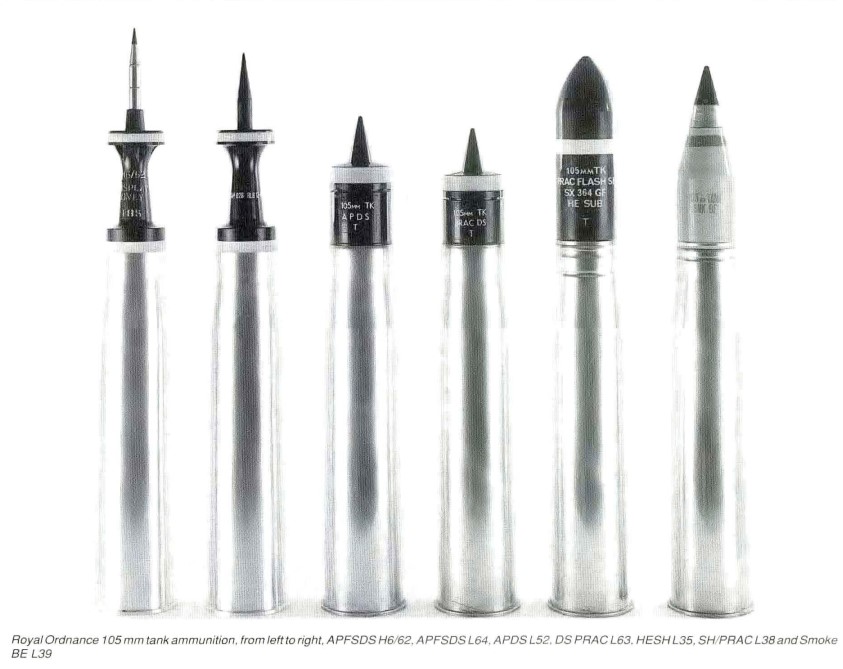
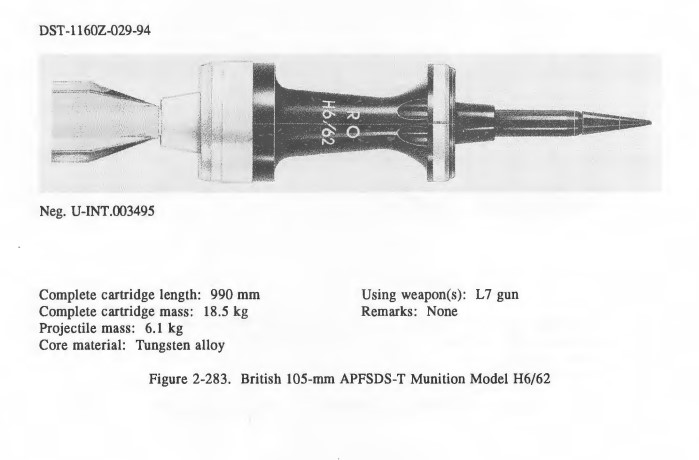
The British 105mm H6/62 Armour Piercing Fin-Stabilised Discarding Sabot Traced (APFSDS-T) round was developed by Royal Ordnance (later BAE Systems, RO Defence) in the late 1980s as a second-generation replacement for the earlier L64A4 APFSDS round. First demonstrated in 1987, the H6/62 retained compatibility with the widely used 105mm L7 and M68 tank guns, in addition to various other foreign 105mms, ensuring broad export potential. It was designed to overcome the increasingly complex armour arrays of the period, with improved lethality, accuracy, and consistency.
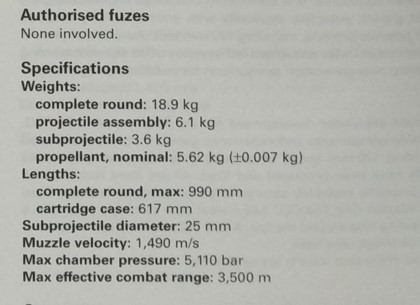
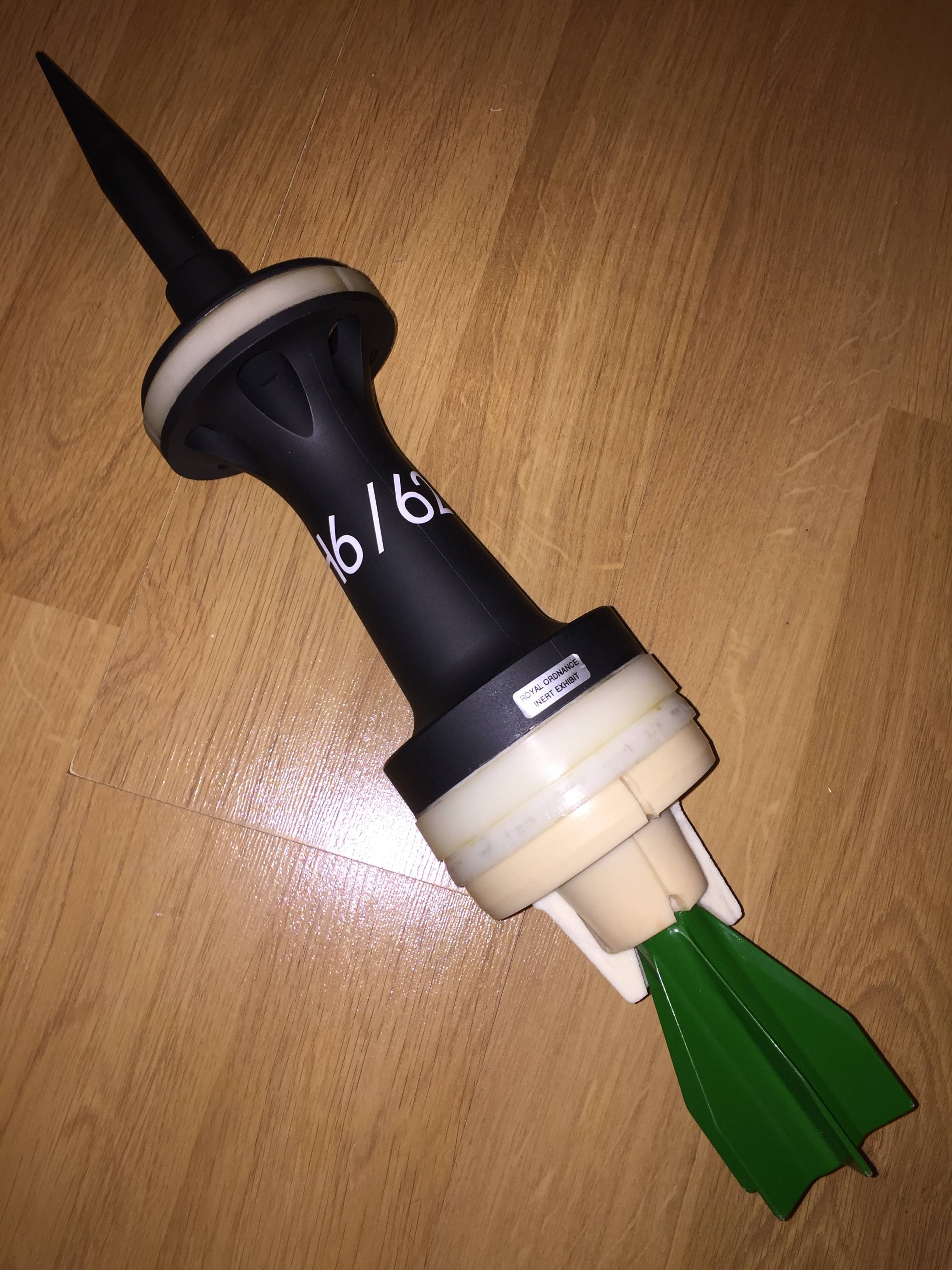
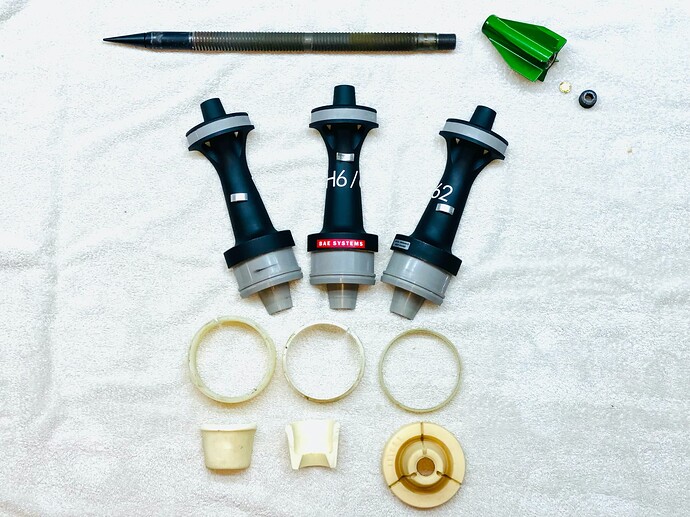
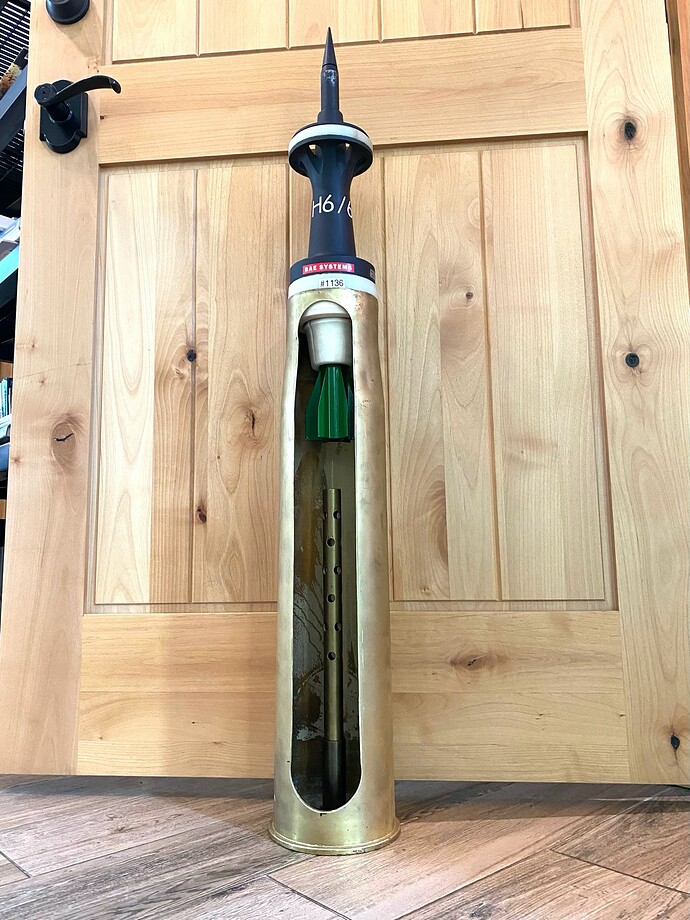
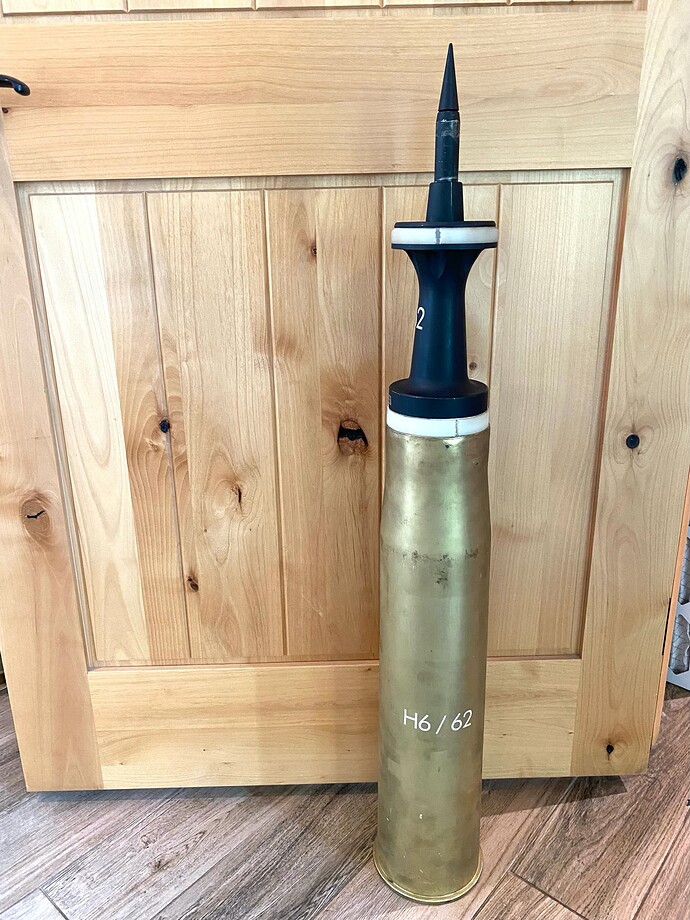
Technically, the H6/62 is a fixed round consisting of a sub-projectile and a sabot, crimped into a combustible cartridge case made of nitrocellulose with 2 percent plasticiser and a lacquered coating (though the inert ammunition doing the rounds at expos used regular old brass casings). The sub-projectile is a tungsten-nickel-iron rod, 25mm in diameter, fitted at the front with an aluminium windshield and at the rear with a six-finned aluminium tail unit that contains an L1A1 tracer. The sabot is constructed of steel and aluminium segments separated by spacers, secured with a plastic obturating band. The cartridge case is filled with approximately 5.6kg of triple-based propellant known as WNC LM1900.
H6/62 delivers a muzzle velocity of 1490m/s and is capable of defeating the NATO Single Heavy target at 5000m and the NATO Triple Heavy target at 6000m, achieving dispersion of less than 0.3 × 0.3 mil out to 3000m. It maintains consistent performance across extreme temperatures ranging from -46°C to +52°C, with a barrel life of approximately 380 rounds at standard conditions. Although intended as a successor to the L64A4, offering superior penetration and reliability while retaining backward compatibility with the extensive fleet of 105 mm tank guns worldwide, H6/62 struggled to find any significant export success and marketing was ceased in the mid-2000s. Nevertheless, it remains one of the most potent 105mm anti-tank rounds developed by Britain.
In game, as a second generation APFSDS round, H6/62 should have a performance in-line with rounds like DM33, depending on exactly how Gaijin decides to implement it. This means it would be the perfect unique, domestic round to equip later 105mm wielding British tanks, like the VFM5 in the tech tree, as well as potential future additions such as the GKN Warrior 105, Vickers Mk 3I, Mk 3M, or Vickers Valiant Mk 4 (105).
Specifications
Spoiler
Images
Sources