- Yes
- No
Hello everyone, and welcome to this new suggestion.
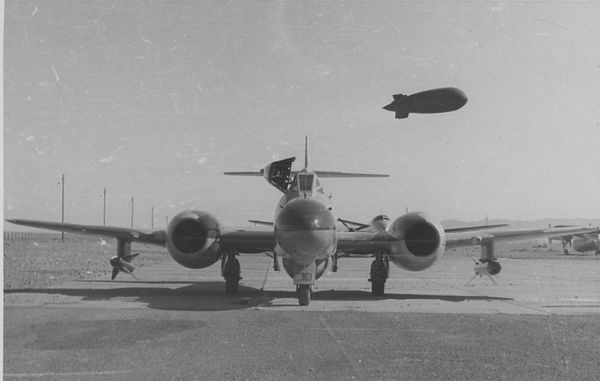
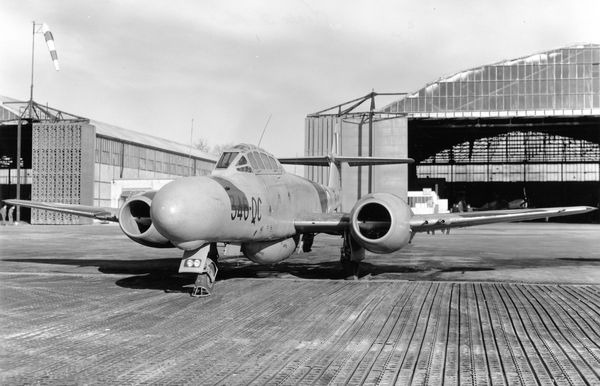
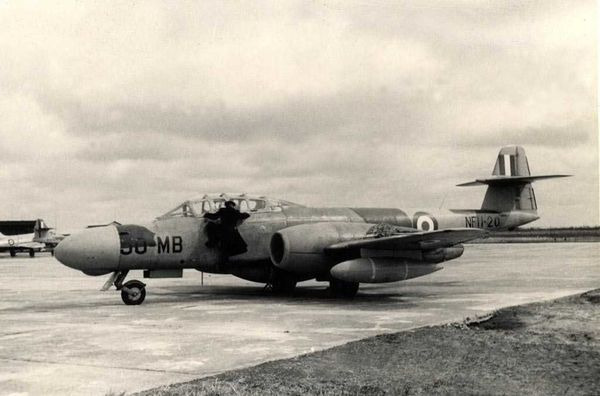
Today, I am presenting a new jet that served with the French Air Force: the Gloster Meteor NF.11.
The Gloster Meteor was the first operational jet fighter developed by the Allied powers during the Second World War. Although it entered service too late to make a significant impact on the conflict, it quickly became one of the most successful post-war jet aircraft, serving with numerous air forces across Europe and the Commonwealth. As the Meteor evolved, several specialized variants were developed, including fighter-bombers, trainers, and dedicated night fighters. Among the latter was the Meteor NF.11, equipped with an airborne interception radar and a two-seat cockpit specifically designed for all-weather and night operations.
By the early 1950s, the French Air Force’s night-fighter force was becoming increasingly obsolete. Its primary aircraft, the de Havilland Mosquito NF, had served well during the Second World War but was no longer capable of meeting the demands of modern jet combat. In 1953, France decided to modernize its all-weather interceptor fleet by acquiring the Gloster Meteor NF.11. One of the aircraft’s main advantages was its AI Mk.10 radar, which was closely related to the radar already used aboard the Mosquito, allowing radar operators to transition with relatively little additional training. France initially purchased twenty-five new aircraft before acquiring sixteen additional examples from Royal Air Force stocks, enabling the re-equipment of EC 30, one of the French Air Force’s principal night-fighter units.
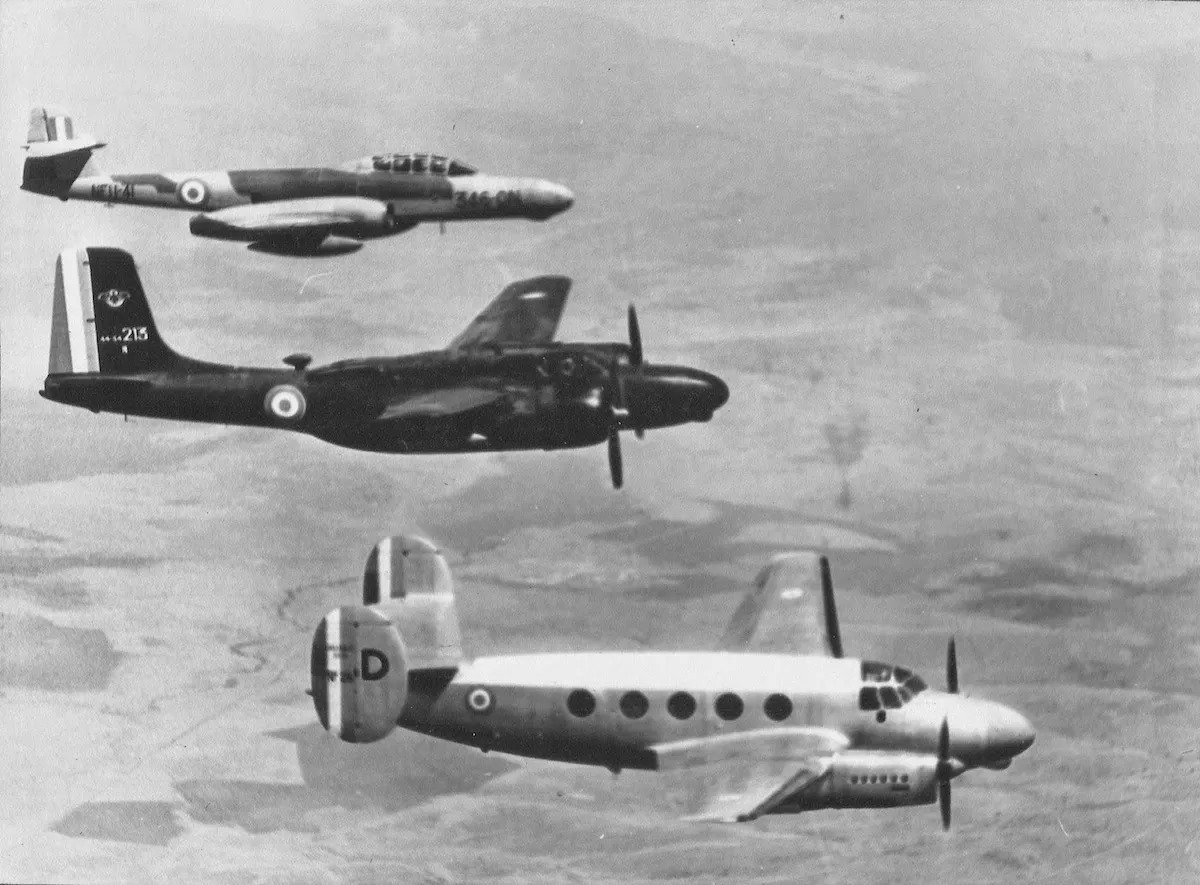
The Meteor NF.11 quickly became the backbone of France’s all-weather interception capability. Although originally intended for the air defense of metropolitan France, the aircraft also saw operational service during the Algerian War. There, it was employed for night patrols, interception, and surveillance missions. However, its radar proved less effective in the counter-insurgency environment than originally anticipated, where slow-moving or ground targets were more difficult to detect. As a result, some of the radar sets were eventually removed and installed in modified Douglas B-26N Invaders, whose mission profile made better use of the equipment.
During the second half of the 1950s, the arrival of the domestically produced Vautour IIN gradually rendered the Meteor obsolete as a frontline interceptor. The new aircraft offered greater speed, improved endurance, and more modern avionics, leading to the progressive withdrawal of the British-built fighter from operational squadrons. Rather than being retired immediately, many Meteor NF.11s were reassigned to training duties, where they continued preparing crews for jet and radar operations. Several examples also remained in service with the Centre d’Essais en Vol (CEV), supporting flight testing and experimental work well into the following decades.

Characteristics
Length : 14.80 m
Width : 13.10 m
Height : 3.96 m
Mass :
- Empty : 4 846 kg
- Max : 7 121 kg
The aircraft is powered by two Rolls-Royce Derwent jet engines, enabling it to reach a top speed of 970 km/h and a service ceiling of 13,000 m. It has a range of 970 km.
The crew consists of a pilot in the front seat and a radar operator in the rear seat.
Equipment
The aircraft is equipped with the AI Mk 10 radar. Originally designated the SCR 720, this is an interception radar that guides the aircraft toward a target—a significant advantage for a jet designed for night interception missions.
Weapons
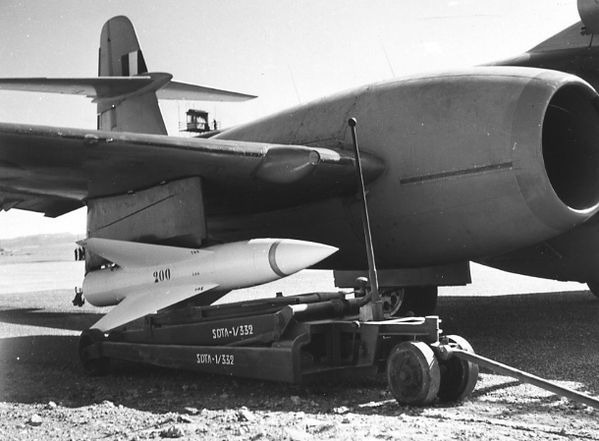
The aircraft’s armament was initially quite conventional, consisting of four 20mm Hispano Mk.V cannons; however, following several modifications by the CEV, the aircraft gained the capability to carry and fire AA-20 air-to-air missiles under its wings (up to two missiles).
The aircraft can also carry a variety of fuel tanks, including a centerline tank and two under-wing tanks (using the hardpoints intended for AA-20 missiles).
In-game, this aircraft would be an interesting addition to the French tree, providing a low-BR night fighter jet capable of engaging various target types and firing wire-guided air-to-air missiles, thereby enhancing its air combat capabilities.
Sources
- GLOSTER METEOR NF 11 - MEAC MTL
- 53 - Gloster “Meteor” NF-11. - Le blog de Avions de la Guerre d’Algérie
- Gloster Meteor NF11 | Ailes Anciennes Toulouse
- Gloster Meteor Archives - Passion pour l’aviation
- Gloster Meteor NF.11 : Photoscope détaillé (Ailes Anciennes Toulouse) - Master194
- NF-11-14 Armée de l’Air (French Air Force) Gloster Meteor NF 11 Photo by Thomas Schmidt-Blindenhöfer | ID 783532 | Planespotters.net | Planespotters.net