Alright, it seems necessary now to provide a comprehensive summary of the issues stemming from the recent changes to the PL-12 series. When these adjustments first came to light, I maintained a stance of cautious optimism, even after initial testing revealed that the PL-12’s maneuverability was inferior to that of the AAM-4. My optimistic guess was that this change would simply shift the PL-12’s agility from “excellent” to “adequate” while potentially resolving the long-standing energy retention issues at long ranges caused by airframe jitter. I viewed it as a nerf but one that was not particularly severe.
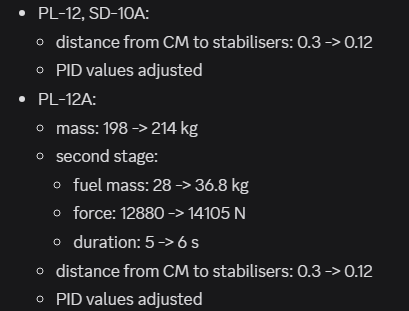
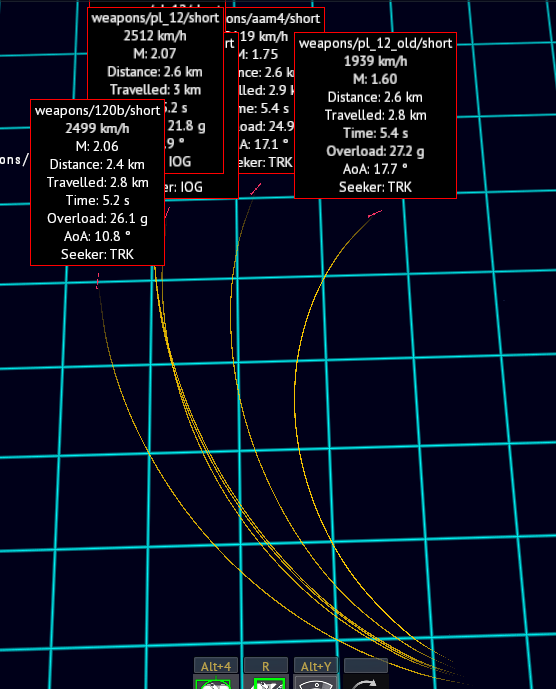
However, after the changes were implemented, the actual test results were staggering:
Multiple combat videos have demonstrated that the Rafale and Typhoon can easily evade the PL-12/PL-12A using simple maneuvers. Regarding the underlying reasons, I am reposting the test results from Bilibili up SpitfireMkIX (Original link: PL-12/12A导弹表现巨大问题 - 哔哩哔哩). The reposted content is indicated in italics:
A highly unexpected situation.
Due to the excessively short distance from the CM to the stabilizers, the PL-12/12A is currently suffering from severe control surface locking under high IAS conditions.
Testing was conducted at an altitude of approximately 1,000 meters. Empty PL-12A and AIM-120D missiles (with fuel removed to maintain constant burnout weight and zero motor burn time) were released at Mach 4.3 to attempt off-bore shots and evaluate the raw performance of the airframes.
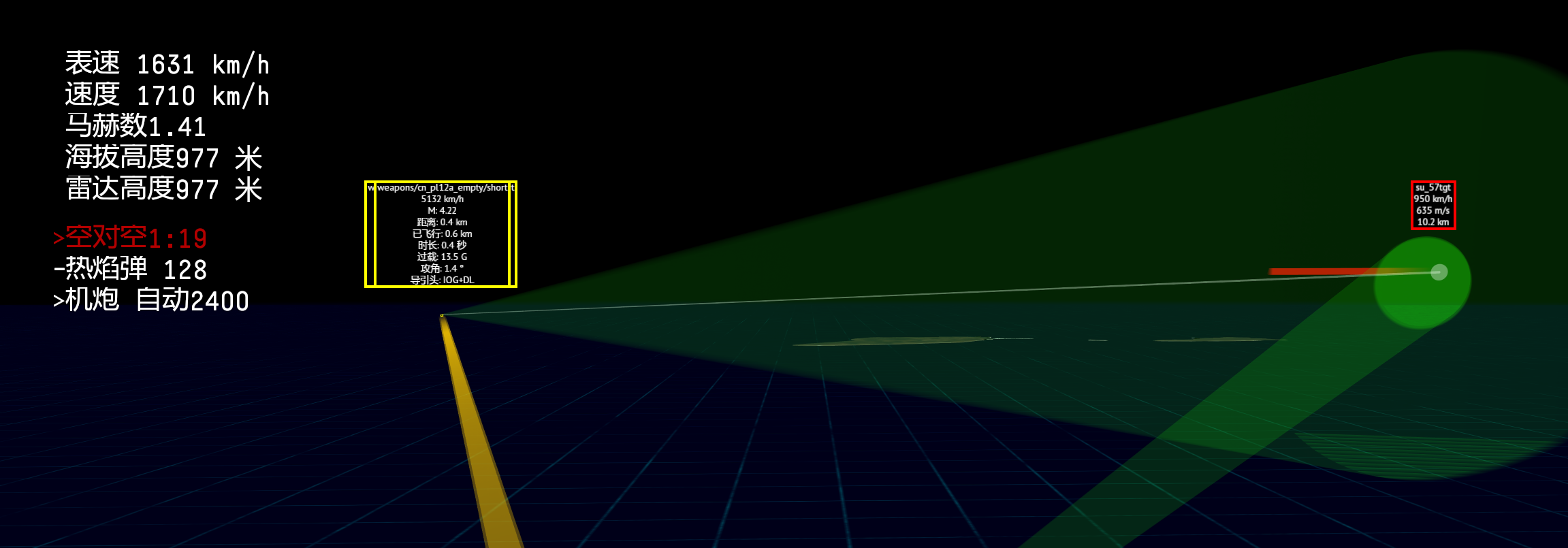
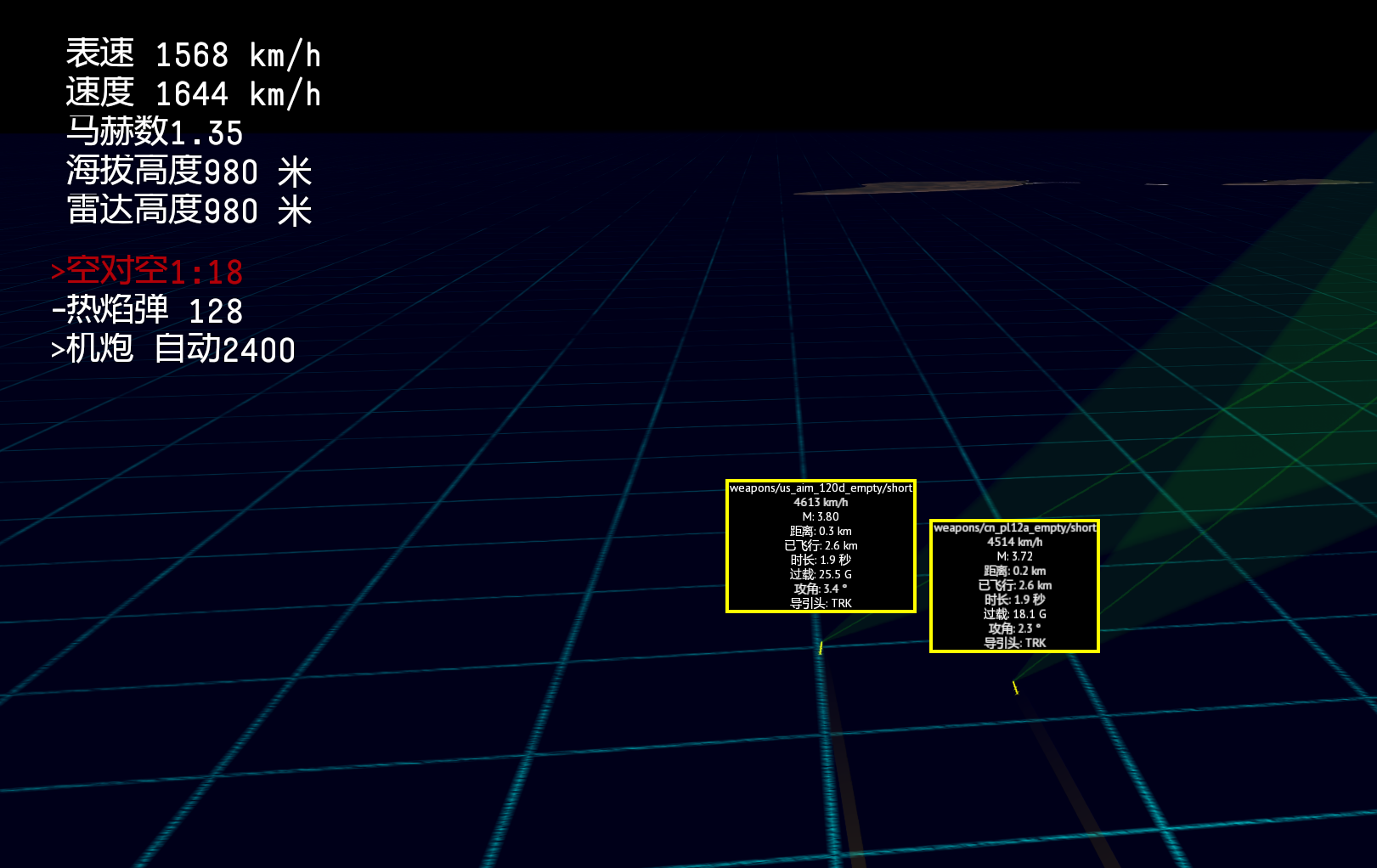
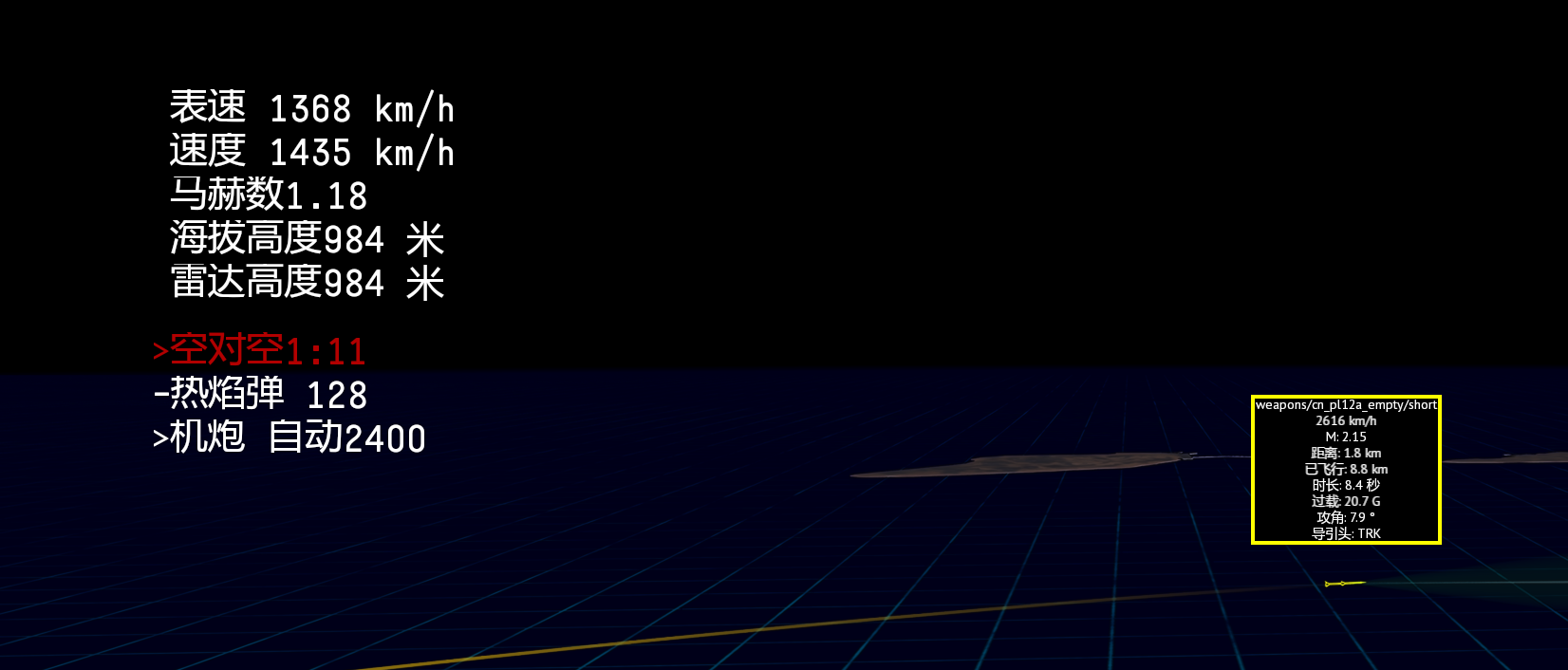
As the missile speed dropped from Mach 3.8 to Mach 2.1, the available overload increased from 18G to 21G (maximum value).
Once the speed dropped below Mach 2.1, the available G-load began to gradually decrease.
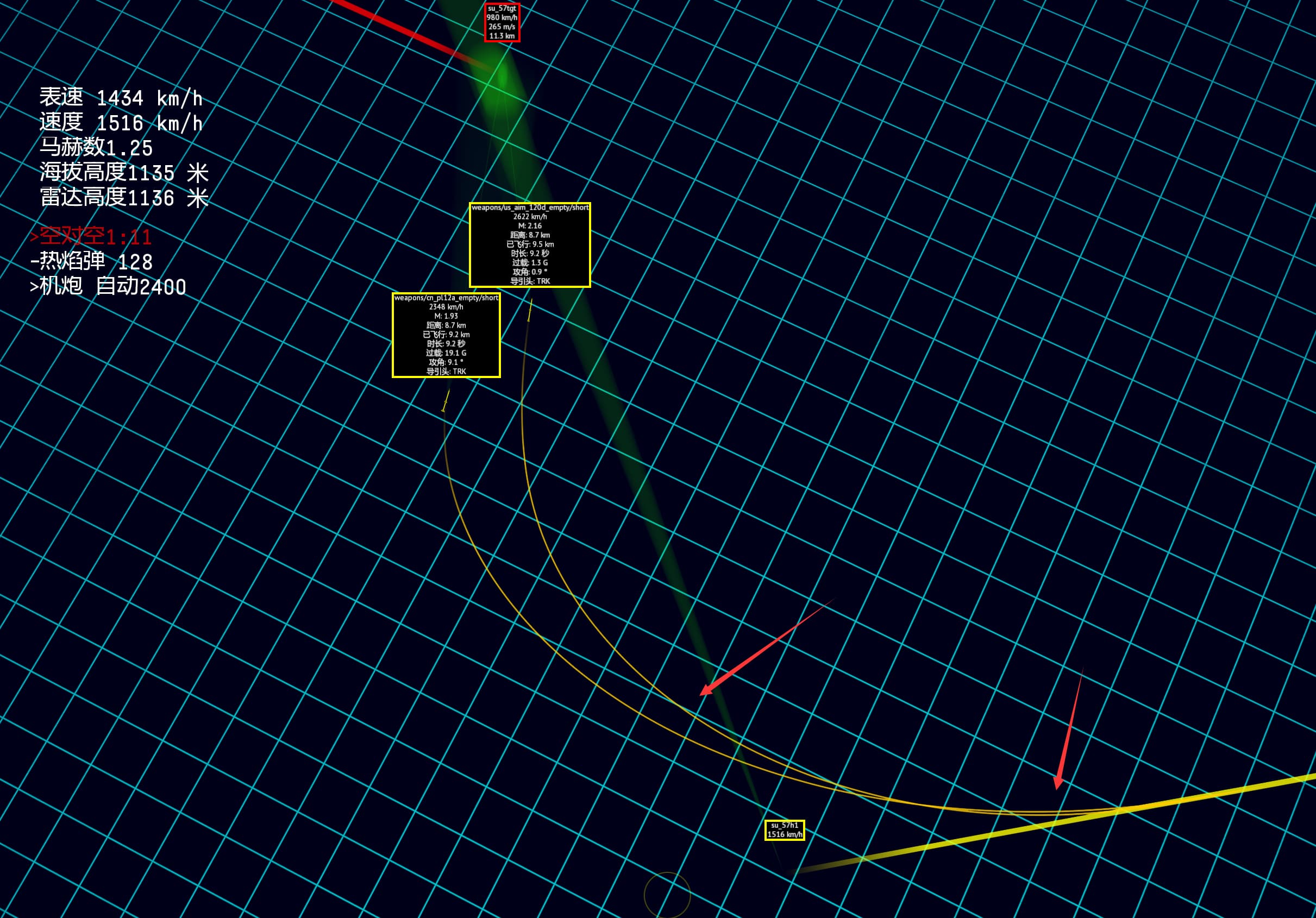
From this chart, it is evident that in this scenario, the PL-12 is actually inferior to the AIM-120D.
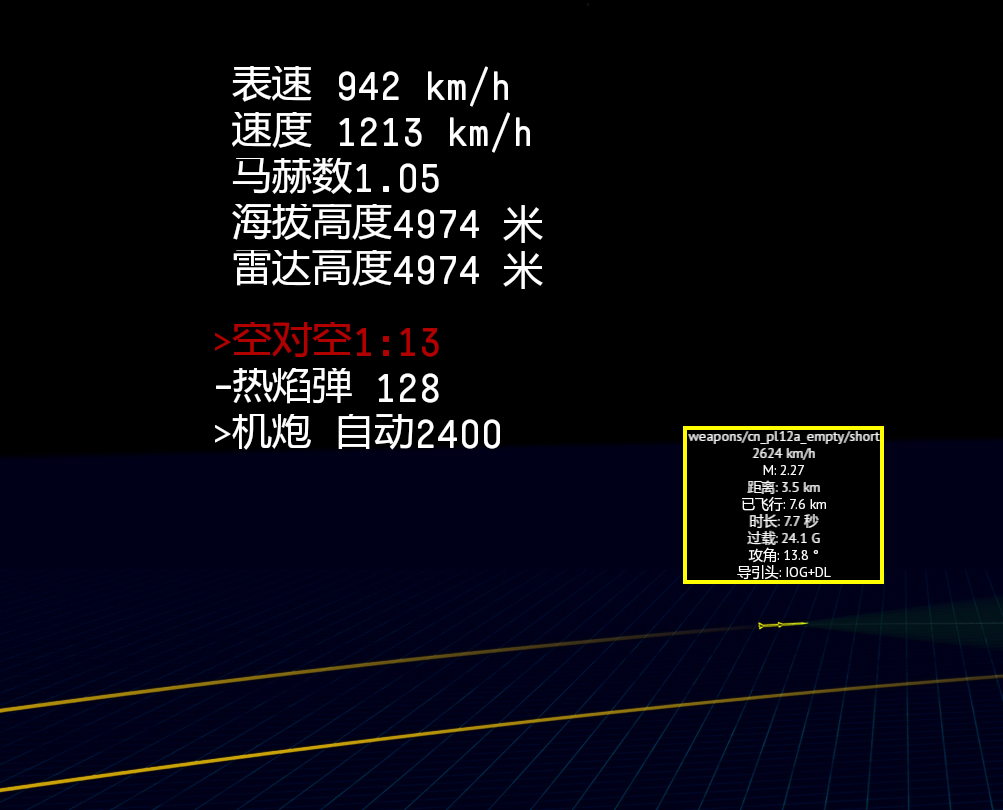
When firing at low altitudes, the actual maximum available overload is only around 20G; achieving the stated 38G is impossible.
At higher altitudes, due to lower air density, it is actually possible to pull slightly higher overloads—for instance, reaching 24+G at around 5,000 meters.
Currently, due to the severe control locking, PL-12/12A missiles launched within visual range (WVR) can be out-turned without much difficulty by the Rafale/Typhoon at high speeds. Even airframes with maneuverability comparable to the Su-27SM can out-turn them if the pilot employs proper defensive techniques.
Similarly, due to the control locking, in high-speed, high-angle, and medium-range off-bore shots (e.g., a 70-degree off-bore shot at 8km), the PL-12A’s turning radius is massive, to the point where it might even be outperformed by the AIM-120D in these circumstances.
My previous assessment that the PL-12A received a buff was premature. It is truly demoralizing to see a high-energy medium-range missile—one that should be a “guaranteed kill”—be out-maneuvered in a head-on engagement. I suggest that the stat card’s listed overload be changed from 38G to 25G.
As for the root cause of these issues—the “Distance from CM to stabilisers”—this change is utterly baffling. We will set aside the discussion regarding Gaijin’s “credible sources,” as they are never shared with the players anyway. We will also ignore the ongoing debate over whether “stabilizers” refers to the center fins or the rear fins. Simply listing the corresponding data for various active radar homing (ARH) missiles is enough to illustrate the problem:
The following data and viewpoints are reposted from MythicPi:
Thats the other possibility, but regardless of what the number represents exactly, they seem to be a little all over the place with it.
For example (missile length / distFromCmToStab value):
AIM-120 variants: 3.66m / 0.175
R-77: 3.6m / 0.175
R-77-1: 3.71m / 0.175
MICA: 3.1m / 0.175
PL-12 variants: 3.93m / 0.12
AAM-4: 3.667m / 0.25
Imo, a valid assumption would be that a longer missile should usually have a larger distFromCmToStab value (assuming similar form factor and weight distribution, which is why i picked the missiles above), because regardless of if the value is in meters, or unitless, the physical distance from the control surfaces should increase with an increasing missile length, but
its not the case as seen above.
AAM-4 has a value almost 50% larger than that of AIM-120/R-77 despite having almost the exact same size
PL-12’s have the smallest value despite being the longest missiles
MICA shares a value along with most of the other missiles despite being the shortest by half a meter
Toss in other missiles and it gets even weirder:
AIM-54 variants: 3.96m / 0.05
Fakour 90: 4.25m / 0.35
AGM-144 variants: 1.63m / 0.01
Brimstone: 1.803m / 0.075
F90 gets 7x the value AIM-54’s gets despite similar form factor
Brimstone gets 7.5x the value used on AGM-114’s despite similar form factor
I just can’t figure out how they choose their numbers…
Many people likely have an explanation for this “chaos”: Gaijin is intentionally assigning values to the “Distance from CM to stabilisers” to force the missiles’ performance to align with their own preconceived balance targets. Of course, this is merely speculation, and we have no way of proving its authenticity. However, rather than believing that Gaijin has obtained actual, classified data for the PL-12, I would much rather believe in this hypothesis.
It now appears that the statement in the official announcement, “missile autopilot parameters have been adjusted, the missiles are now more stable on the trajectory,” concealed far more than it revealed. Regarding the performance of the two missiles following these changes, the PL-12A has become something of an AIM-120D analogue due to an useful increase in its operational range. However, the PL-12 has effectively been ruined; it has been reduced to an AIM-120 with inferior range—and as we all know, range is currently the only redeeming quality of the AIM-120.
Furthermore, the aircraft significantly impacted by this are no longer limited to the JF-17 and J-10A as we initially estimated. Instead, every aircraft that utilizes the PL-12 is affected, which encompasses the entire PLAAF. So, Gaijin, is this truly your objective? I hope this is not your true purpose.
What Gaijin should do now is revert the “Distance from CM to stabilisers” value for the PL-12, or at the very least, bring it up to the universal standard of 0.175.
Finally, allow me to offer another hypothesis:
Why was the range of the PL-12A suddenly buffed while the maneuverability of the entire PL-12 series was gutted? The reason is quite predictable: during this BR adjustment, many players expressed dissatisfaction with the perceived weakness of the J-15T and the overwhelming strength of the Su-30MKK, demanding changes to their BRs. Furthermore, I believe the J-15T’s poor combat performance data has caught Gaijin’s attention; after all, a administrator once told me that the performance of new vehicles is closely monitored—it seems he wasn’t lying. (However, they only seem interested in raw combat data, while ignoring obvious qualitative reasons for BR adjustments: Does J-15T Really Belong 14.7? ).
But are these adjustments truly effective for these two aircraft? I believe the results are far from ideal. For the J-15T, the critical issue regarding its countermeasure count remains entirely unaddressed, leaving it with very few viable combat tactics. As for the Su-30MKK, even without carrying the PL-12, it remains more than capable of dominating the vast majority of aircraft within the 12.3–13.3 BR range.
Ultimately, Gaijin’s response to player demands for Battle Rating adjustments for the J-15T and Su-30MKK is simply this: no BR adjustments. Instead, they chose to take a heavy-handed swing at the PL-12. This blow carries massive energy and a wide area of effect, damaging the entire PLAAF and showcasing Gaijin’s “masterful” approach to operations. As for whether the J-15T is actually better off, or if the Su-30MKK will stop ruining the gameplay experience for others? I am certain Gaijin will simply say: “We will closely monitor their combat performance”.