History and Introduction
The Roland air defense missile system was developed in co-operation between Germany and France, specifically, Messerschmitt-Bölkow-Blohm (MBB) and Aérospatiale producing the weapon system and EuroMissile producing the Roland 1, 2 and 3 series of missiles.
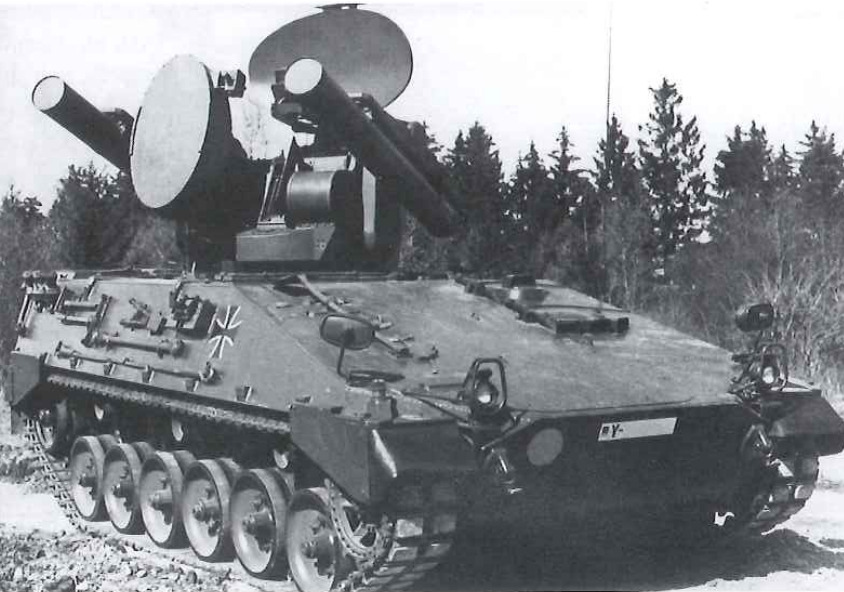
The story of the Roland in the German air defense duty starts with the FlaRakPz Roland 2. Unlike their French counterparts, the germans chose to delay the induction of the roland until the Roland 2 had been developed. The main difference between the Roland 1 and Roland 2 (systems) is that the Roland 1 was a purely Day time and clear weather system, operating fully on a passive InfraRed tracking sight assisted by a search radar.
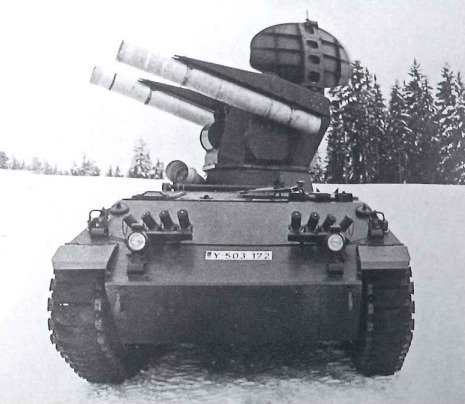
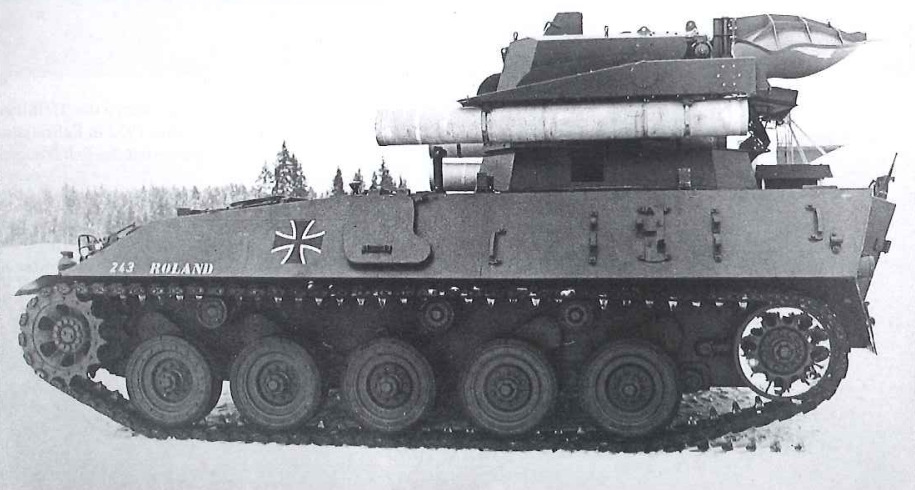
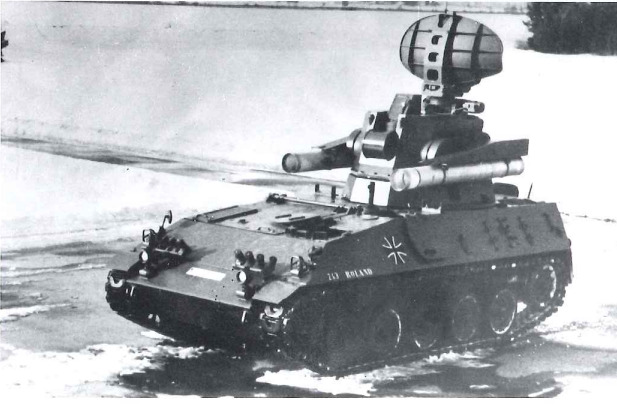
As can be seen, it does not have a tracking radar
The later prototype for the Roland 1 did not fare much better in their eyes either.

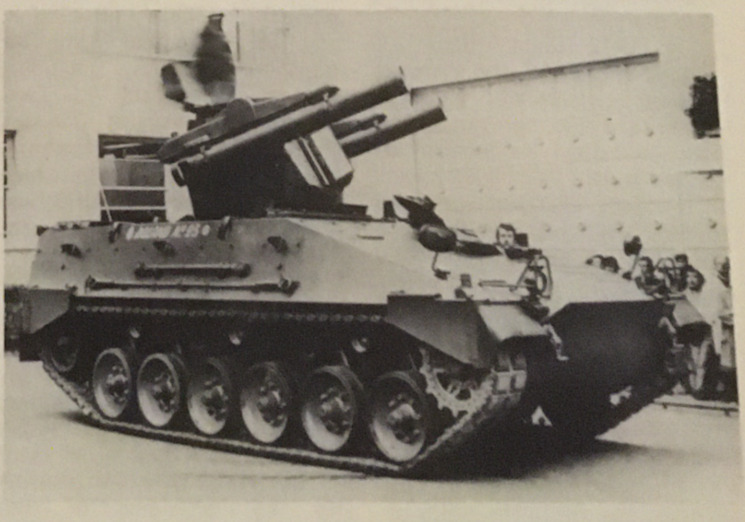
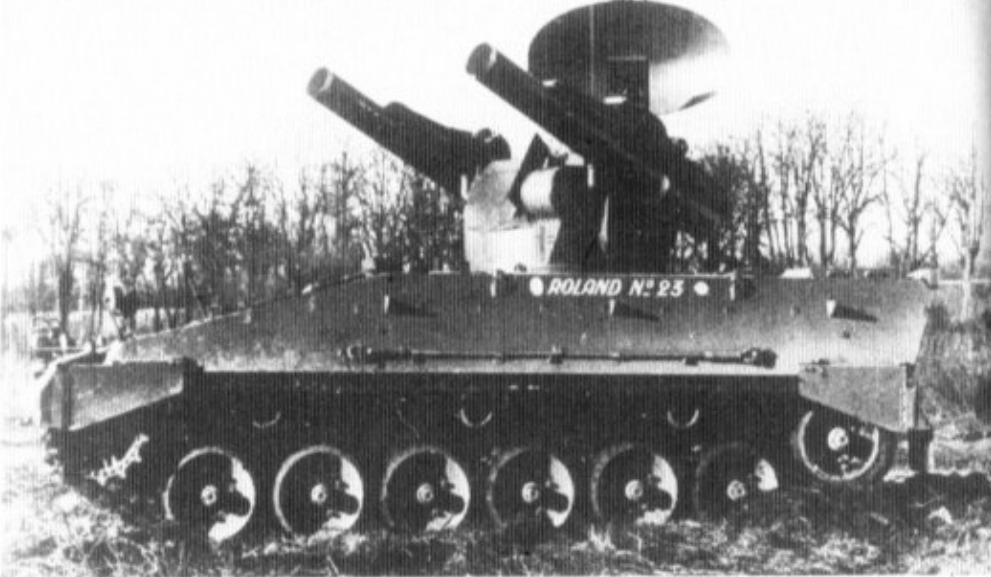
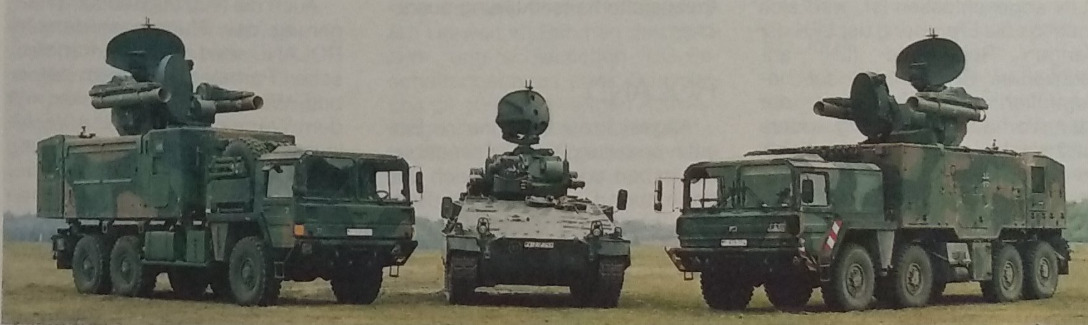
The Germans did not consider this satisfactory and thus the Roland 2 was developed with a dedicated Tracking radar in tandem with the IR sight. Initially, the system was only mounted on the Marder chassis in active service.
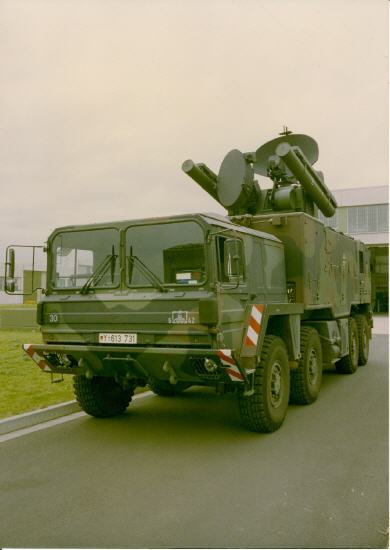
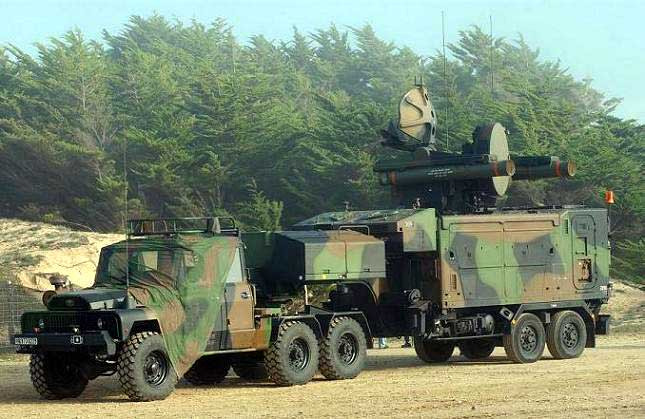
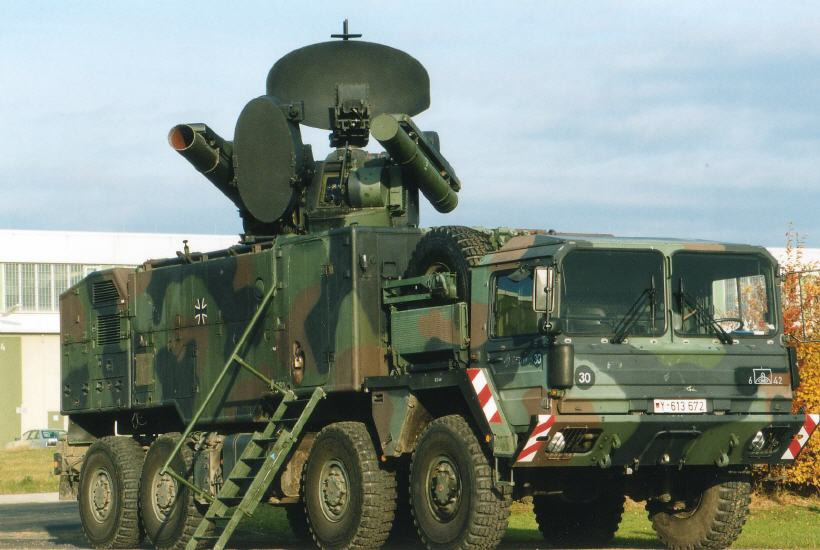
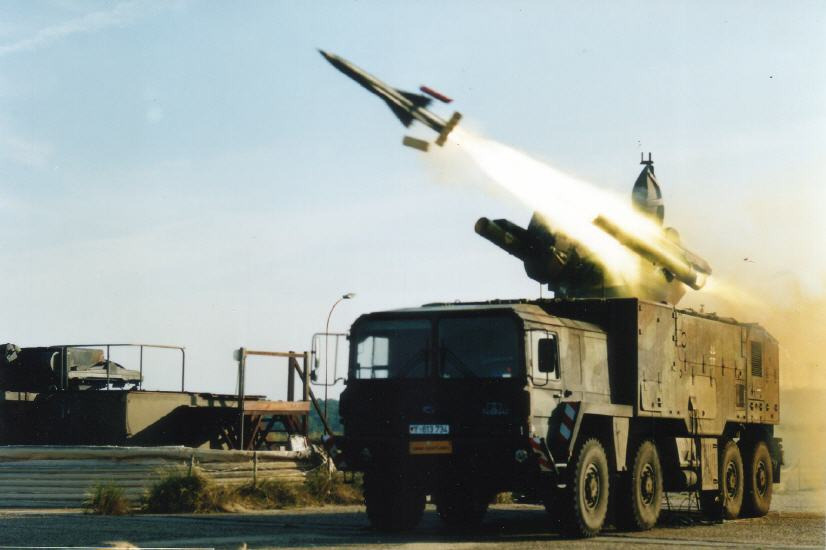
But this was only for the bundeswehr. The Luftwaffe also needed an air defense system to protect their airfields, for this reason, the same Roland 2 system was mounted on a MAN CAT 1 8x8 truck chassis. While this was a much lighter vehicle by mass as compard to the Marder variant, it was by no means light enough to be air transportable. Thus, a lighter 6x6 chassis was outfitted with the SARO (Roland self contained system). It was named the Roland Luftverlastbar (LVB) used to allow the entire vehicle to be airlifted to far away combat areas.

Named the Roland LVB, the French also created their own version of the LVB.
Spoiler
That brings the total number of Roland variants that were in service for the German military to 3:
- FlaRakPz Roland 2
- FlaRakRad Roland 2
- FlaRakRad Roland 2 LVB
But theres more… In came the NDV program. In the 1990s, the air threat situation was changing. The rolands were estimated to be retired soon, around 2002-2003 unless changes were made.
So, in the year 2000, Germany awarded a contract to LFK GmbH to upgrade the Roland weapon systems to the NDV standard. In english, basically SLE (service life extension). If accepted into service, the Rolands would remain operational upto 2015.
According to the Military History Museum of the German Armed Forces, the 1 FlaRakPz 1A1 Roland 2 and 2 FlaRakRad 1 Roland 2 vehicles participated in the upgrade. They were designated FlaRakPz 1A2(v?) Roland 2 and FlaRakRad 2 Roland 2 respectively. The FlaRakPz 1A2 was the most clearly documented, but the upgrades were similar across both vehicles.
They were given upgraded systems including new digital computers with Mil-Bus connections, an integrated self test system, improvements to missile guidance such as adapted guidance laws for the ROLAND 2 and ROLAND 3 missiles, wireless connection to HFlaAFüSys, multifunction displays and adjustments to peripheral devices, probably including a new “Glaive” IR sight.
Troop trials commenced with the vehicles being tested for their utility up to the year 2003. However, it was decided to retire the Rolands that very same year. The LeFlaSys Ozelot in tandem with its AFF Wiesel 2 radar carrier were the interim successors of the SHORAD complex until the IRIS-T SLS system is adopted into service (which, ironically, has been beaten into service by the SLM).

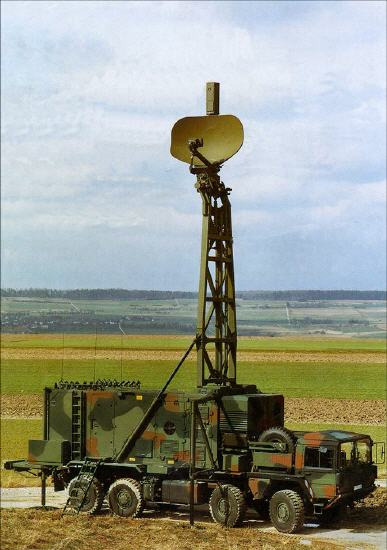
The system that completes the Fla-Rak-Rad-Komplex is the Flugabwehrgefechtsstand ROLAND (FGR).
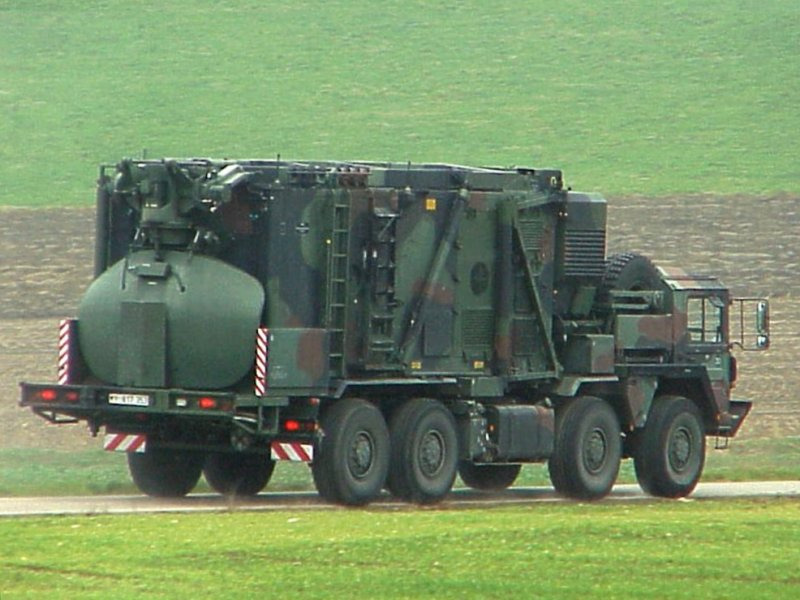
The FGR is an air defense radar system manufactured by Hensoldt. The Radar designation is TRML-2D and was deployed in tandem with the FlaRakRad (FRR) Roland 2 (later FRR Roland 2 NDV) air defense missile system as a long range surveillance, early warning, acquisition-targeting and Command and Control center for the Luftwaffe.
It posseses functions that the Rolands themselves did not have, such as TWS. The antenna above the main radar is not an IFF (which is integrated into the main dish), but rather an omnidirectional sidelobe suppressor. It has a dedicated helicopter detection function which allows it to search for and track low flying, low speed targets including helis, ARMs, slow aircraft even among ECM. It’s mast can deploy to a height of 12 meters but the radar can operate both with the mast folded and extended (at raised and at roof height).
It can communicate with upto 40 various air defense systems with dedicated channels for Rolands (upto 10 FRR to 1 FGR).
The benefit of this complex is that while the entire system is amplified by the main FGR, each of the Rolands can operate independently as well.
Extra reading
The Germans were offered and trialled many variants of the roland system, among them being the Roland 3. What is important to note is that there is a series of missiles named Roland 1, 2 and 3, AND there is a series of systems known as Roland 1, 2 and 3. As stated above, the Roland 1 lacked a tracking radar, which Roland 2 incorporated, and Roland 3 added 2 more launch tubes for the missiles.
The VT-1 missile is actually not part of the Roland missile family, but rather is from Thales and was made compatible into a German Roland system by Euromissile (which was not authorised by Thales and got Euromissile sued but they won the case and got the freedom to offer the integration of the VT-1 to their customers).
Complete list of all German Roland variants
- FlaRakPz Roland 1 (RU243 chassis)
- FlaRakPz 1 Roland 1
- FlaRakPz 1 Roland 2
- FlaRakPz 1A2 Roland 2 NDV
- FlaRakRad Roland 2
- FlaRakRad Roland 2 LVB
- FlaRakRad 2 Roland 2 NDV
- FlaRakRad Roland 3
Specifications: FGR
Crew: 3 (Commander, Radio operator, Driver)
—Dimensions and mass—
Mass: 27.275t
Length: 11.20m
Width / with mirror: 2.9m / 3.3m
Height: 3.9m
Mast height: 11.5m
—Mobility—
Engine: V-8 Diesel (turbo)
Engine Power: 360 hp
—Radar—
2D Pulse Doppler radar
Band: G-Band
Cycles: 13-27rpm (two modes)
Radar search range: 60km
Radar search altitude: 6km
Maximum tracked targets: 127
Maximum targets engaged targets: 50
—Self protection—
Smoke grenades: 16 (4 + 4 right side, 4 + 4 left side)
Specifications: FlaRakRad 2 Roland 2 NDV
Crew: 3+1 (Commander, Gunner, Radio operator) +Driver (but roles may be overlapping)
—Dimensions and mass—
Mass (SARO + truck): 27.5t
Length: 9.75m
Width / with mirror: 2.9m / 3.3m
Height / Search radar active: 3.95m / 5.52m
—Mobility—
Engine power: 360hp (236kW)
Top speed: 80kmph
Wading depth: 1.20m
Carrier vehicle: 15t MAN CAT I A1 (8x8)
—Ammunition—
Types: Roland 2, Roland 3
Number of missiles: 2 ready + 8 in magazine
—Search Radar—
Siemens MPDR-16 Pulse Doppler radar
Band: D-Band
Radar search range: 16km
Radar search altitude: 3km
—Tracking Radar—
Thomson-CSF Domino 30 Monopulse radar
Band: J-Band
Radar track range: 16km
Radar track altitude: 16km
—Self protection—
Smoke grenades: 16 (4 + 4 front, 4 + 4 rear)
—Equipment—
TVD: Yes
Stabiliser: Yes
Photo Gallery
FGR
FGR Radar Mast Full Unfolding sequence
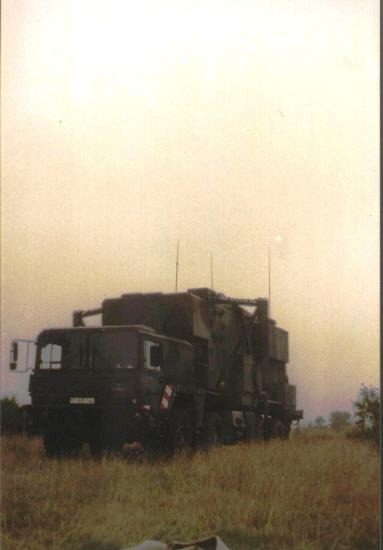
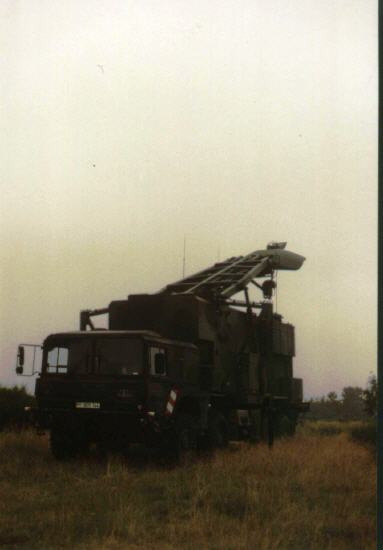
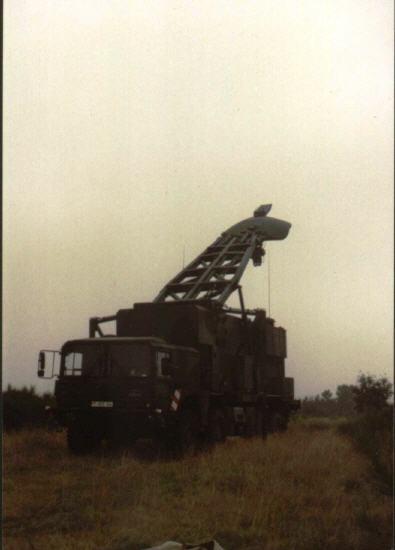
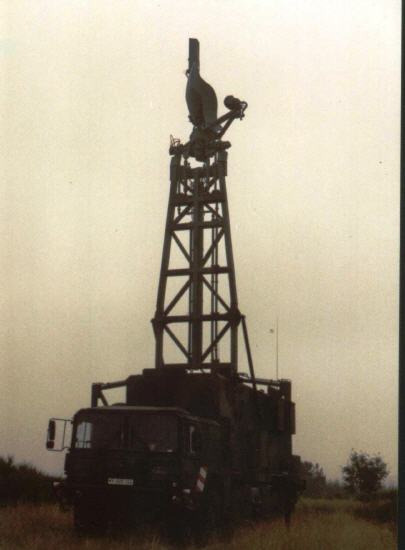
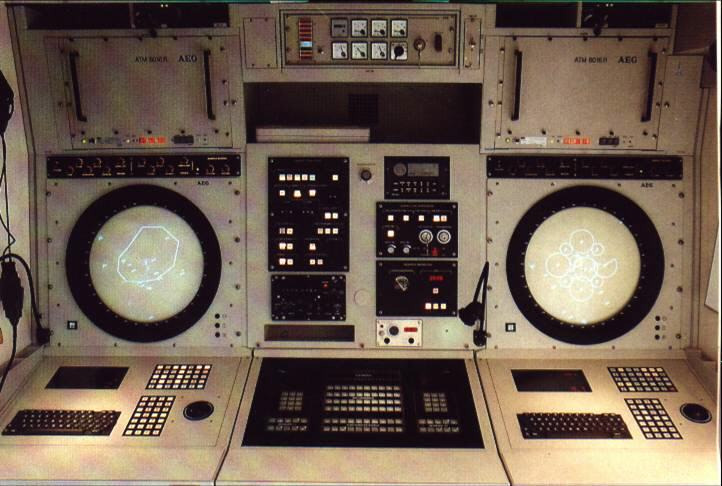
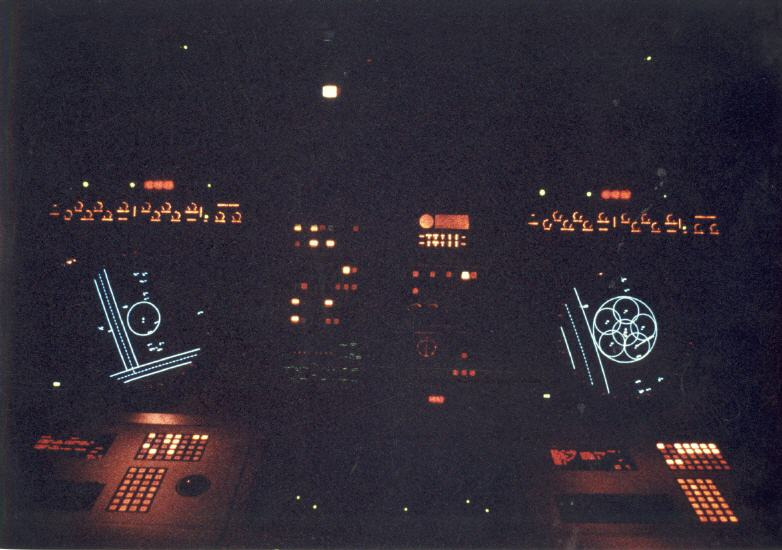
FGR Crew Cabin Interior
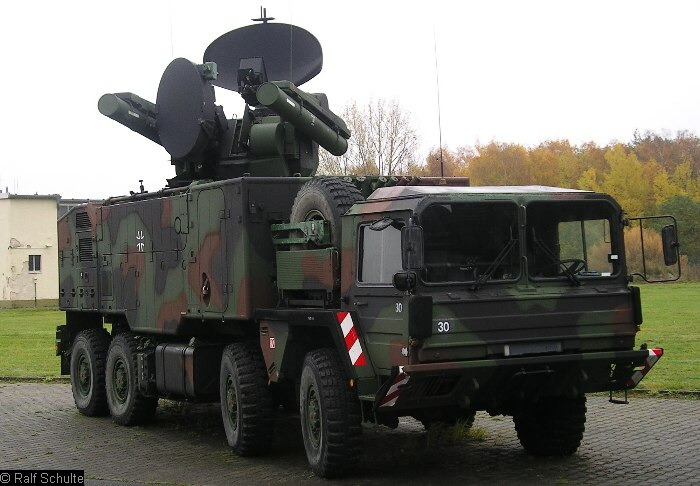
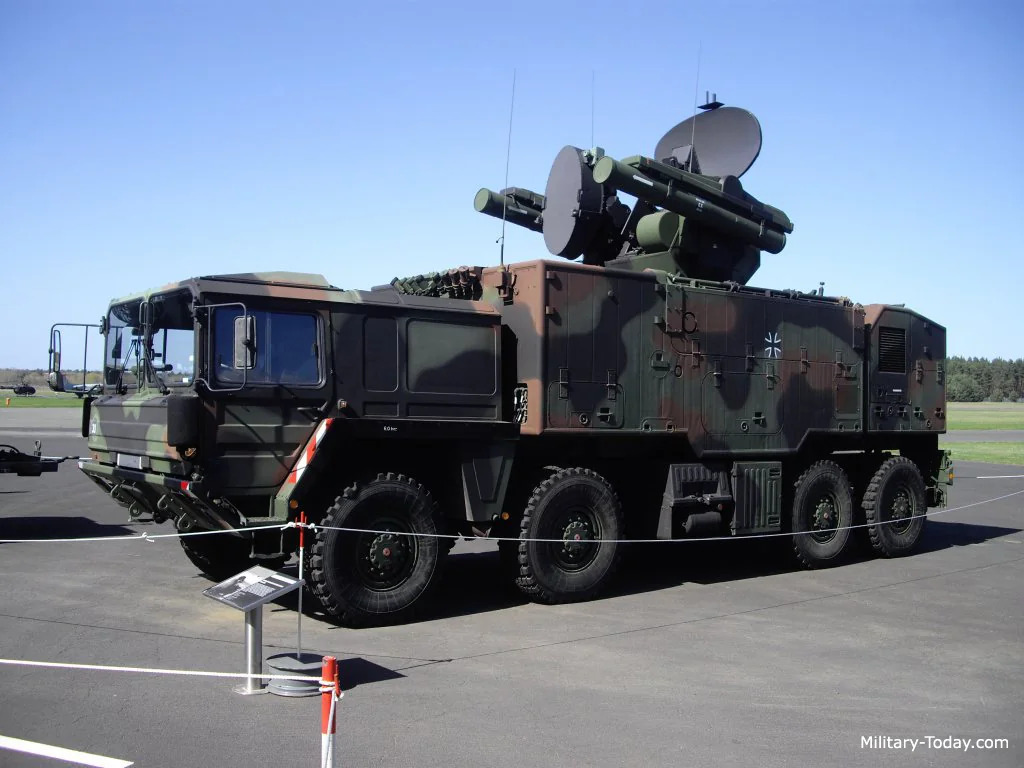
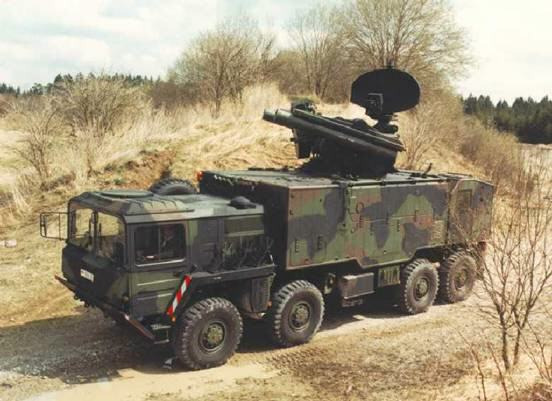
FlaRakRad Roland 2 NDV
DISCLAIMER: It is impossible to tell apart a FlaRakRad NDV and base model FlaRakRad (afaik)

Sources
- Direct correspondence with Military History Museum of the German Armed Forces: Roland NDV program (limited availability on request)
- Direct correspondence with Military History Museum of the German Armed Forces: Roland weapon system stabiliser (limited availability on request)
- EADS Roland NDV project description document (2003)
- Defense-Aerospace
- Forecast international
- Wehrtechnik, 1987/10
- Forecast international: MPDR 3002 S radar
- Forecast international
- Armies and weapons (march - april 1977)
- https://www.iqytechnicalcollege.com/Radar%20&%20Electronic%20Warefare.pdf
- Roland (Waffensystem) – Wikipedia
- TRML - Wikipedia -EN/DE- Nahbereichsradar – Wikipedia
- FlaRakGrp42: Roland FGR
- FlaRakGrp42: Roland FRR
- Der Marder feiert in 2021 sein 50-jähriges | Rheinmetall
- FlaRakSys ROLAND 1 - FGR (Bw)
- TRM-S - Radartutorial
- TRML-2D - Radartutorial
- ROLAND
- frr-8.de_startseite
- http://www.flak11.de
- http://www.tla-der-nva.de
- http://www.dsu-22.de
- SERVOWATT: Glossar | LÜR Luftraum Überwachungs Radar
- Yes
- No
- 11.3
- 11.7
- 12.0
- 12.3
- I voted no