- Yes
- No
- Other
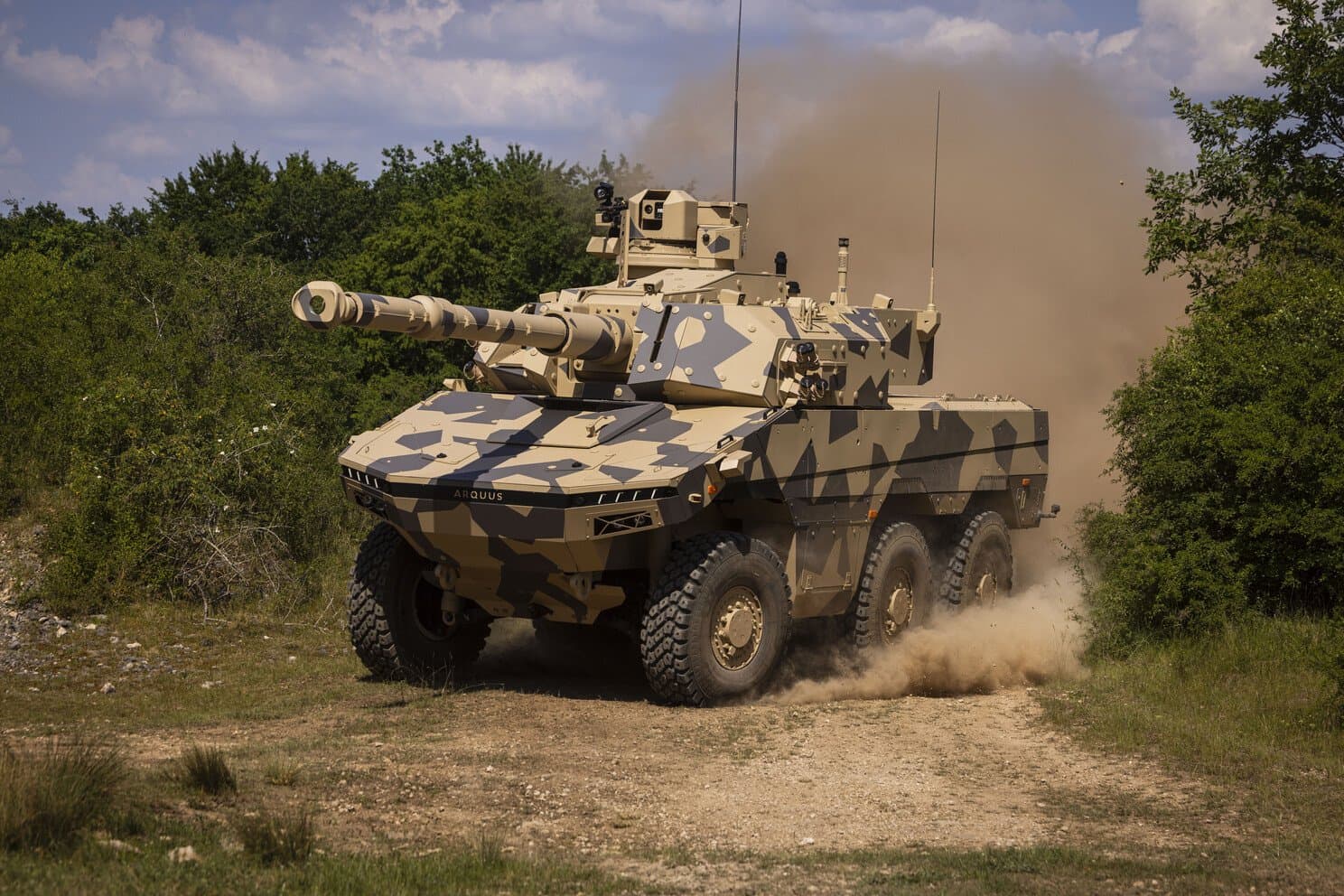
TL;DR: A Jaguar chassis fitted with a Cockerill 3105 turret and autoloaded 105 mm high-pressure gun capable of firing APFSDS, HEAT, HESH, HE, smoke rounds, and Falarick gun-launched anti-tank missiles.
History
Development History
The origins of the Fenris can be traced back to the transformation of the European defense industry during the mid-2020s. In 2024, Belgian defense company John Cockerill Defense completed its acquisition of French military vehicle manufacturer Arquus, creating one of Europe’s most comprehensive land systems groups. For John Cockerill, the acquisition represented far more than a simple business expansion; it provided the company with a manufacturer capable of producing complete armored vehicle chassis, allowing it to move beyond its traditional role as a supplier of weapon systems and turrets.
Prior to the acquisition, John Cockerill had achieved considerable success with its Cockerill 3000-series turrets, which had been integrated onto numerous tracked and wheeled platforms around the world. However, the company still relied on external manufacturers to provide the vehicles themselves. By acquiring Arquus, John Cockerill gained access to a portfolio of established armored vehicles, including the Sherpa, Bastion, Griffon, Serval, and most importantly, the EBRC Jaguar.
In January 2026, John Cockerill Defense CEO Jean-Luc Maurange publicly confirmed that discussions were underway regarding the development of a 105 mm-armed derivative of the Jaguar. The project was presented as a logical extension of both the Franco-Belgian CaMo partnership and the company’s newly acquired industrial capabilities. The goal was to create a vehicle capable of delivering significantly greater direct-fire support while preserving the mobility, networking capabilities, and deployability of the original Jaguar.
Early reports indicated that the concept would utilize the existing Jaguar chassis together with the Cockerill 3105 turret, a mature and already fielded system that had previously been integrated onto several tracked and wheeled platforms. This approach dramatically reduced development risks and allowed engineers to focus on vehicle integration rather than developing entirely new subsystems.
Throughout the first half of 2026, reports from industry observers and defense journalists suggested that integration work was progressing rapidly. The project was frequently described as the first true demonstration of the synergies created by the Arquus acquisition, combining a French-developed combat vehicle with a Belgian-designed turret system.
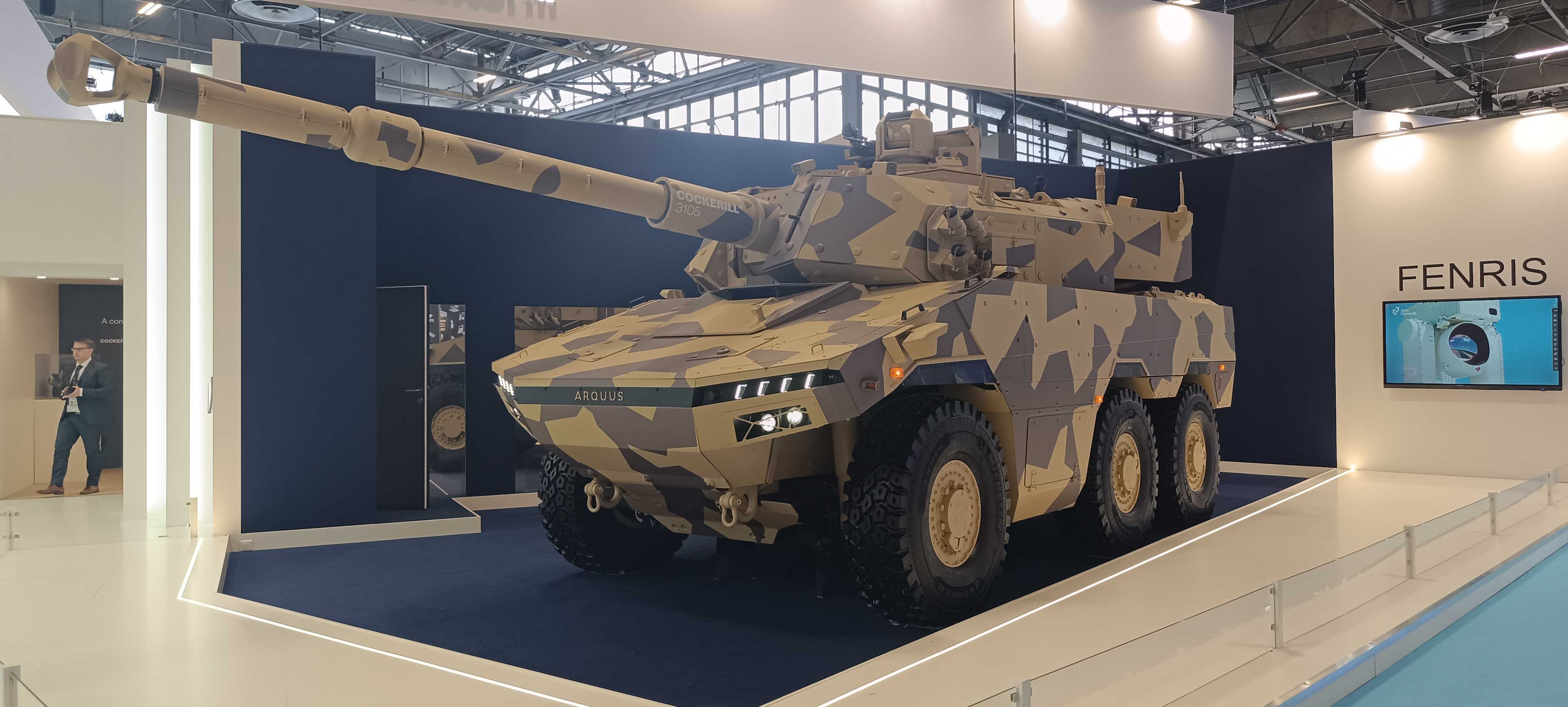
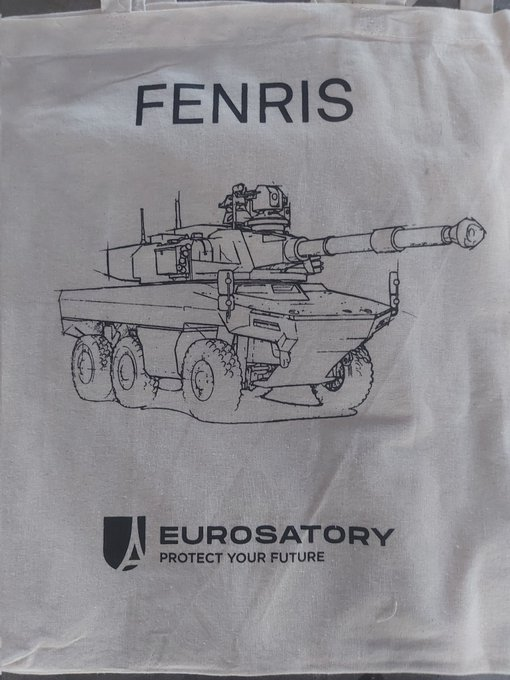
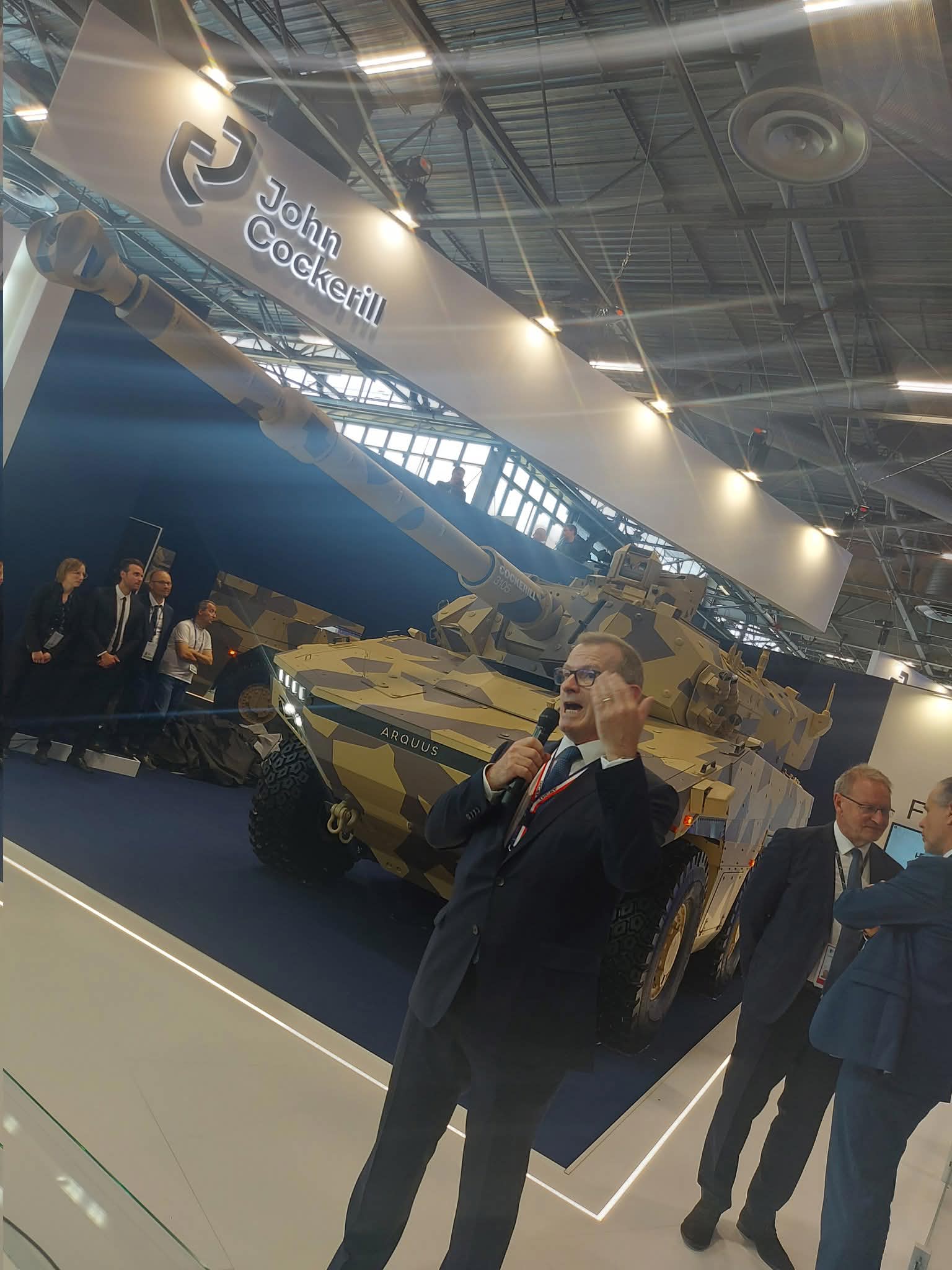
The completed vehicle was officially unveiled during Eurosatory 2026 under the name Fenris. Presented jointly by Arquus and John Cockerill Defense, the vehicle immediately attracted considerable attention as the first armored fighting vehicle fully developed within the newly unified group. During the exhibition, company representatives emphasized the vehicle’s combination of mobility, firepower, and strategic deployability, describing it as a modern fire support vehicle positioned within the same operational family as the AMX-10RC while benefiting from decades of technological progress.
Additional information released during and after Eurosatory indicated that hull and turret integration had already been completed and that live-fire testing was expected to begin shortly thereafter. The vehicle is currently being marketed as a highly mobile fire support platform for both existing Jaguar operators and export customers seeking a lightweight alternative to larger wheeled gun systems.
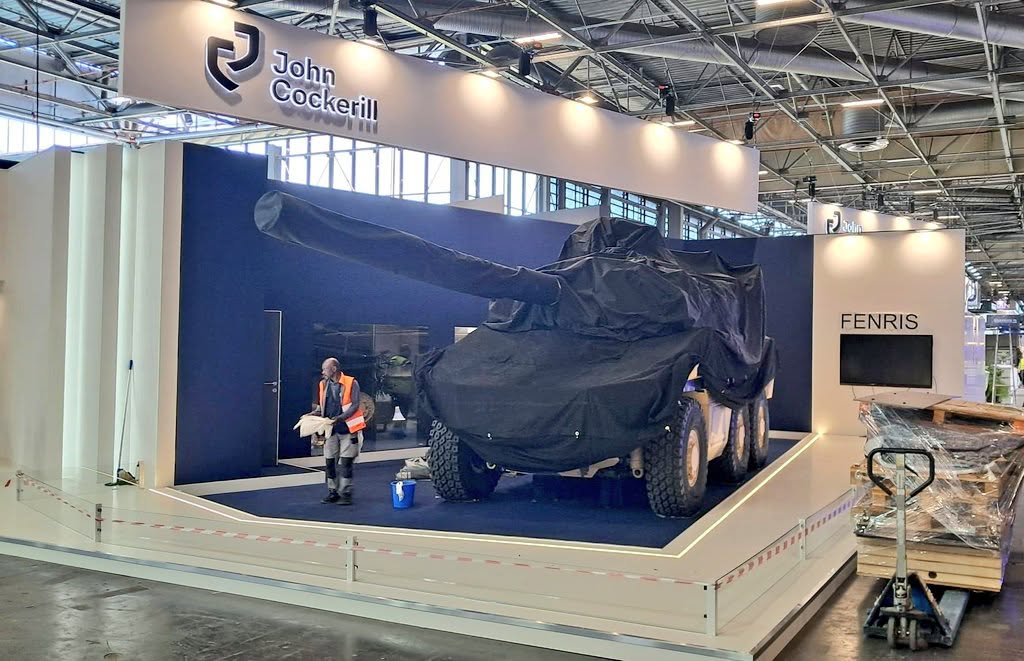
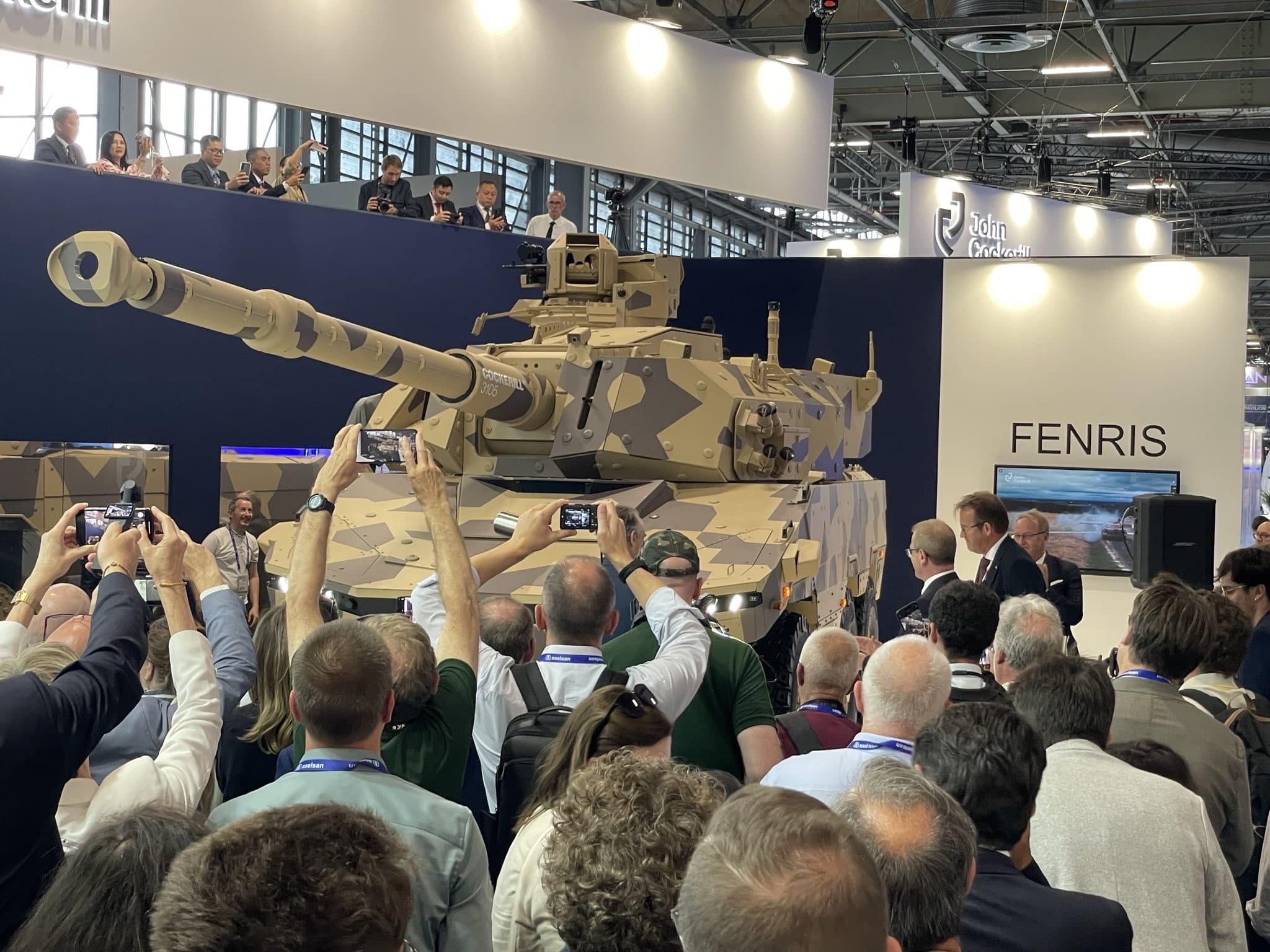
Design and Layout
Vehicle Architecture
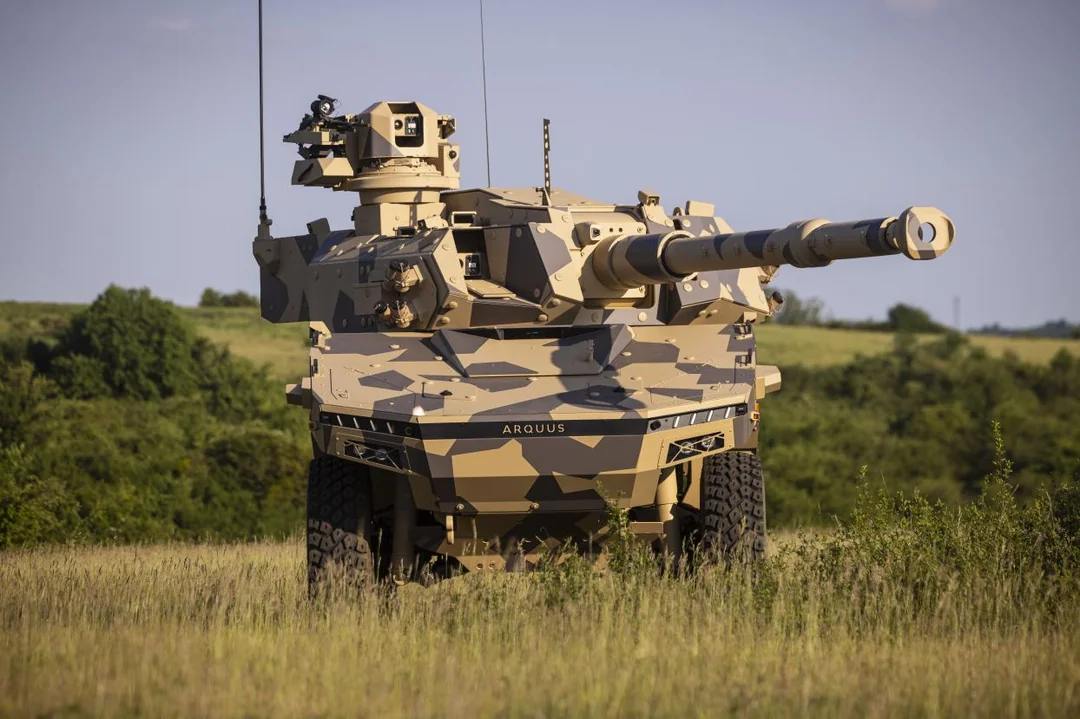
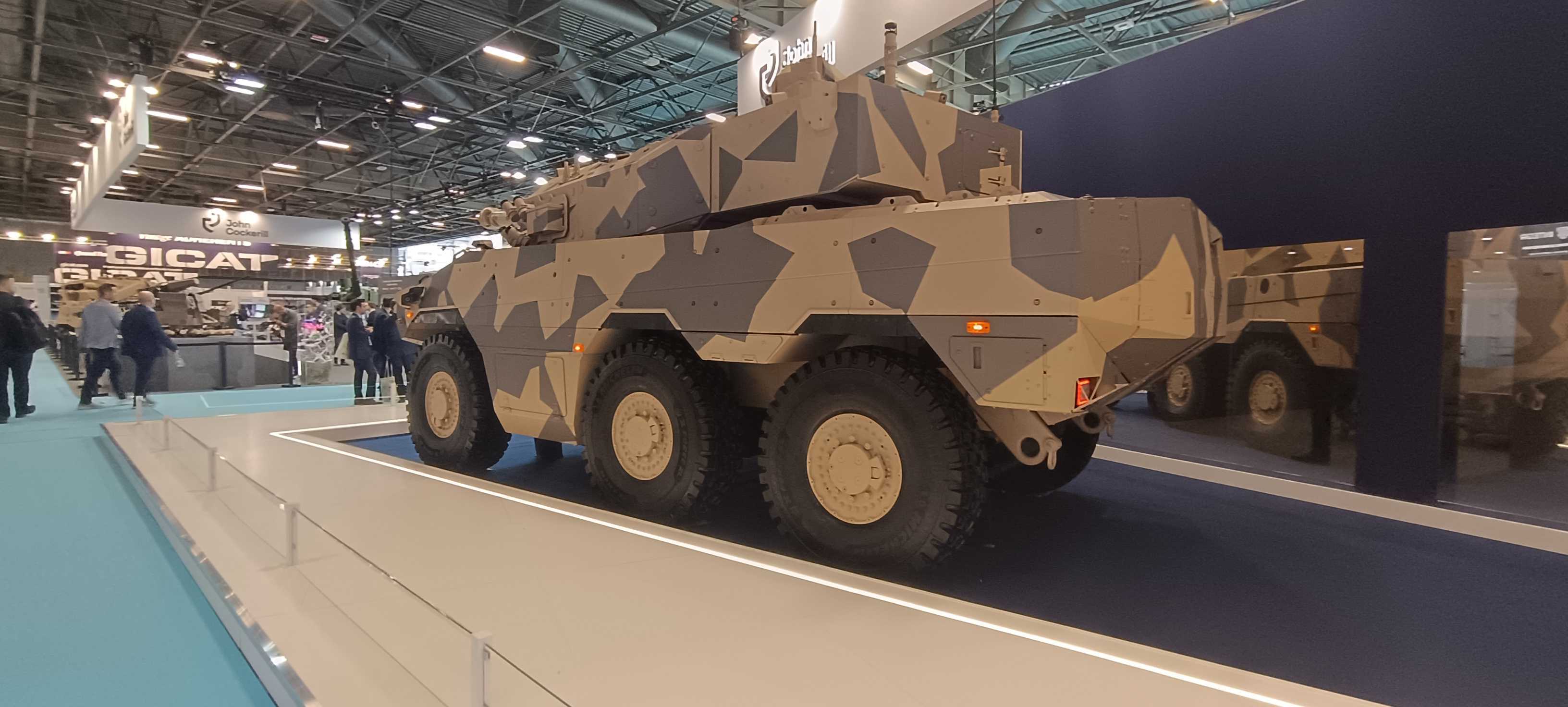
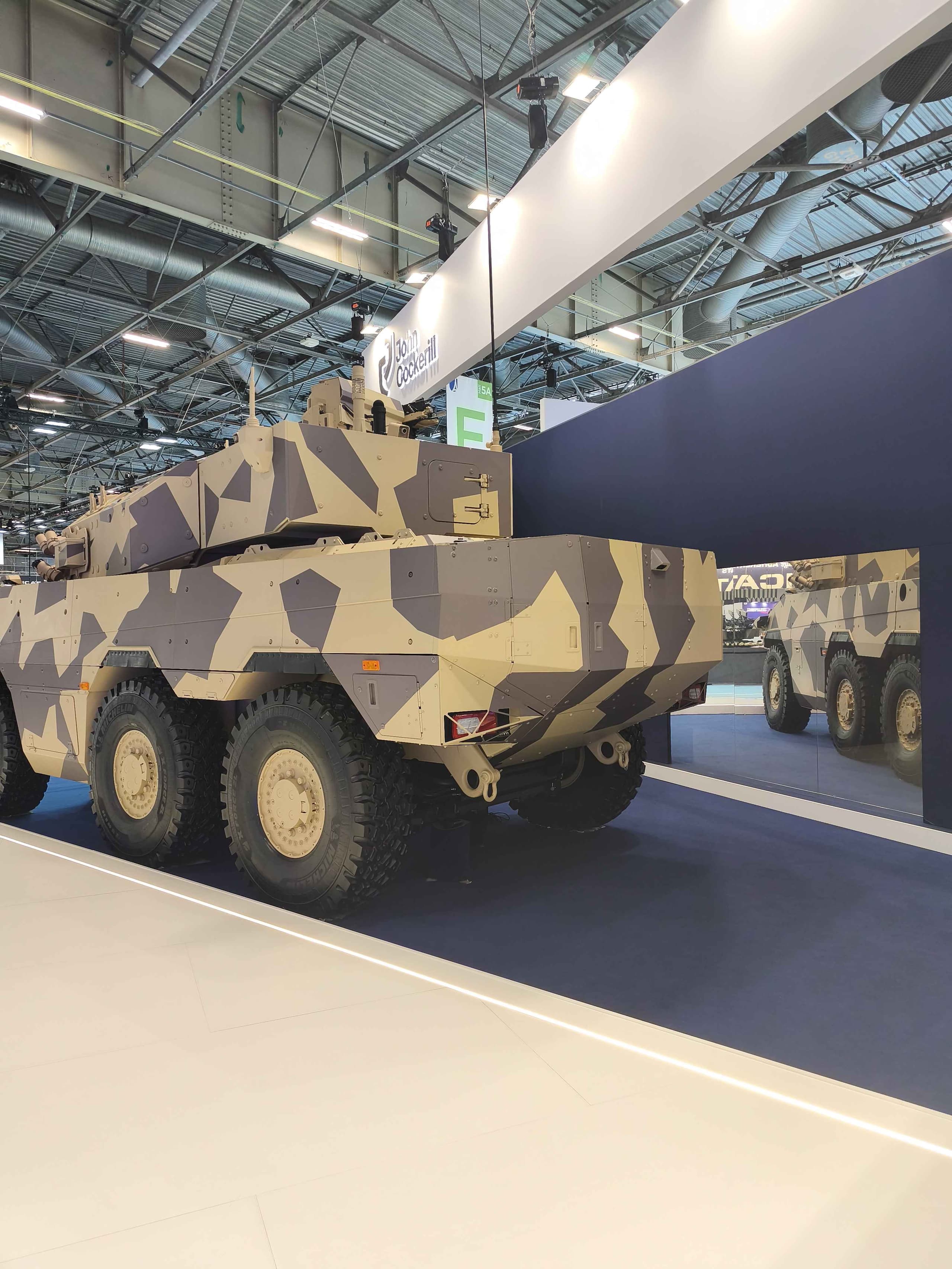
The Fenris is not simply a Jaguar fitted with a larger turret. While it retains key automotive components from the EBRC Jaguar, including its powerpack, drivetrain architecture, axles, and variable-height suspension system, the vehicle utilizes a newly developed Arquus hull specifically adapted to accommodate the Cockerill 3105 turret and its associated ammunition storage requirements.
To integrate the larger turret basket, engineers modified the chassis layout by increasing the spacing between the first and second axles. This redesign provides sufficient internal volume for the turret ring and fighting compartment while preserving the mobility characteristics of the original Jaguar platform. The result is a purpose-built fire support vehicle rather than a simple turret conversion.
The vehicle retains a 6×6 configuration and continues to employ Jaguar-derived automotive systems, including the independent variable-height suspension. This suspension allows the vehicle to adjust ride height according to terrain and mission requirements, improving both cross-country mobility and firing stability.
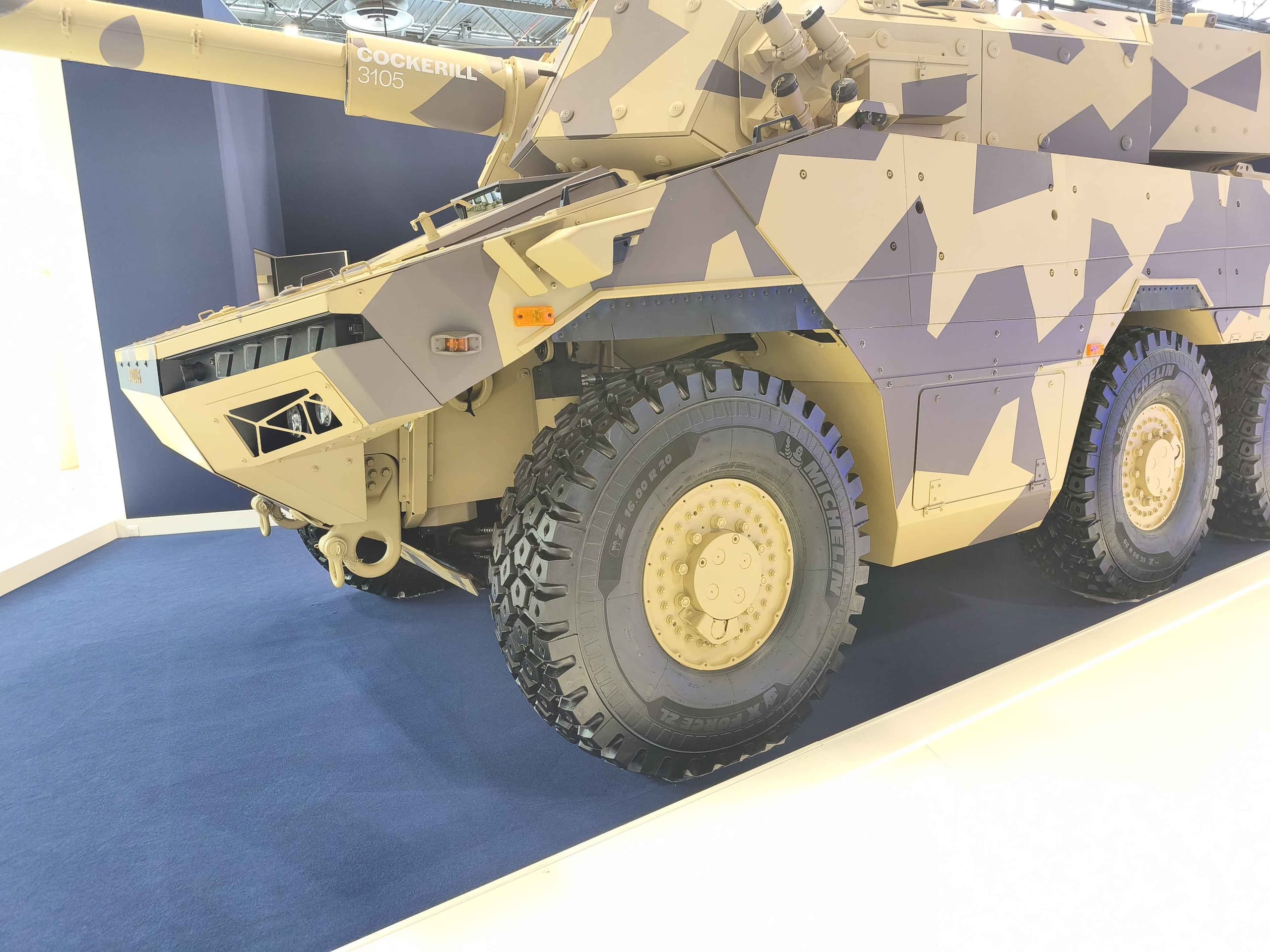
To support the increased combat weight, which is reported at approximately 26 tonnes gross vehicle weight, the Fenris adopts larger 1600R20 tires specifically selected to handle the higher axle loads generated by the 105 mm turret and ammunition load. The vehicle also incorporates an Electronic Stability Program (ESP), enhancing safety and handling during high-speed road movement.
The Cockerill 3105 remains a two-man turret operated by the commander and gunner, while the driver remains seated in the hull. Crew arrangement therefore remains:
- Driver
- Gunner
- Commander
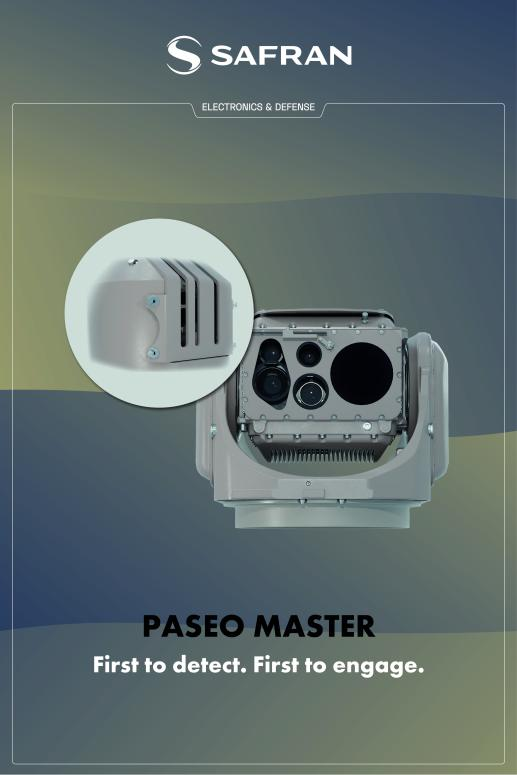
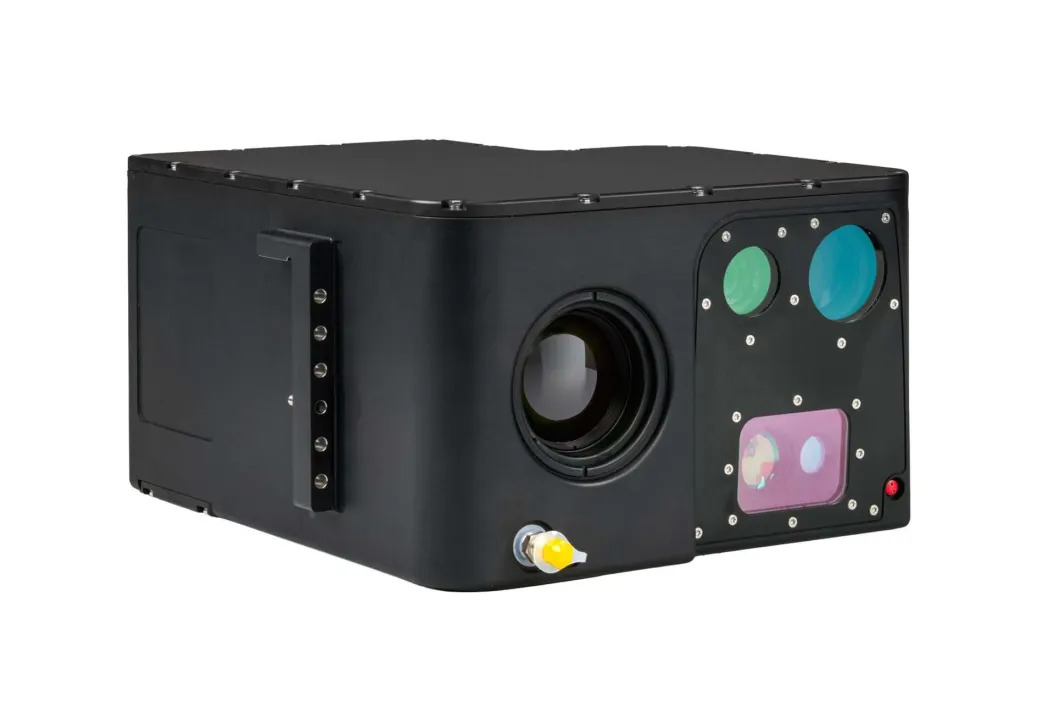
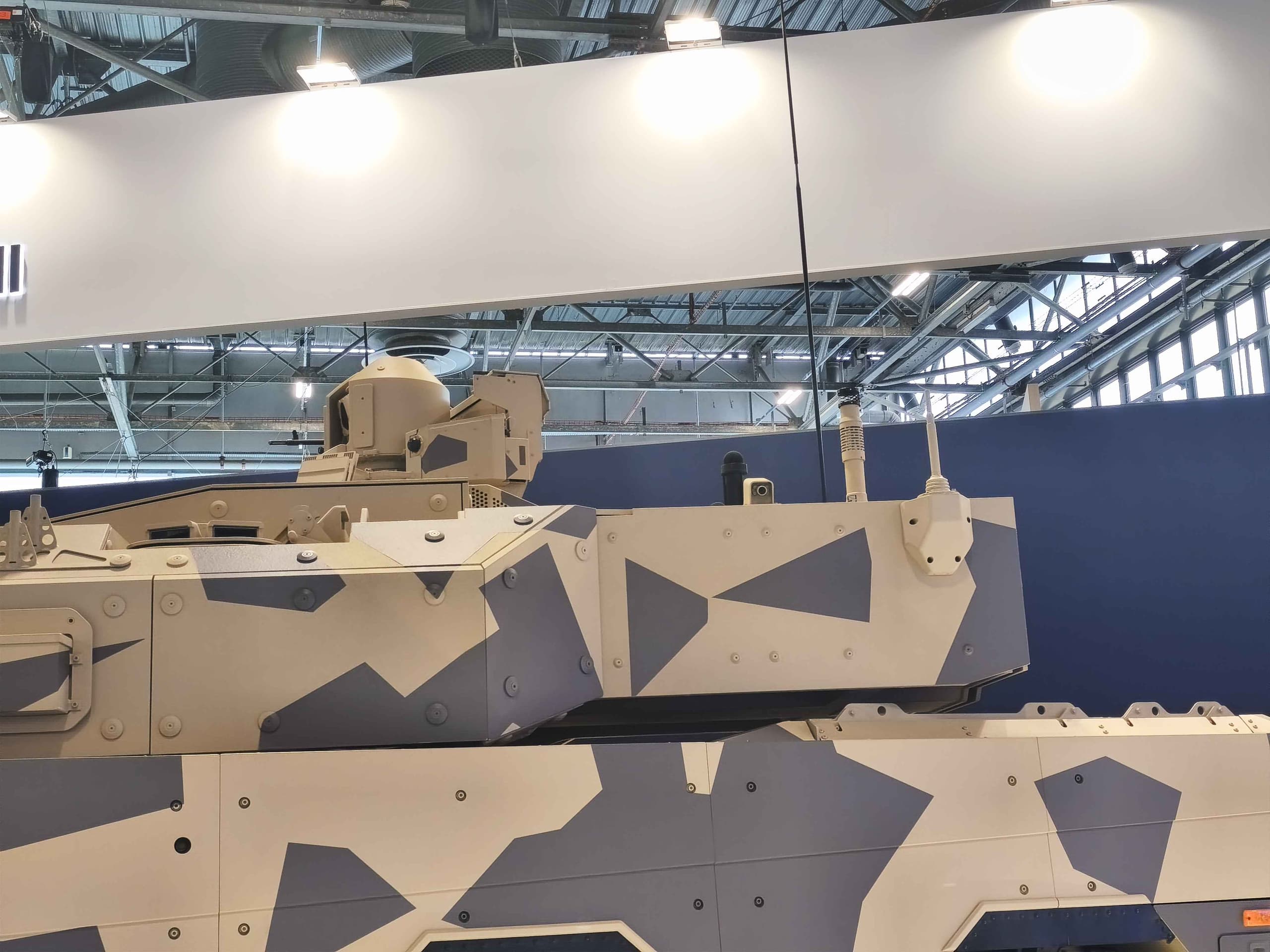
The vehicle benefits from a highly modern observation and fire-control architecture. The commander is equipped with Safran PASEO MASTER stabilized panoramic sights featuring thermal imaging, laser rangefinding, and hunter-killer functionality. The gunner with the IOP FINTIR, as seen below. Backup direct-view optical sights are also fitted, ensuring continued operation in degraded conditions.
IOP FINTIR
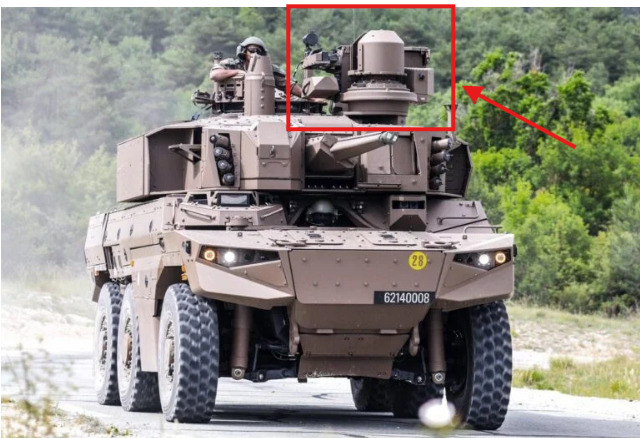
An additional feature inherited from the Jaguar family is the remotely operated Jaguar T3 weapon station mounted on the turret roof. This station incorporates a drone-detection radar, providing additional situational awareness against low-flying UAV threats.
Jaguar T3 weapon stationUnlike the standard Cockerill 3105 installation, gun elevation on the Fenris is reported to be limited to approximately +34°. This restriction appears to result from internal clearance requirements between the recoiling gun assembly and the turret basket integrated into the Jaguar-derived hull. Nevertheless, the vehicle still retains substantially greater elevation than most contemporary wheeled fire-support vehicles.
Despite mounting a full-size high-pressure 105 mm weapon, the Fenris remains significantly lighter than a main battle tank and is marketed as being transportable by the Airbus A400M strategic transport aircraft, preserving the expeditionary character of the original Jaguar concept.
Firepower
Main Armament
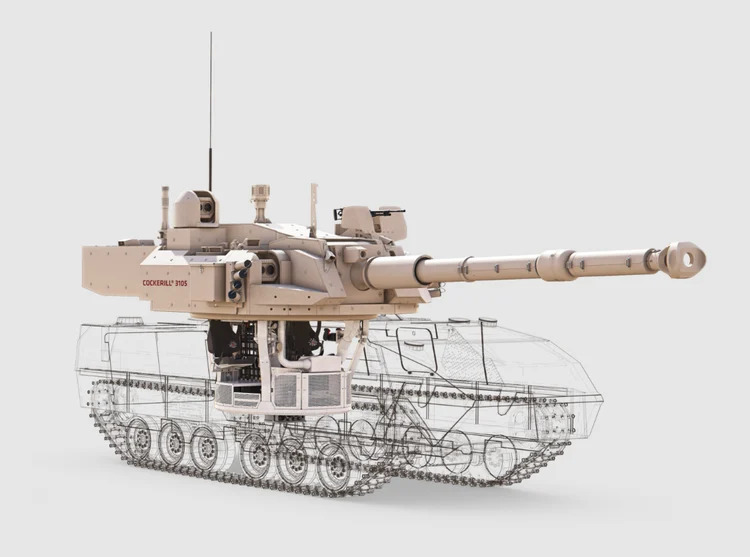
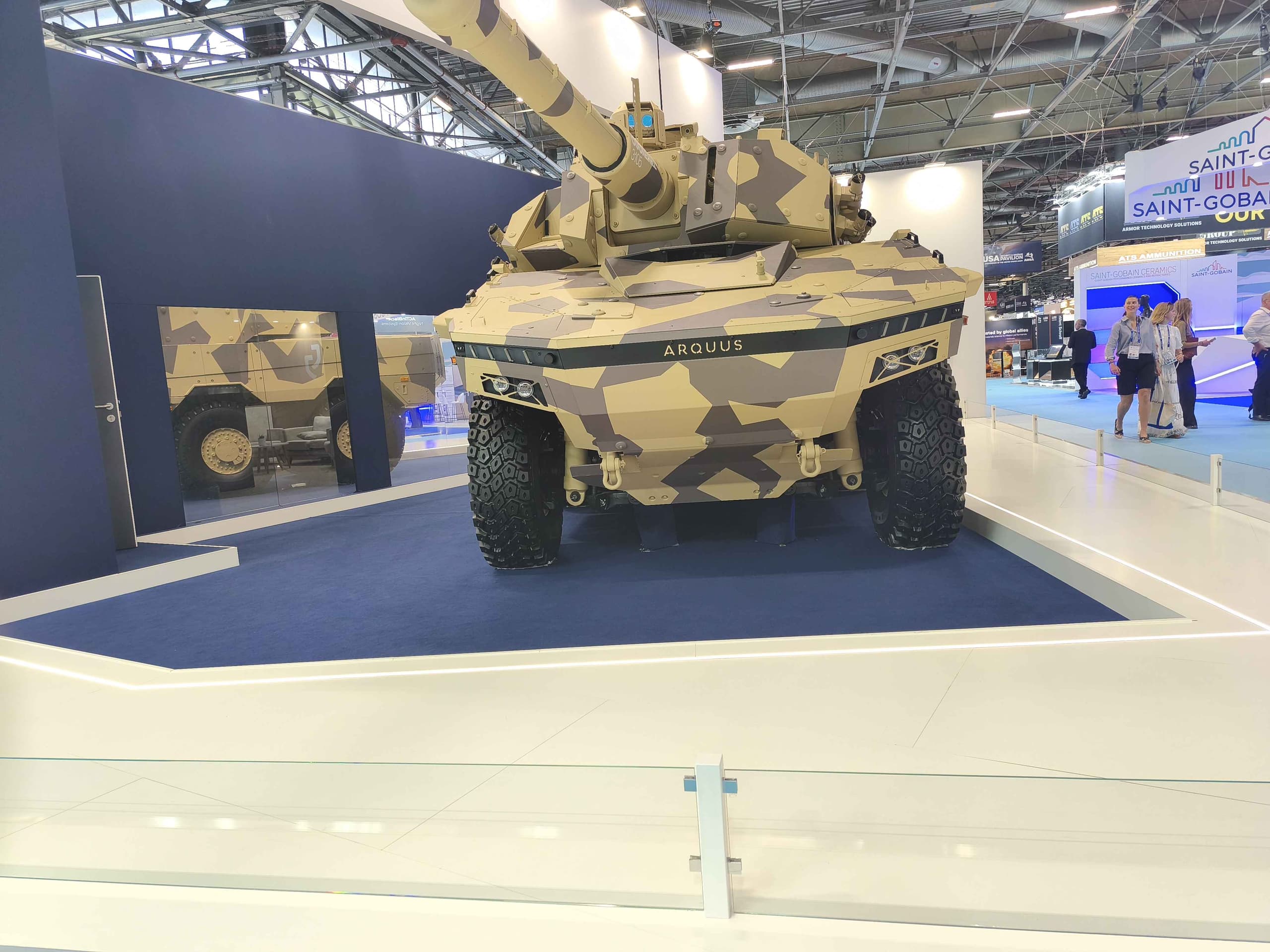
The primary armament of the Fenris is the Cockerill High Pressure 105 mm gun mounted within the Cockerill 3105 turret.
The weapon is served by a fully automatic loading system holding 12 ready rounds within the turret bustle. According to John Cockerill Defense, the autoloader is capable of maintaining a firing cycle of approximately five seconds regardless of vehicle movement or crew fatigue.
A major advantage of the Fenris compared to many contemporary wheeled gun systems is its ammunition capacity. Total ammunition stowage is reported at 36 rounds, distributed between the turret autoloader, internal hull storage, and rear ammunition lockers:
- 12 rounds in the turret autoloader
- 12 rounds stored within the hull
- 12 rounds stored in rear external lockers
This ammunition capacity is notably higher than that of several other modern wheeled fire-support vehicles while still maintaining a compact 6×6 platform.
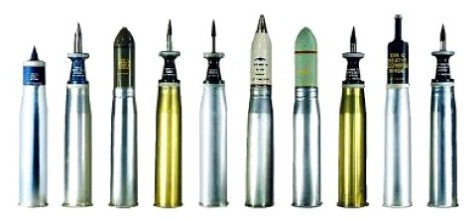
The gun is compatible with the complete family of NATO-standard 105 mm ammunition as well as the Falarick 105 gun-launched anti-tank guided missile.
Available Ammunition
Designation Type Velocity Manufacturer Claim M393A2 HESH 732 m/s ~127 mm penetration M1010 HE-T 700 m/s 2.0 kg Comp B filler M1061 HEAT-T 1173 m/s 400 mm penetration M1060A1 APFSDS-T 1510 m/s 400 mm @ 60° / 2000 m M1060A2 APFSDS-T 1460 m/s 440 mm @ 60° / 2000 m M1060A3 APFSDS-T 1560 m/s >500 mm @ 60° / 2000 m M1060CV APFSDS-T 1620 m/s 560 mm @ 60° / 2000 m Falarick 105 GLATGM 370 m/s >550 mm behind ERA M416 Smoke 732 m/s Smoke Screen The most powerful kinetic round currently advertised for the weapon is the M1060CV, specifically optimized for use with the high-pressure 105 mm gun.
In addition to conventional ammunition, the vehicle can fire the Falarick 105 gun-launched anti-tank guided missile. This missile uses a tandem-charge warhead and is advertised as capable of penetrating more than 550 mm of armor behind explosive reactive armor.
Secondary Armament
- 1 × 7.62 mm FN MAG coaxial machine gun
- Optional roof-mounted weapon station
Protection
Survivability
Although the Fenris is not intended to function as a main battle tank, it incorporates numerous survivability features common to modern armored fighting vehicles.
The turret can be protected up to STANAG 4569 Level 5 standards depending on customer configuration.
Protection systems include:
- Laser Warning Detection System (LWD)
- Acoustic Gunshot Detection System
- Eight smoke grenade launchers
- Optional Active Protection System (APS)
- Day/night 360° situational awareness cameras
- NBC protection
Like the standard Jaguar, the Fenris relies heavily upon mobility, sensors, and battlefield awareness rather than armor thickness.
Its ability to detect threats before being detected remains one of its primary defensive advantages.
Mobility
Mobility
Mobility remains one of the Fenris’ defining characteristics.
Although the vehicle employs a newly developed hull, it retains the proven Jaguar automotive architecture, including the original powerpack, drivetrain components, axles, and independent variable-height suspension system. This approach minimizes technical risk while preserving the mobility characteristics that made the Jaguar one of the most capable wheeled combat vehicles in European service.
1600R20 tiresThe Fenris has a reported gross vehicle weight of approximately 26 tonnes. To support this increase in weight, Arquus equipped the vehicle with larger 1600R20 tires designed to reduce stress on the running gear while maintaining good off-road performance.
The vehicle also incorporates an Electronic Stability Program (ESP), improving road handling and vehicle control during high-speed maneuvers.
Key mobility characteristics include:
- Combat weight: approximately 26 tonnes GVW
- 6×6 drivetrain
- Jaguar-derived powerpack
- Jaguar-derived axles
- Independent variable-height suspension
- Electronic Stability Program (ESP)
- 1600R20 heavy-duty tires
- Maximum road speed: approximately 90 km/h
- Operational range: approximately 800 km
One of the most notable aspects of the Fenris is that it achieves firepower comparable to many wheeled gun systems based on larger 8×8 chassis while retaining the more compact dimensions and reduced logistical footprint of a 6×6 vehicle. Combined with its advertised A400M transportability, this makes the vehicle particularly attractive for expeditionary and rapid-reaction forces.
Specifications
Characteristic Value Crew 3 Configuration 6×6 Combat Weight ~26 t GVW Main Armament 105 mm Cockerill HP Gun (7.62 mm co-ax) Secondary Armament Jaguar T3 RCWS (one 7.62 mm) Ammunition Capacity 36 rounds Ready Rack 12 rounds Reload ~5 seconds (autoloader) Gun Depression -10° Gun Elevation +34° Thermal Sights Commander & Gunner Primary Optics Safran PASEO MASTER (Commander) Gunner Optics IOP FINTIR Backup Optics Direct-view optics Laser Rangefinder Yes Hunter-Killer Yes Stabilizer Dual Axis Variable Suspension Yes Electronic Stability Prog. Yes APS Optional Drone Detection Radar Yes (via Jaguar T3 RCWS) Smoke Launchers 8 Maximum Speed ~90 km/h Range ~800 km Strategic Airlift A400M compatible (claimed)
Place in War Thunder
Implementation
The Fenris would fit naturally within the French ground forces tree due to its Franco-Belgian origins and its use of the Jaguar chassis.
The vehicle would likely occupy a position behind the Vextra or similar vehicles.
Gameplay would focus on:
- Exceptional mobility
- Fast autoloading 105 mm gun
- Advanced thermal sights
- Gun-launched ATGMs
- Excellent gun handling
- Powerful APFSDS ammunition
Compared to vehicles already present in War Thunder, the Fenris would most closely resemble a hybrid of the Rooikat 105, Boxer MGS, and M1128 Stryker MGS while possessing significantly more modern optics and fire-control systems.
A Battle Rating between 10.7 and 11.0 would likely be appropriate depending on ammunition selection.
With access to the M1060CV and Falarick 105, it could become one of the most capable wheeled fire support vehicles available to France.
Images


References
Sources
Manufacturer & Official Sources
Arquus. (2026). Arquus à Eurosatory 2026. Arquus Defense.
https://www.arquus-defense.com/arquus-eurosatory-2026-shaping-future-land-defenceArquus. (2026, 15 juni). [Eurosatory J1]. LinkedIn. #eurosatory2026 #arquus #défense | Arquus
Eurosatory. (2026). Fenris. Eurosatory 2026 Exhibitor Catalogue.
https://www.eurosatory.com/en/catalogue-details/?exhibitor=07e04d0e-9b6e-4d1c-bc2e-eecce6c7becaJohn Cockerill Defense. (2026). Cockerill 3105 technical specifications. John Cockerill Defense.
Cockerill® modular turret 3105 : Defense - John CockerillJohn Cockerill Defense. (2026). Cockerill 3000 series and 3105 product documentation. John Cockerill Defense.
Documents dedicated to suppliers - DéfenseCockerill, J. (2026, 15 juni). [Reveal FENRIS]. LinkedIn. [Reveal FENRIS] At the Eurosatory, on the John Cockerill booth, Jean Luc Maurange, CEO of John Cockerill and Thierry Renaudin, CEO of John Cockerill Defense proudly present the FENRIS, our… | John Cockerill
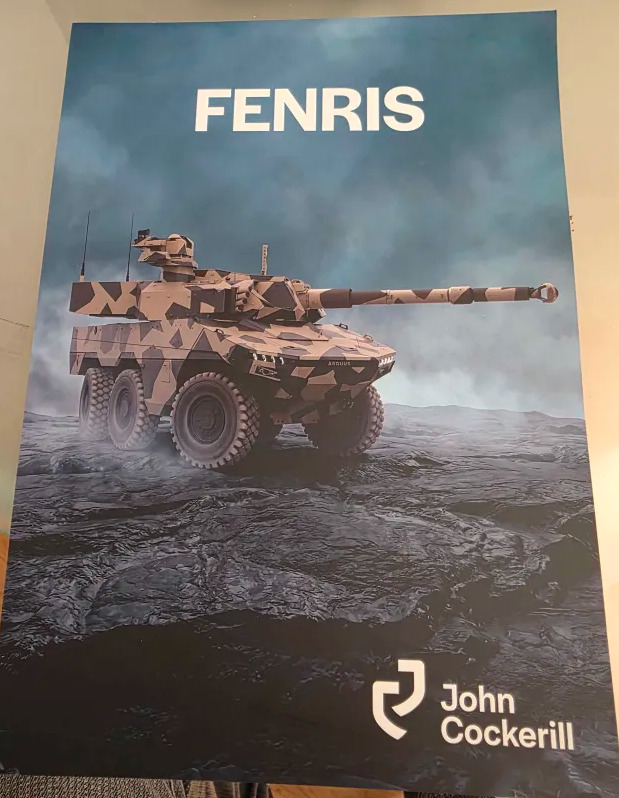
cover of JCD Flyer for FENRIS at Eurosatory
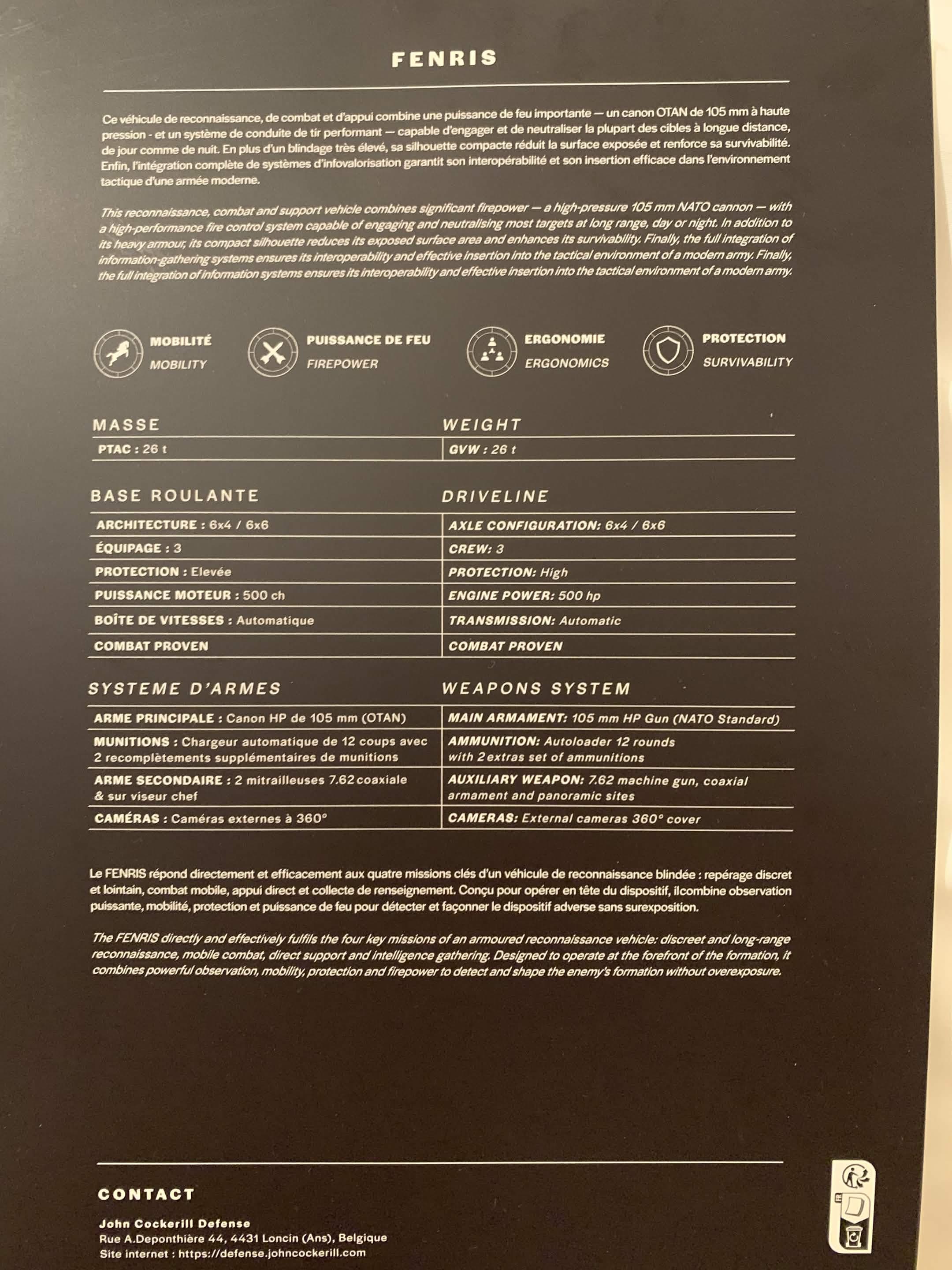
JCD Flyer for FENRIS at EurosatoryDefence Industry Reporting
BusinessAM. (2026, January 25). Frankrijk en België onderzoeken gepantserd voertuig met 105 mm kanon. BusinessAM.
Frankrijk en België onderzoeken gepantserd voertuig met 105 mm kanon - Business AMServaes, A. (2026, January 23). France and Belgium study 105mm gun variant of French Jaguar 6x6 combat vehicle. Army Recognition.
Social Media & Contemporary Reporting
Lamigeon, V. [@VincentLamigeon]. (2026, June 16). Eurosatory : John Cockerill et sa filiale Arquus présentent leur premier blindé commun basé sur une tourelle de 105mm, Fenris. Véhicule 6X6, gamme AMX-10RC, transportable A400M, livrable en 12 mois pour les clients pressés [Post]. X. Vincent Lamigeon on X: "Eurosatory : John Cockerill et sa filiale Arquus présentent leur premier blindé commun basé sur une tourelle de 105mm, Fenris. Véhicule 6X6, gamme AMX-10RC, transportable A400M, livrable en 12 mois pour les clients pressés https://t.co/2dmSWMeUMD" / X
DefenseWebTV. (2026, June 16). Top Military Technologies Unveiled at Eurosatory 2026 | Day 1 Highlights [Video]. YouTube. https://www.youtube.com/watch?v=jM4ki2l-Um4
DefenseWebTV. (2026b, June 17). John Cockerill Defense Demonstrates Advanced Turret Integration on Armored Vehicles Eurosatory 2026 [Video]. YouTube. https://www.youtube.com/watch?v=1yq_BxLkEN8
Independent Analysis & Commentary
Blablachars. (2026, January 16). Initiative franco-belge. Blablachars.
Blablachars. (2026, April 22). Le Jaguar 105 dévoilé à Eurosatory. Blablachars.
Christina Mackenzie (2026, June 15). France’s Arquus unveils new 6×6 meant to carry big guns breakingdefense. France's Arquus unveils new 6x6 meant to carry big guns - Breaking Defense