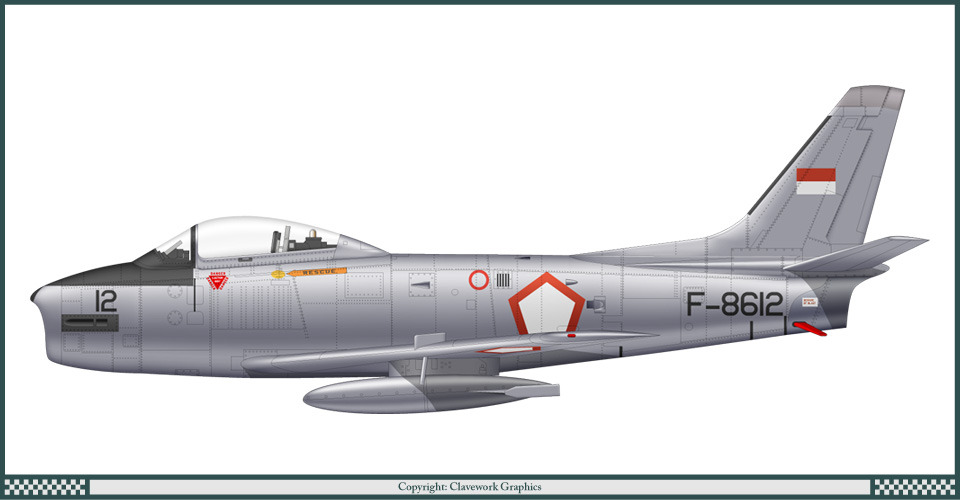
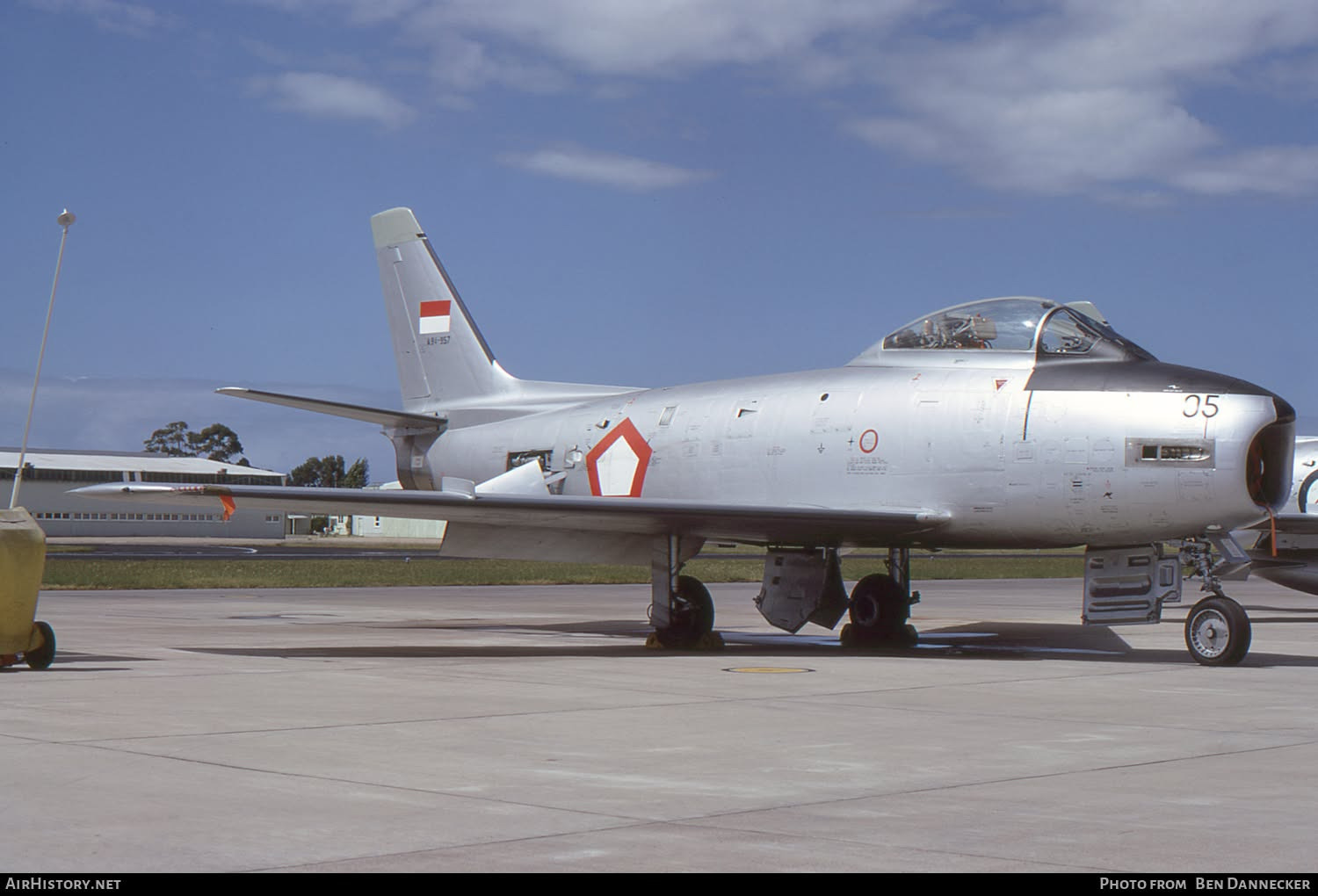
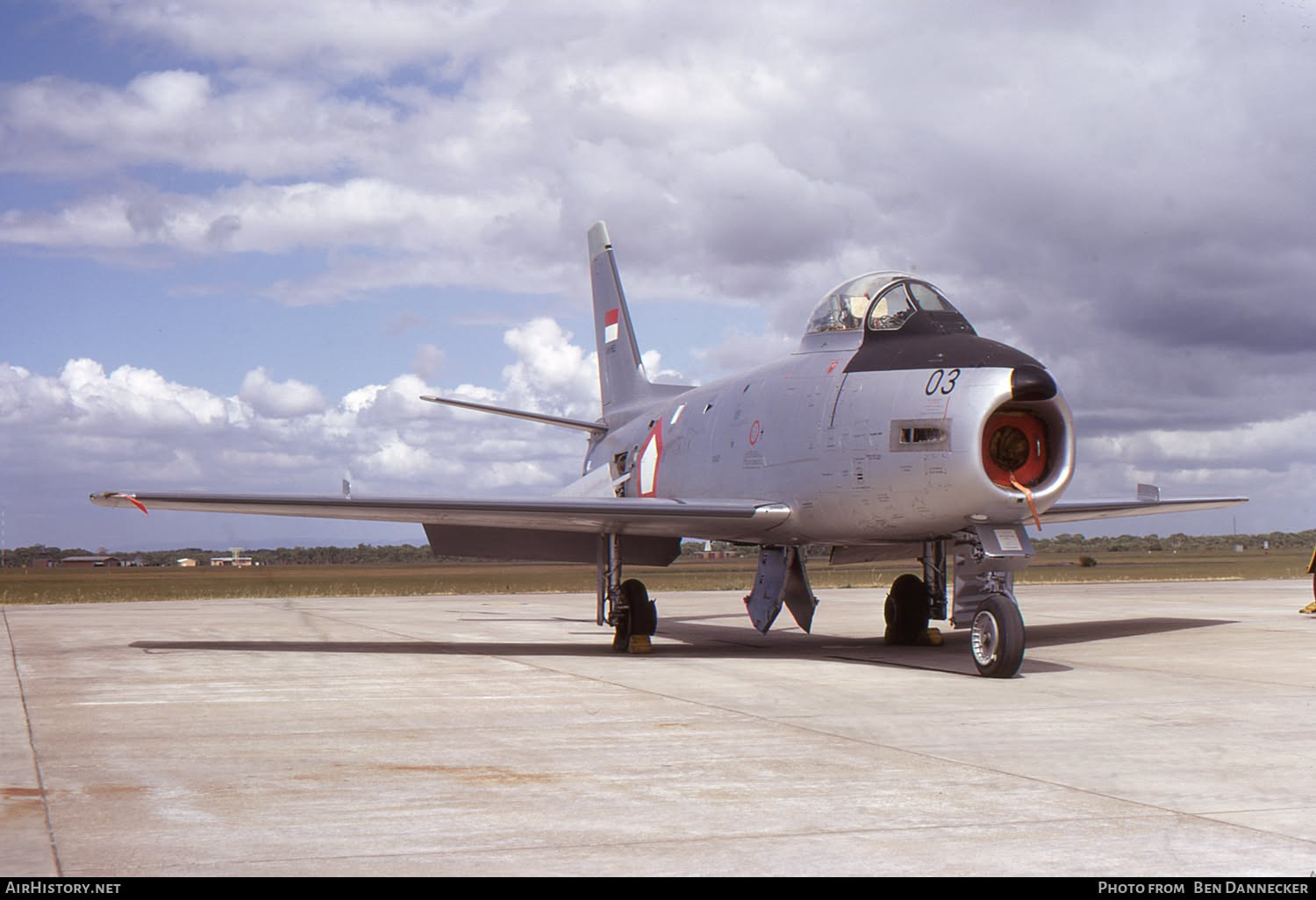
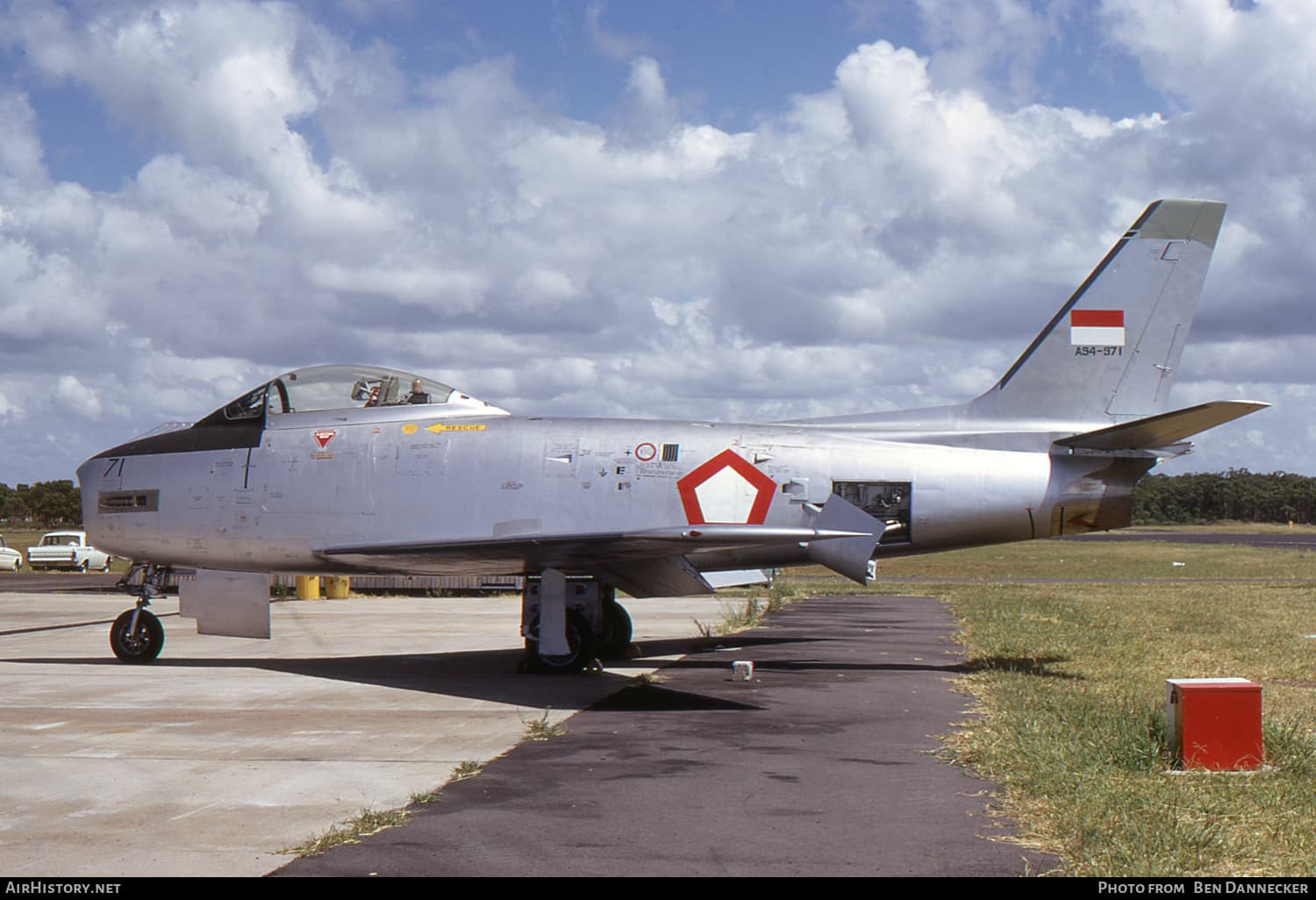
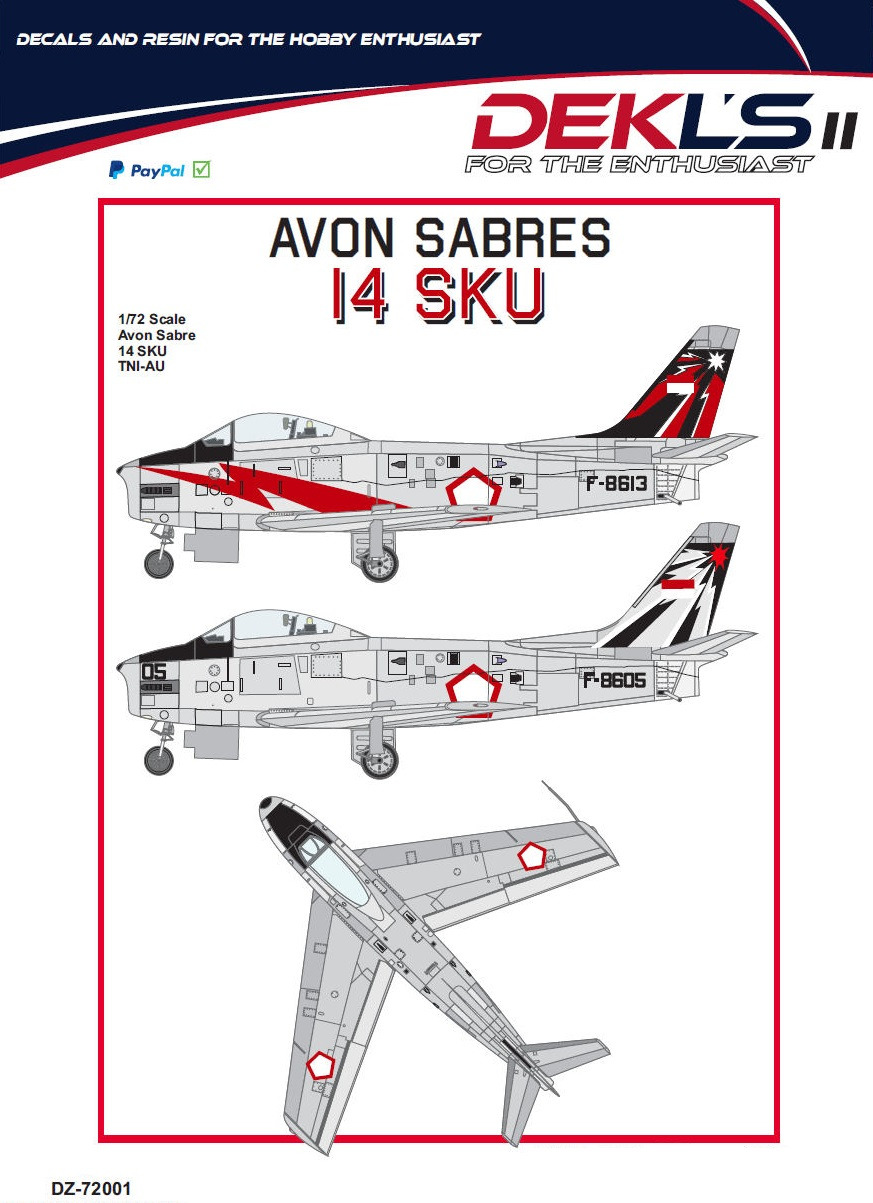
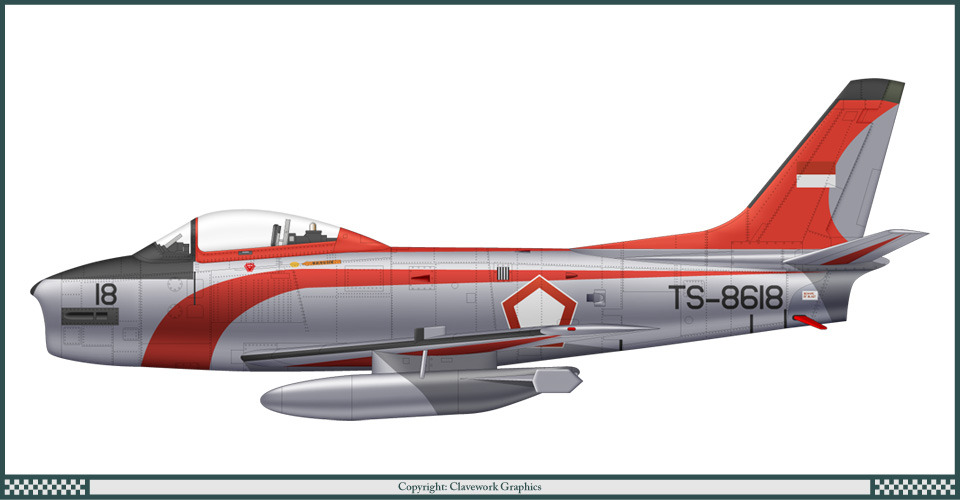
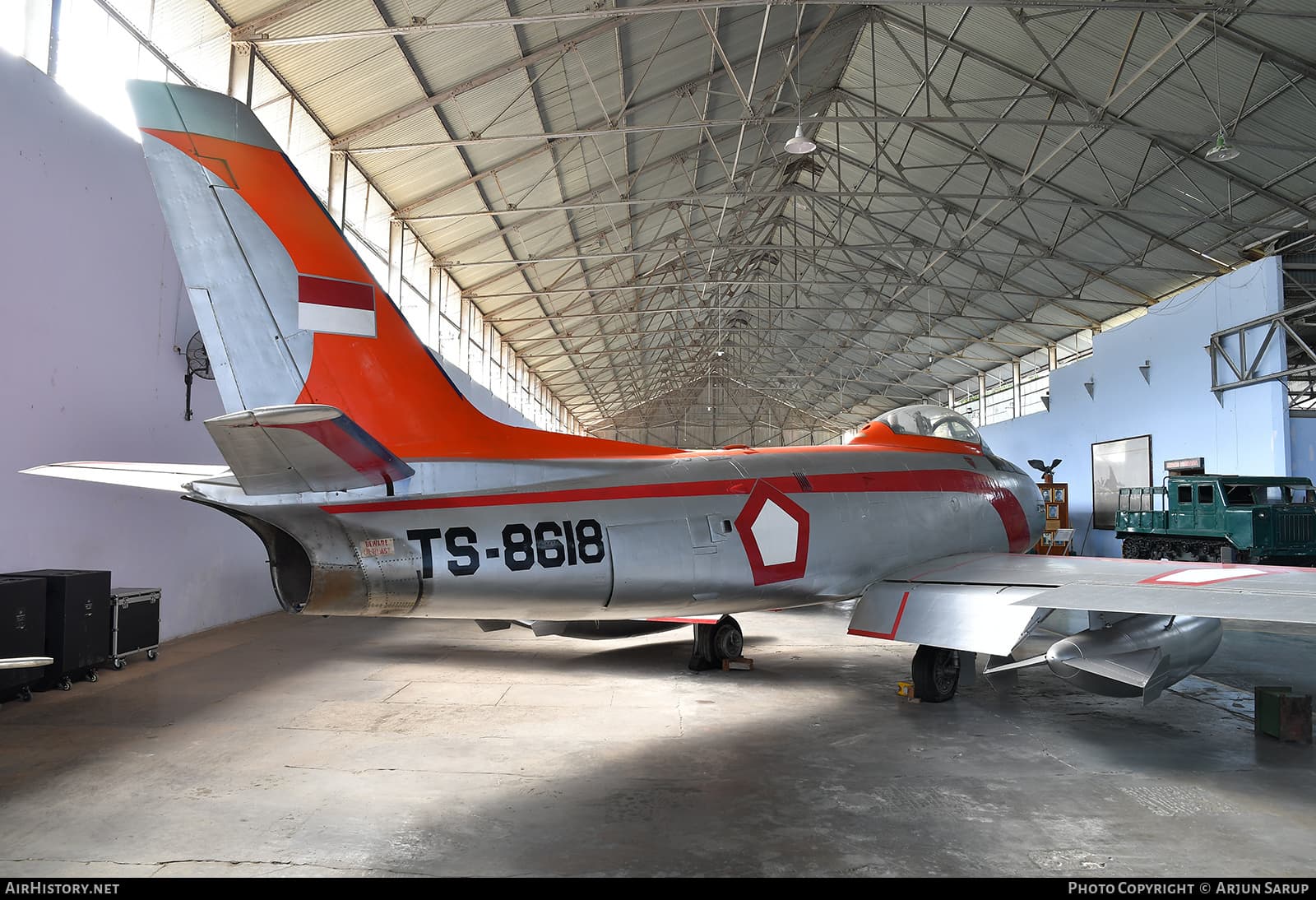
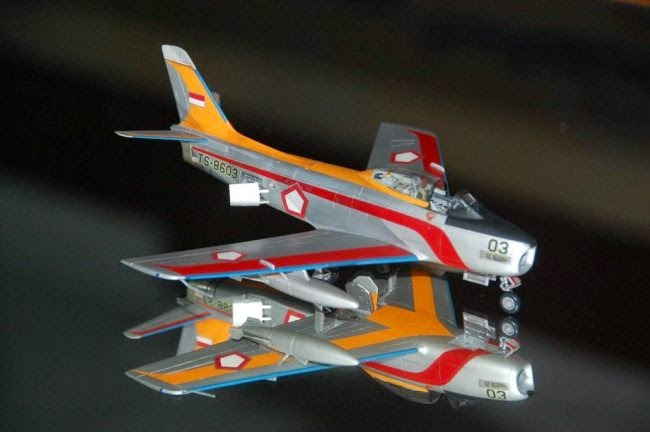
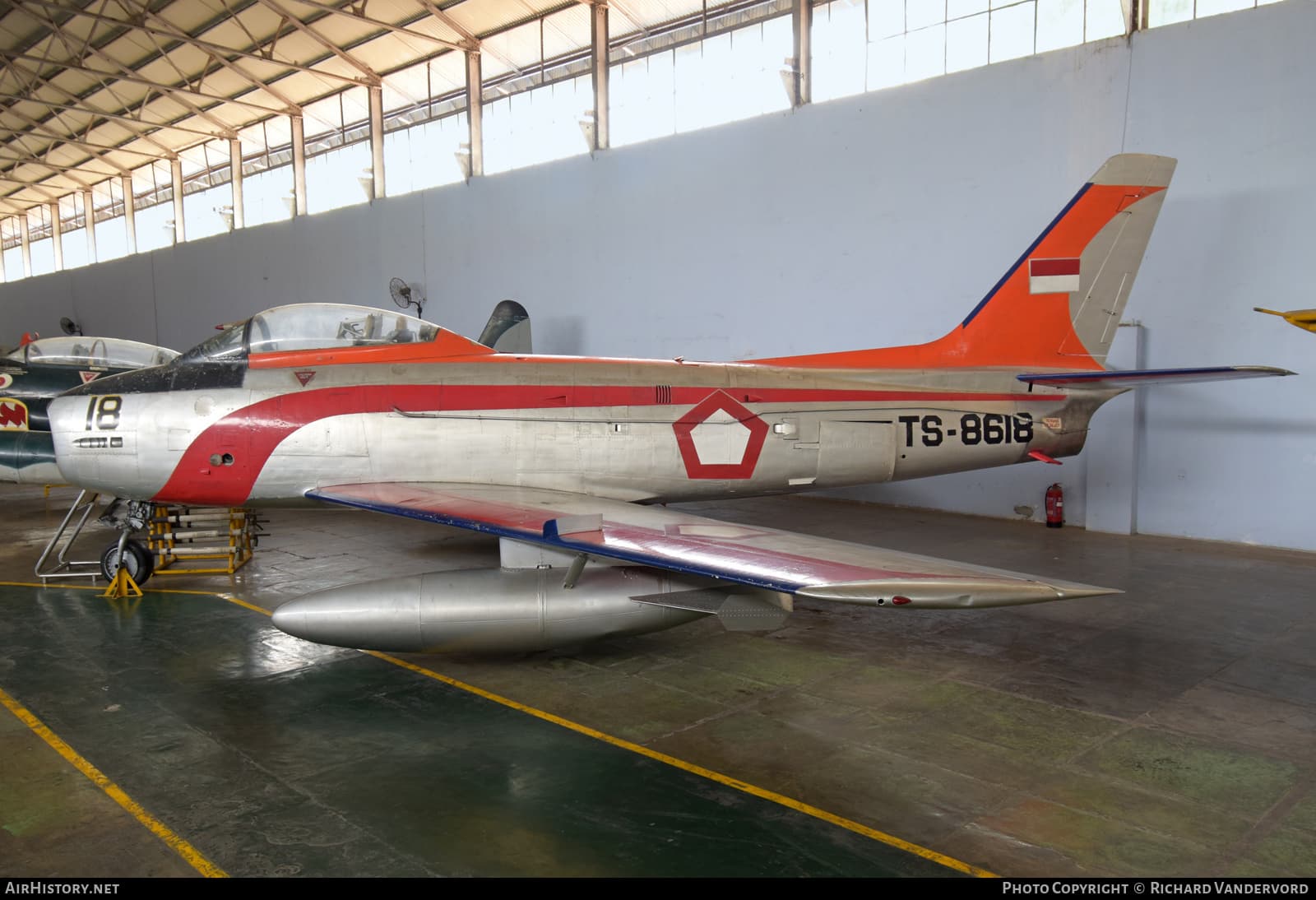
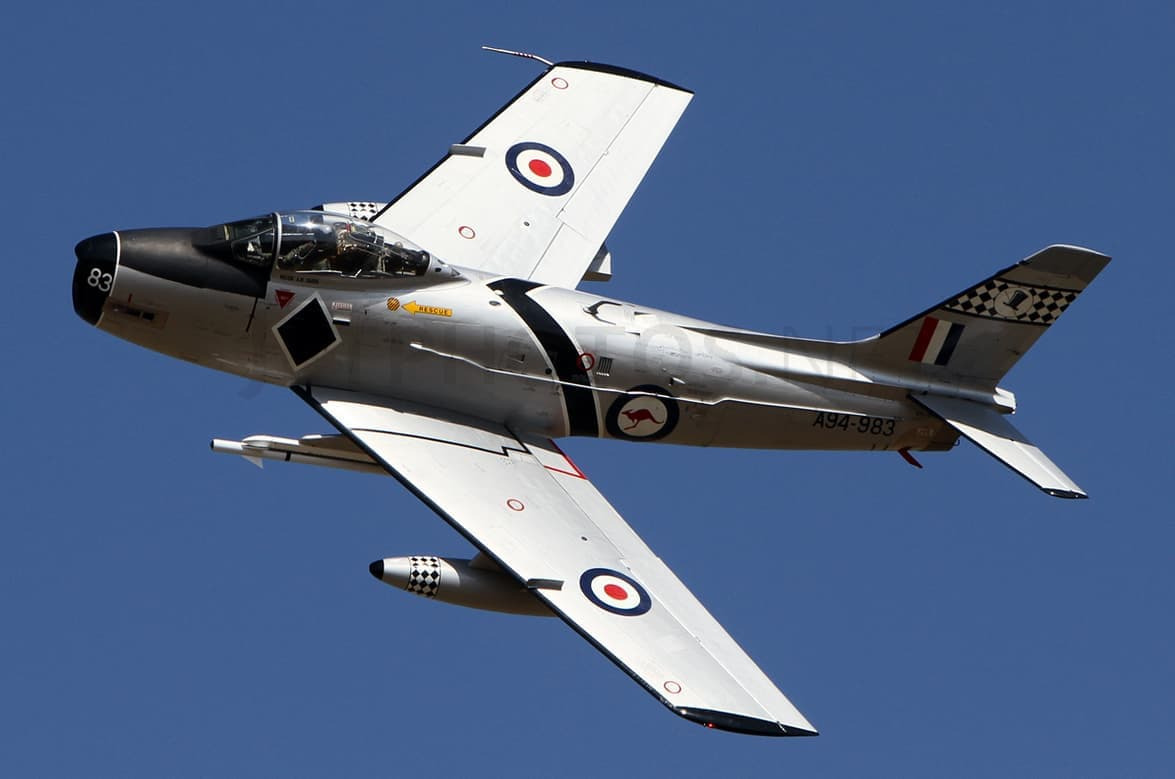
Hello everyone! Today I would like to suggest the Indonesian CAC Avon Sabre. This specific variant was handed over without armament by the Royal Australian Air Force to their Indonesian Counterparts. However, with efforts by the Indonesian Air Force’s Puslitbang (Research and Development Center), the gun was able to be reactivated. Additionally the plane was modified to carry the 80mm SURA-D rockets under its wing. While sources states that the aircraft can carry AIM-9 sidewinders missile, its unclear exactly whether this is 100% accurate for the Indonesian jets since there has been no evidence of them carrying the missiles while in-service.
The CAC Sabre is an Australian development of the F-86, while the original design looks similar, its performance can make it be classified as a new aircraft entirely. A large part of the airframe was redesigned to fit its new and more powerful Avon engines. Armament wise there was also a switch of the original .50 cals to a 30mm ADEN cannons.
In terms of its performance in game, with the assumption that the missiles are omitted, this vehicle could be placed at Rank 5 with a BR of ~ 8.3 - 8.7 for Indonesia in the Japanese tree. Of course if given the missiles then the BR should be increased accordingly. This could be placed as a tech-tree vehicle in the empty line 4 or as a premium/event/squadron vehicle.
Details
Towards the end of 1949, the RAAF understood that its first jet aircraft would need to be replaced by a more modern design. A number of existing and proposed aircraft were considered, but in the end the Gloster Meteors was bought from the UK and went almost immediately into service in Korea with the no.77 Squadron. The Australian Government of the time wanted an aircraft designed from the UK to be license-built by Commonwealth Aircraft Corporation (CAC) in Australia. Several designs were proposed but the development times were deemed far too long for the RAAF. Lawrence Wackett from CAC determined that it would be best to combine the American F-86 airframe to the more powerful Rolls-Royce Avon Turbojet engine. In 1951, plans were finalized for CAC to built a new aircraft based on the design of the F-86F with a slatted wing.
The design would replace the original The new dimensions of the engine meant that the fuselage would require changes, such as a larger nose-intake to improve the front intake flow, as well as moving the engine mounting further to the back to maintain its center of gravity. Other improvements were also made to the design, namely an increased fuel capacity, a new cockpit layout, and a switch of the primary armament from six (6) .50 cals to two (2) 30mm ADEN cannons.
Experience in Korea proved that the original machine guns were not sufficient for its modern role, where the high closing rate of fighters of the time meant that firing windows were quite short, and one short burst should knock out the enemy. The initial choice for the new armament was four 20mm Hispanos, the same as the meteor, but eventually it was decided to use two 30mm ADEN cannons instead. The cannons has a rate of fire of 1200/1400 rpm.
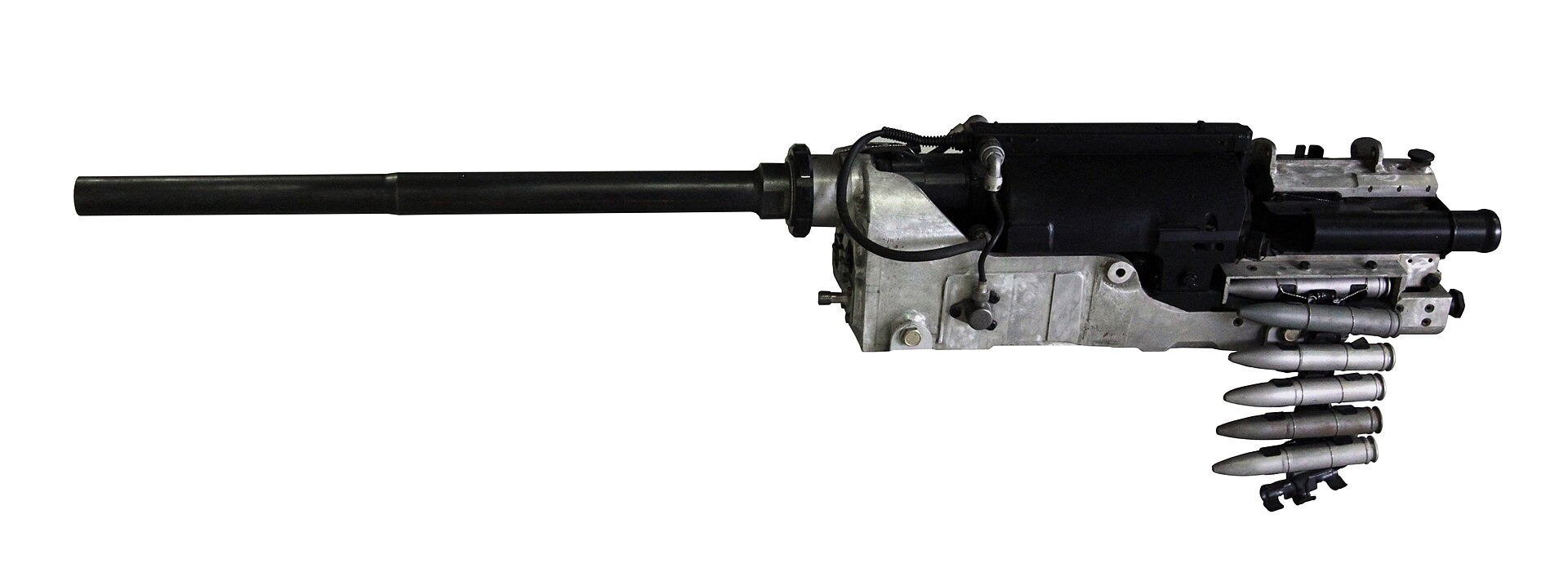
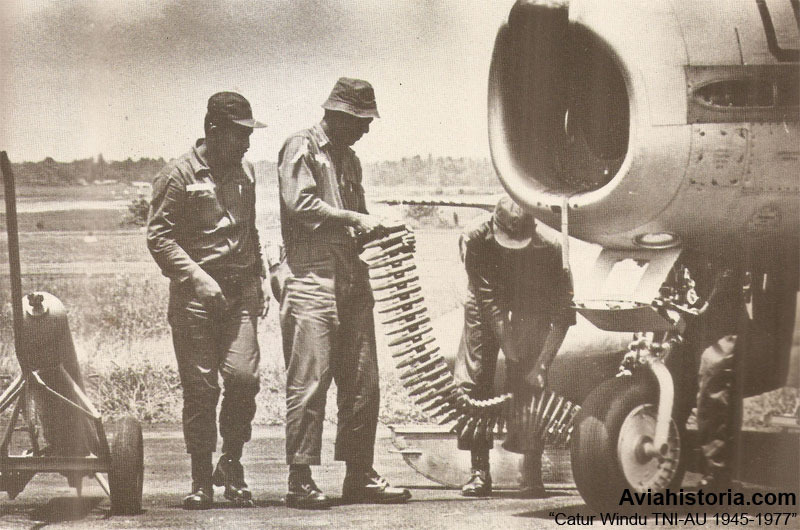
30mm ADEN Cannon
All these changes resulted in the aircraft acting as its own new aircraft with its own performances, while looking similar to the original F-86 it was derived from. The first prototype, designated as the CA-26 was delivered in August of 1953, deliveries of the production aircraft, designated as the CA-27 Mk.30 began a year later. After that a further 21 Mk.30s were produced. These airframes had an imported Avon engine and leading edge slats
CAC Sabre Prototype
The next series of CAC Sabres, designated as the Mk.31 started being produced in 1955, with 20 units fully delivered by 1956. Compared to the Mk.30s, the Mk.31 uses the Australian-built CAC Avon Mk.20s engines. This new Mk.31 design included a change to the wing due to experiences in the Korean War. The original wing was replaced with a new design called the 6/3 wing. The dropout slats was removed as it had a tendency to asymmetrically deploy while rolling at high altitude. The wing cord was also increased by 6 inches at the root and 3 inches at the tip. The new wing also incorporated wing fences. This addition helped give the aircraft better performance at high altitude/high mach numbers. Later versions of the Mk.31 also has increased fuel capacity in the leading edge itself. Additionally provisions for Drop-tanks, bombs and rockets were also added. All of the older Mk.30s were eventually upgraded to this Mk.31 standard.
RAAF CA-27 Mk.31 Sabre (A94-942).
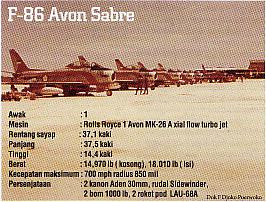
The Final and definitive variant of the jet was the Mk.32. Totaling with 69 aircrafts, the first deliveries began in 1956, and fully completed at the end of 1961. These aircraft had an updated version of the 6/3 wing, four hardpoints total, with 2 under each wing (the Mk.31 only had 2x total), which allows the new version to carry both a bomb load and long range droptanks. The jets also received a new redesigned Avon 26 engine with improvements in airflow to prevent surging when the guns were fired.
The jet was originally installed and tested with the British-designed Firestreak Air-to-Air Missiles, however further development was not carried out, as it requires significant changes to the airframe and internal wiring. Instead the American AIM-9B Sidewinder was fitted instead, since it doesnt require any changes to the airframe and was in effect a bolt on installation.
For Ground-attack role, the jet could also carry two drop tanks (either 100 gallon or 167 gallon), two bombs up to 1000lbs each, as well as provisions for either eight (8) or twenty four (24) HVARs depending on the warhead size. While the four drop tanks can be carried, it provides extra drag which negates all the benefits of the droptanks, and as such usually a maximum of two is used.
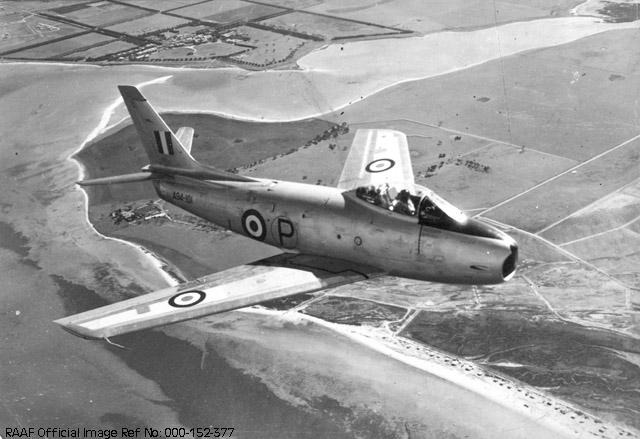
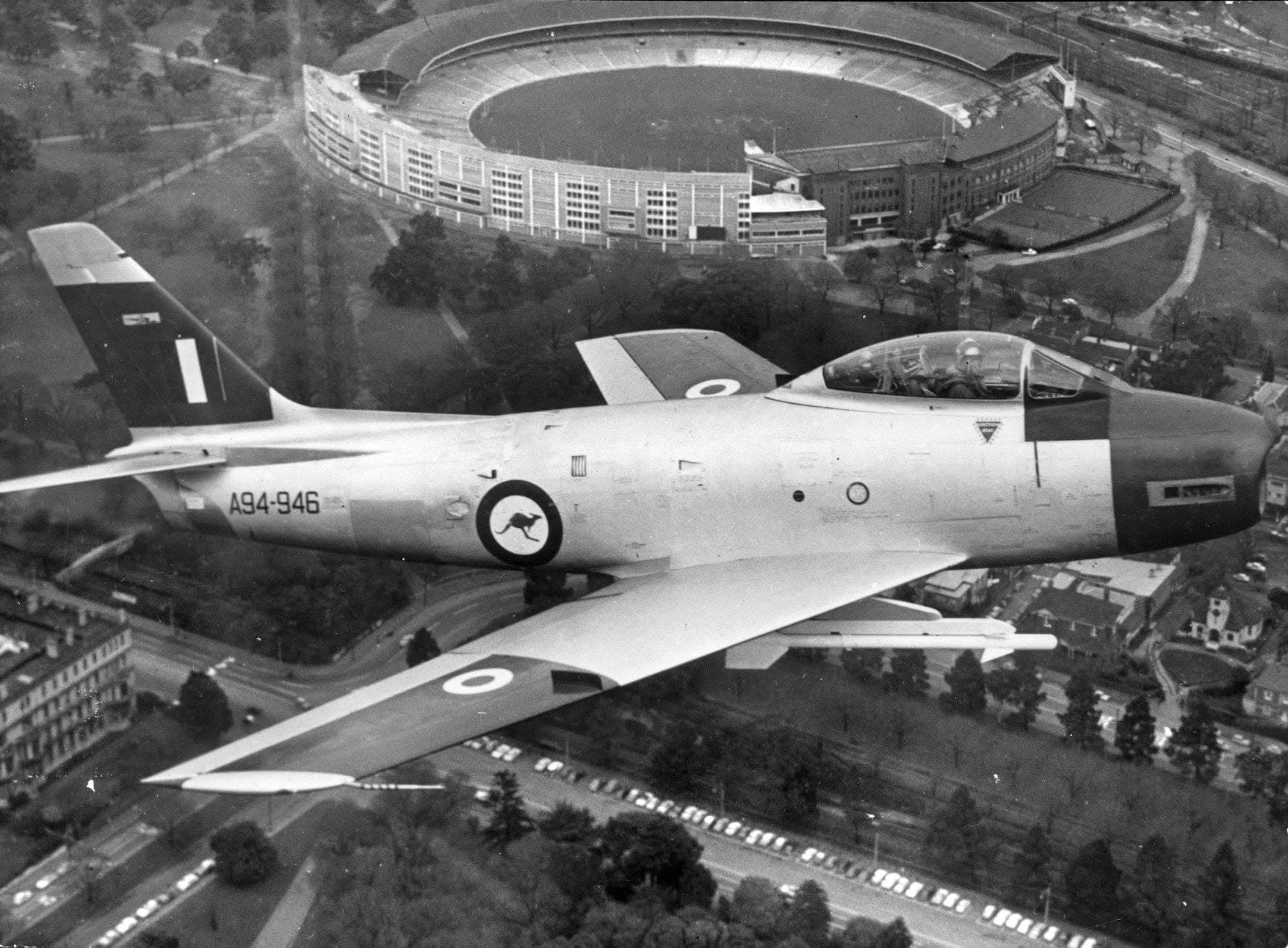
CA-27 A94-946 of the RAAF’s Air Research & Development Unit (ARDU) flying over Melbourne Cricket Ground with an AIM-9 Sidewinder during flight testing
During RAAF service the jet was operated by many different units, namely No.3, No.75, No.76, No.77, No.79 Squadron. Additionally the aircraft was also used by the No.2 OCU, No.5 OTU and the ARDU. The jet served at various airbases within Australia as well as outside, where it saw active service at Butterworth, Malaya during the “Emergency”, “Confrontation”. The jets was also stationed at Ubon, Thailand during the Vietnam War. Eventually, the CAC Sabres were retired in July 1971 when their roles were taken over by the Dassault Mirage III.
No.79 Squadron’s CAC Sabre equipped with AIM-9 Sidewinders at Ubon, Thailand During the Vietnam War (1966).
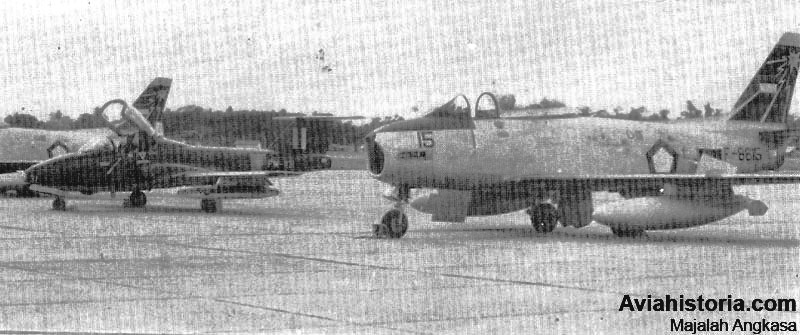
During the time of the Suharto’s New Order Regime, the Indonesian Air Force’s once superior air fleet had become destitute. Because of the violent communist purges, relations with the Eastern Bloc nations collapsed, and as such the Nation failed to secure spare parts to keep the predominantly Warsaw Pact airframes operable. The consolidation of Suharto’s power, which focuses on the Army, had also contribute to the desolate status of the Navy & Air Force’s Political power. Nevertheless, after a series of crashes of the older MiG-series aircraft, it was decided in early 1970s to ground the remaining Eastern-Bloc aircraft and replaced by Western aircrafts instead. This resulted in the acquisition of 18 ex-RAAF’s Avon Sabre Jet Fighter & 16 T-33 Trainer shooting star from the US.
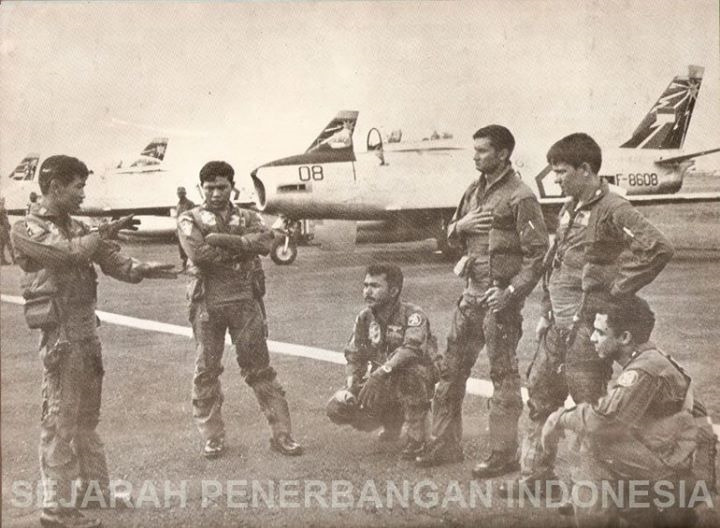
Headed by Air Marshall Iskandar, The Avon Sabre procurement, codename “Garuda Bangkit”, started with the dispatchment of Indonesian technicians on the 30th of May, 1972. Following the technicians, 12 pilots was then sent to train on the jet in Williamstown RAAF Base, Sydney. However two former MiG pilots had to be returned home due to them not having operated any fighter jets for well-over 7 years. The Indonesian technicians eventually returned in two waves, and in late December 1972 the technicians landed at Iswahjudi AFB to prepare for the arrival of the inbound jets, such as the creation of new facilities throughout the Air Base.
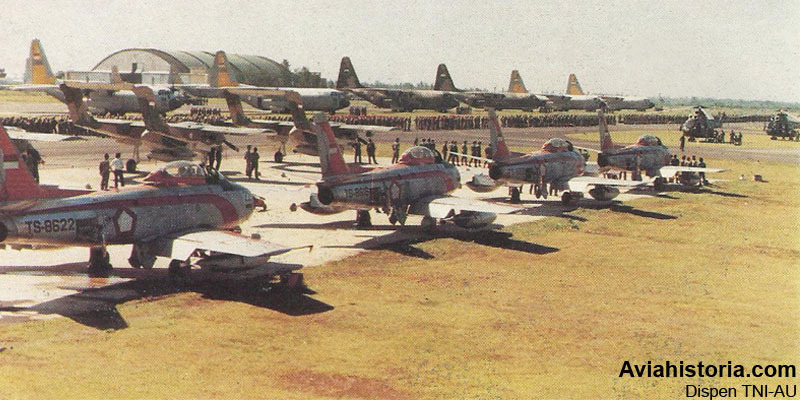
Despite the limited infrastructure difficulty of conversion training from eastern-to-western jets, the 10 remaining pilots were able to fly the Sabres and completed their training just in time to ferry flight the jets home alongside their Australian counterparts. In early 1973, the ferry flight was organized into two groups, from Williamstown-Darwin-Denpasar-Iswahjudi. Of course its not all smooth sailing, as one aircraft (F-8606) was damaged when the jet overshot the runway during takeoff. The aircraft was returned to Australia and was replaced with the A94-370, which received the Indonesian designation F-8617. Later on in ~1976 Indonesia also received 5 Ex-Malaysian Air Force, which brought its total Avon Sabre to 23 units.
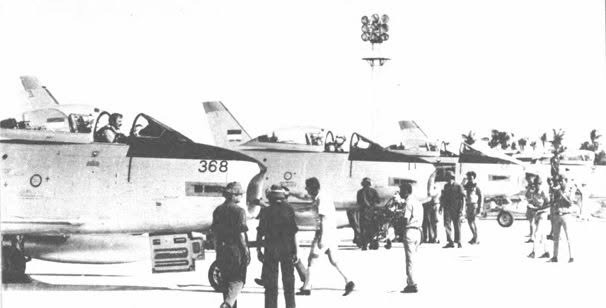
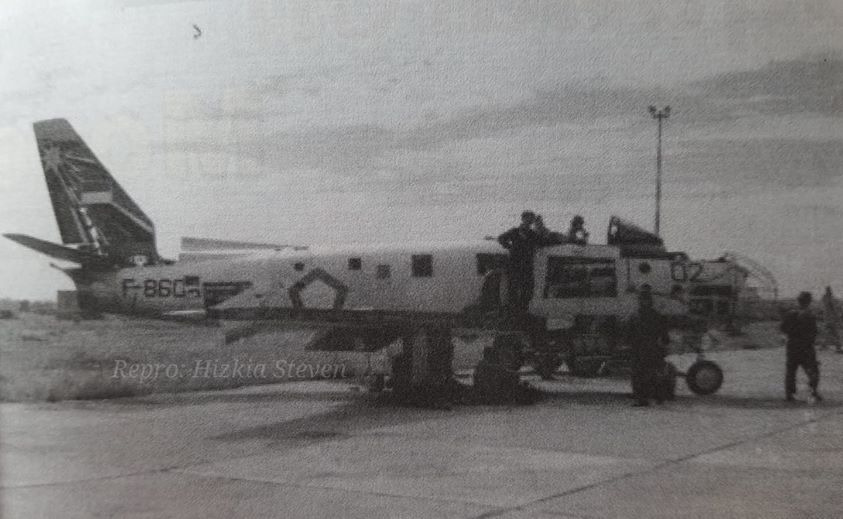
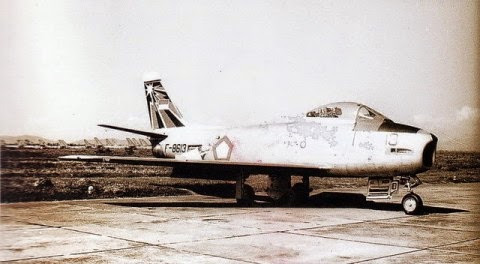
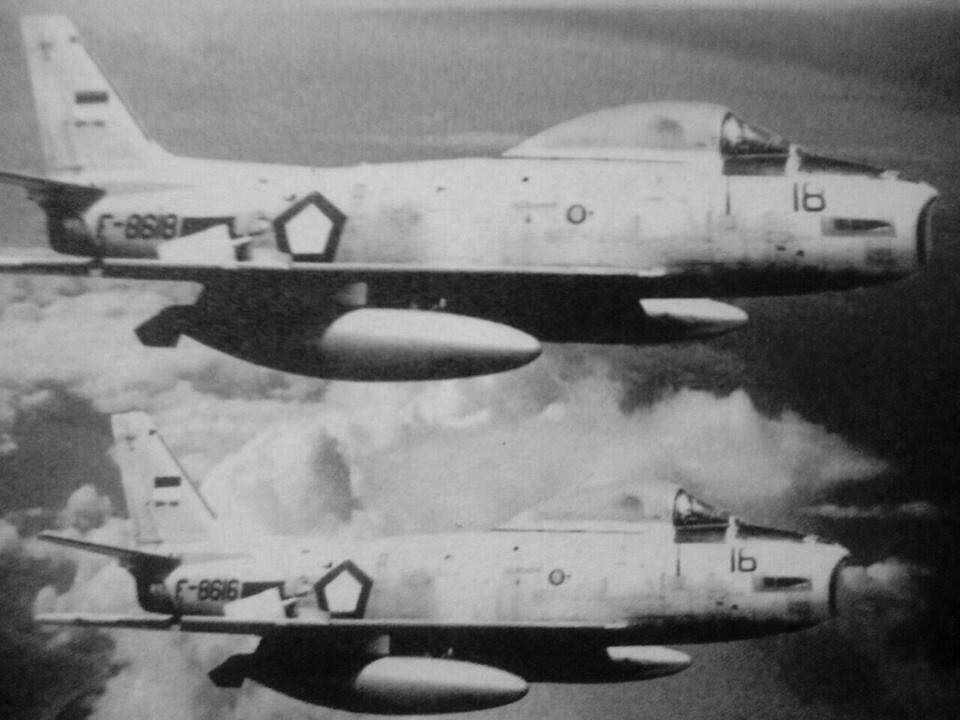
Avon Sabres first arrival in Indonesia. Notice the small black text under the Indonesian flag on the Vertical Stabilizer which contains the old RAAF designation (A94-xxx)
Speaking on the aircraft itself, it can be described as a “step-back” compared to the TNI-AU’s previous MiG-21 Fleet. One issue is regarding the low top speed of the aircraft, significantly below that of the MiG-21F-13. But another key problem is that the jets were granted without any offensive armament. But it didn’t take long for the Indonesian Air Force to start sharpening the blunt blade of the jet.
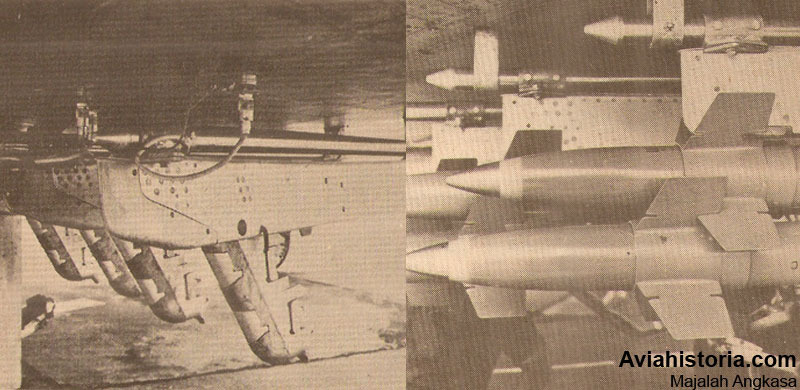
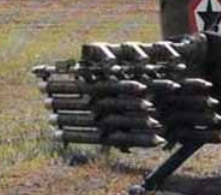
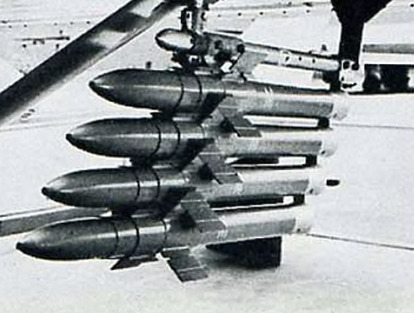
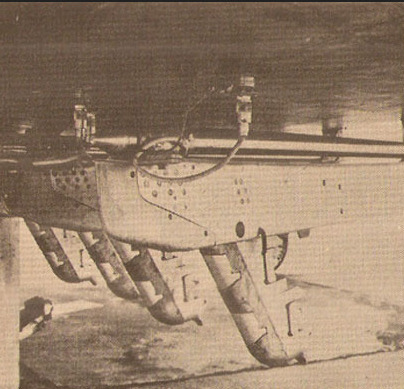
Under the leadership of then-Air Force Chief of Staff, Air Marshall Saleh Basarah as well as through the Air Force’s Research and Development Center (Puslitbang) began rearming the jets. The 30mm ADEN were relatively easy to be reactivated, additionally another changes was the installment of unguided rockets under the fuselage. Specifically the 80mm SURA rockets which were domestically produced under the Proyek Menang. Several changes were also done to the rockets, namely reconstruction of the launchers, tampering with the rocket fuel in order to keep the launch speed the same with the Sabre’s. Additionally according to aerodynamic tests as well as the age of the airframe, it was decided that the jet should only be armed with 16x rockets.
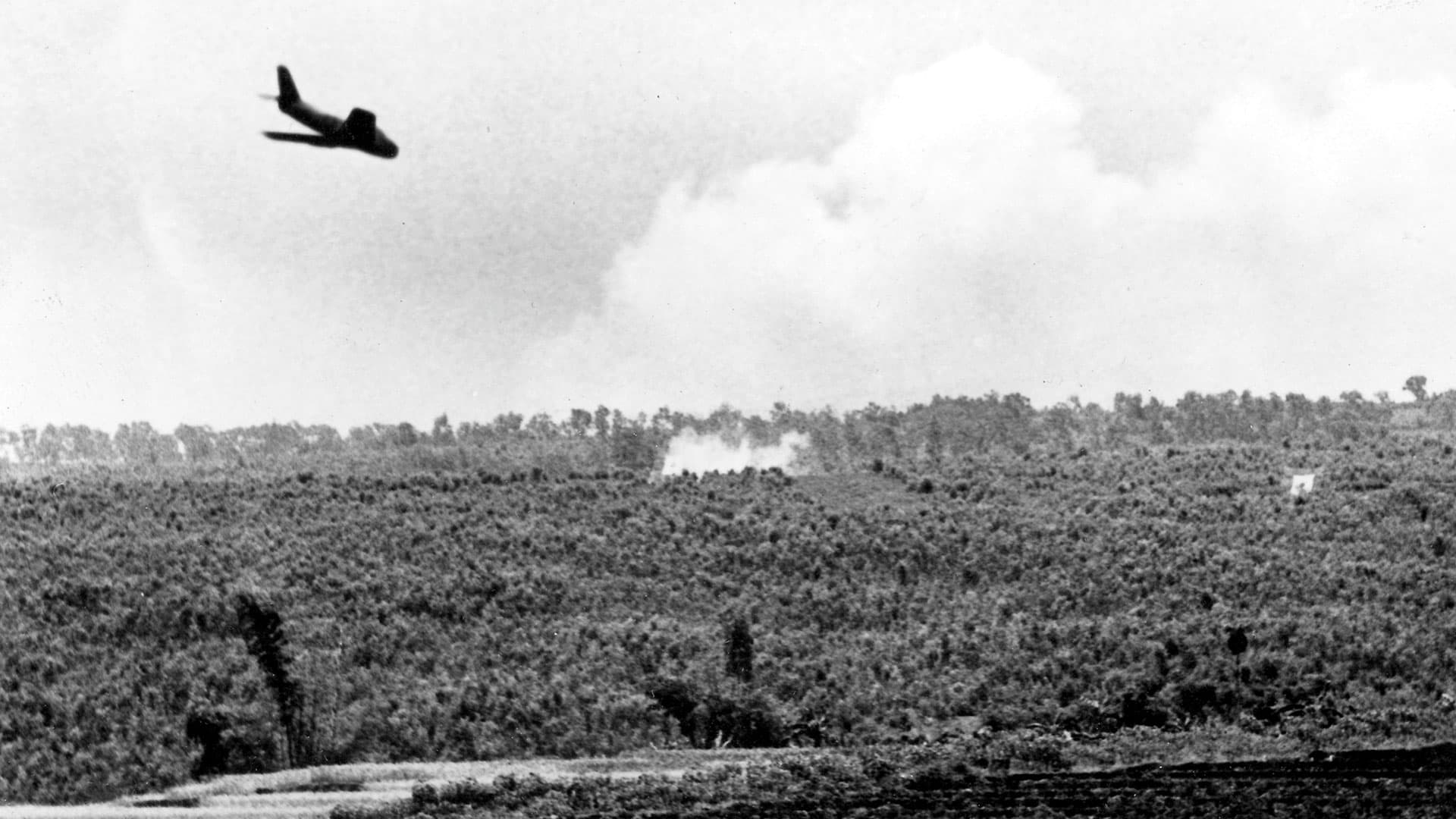
Test fire of the new armaments was conducted in January of 1976. Four Avon Sabres from Iswahjudi were deployed to attack static targets in Ponorogo from a height of 1,000 feet. With Saleh Basarah and Commander of the National Air Defense Command AIr Marshall Suwondo in attendance, the test was considered satisfactory. Unfortunately the armament was never fully tested in the battlefield, this is because the jet were explicitly forbidden to act in any actual military operations by the Australian government. It’s first proper offensive operation was through the ABRI Combined Exercise Tutuka-II in 1977.
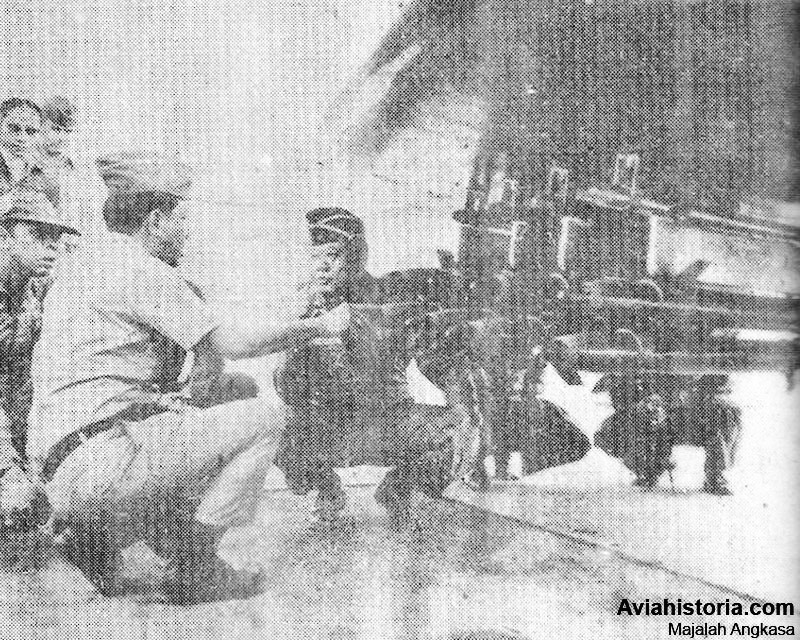
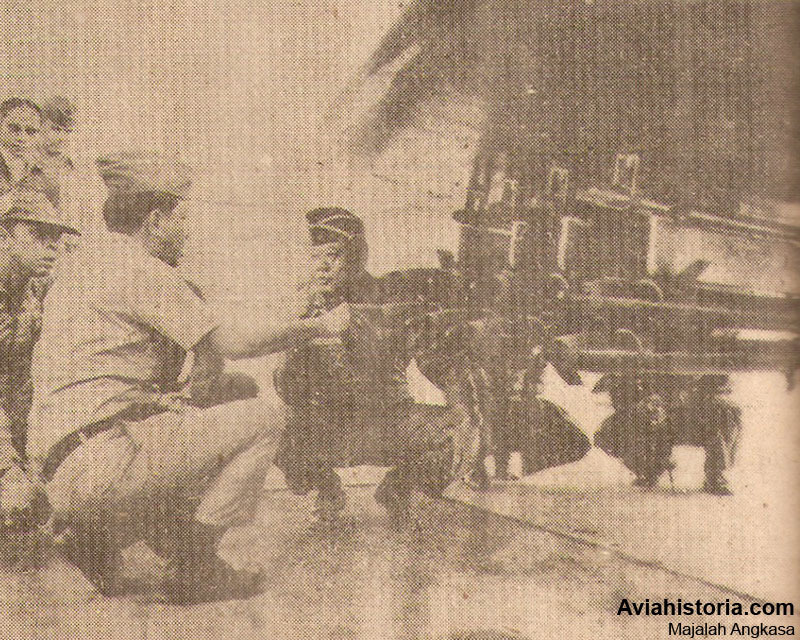
Then-Indonesian Air Force Chief of Staff, Saleh Basarah inspecting the SURA-D rockets installed by the Puslitbang onto the Avon Sabre
While the aircraft itself isn’t as noteworthy as that of other jets in the Indonesian Air Force, the acquisition program does benefit the Air Force elsewhere, namely through procedures and training skills. At the time, the RAAF instructors help teach the Indonesian crews on squadron management, such as morning briefings, weekly forums, and everything of the like. RAAF personnel for a year also help guide the TNIAU officers with creating a new Standard Operating Procedures to prepare them in operating a modern Air Squadron. Iswahjudi AFB was designated as a model base for future TNIAU air bases.
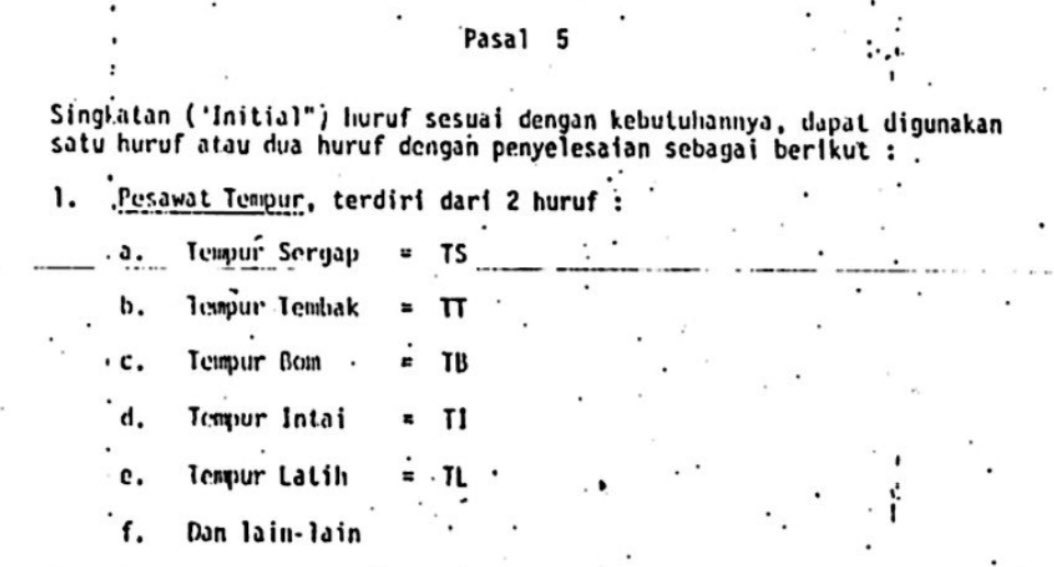
Fun fact: All Indonesian Fighters uses the English designation “F-xxxx”, with F standing as Fighter, however when this designation was changed in 1971 to Indonesian, all Fighters was switched to “TS-xxxx” which stands for Tempur Sergap
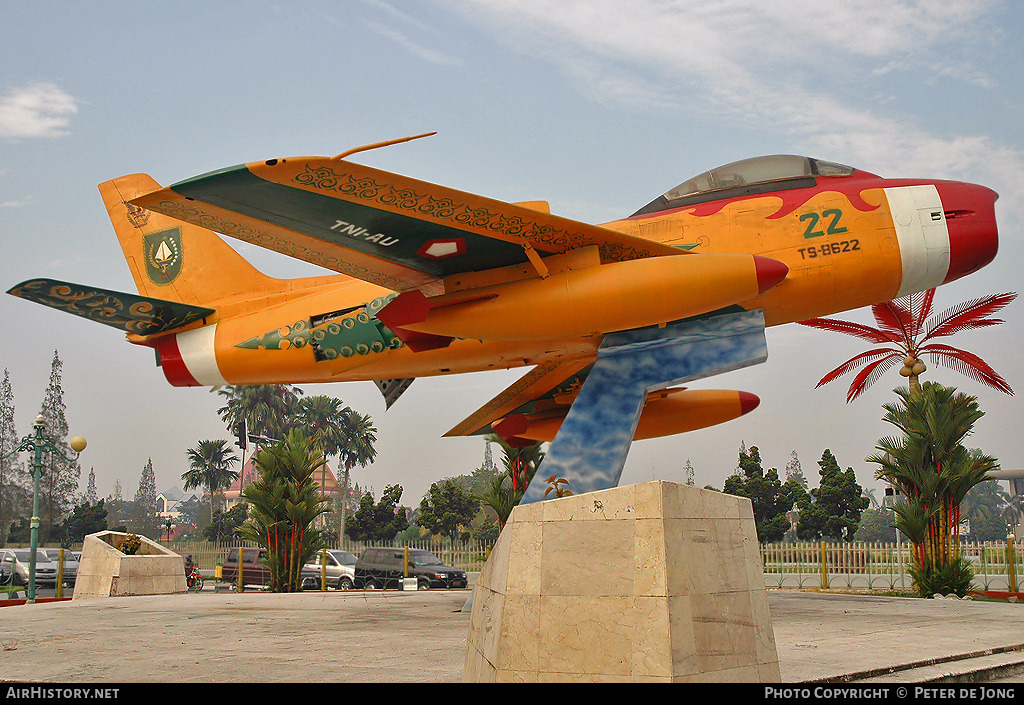
The aircraft was used by the 14th Air Squadron based in the Iswahjudi AFB as well as its aerobatic team “Spirit-78”, with its distinctive orange camouflage still remaining on surviving airframes. Its final public appearance was during the ABRI’s 35th Anniversary on the 5th of October 1980 in the sky above the Jagorawi Toll. Flight Major Budiardjo “Bison” Soerono lead the novice Sabre pilots in several difficult aerobatic maneuvers. However just a few weeks after this display, he would eventually passed away when his Sabre’s (TS-8620) wing detached due to extreme wind pressure, with the aircraft plunging downwards in a dive and exploding. Major Budi managed to eject, but at that speed he died before hitting the ground. The cause of the detachment was deemed to be the old airframe as well as the nature of the speed test (faster than then speed of sound). As a result of this accident, all Indonesian Avon Sabres was grounded. The sabres now serve either as museum pieces or monument display scattered throughout the country. Two units were eventually returned back to Australia, and 7 units were purchased by an American company called “Aero Trader” in 1989, with the purchased airframes being scrapped in Actolio Wells.
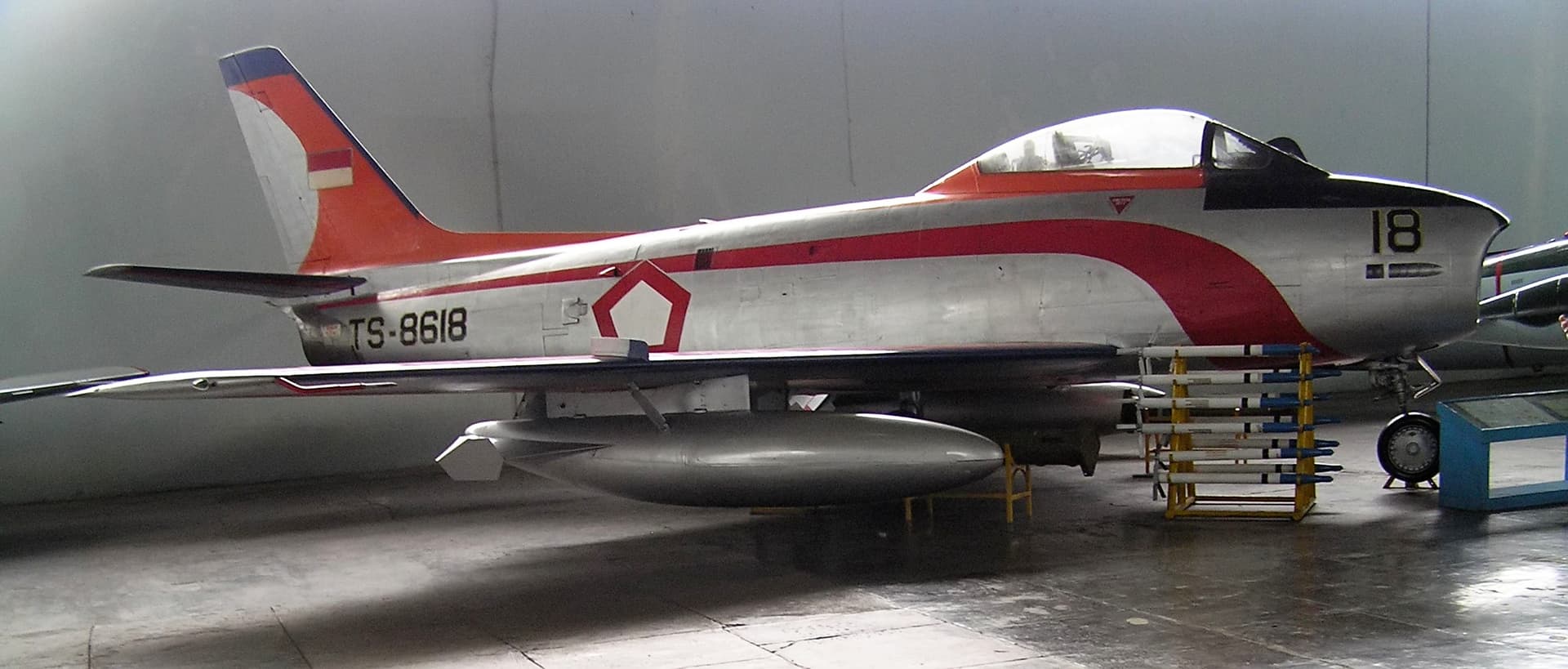
Avon Sabre with the Spirit-78 Orange and Blue Camouflage displayed in the Dirgantara Mandala Museum in Yogyakarta.

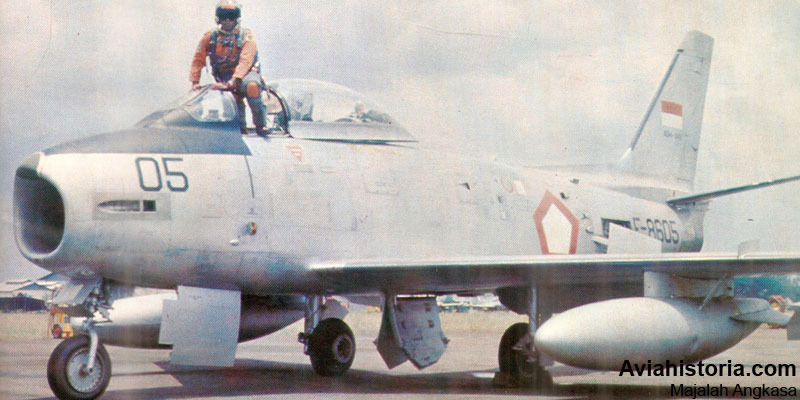
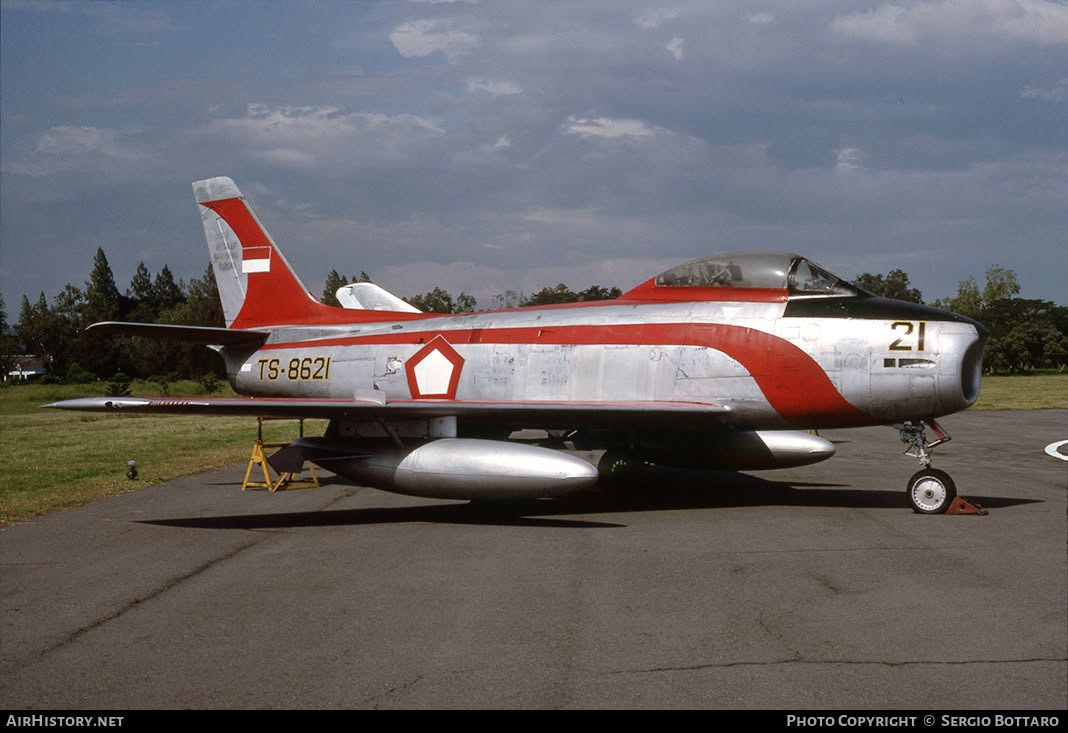
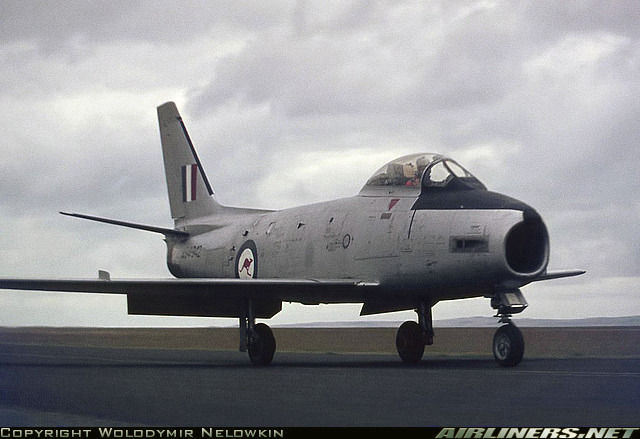
 F-86 Avon Sabre (Mk.32)