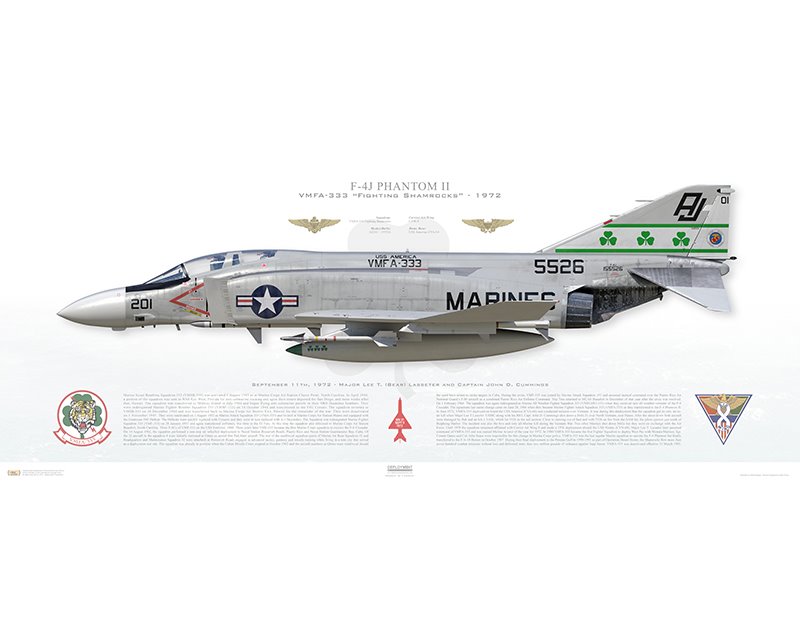
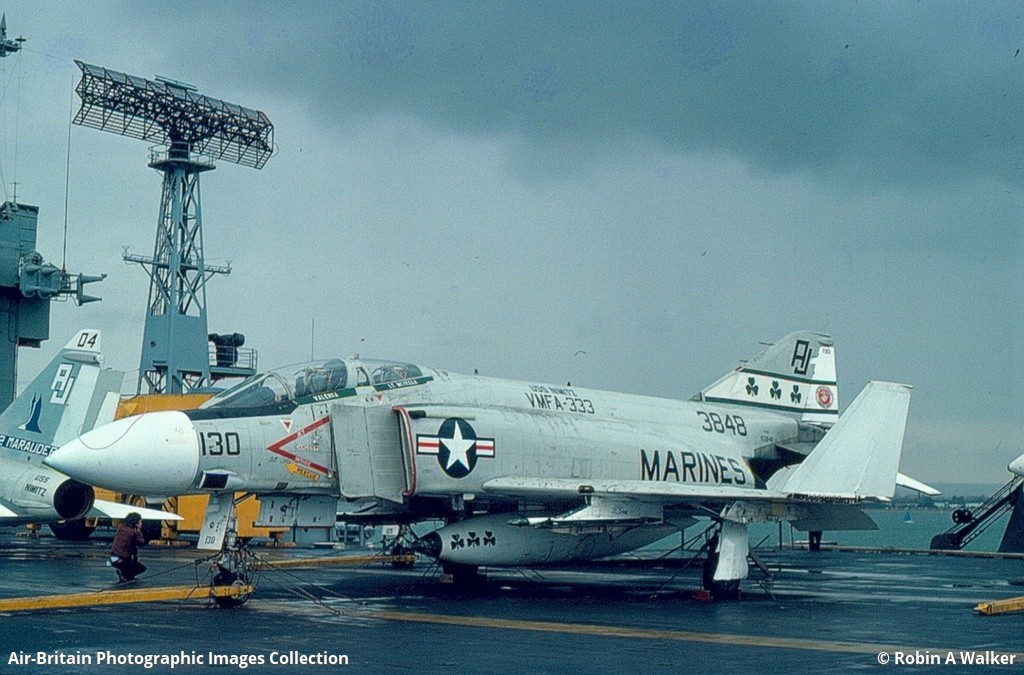
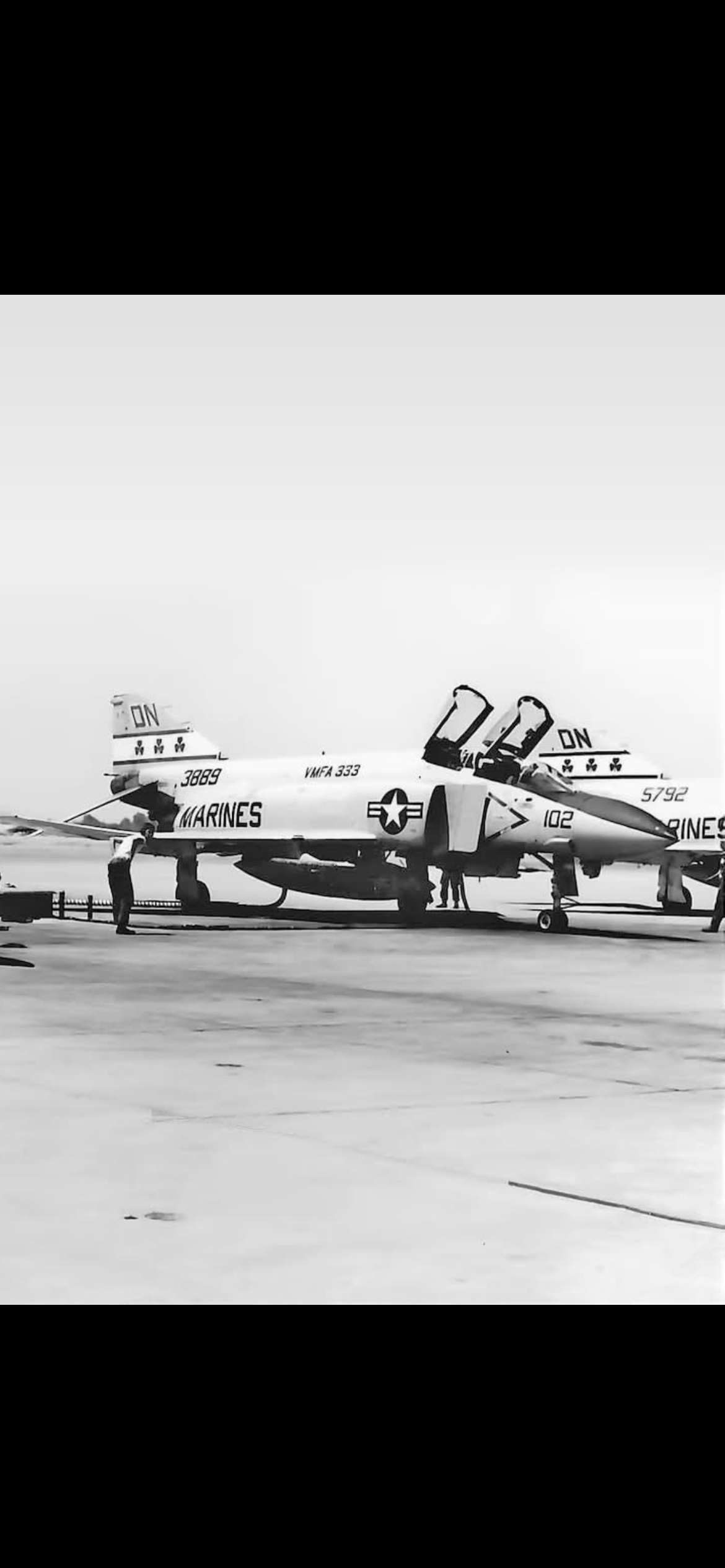
Note: this is a suggestion for VMFA-333’s camo scheme when shore based, meaning their aircraft do not have any ship name on the aircraft. Any images shown with a ship name are only used as references.
History
VMFA-333 was established on August 1st, 1952, as VMA-333, drawing on a lineage that extended back to a 1943 predecessor squadron. Initially flying F6F Hellcats out of Miami, the unit subsequently transitioned to F4U Corsairs and A-1 Skyraiders. In 1957, the squadron converted to the FJ Fury and relocated its home station to Marine Corps Air Station Beaufort, South Carolina.
In 1960, the unit became the first United States Marine Corps squadron to receive the F-8 Crusader. Following its participation in the naval blockade during the Cuban Missile Crisis in 1962, the squadron returned to South Carolina.
The squadron deployed to Southeast Asia in 1966 under the designation VMF(AW)-333. Operating primarily from the aircraft carrier USS America, the squadron flew intensive combat bombing and close air support missions throughout the Vietnam War, striking enemy supply routes, infrastructure, and troop positions. In 1968, the unit transitioned to the F-4 Phantom II and officially resumed the VMFA-333 designation.
Amidst its heavy bombing schedule, the squadron achieved a historic milestone on June 27, 1972. Flying an F-4J Phantom from the USS America, pilot Major Lee Lasseter and radar intercept officer Captain John Cummings intercepted and shot down a North Vietnamese MiG-21 using an AIM-7 Sparrow missile. This victory marked the only all-Marine air-to-air combat kill of the Vietnam War.
Following the Vietnam conflict, the squadron maintained operational readiness, which included a brief deployment aboard the USS Nimitz in 1976. Decades later, VMFA-333 deployed to the Persian Gulf for Operation Desert Storm, executing over 700 combat sorties with zero aircraft or personnel losses. The squadron was deactivated in 1992.
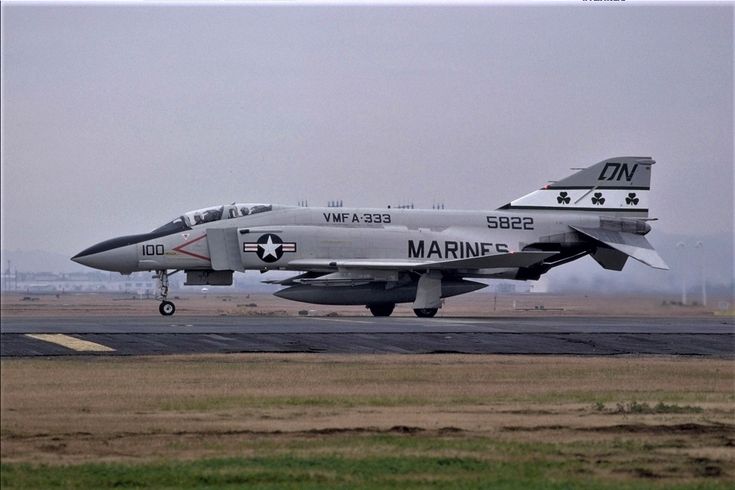
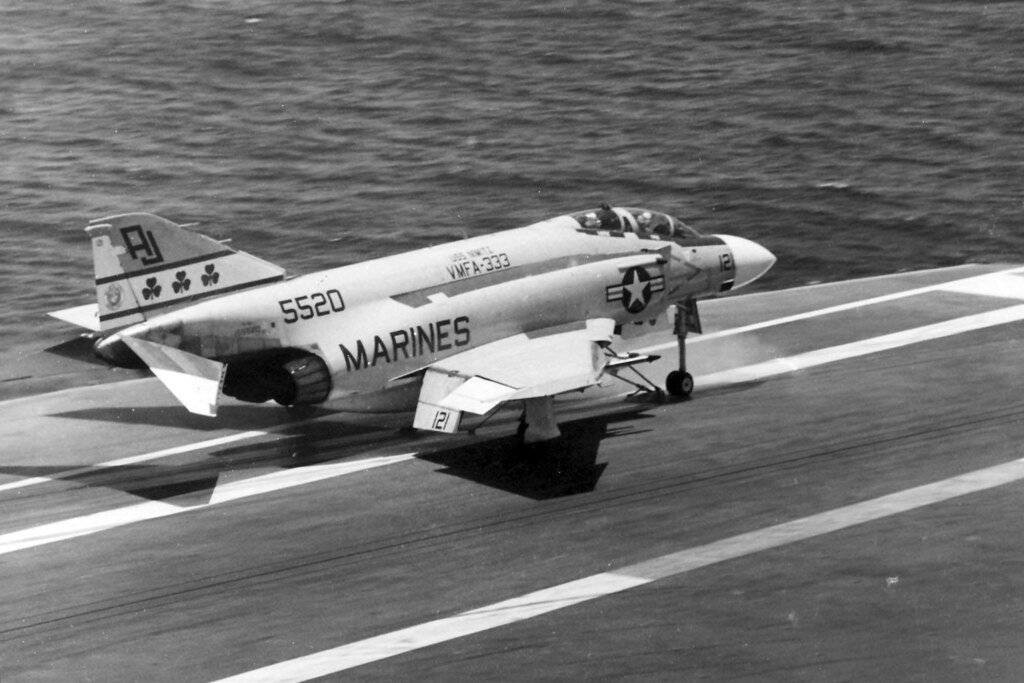
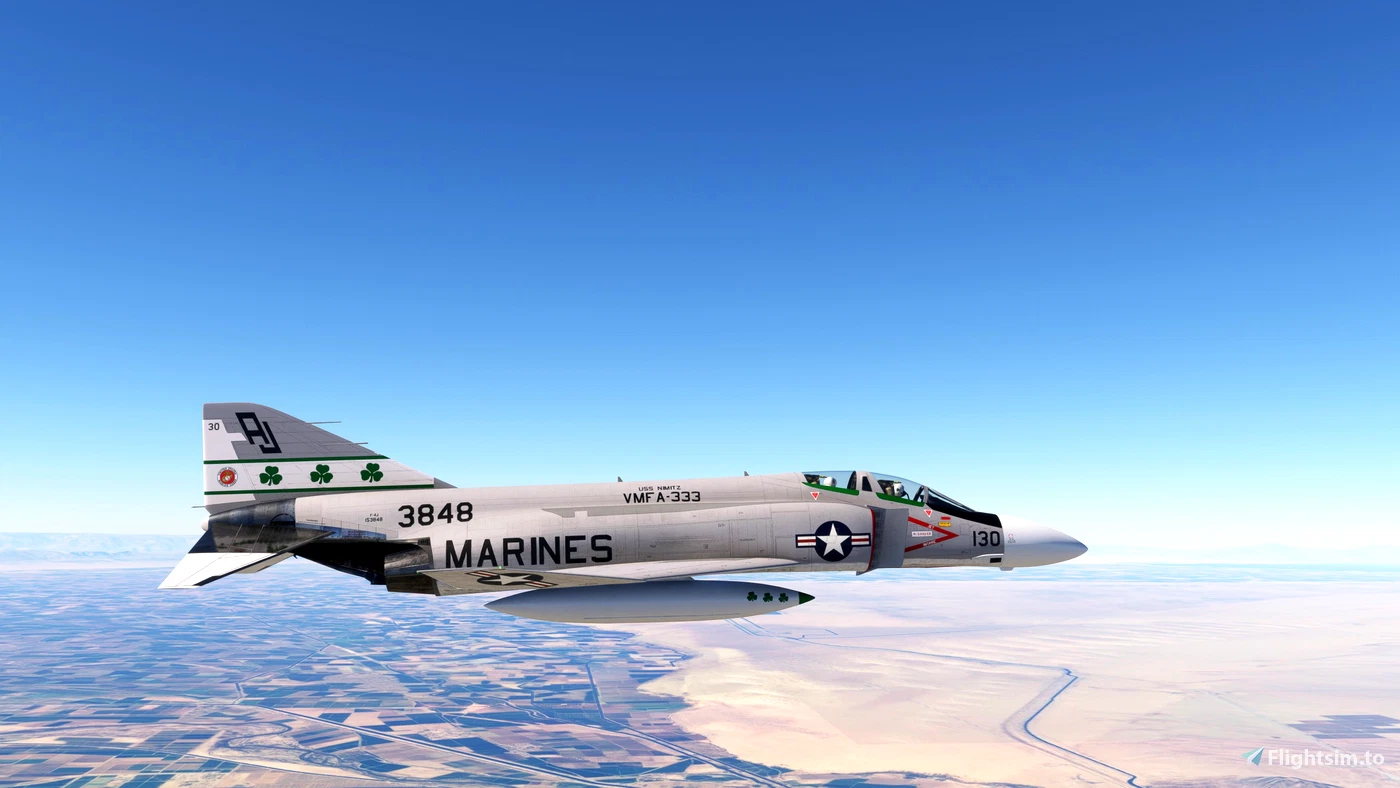
Usually VMFA-333’s aircraft were painted in navy grey, and bore a white stripe on the bottom of the vertical stabilizer with green lines both above and below the white line. Inside the white line there were three evenly spaced green clovers. Just above that and ahead of the rudder was usually the pattering AJ or DN, Underneath both cockpits where dark green spots where the crews names would be written. On the top of the right wing and bottom of the left there was a typical American aircraft emblem. Additionally the same emblem was located on both sides of the aircraft just behind the intakes. Towards the rear of the wings on the fuselage was the word “marines”.
- Yes
- No