- Yes
- No
- Yes
- No
- I said no to the previous question
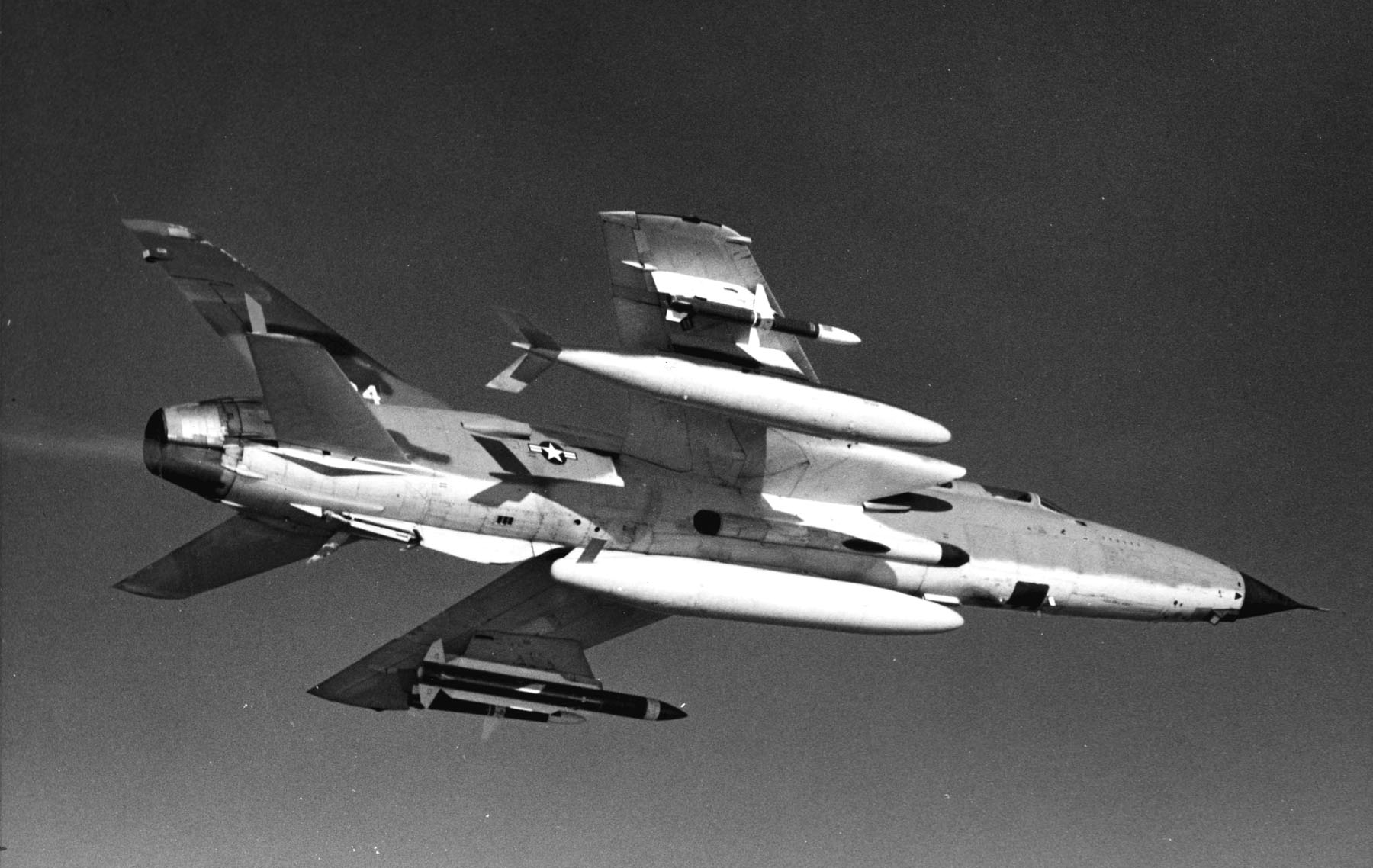
F-105G in flight on May 5, 1970, carrying AGM-45 and AGM-78B missiles (source: File:AGM-45 and AGM-78B on F-105G.jpg - Wikimedia Commons)
TL;DR: two-seater Thunderchief capable of carrying AGM-45 and AGM-78 along with bombs, rockets, and Sidewinders.
The Republic F-105G Thunderchief Wild Weasel III was the definitive SEAD variant of the Thunderchief family. Developed from the F-105F combat trainer variant (some of which had already undergone SEAD conversions), it was equipped with advanced radar warning systems and electronic countermeasures, along with the AGM-45 and the new AGM-78 Standard ARM. It served effectively throughout the Vietnam War, leading the fight against SA-2 Guideline SAMs alongside the less capable F-4C Wild Weasel IVs, before being replaced by the F-4G Wild Weasel V.
History and design
This is a somewhat long-winded history section since I wanted to at least partially cover the previous Wild Weasel operations. You can jump to the fifth paragraph if you just want to read about the F-105G.
During the Vietnam War, the SA-2 Guideline SAM system posed a serious threat to USAF operations. In response, some F-100F Super Sabre airframes were converted for electronic warfare and SEAD operations under the Wild Weasel I project in 1965. Despite the project’s success, the USAF understood that it needed a high performance aircraft for the role, as the F-100F was slower than the Thunderchiefs they were meant to escort and carried too little ordinance. Therefore, two projects, the Wild Weasel II using the F-4C and the Wild Weasel III using the F-105F, were immediately initiated. While the Wild Weasel II project failed, Wild Weasel III succeeded in producing one of the primary SEAD aircraft of the Vietnam War.
The F-105F was developed as a trainer aircraft for operational conversion, but it retained the same strike capabilities as the F-105D with dual controls. For Wild Weasel III, the chosen airframes had a electronic warfare officer in the rear seat and were initially fitted with the same electronics as the F-100F Wild Weasel I, including the AN/APR-25/26 radar warning and launch warning receivers and capacity to carry AGM-45 Shrikes, but more upgrades were added over time. The AN/APR-25/26 were supplemented by the North American SEE-SAMS system, which in turn was replaced by the Loral QRC-317A system that could also cover SA-2 missile guidance signals. The ability to carry AGM-78 Standard ARMs on the inner pylons was also added to increase the Weasels’ engagement range.
North Vietnamese SAM crews soon adapted to the new threat. Defeating the Shrike was relatively easy for them since the Shrike was slower than the SA-2’s missiles, allowing crews to launch at the Wild Weasel aircraft first and then turn off the radar. Nevertheless, the constant SEAD threat significantly reduced the ability of SAMs to attack other aircraft. The Standard ARM proved to be more potent, both due to its higher speed and its memory circuits that allowed it to continuing flying on target even if the SA-2 radars were switched off. However, the lack of pylons on the F-105F continued to cause contention. In 1966/67, the 7th Air Force decided that the MiG threat was so great that the Wild Weasels had to carry at least one Sidewinder, which would displace one of the Shrikes on the outer pylon. After the order was rescinded, a new order came down ordering the carriage of an ECM pod instead. The Weasel crews were livid, not only because this would still displace a Shrike, but also because the ECM pod’s operation would interfere with the F-105F’s own capabilities. However, command wouldn’t budge, so crews were forced to carry a ECM pod that they would rarely use.
Some creative solutions were applied to comply with the order. One attempt was to create a adaptor for carrying two ECM pods on one pylon so that another aircraft could carry a full load of Shrikes and still technically have one ECM pod per aircraft. Another was to use a dual Shrike launcher developed by the Navy, allowing two Shrikes on the left outboard and a ECM pod on the right. During Operation Linebacker, one aircraft carried two dual Shrike launchers and two Standard ARMs, bringing the number of missiles to an impressive six. It was so impressive that the aircraft was photographed and the pictures airdropped over North Vietnam to intimidate the SA-2 crews. However, in practice the pilots didn’t like the dual launcher, as launching just one of the two Shrikes would cause excessive vibration, so the launcher wasn’t adopted. The ultimate solution to this issue would be the development of the F-105G.
The F-105G solved the earlier issue by splitting a ALQ-101 ECM pod into two and installing them in blisters on the lower fuselage so that it wouldn’t take up pylon space, a system that was standardised as the ALQ-105. More importantly, the radar warning systems were upgraded, with the AN/APR-25/26 being replaced by the AN/APR-35/36 and the QRC-317A replaced by the AN/ALR-31 SEE-SAMS, which further widened the bandwidth monitored. Finally, the AGM-78B version of the Standard ARM was introduced, adding coverage of E, G, and I bands.
A total of 61 F-105Gs were produced, all upgraded from F-105Fs. The first converted aircraft began arriving in April 1968, during the Tet Offensive, but didn’t seem to make much of an initial impact. Conversion was still ongoing, and the earlier F-105Fs, while quite effective in suppressing North Vietnamese SAMs, had been significantly reduced in numbers through combat losses. The halting of bombing north of the 19th parallel in March and the 17th parallel in November further reduced the need for Wild Weasel operations. The 7th Air Force used this opportunity to fully convert to F-105Gs and restructure the Wild Weasel force. After a series of confusing deactivations, transfers, and redesignations, all the surviving Wild Weasels in Southeast Asia were grouped under the 17th Wild Weasel Squadron stationed at Korat RTAFB.
Despite the bombing halt, some Wild Weasel combat missions were still flown in support of RF-4 reconnaissance flights and AC-130 and AC-119K gunship patrols, plus training and test missions. During these four years, 14 two-seater Thuds, including 8 F-105Gs, were lost. However, combat intensity escalated significantly in 1972 when Operation Linebacker began. The 17th WWS was exhausted by the twice a day and twice a night operations, so Detachment 1, 561st TFS, 23 TFW equipped with F-105Gs and 67th TFS, 18th TFW equipped with F-4C Wild Weasel IVs were sent in to support. Operation Linebacker II followed in December, which posed an even greater challenge for the Wild Weasels. The B-52s used for the operation were slower and larger and their targets were much better defended. On 20th December, despite the best efforts of the Wild Weasels, the North Vietnamese managed to launch up to 220 SA-2 missiles against the B-52s, downing six. Five more BUFFs were lost in the following two days as the Weasels were overwhelmed by the number of SAM emplacements. In response, tactics were changed to use flights of two F-105Gs plus two F-4 strike aircraft to double the number of hunter killer groups. This, combined with more effective usage of the B-52’s ECM systems, drastically reduced losses. On later bombing runs, North Vietnamese SAMs were apparently launched on ballistic trajectories without guidance, as the crews could not turn on their radars for fear of attracting the attention of the Weasels.
Linebacker II was the last major combat operation for the F-105G. A few more missions were flew in support of RF-4 recon missions or bombing runs in Laos, and the last combat mission for the F-105G was flew on the 3rd August, 1973. With the war winding down, the 561st TFS returned to the continental US the same month and was assigned to the 35th TFW at George Air Force Base, California, while the 17th WWS followed a year later and was also redesignated as the 562nd TFS. There, the F-105Gs trained the future generation of Wild Weasels alongside the F-4C Wild Weasel IV. In 1978, as the 35th TFW began converting to the F-4G Wild Weasel V, the F-105Gs were transferred to the Georgia Air National Guard. The AN/ALR-31 was also replaced by the AN/ALR-46, making it the only Thud with a digital RWR. On 25th May, 1983, the F-105G was finally retired from the Georgia ANG, marking an end to a legendary chapter of Wild Weasel operations.
Specifications
General characteristics:
- Crew: 2
- Length: 69 ft 7.3 in (21.22 m)
- Wingspan: 34 ft 11.2 in (10.65 m)
- Height: 20 ft 1.9 in (6.14 m)
- Wing area: 385 sq ft (35.77 m²)
- Empty weight: 31,279 lb (14,188 kg)
- Max takeoff weight: 54,580 lb (24,758 kg)
- Engine: 1x Pratt & Whitney J75-P-19W with 26,500 lbf thrust (117.88 kN thrust)
Performance:
- Maximum speed: 723 kn at 36,000 ft (1,339 km/h at 10,973 m)
- Climb rate: 23,000 fpm from sea level, combat weight (116.84 m/s from sea level, combat weight)
- Combat ceiling: 43,900 ft (13,381 m)
Armament:
- 1x 20 mm M61 cannon, 1028 rounds
- 5 hardpoints (centreline, inboard, outboard):
- 650 gal drop tank on centreline, 450 gal drop tank on centreline and inboard
- 6x LAU-3/A, -18/A, -32, -59 launchers for Mighty Mouse on inboard (dual pylons) and outboard
- In various configurations on all hardpoints (refer to pilot’s manual for details): Mk 82, Mk 83, Mk 84, M117, M118 bombs; BLU-1/B, BLU-27/B fire bombs; CBU-24, CBU-29, CBU-49, CBU-53 cluster bombs
- 4x AIM-9B/E on outboard (dual pylons)
- 4x AGM-12B on inboard and outboard
- 2x AGM-12C on inboard
- 2x AGM-78B (mod 1) on inboard
- 2x AGM-45 on outboard
- Trialed but not standardised 4x AGM-45 on outboard (dual pylons)
- 2x QRC-160, QRC-335 on outboard
- 2x AN/ALE-2 chaff dispensers on outboard
Electronics:
- AN/ASG-19 FCS and radar
- AN/APR-35/36 and AN/ALR-31 RWR (later replaced with AN/ALR-46 RWR)
- AN/ALQ-105 jammer
More pictures
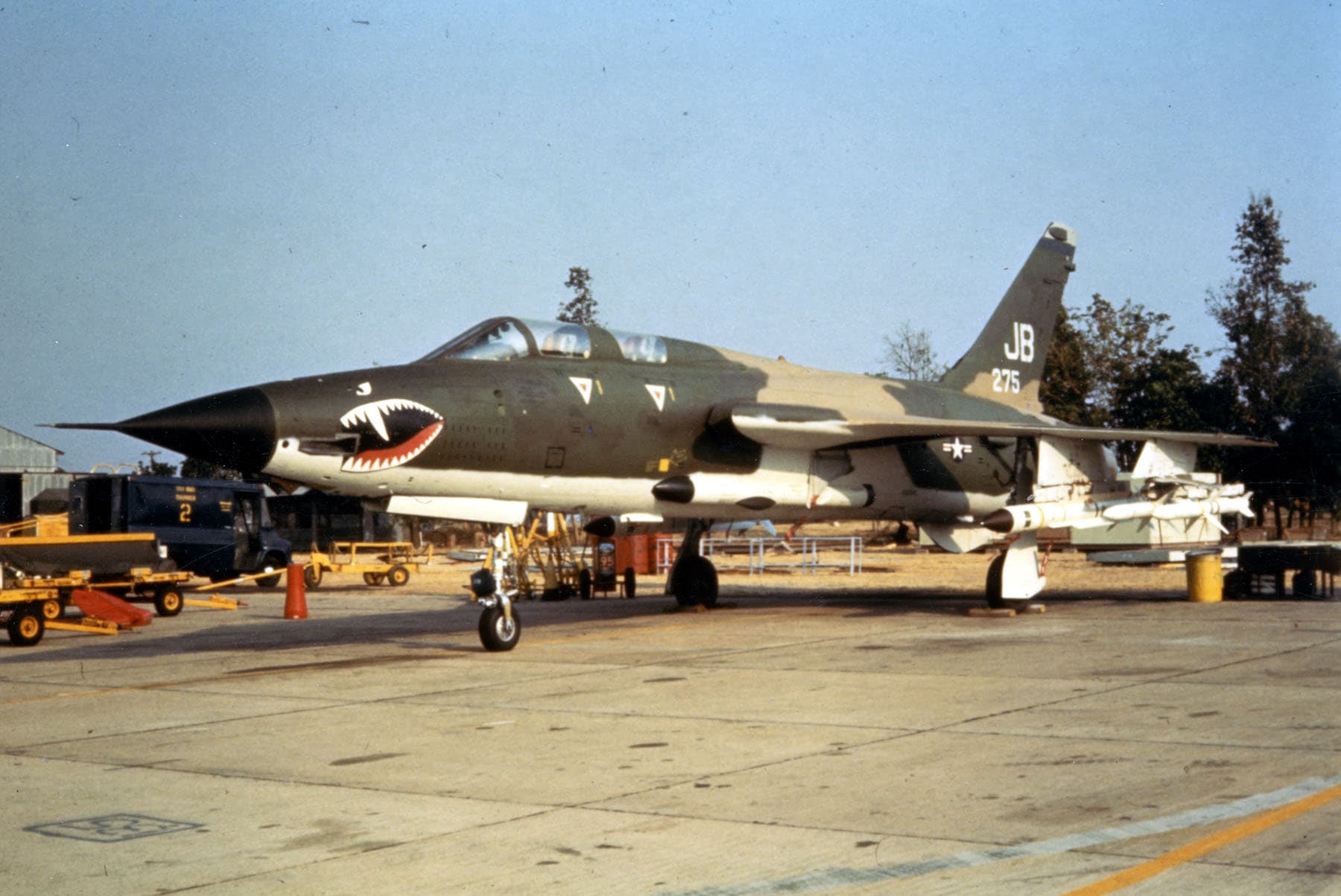
F-105G with four Shrikes and two Standard ARMs (source: https://media.defense.gov/2009/Jun/05/2000558637/-1/-1/0/090605-F-1234P-037.JPG)
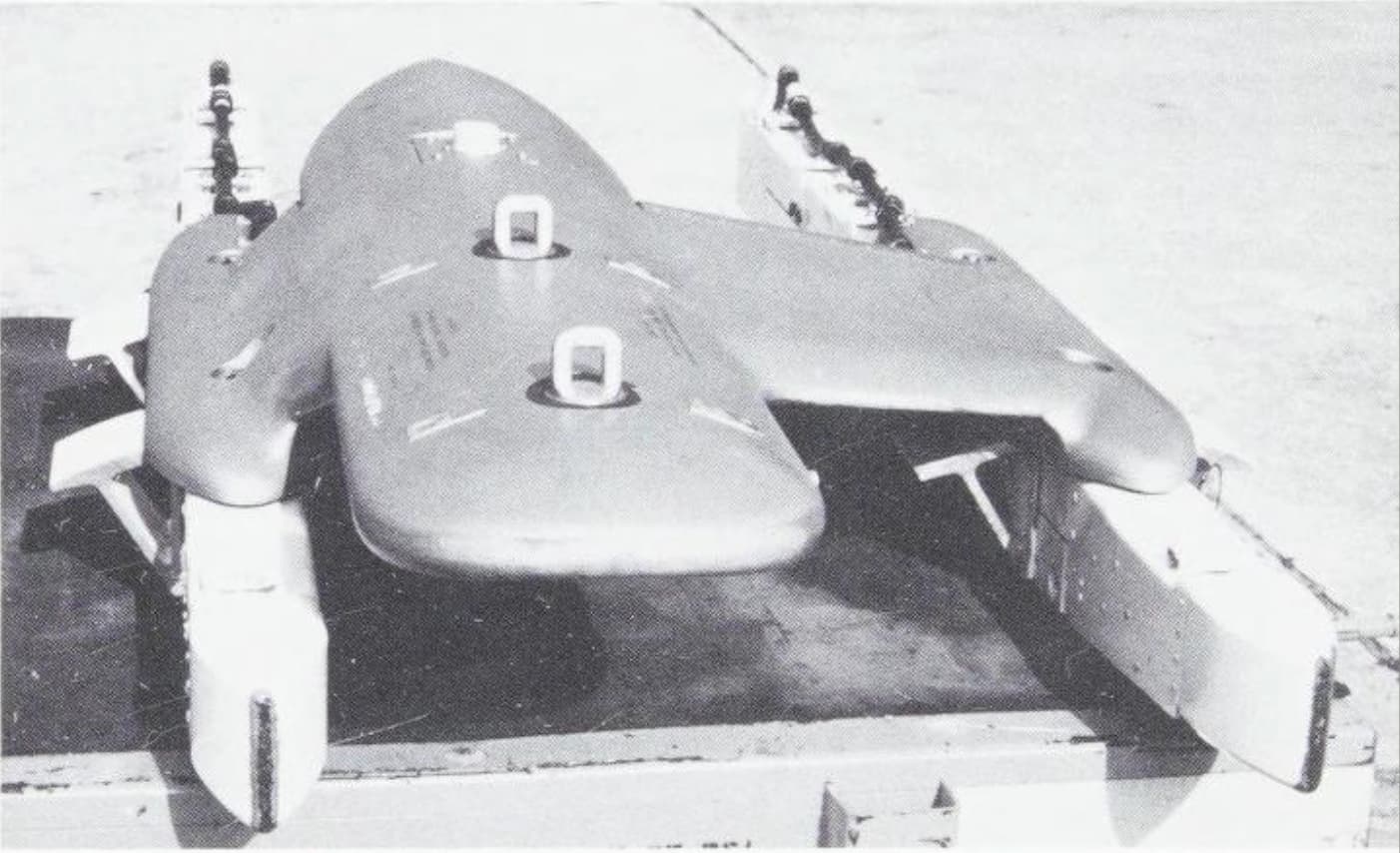
Closeup of dual Shrike launcher (source: Davis)
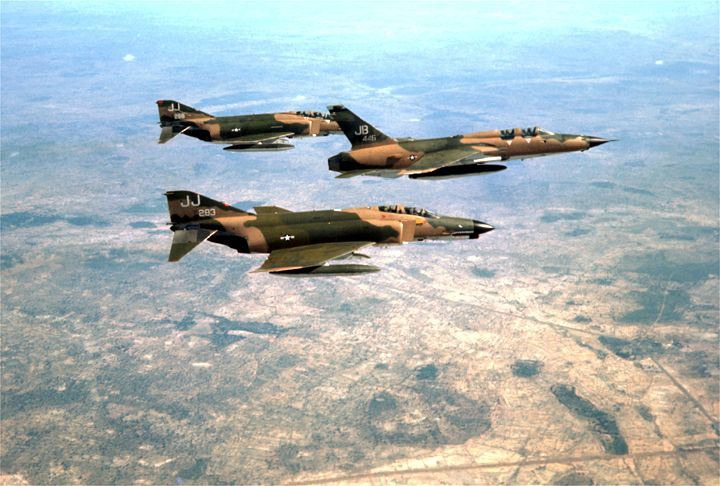
F-105G leading Wild Weasel hunter-killer team (source: F-105s Hunting – Society of Wild Weasels)
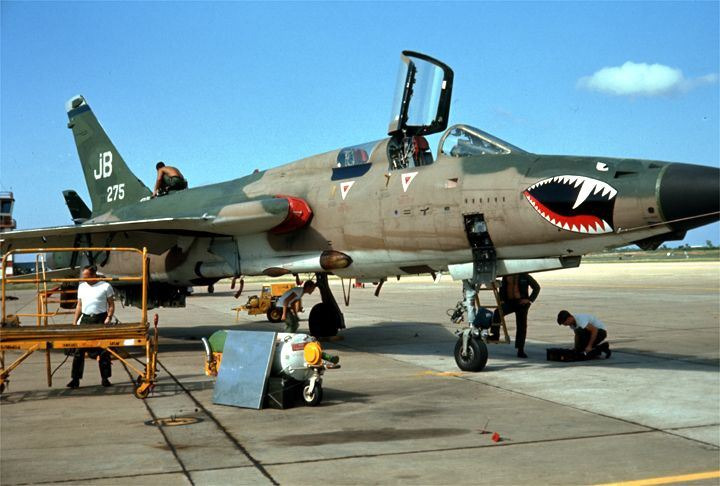
F-105G with teeth (source: F-105s Hunting – Society of Wild Weasels)
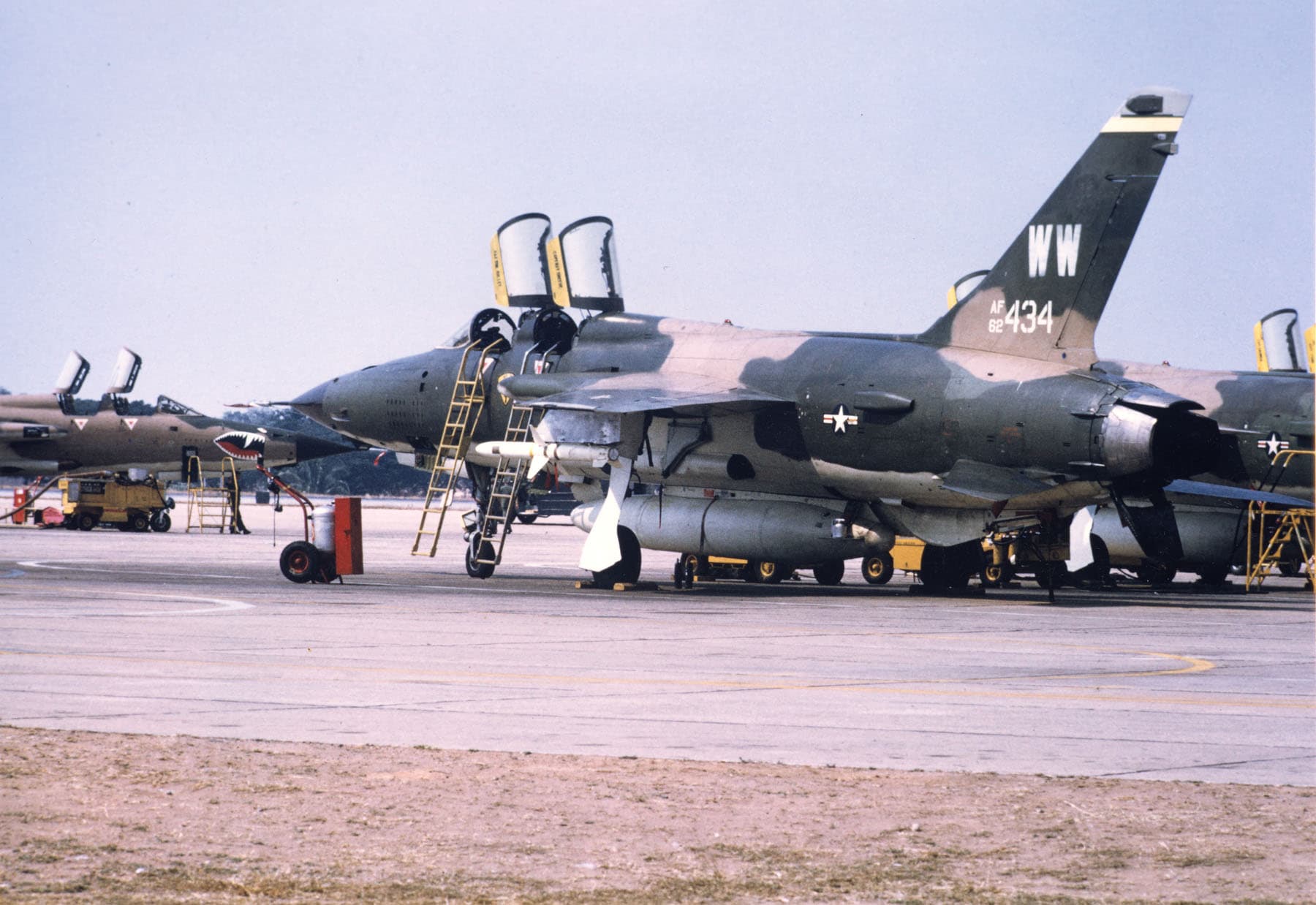

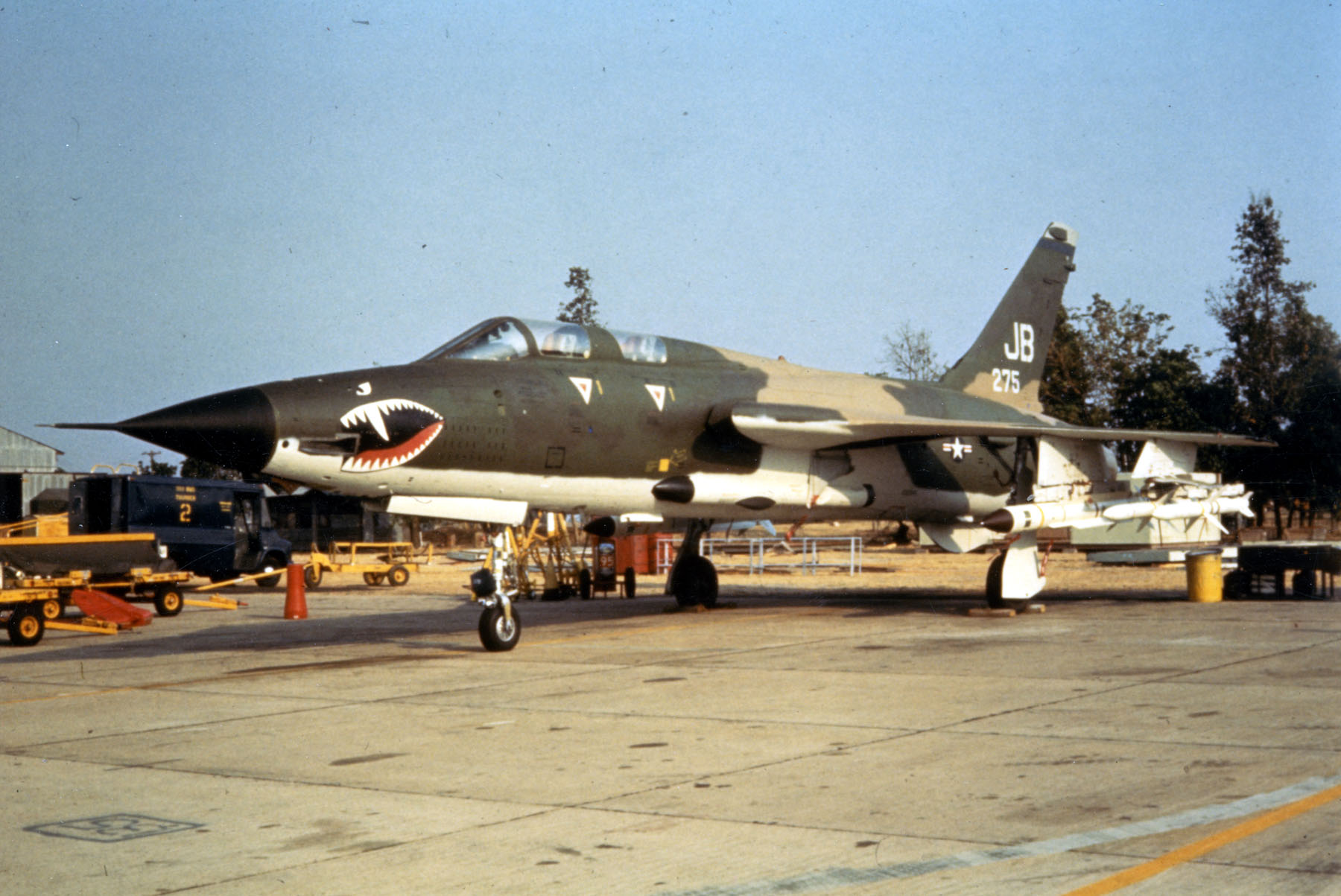
F-105G on flightline (source: F-105s Hunting – Society of Wild Weasels)
Sources
- “Wild Weasel: the SAM suppression story” by Larry Davis
- “F-105 WILD WEASEL vs SA-2 “GUIDELINE” SAM Vietnam 1965–73” by Peter Davies
- F-105G_Thunderchief_CS_-_November_1972
- T.O. 1F-105D-1 - Flight Manual - F-105D, F-105F & F-105G (09-09-1970).pdf
- https://www.nationalmuseum.af.mil/Visit/Museum-Exhibits/Fact-Sheets/Display/Article/196035/agm-45-shrike-anti-radar-missile/