- Introduction:
-
For simplicity, all aircraft-mounted maritime surface search radars will be referred to as ASV radars throughout this suggestion, regardless of their original designation.
-
The game already contains a few of these aircraft that carried an ASV radar.
-
A few of these aircraft would be the aforementioned Shackleton MR Mk. II and Short Sunderland (both variants in-game)
-
This feature would be particularly useful in naval night battles where radar could provide an alternative means of locating enemy vessels beyond visual range.
- Gameplay:
-
Surface search radars could be used as a type of an AWACS aircraft.
-
ASV (Air-to-Surface-Vessel) radars would not be able to detect friend and foe naval vessels by themselves.
-It would provide an incentive for players to fly these otherwise underused aircraft in naval night EC battles, giving them a useful reconnaissance and support role.
-
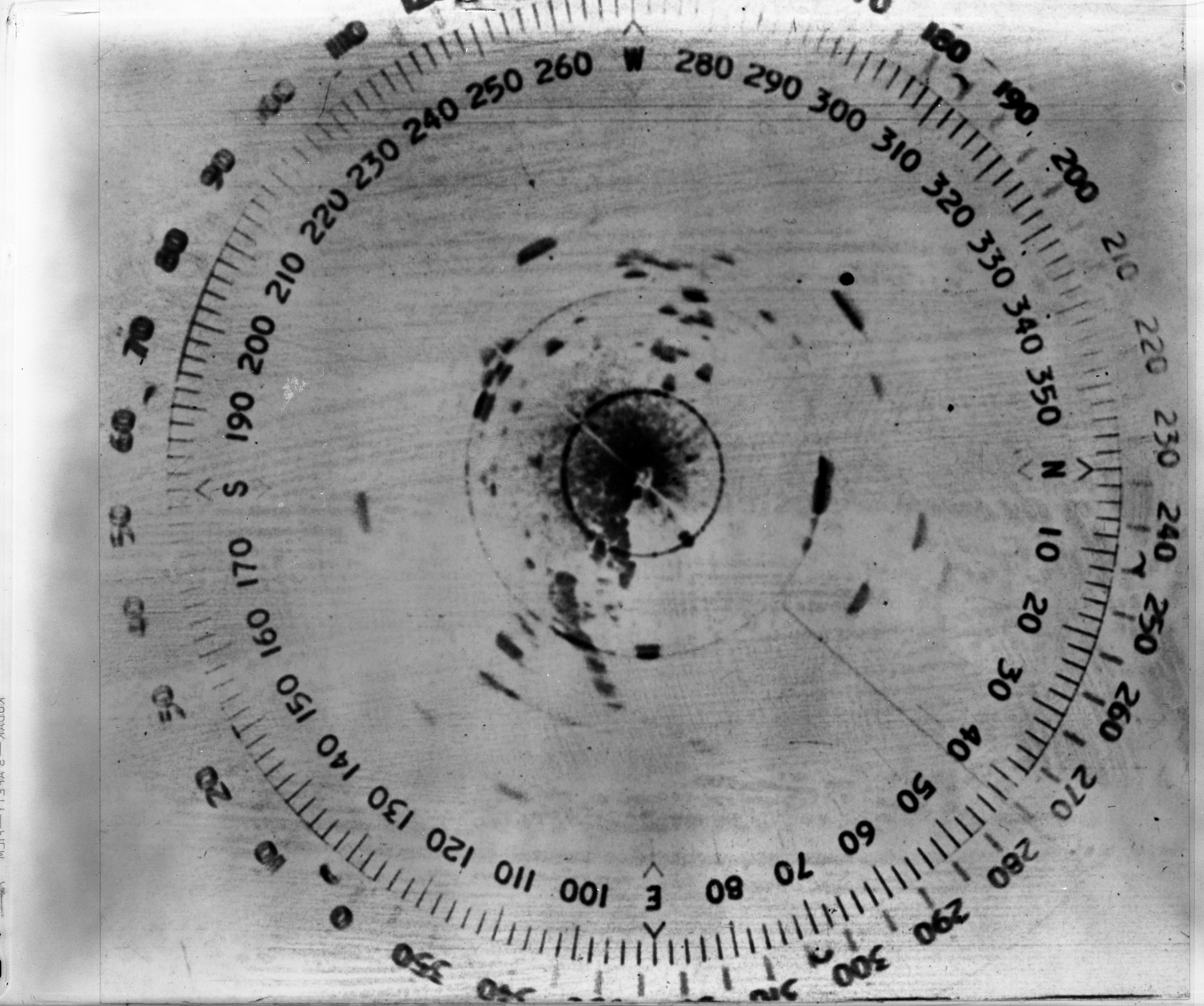
The ASV radar functions similarly to an air to air radar, its a full circle with your aircraft in the middle, it will do a scan around the area and leave radar echos which represent vessels.
-
Not all aircraft had 360 degree scanning sector, so only the scanned area of the circle should be illuminated.
-
Players could alert allied ships of potential enemy fleet in the dark of night before they get within range or use the radar to hunt.
- Historical Background:
-
British airborne radar experiments began in 1936, with early receiver trials conducted aboard a Handley Page Heyford. The first complete airborne radar system was tested aboard the aircraft in March 1937.
-
The first aircraft to receive a production ASV radar was the Lockheed Hudson
-
Britain was among the pioneers of dedicated airborne surface-search radar, with development driven largely by the need to locate enemy shipping and submarines at sea.
-
German U-boats frequently exploited darkness and poor visibility to approach and attack convoys while surfaced. They also needed to surface regularly to recharge their batteries, making nighttime an attractive period for these operations.
- Visual Examples:
- Unknown radar PPI, the basis of the style of ASV radar im proposing
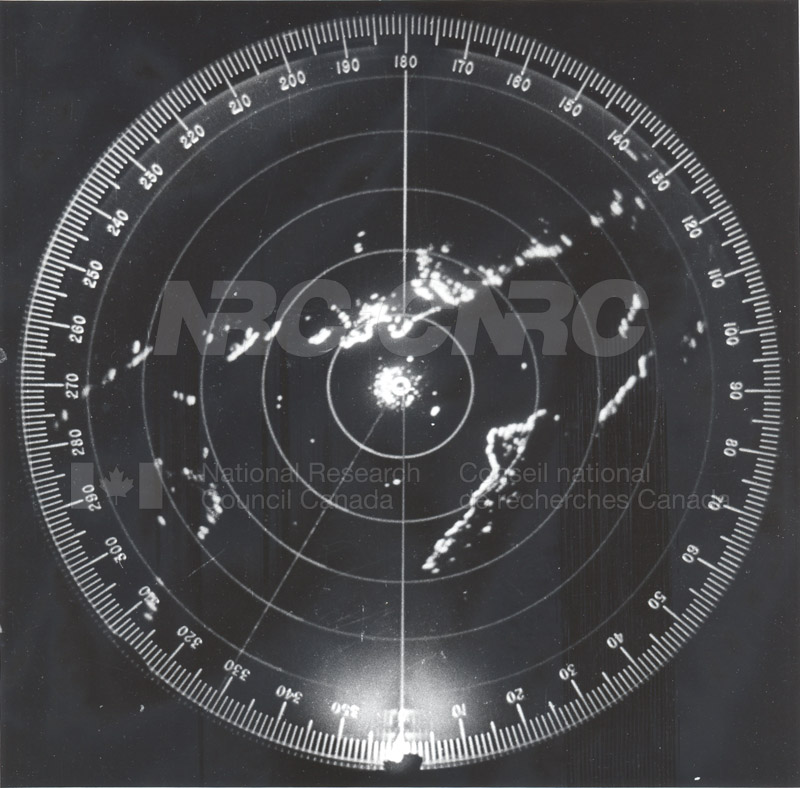
- Another example of the proposed style of the ASV Radar
Spoiler
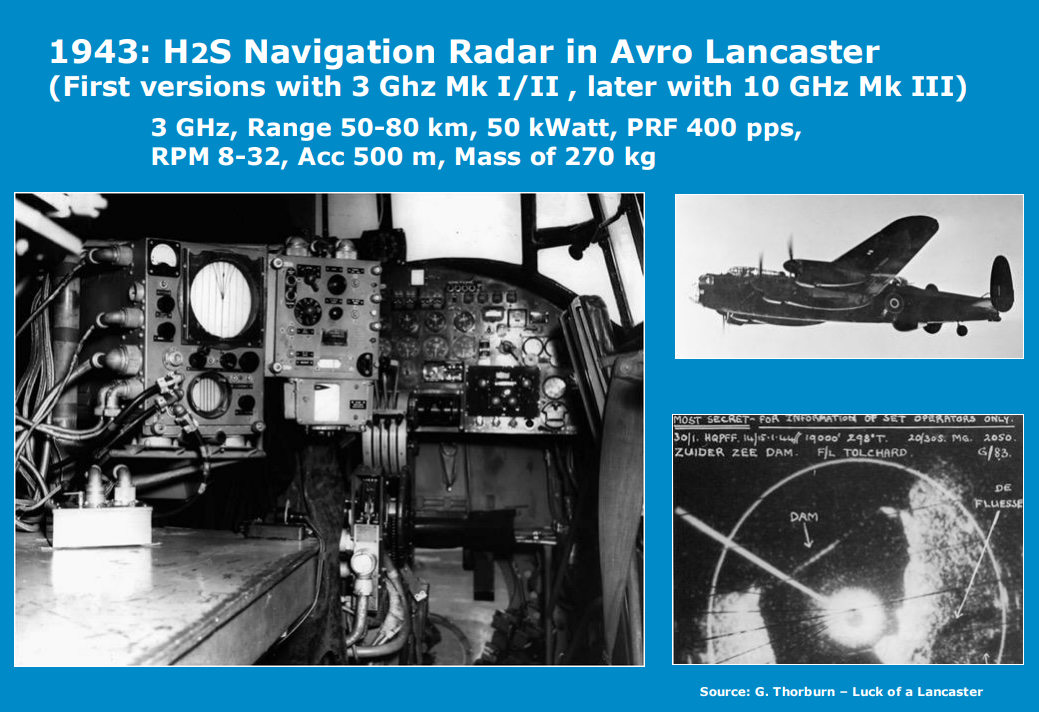
- Avro Lancaster’s PPI (H2S ground mapping radar, not an ASV, Im using it as another reference as to what the PPI looks like)
- Limitations and Balance:
-
Surface search radar detects reflected signals from vessels and other objects, it does not inherently distinguish between friendly and hostile ships. Unless supported by a separate identification system, all detected vessels would appear as unidentified radar contacts.
-
ASV radars could also detect coastlines (as seen in the second picture), which would allow the operator to identify geographical features and estimate the location of a radar contact more accurately by comparing the PPI display with a map.
-
This would not change how the in game map itself functions. Instead, the PPI would provide a very rough representation of the surrounding coastline and other radar returns. Players could compare this visual information with the in game map to estimate the location of a potential hostile vessel more accurately.
-
The PPI does not identify what each radar echo represents. It is up to the player to interpret the returns and determine what they are looking at, unless the aircraft is equipped with a separate Friend-or-Foe (FoF) identification system compatible with its radar.
-
ASV radars worked by radar cross-section, meaning that if a large battleship was bow towards the aircraft (depending on altitude), it may appear as a small blip, compared to a destroyer portside towards the radar.
-
This could make it harder to detect smaller coastal vessels such as torpedo boats, particularly against sea clutter. Surfaced submarines could also produce weaker returns depending on their size and orientation relative to the radar.
-
The PPI would display bearings and cardinal directions as you turn, allowing you to give your allies bearings of contacts.
-
Ships currently available in game do not appear to possess a functional RWR or ESM system to my knowledge. One potential exception might be USS Newport News, considering it was equipped with an AN/SLR-2 in real life, although I do not know whether this equipment has any functionality in game.
-
This would mean that, currently, ships have no way of detecting incoming maritime radar emissions.
-
Certain aircraft, however, might be able to detect emissions from maritime search radars, such as the Shackleton’s ASV-21D, provided their RWR supports the appropriate frequency range.
-
The Shackleton’s ASV-21D operates in the centimetric radar range. Therefore, an aircraft’s RWR would need to support the radar’s operating frequency to detect its emissions.
- Additional Notes:
-
Some radars were capable of detecting aircraft but I dont believe it could be used as a feature.
-
I believe we could combine our current air to air radar style with the PPI images, have the PPI be a full circle with your aircraft in the middle, and only display the areas the radar can sweep.
-
I was unable to find proper documentation as to what altitude each type of radar would work at their peak and what these ranges would be.
-
Several different types of ASV radar receivers and displays existed. Some did not use the PPI display shown in the Visual Examples section. However, for simplicity, all aircraft equipped with maritime surface-search radar would use this universal PPI-style interface in-game.
- Yes
- No
- Sources: