China wont export their Gen 6, USA might but it will be heavily diluted. Russia it is a real leap in capability they will get there with something that they class as 6th Gen.
Tempest has a real chance if all Stakeholders can cooperate.
Dassault have the right idea with the F.5 Rafale and offering it with the autonomous wing man system. Britain needs to go down this pathway to make the transition to Gen 6 and to prepare for that style of warfare.
I have read that the F-47 RCS and Emissions will be so low it will be incredibly difficult to detect. How do you detect something like that and then produce a firing solution. The theory behind Gen 6 air battles is facinating.
The few common projects between France and most other countries, including Italy and britain overall went well. However any major project with France and Germany seems to be destined to always fail. 2 hotheaded countries with very different needs don’t really make for great partnerships.
Meanwhile, it’s surprising that the UK did not try to go for a navalized EFT while France was part of the project. The QE class is technically convertible to a proper CATOBAR, but at the time the carrier came into service it wasn’t economical anymore. Would need a pretty massive redesign of the structure of the EFT to accommodate the landing gear, reinforce the structure… Britain also only operates nukes via their submarines so they did not have the same exact requirements as France, but it would have been much closer still
Guess it was all a timing issue in the end
just dont ask about jaguars export success. Torpedoed by the french to sell the mirage.
honestly im surprised we didnt either. by the point where typhoons design was almost fully done the UK govt had already decided to kill the harrier early (one of the many things the 1997-2007 govt screwed us on). We wouldnt have a replacement for Shar and GR5-9 until F-35 a decade after harrier was euthanised from service.
perfect storm of france being france, germany being germany and the uk turning into the yookay.
Russia doesn’t have the capability to make a 6th gen as of now imo. Between the sanctions that still limit their access to sensitive tech and their war economy more focused towards low cost equipment, i don’t think they are even in the race for 6th gen.
The US also lost a lot of thrust with it’s partner. I however don’t put China out of the race. They might very well be capable to export some 6th gen to some degree. It seems they have multiple prototypes as of now, so they might have more incentive to export some of them.
At this point, they should redesign the rafale with some internal bays and more refined VLO shapes, and it would basically be 5th gen.
for most stealth aircrafts (and ig f47 included), RCS is low in X band. We will probably see improvements in radar technology and probably longer waves, which will detect stealth aircrafts much easier. Nowadays computing power and radar tech has improved sufficiently to get probably get decent radar solutions on VLO targets despite the (on paper) less accurate band. Ground stations already operate radars in similar bands and apparently are much better at picking out stealth aircrafts than before
consider that the f47 will come with standarized 200+km range missiles. current gen IRST can have firing solution at around 100Km for a frontal jet in dry thrust at best (so with clear skies), so it’s not enough anymore.
The argument can totally be made with the f35, as the US don’t operate anything better than the AIM120D (and the f35 famously did not operate in bad weather for a significant time, hello “Lightning 2” which can’t handle lightning), but it’s harder to make a case for the F47
Egypt originally chose the EFT. Germany refused to sell, so they instead bought the Rafale.
While the rafale started getting better reputation due to being combat proven, the egyptian deal is the first rafale export and probably was a major factor in subsequent contracts being made
IRST requires very good atmospheric conditions. It is not reliable especially when you consider you might be able to see them but can you shoot them.
I see Gen 6 based on what I have read as a battle to stay undetected and that includes not using the Radar but using the autonomous wing men to scan and then like a team of Destroyers hunting a sub you need to find and triangulate absolute sensor fusion shared between the Gen 6 and the UCAVS.
It will not be like air combat is now, get high and fast and launch missiles from 150 miles away.
But its not like Spain jumped into the project out of nowhere. The new project architecture was agreed upon by the respective countries which really shows that the problem was how little pressure the french government could put on Dassault, because of their extraordinary importance for the french MIC. Pretty much any end would have been a win for Dassault.
Germany and Spain agree on giving Dassault bigger workshare → win Dassault
Project fails which means that France is going for national solution which of course heavily includes Dassault → win Dassault
France is never going to buy a non domestic fighter so Dassault was never in any danger should FCAS fail.
I wouldnt even necessarily say that but i would say that failed european cooperations in the aerospace sector seem to have one companies name come up more often than others.
When your plane cost as much as an f-35 over it’s life no wonder it does not export, add the fact of lying to your clients in the mix and the previous thing you said about how the upgrades were handled.
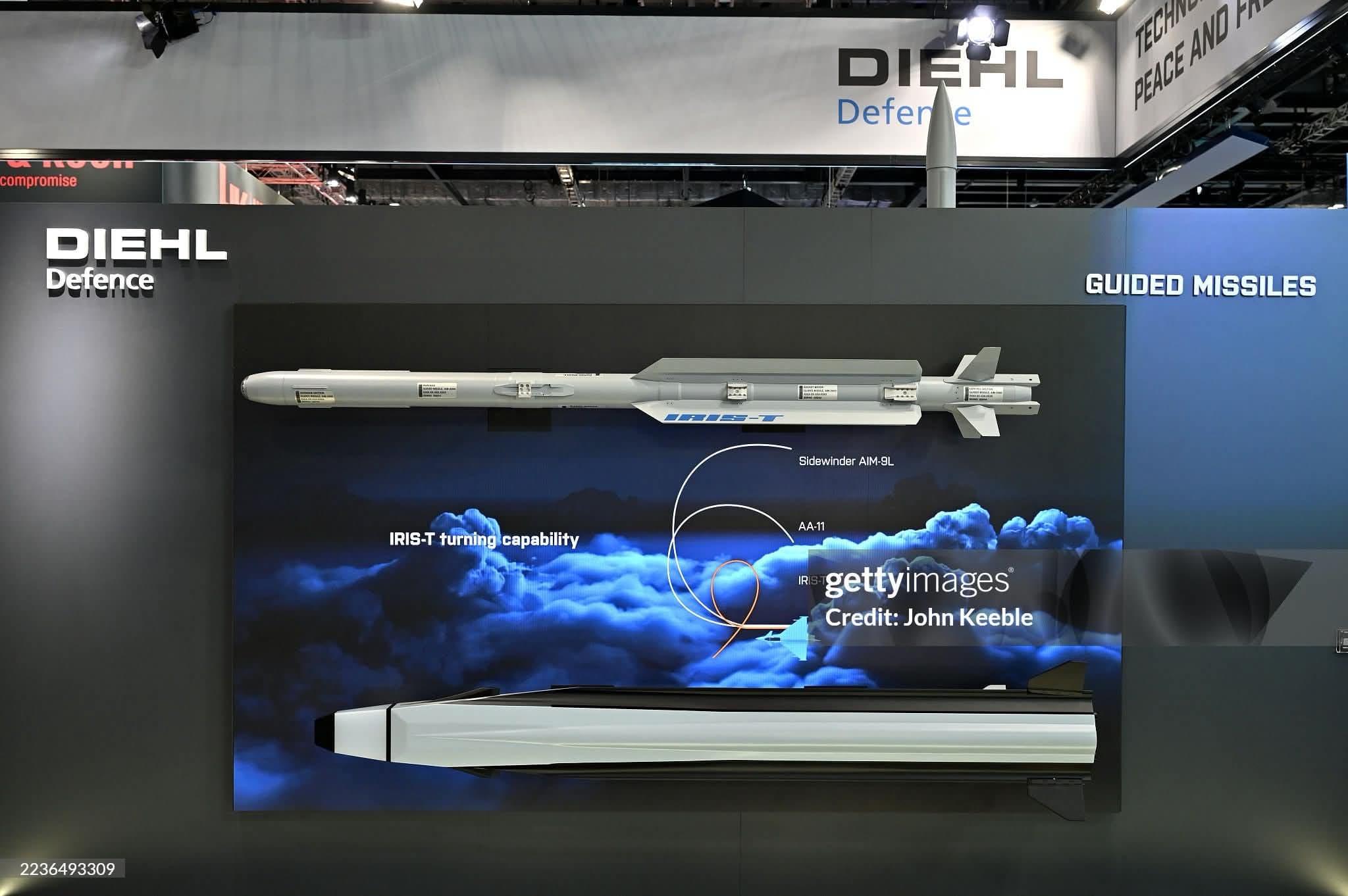
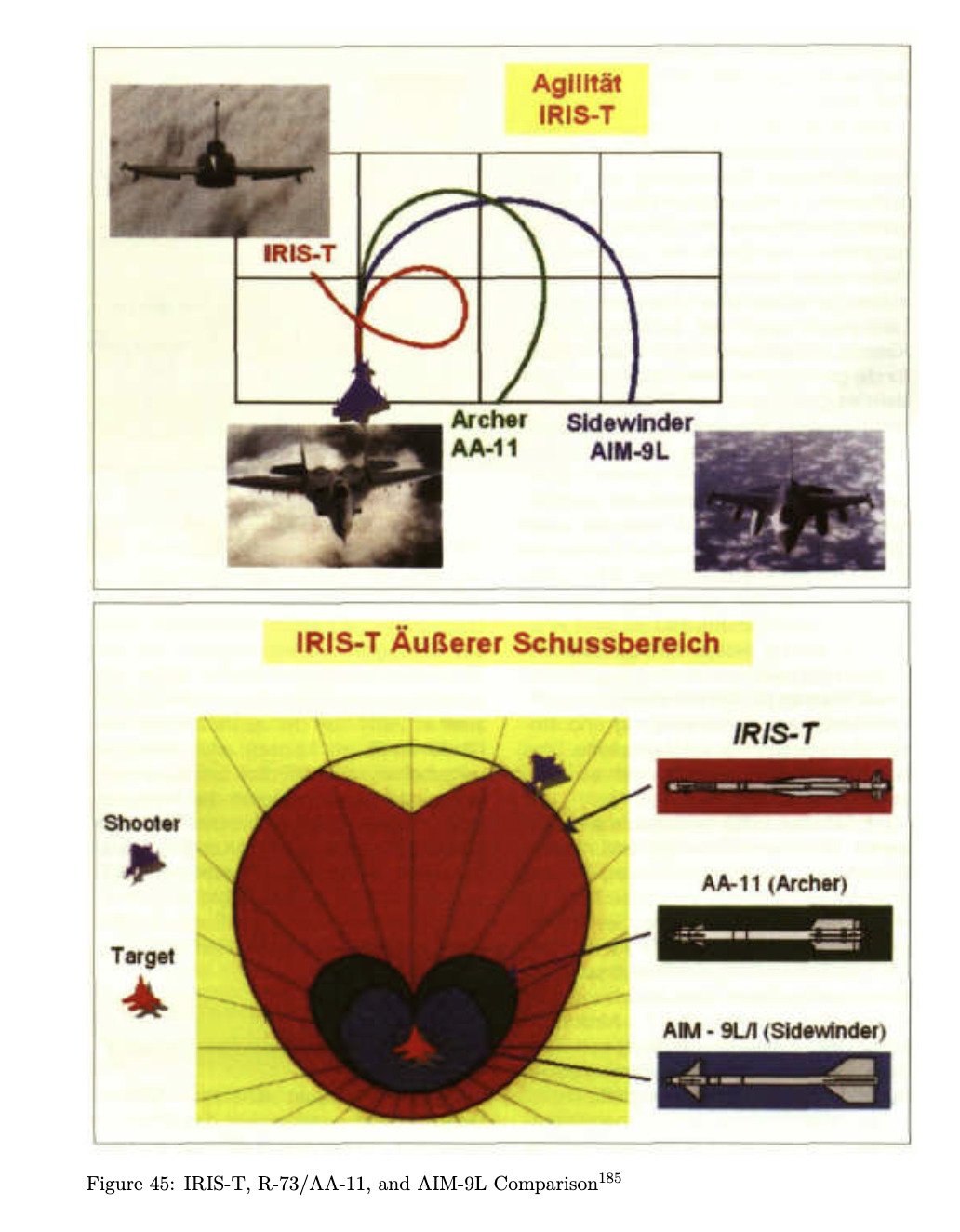
Gaijin thinks they’re real funny nerfing it into the dirt, and it’ll likely stay that way forever in-game, considered their continued blatant abject hatred of germany, but for other ppl’s sake who might be interested, here is a comparison (from manufacturer) of turn radius and weapon employment zones compared to the other IRAAM’s the german military used:
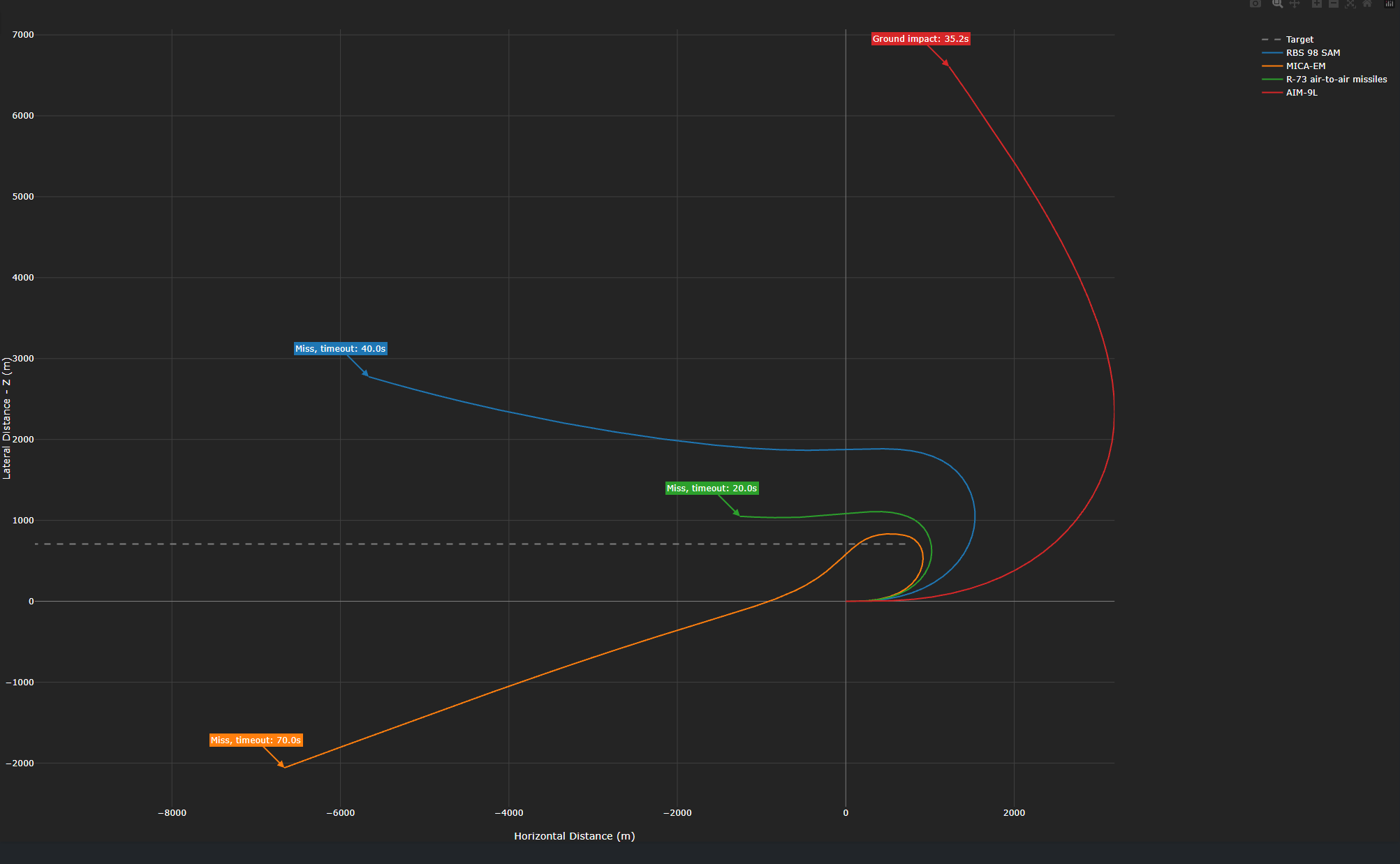
If said manufacturer claim is accurate (and there’s no reason to believe its not quite frankly, since “more manoeuvrable than R-73” was a design goal iirc), then the IRIS-T should likely be tighter turning than the current in-game MICA, which its very much not…
Edit: looks like Devil beat me to it lol
You’d likely need to give the tailfins more control authority (for stability) and adjust the PID controller to try to make it work. Granted irl the IRIS-T is claimed to use an H-infinity controller, so it’ll never work as it does irl in-game, but they could get it closer if they actually wanted to.
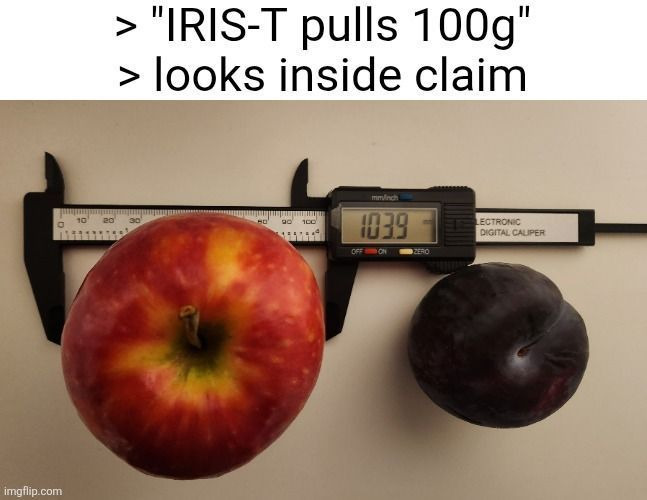
Doesnt help that the french mains maliciously bug report the IRIS-T to nerf it, such as with the 50G “source” that got its G limit cut down, cuz DS’ second favourite thing to do behind lying about french stuff is trying to nerf german stuff
Half a 9L’s turn radius is still quite good, but it is the first production TVC IRAAM, and its 10-20y older than western TVC missiles. Assuming the missiles are travelling at the same speed (for simplicity), half the turn radius is double the G-load.
Giving me flashbacks to my childhood where I got blamed for something I didn’t do. I never made a report to nerf the G-load of IRIS-T.
The problem with this theory is that it doesn’t account for the guidance delays. There’s reasons to believe the R-73 could have overperforming guidance delay while the IRIS-T could have underperforming guidance delay. Part of why the MICA is so strong in high off-bore shots is because of its very low guidance delay of just .15 seconds which is the lowest out of all fox-3 missiles iirc.
I messed around with the unmodified rbs98 on the JAS39E and there is def some funky guidance shenanigans going on. IRL is there a difference in programming between the standard air launched and SL variants? Perhaps a guidance delay on the SL accounts for time taken to leave the launcher vs immediately going HOB in the air as seen in test fires.
If it does in fact use H-infinity as claimed, I dont think it need it.
The advantage of an H-infinity controller is that, too my understanding, it basically “builds” a new controller for every shot, taking into account all variables defined as important by the designer of the controller, and optimizing for the desired outcome, so the missile being air launched or ground launched is likely irrelevant, as the guidance controller will optimize for the launch conditions and target conditions on its own.