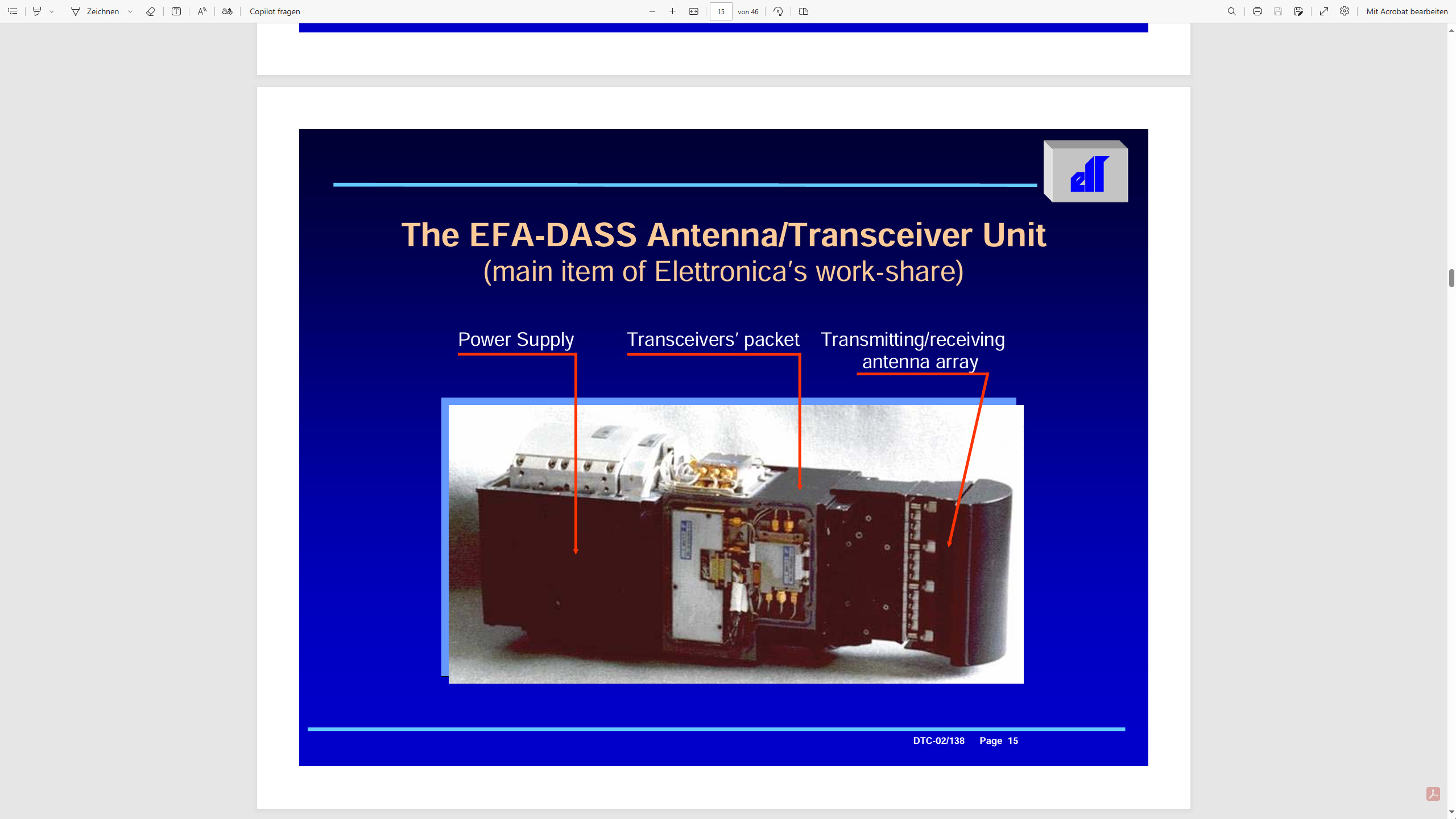
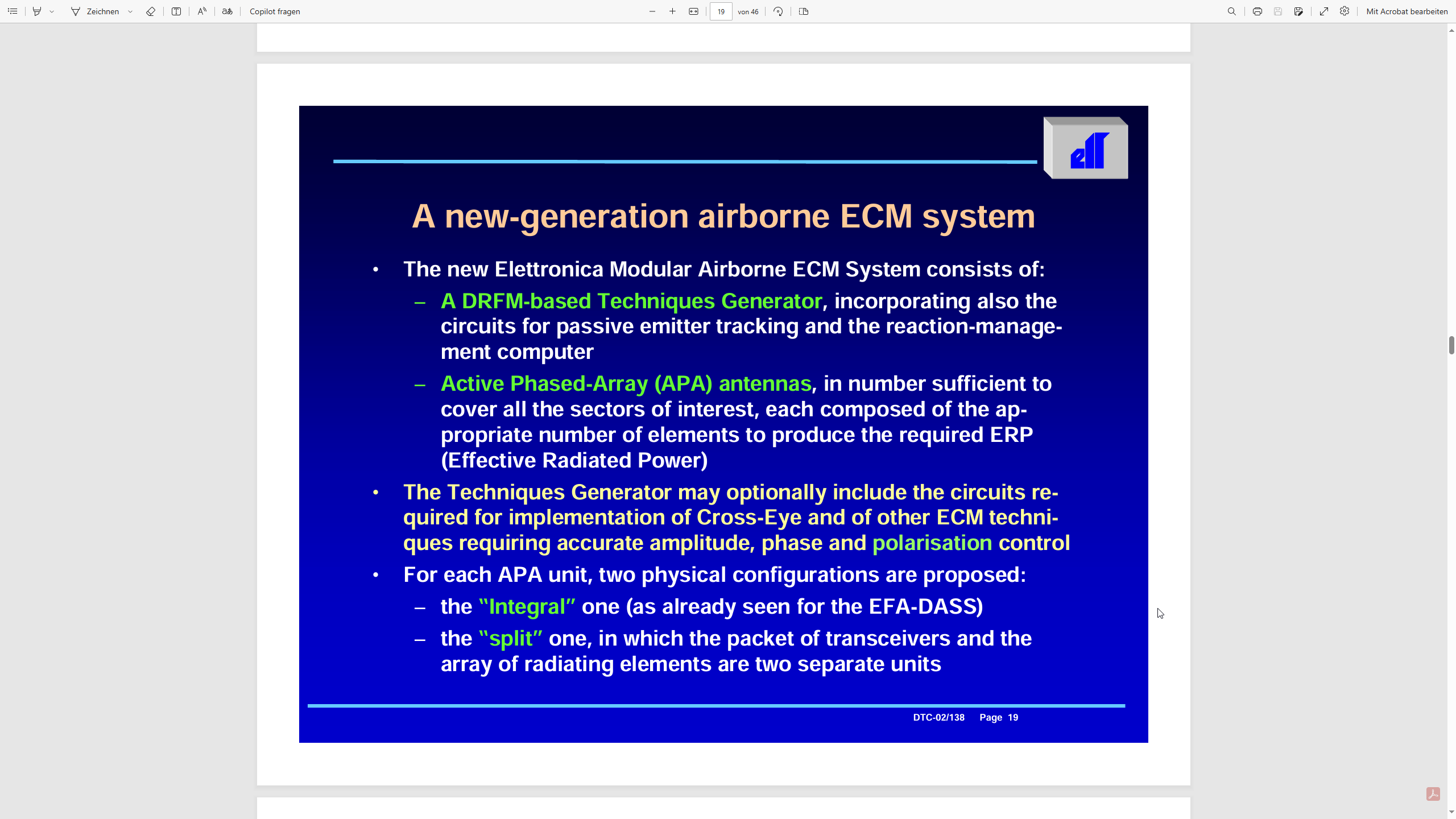
i am asking cause what they are describing is essentially an RWR eg ID´ing Radars, their direction, strength…
also i am being a mong, and forgot what we were talking about
i am asking cause what they are describing is essentially an RWR eg ID´ing Radars, their direction, strength…
also i am being a mong, and forgot what we were talking about
According to the declassified RAF manual for the Harrier GR.7 the PVS2000 MAW is E/F band.

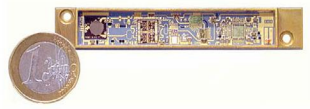
And all the associated electronics. This is a I band (3 cm wavelength) TRM, you’ll notice it is a fair bit longer than 3 cm.
You mean the radar which was over a metre in diameter, with tons of room behind it to fit electronics?
Look at the size of the MAW antenna. You really think there are there are 1,000 TRMs on the top face of the wedge and 1,000 TRMs on the bottom face, with all the associated wiring?
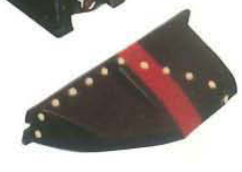
Ok, Preatorian MAWS is based on PVS2000, it’s not PVS2000, but then again GEC-Marconi is laying big time, because E/F band are by no means “high resolution radars”.
However, it just means the resolution is sh1t, but it doesn’t change the fact that the wing root module has 2 panels looking up and down and that they have probably the best gain while looking 60° (or so) up or down of the wing chord and most likely see past the vertical. :D
In game, MAWS can’t see past 45°, or so, off chord line, which is point of the report.
I may have completely omitted TRMs from the report, as this isn’t a report about resolution, but coverage, as stated in the title.
2 years of sal brimstone 1, not even brimstone 2. Thank you gaijin
45 is just the default when there is no sources
This is the part I just don’t understand. They act like Brimstone 2 is MMW-Only
(looks at the chinese MAW´s, shit will never be not funny)
Bluetooth Mi28🥲
Yes but you appear to have based your argument off this quote talking about PVS 2000.
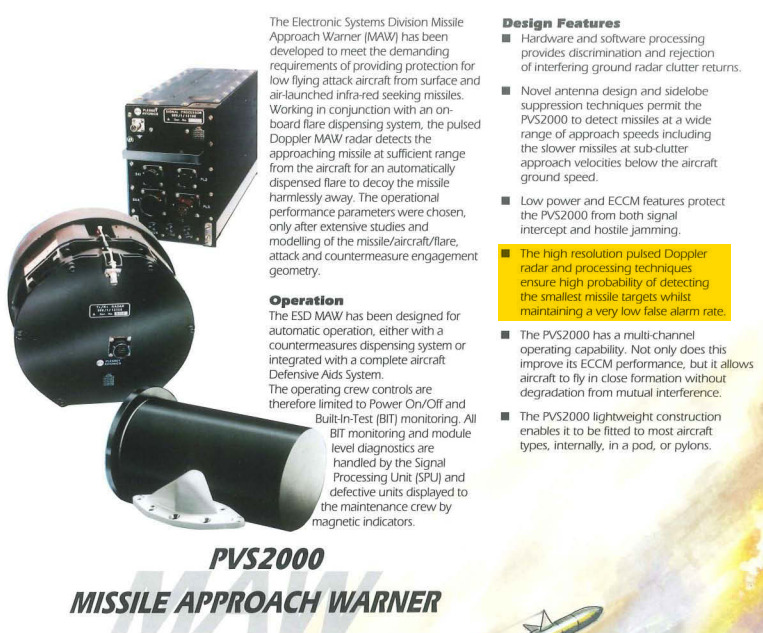
Consider that PESA / AESA radars lose gain the further away you get from the axis of the face, with 60° being the practical limit for detection with PESAs and AESA radars of that era (with significant degradation in detection range already occurring at that angle). Looking at the angle of that wedge it would appear to place the antennas at, or quite possibly even beyond, 60° relative to dead ahead.
So if the antenna is two PESA / AESA arrays as you claim it would have highly degraded, or even non existent capability at angles close to 0 degrees elevation. Of all the places to have a blind spot that’s a real bad one. Also you can see from the image of a TRM that I put in my last post, those things have depth, what are the odds that you can fit the top and bottom arrays, along with all their wiring into that wedge without the back of the arrays hitting each other.
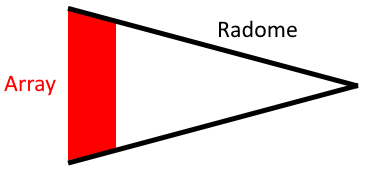
You don’t even seem to have considered the hypothetical possibility that the array is looking straight forward with the wedge being a radome i.e. something like this when viewed side on:
Also EuroDASS happily boast that the ESM and LWS provide spherical coverage, but always carefully avoid saying that the MAW does. If the MAWS did have spherical coverage why wouldn’t they just say it, like they do about the other elements of DASS?
gotta wait for EVO dass that they maybe say something about the MAW trust :)
No. Who puts radome beneath the fairing?
This is what the installation looks like for what we have in game (+/- 45°, or so).
https://militarywatchmagazine.com/article/su35-triple-radars-detect-stealth
I mean, look, if this is the way you’re saying and the MAWS is indeed E/F band in a single row (su-35-like installation), it wouldn’t have any resolution to determine inbound missile’s vector in any meaningful way, as it’d have 5ish elements per wing root module, which is by no means enough to plot a vector, let alone avoidance trajectory, which Praetorian does.
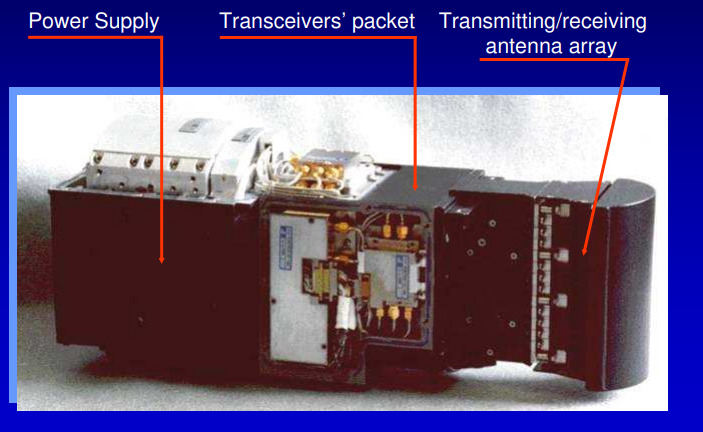
Well the fact you can’t see the exposed TRMs already confirms there is some sort of radome over the array, otherwise you would see the TRM modules.
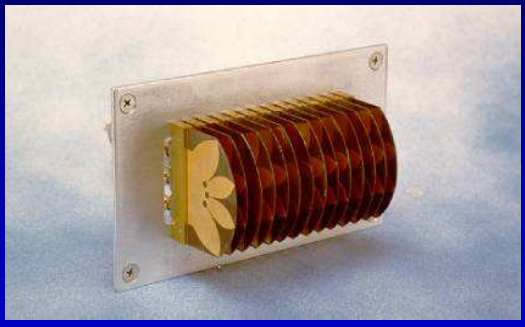
Also to answer your question: EuroDASS do. Here is the design of the exposed AESA ECM array:
And here is the module which goes in the aircraft with a protective radome over the array:
I remember discussing this topic in the past and iirc, it was more likely the MAWS were AESA than not?
Jammer pods are 100% AESA, as stated in the presentation shown in said comment:
Furthermore, I’d covered that to actually meet the requirements for the MAWS system (multiple simultaneous target tracking, 360deg azimuth coverage with 3 antennas, accurate enough missile tracking to handle optimal automatic CM dispensing AND suggest optimal aircraft flight path for missile defeat), it would basically NEED to be an AESA system, particularly since there are no apparent moving parts to any of the antennas.

So once again, as I’ve said in the past, there is nothing EXPLICITLY saying the EFT’s MAWS are AESA, but its almost impossible for them not to be, and the tech was already there, since AESA’s are explicitly known to be in use for the wingtip jammers.
The MAWS has a centralised transmitter unit. By definition AESA radars do not have a centralised transmitter, using individual TRMs to do the transmitting. Ergo the MAWS is not AESA.

touché, ty for the correction :)
Think its PESA then?
This isn’t radome, this is housing, which isn’t “pointy”, like it needs to puncture the supersonic stream, since it isn’t in contact with one. Yeah, wing root module does have a housing, like ECRS has one, or whatever else, which is why you can’t see the elements.
It needn’t to be AESA, per se, it can be PESA, it doesn’t really matter.
What matters is resolution and a freq. required to figure vectors.
Su-35’s slat Lband can’t, eg, determine if the target is above or below the aircraft as there’s only one row of TRMs. It reads azimuth only.
You’re picking at semantics of wording, not really addressing the root of the discussion, I could have just as easily used the word housing in the diagram.
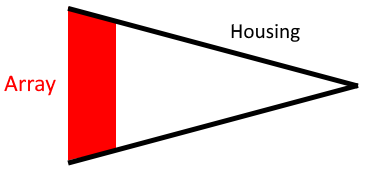
The purpose of the diagram was just to show that there are alternative possibilities. You’re position appears to be that it’s pointy, so it must be two arrays. I’m just pointing out there are other possibilities, you may or may not agree with them, but you can’t make a bug report on the basis that you theory must be right without proving any evidence.
If you think that there are two PESA arrays in there then stop picking around the edges of my argument and address the core points:
I could have sworn that some graphics showed the wing root MAW antennas to be split into two for each which lead some people to believe that the wing root MAW radars are (FM)CW (frequency modulated continous wave) with one transmitter and one receiver antenna instead of pulse radars with transceiver antennas. If that would be so, these radars (at least for the wing roots) couldn’t be AESAs by design.
Yeah ok, but why would anyone do it?
Every single example you showed of housing is right next to the element it is designed to protect, which is how it works. Your assumption is, I guess, possible, but, you know…
Here’s a thing, these elements are so small that they don’t even need “wiring”, but it looks more like printed circuit board.
Not necessarily. If elements are Ka band small, you can fit several rows just on the edge in front.
Also, as mentioned, I can’t figure the angle exactly, but it’s very possible that scan volumes overlap.
You see the flat portion on the outer rim? This is likely where the scan volume from the main panels failed, so the manufacturer added separate panel dedicated to this part of the envelope.
Finally, it nowhere reads the scan volume is identical all over the sphere. There are angles from which threats come more often and those may be better covered vs less important angles, which aren’t.
well then if you know how they look you surly have a picture of them that you can send