MEC (Manual Engine Controls), is a game mechanic more-so known for SIM, than ARB usage. This is due to a few reasons, but mostly just boils down to it generally not being seen as worth the effort of usage. With lots of key binds being required; for what ends up generally just being slightly lower drag, or being able to run WEP for prolonged periods without overheating. While this is generally agreed to be useful, not enough so to where its worth learning for most players.
While I do personally believe that the complexity of MEC is largely overblown, with things such as mixture being not fully implemented on all but a few aircraft; what I present today is something on the other side of the argument for MEC, a method for significant performance gains using it.
So, what is EPS (Engine Power Shunting), as I have dubbed it? Well, put simply, its a technique that allows for prop aircraft to gain a brief, but often significant increase in thrust, by effectively “borrowing” the power from the future.
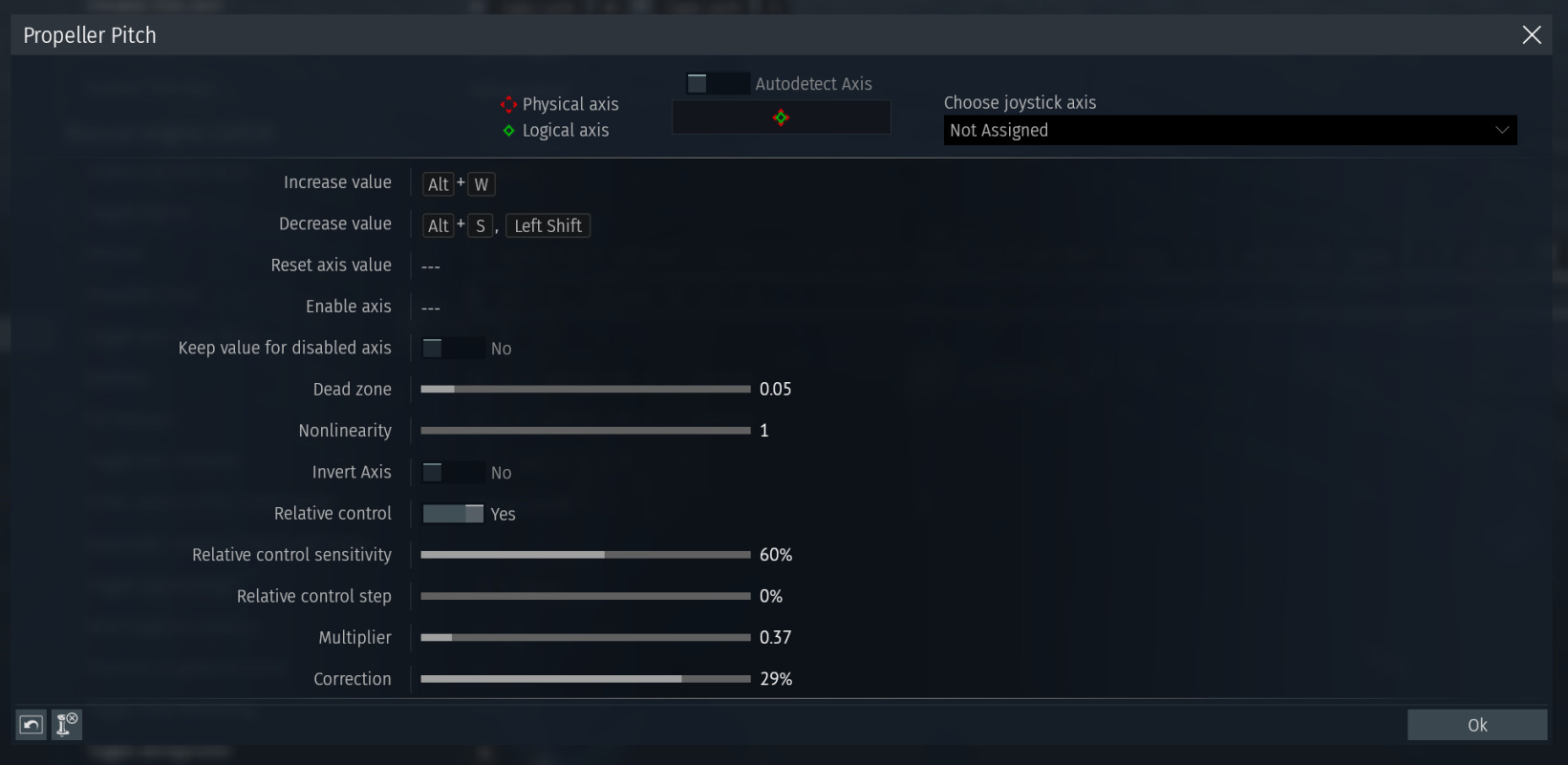
In order to perform EPS, you will firstly need keybinds set to enable MEC, and additionally to disable auto-prop pitch, for aircraft with automatic controllers. Then, within MEC settings, you will need to bind a button to “Decrease Value” within Prop Pitch. From there, there are a few other settings which must be set; “Relative Control Sensativity”, “Multiplier”, and “Correction.”
The values you choose for these variables will greatly alter the exact behaviour of your EPS, and I highly encourage any user to mess around with them, both for personal preference, and because ideal settings will vary by plane and game play style.
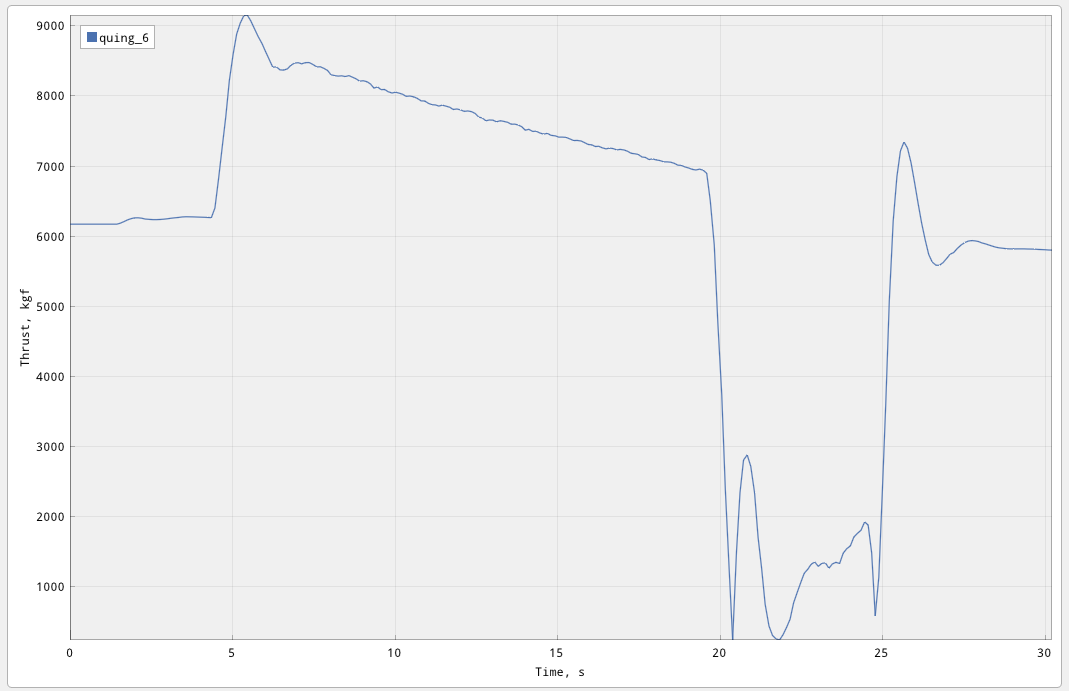
Once everything is set an enabled, all you need to do is load into a test flight or regular mission to test it. If the settings are done correctly, then pressing down the chosen button will cause a gradual decrease in propeller pitch, along with an increase in thrust. This is due to the propeller pitch exceeding the maximum value that can be sustained by the engine, leading to it’s rotational inertia being used as a store of potential energy which it converts to kinetic energy in the form of thrust. Once the button is done being pressed, the prop pitch will return back upwards to 100%, leading to a decrease of thrust as the prop pitch becomes shallower than optimal, along with the decreased RPM of the engine.
Now, not all planes will gain the same amount of thrust for doing so, as a few factors play into the gains you’ll see from, this. Those mainly being an engine’s inertial modifier, its HP, RPM, and the diameter of the propeller. With the greater it has of those figures, the greater benefit this can have. With the largest benefits being on planes such as the qing-6, which has all of those in spades, and can, as the title says, roughly double its power, when EPS is set to deploy aggressively. Although since the energy gains are proportional to the exchange rate of the potential energy, on more generally useful deployment rates, it will be closer to a 50% increase in thrust.
It is also important to note, that the longer EPS is deployed for, (in terms of Prop pitch%), the lower gains it will see. This is due to the base thrust of the engine falls due to the decreasing RPM as potential energy is converted. With at around 50%, the effect generally being equal to regular thrust figures. Additionally, IAS also effects the efficiency of it, although it varies exactly from plane to plane, they all generally benefit a bit more at lower speeds, albeit with their being both a minimum, and maximum speed, at which you do not effectively gain from it, (those being outside the bounds of general flight conditions, however).
Now, how do we actually change how it deploys / recovers? Well, it goes back to those 3 settings I mentioned previously.
-
“Relative Control Sensativity” acts as a total multiplier, with higher values increasing both the deployment rate, and recovery rate.
-
“Multiplier” is a multiplier effects the deployment rate.
-
“Correction” is a baseline which effects the recovery rates,
As I have previously touched upon, a faster deployment rate will lead to more energy, for a shorter period of time, with a slower one being a longer period of increased thrust, albeit a lower increase to that thrust. With the rate you want for this varying largely by what you want to achieve with it. For instance I have mine set slightly on the longer side, allowing for effective use in vertical loops or energy traps, without draining my prop speed entirely.
Something I have not touched on before, however, is how the recovery rate changes how EPS behaves. This is due to the fact that recovery consists of two parts, firstly, the obvious prop pitch returning to ideal angle, but also, the recovery of RPMs of the engine. These two things result in it being that:
- The faster the prop pitch recovers, the less thrust is produced while it’s recovering
and
- If the prop pitch recovery is faster than a certain point, then depending on how much faster, the engine may still have reduced thrust for a brief period of time even after prop pitch normalizes.
So, there are generally two approaches to setting it. Either you can set a slow recovery, in which case you’ll have a long period of a low to medium reduction of thrust, or you can set it quickly, which results in a short period of very little (in some cases approaching zero), thrust. How you choose to set this does greatly depend on the aircraft and intended playstyle though.
So, yeah, that’s my little introduction to Engine Power Shunting. Its a technique I’ve used for a while, and really does give you a leg up on your adversaries. I’ve had a lot of fun using it to pull off seemingly impossible energy traps and such. So I just finally decided I’d let my little secret technique out, for the community to enjoy.
Disclaimer: Does not work with *most german props due to their prop pitch controller being set to absolute angle instead of optimal speed. Besides that, not all props will see the same gains, with most only seeing 10-20% at most; being able to reach very high gains is limited to only a fairly small % of aircraft.
Thrust gain claims are gathered via extrapolated localhost data, through programs such as WTRTI.