- Yes
- No
Hello everyone, and welcome to this new suggestion.
Today, I am presenting a new aircraft from the French Air Force dating back to the early Cold War era: the Douglas B-26C.
First, a quick explanation regarding the “B” designation. The aircraft I am discussing today is a version of the American Douglas A-26, developed during World War II. It was originally an attack aircraft, hence the “A” designation, but when the first versions were delivered to French forces, it was classified as a bomber because that was the role it was intended to fulfill; the name stuck for all subsequent variants.
This suggestion is essentially the same as the one for the B-version of the aircraft; both served in the same squadrons and possessed virtually identical capabilities, save for a few minor differences.
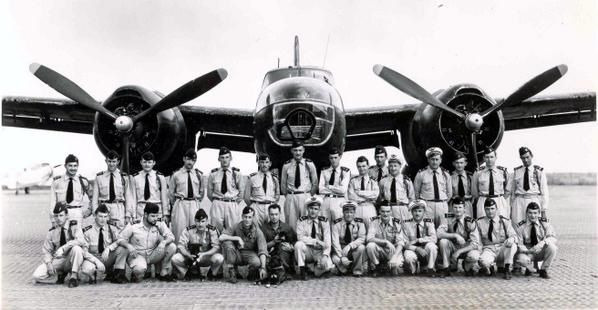
In the early 1950s, the Indochina War was raging; French forces were bogged down in difficult terrain and lacked air support, as the Air Force was still recovering from World War II. To address the shortage of aircraft, the French High Command turned to the US Air Force, which supplied 113 Douglas A-26 Invaders starting in 1951. Redesignated as the B-26, these aircraft were distributed among three bomber groups: GB 1/19 Gascogne, GB 1/25 Tunisie, and GB 1/91 Bourgogne.
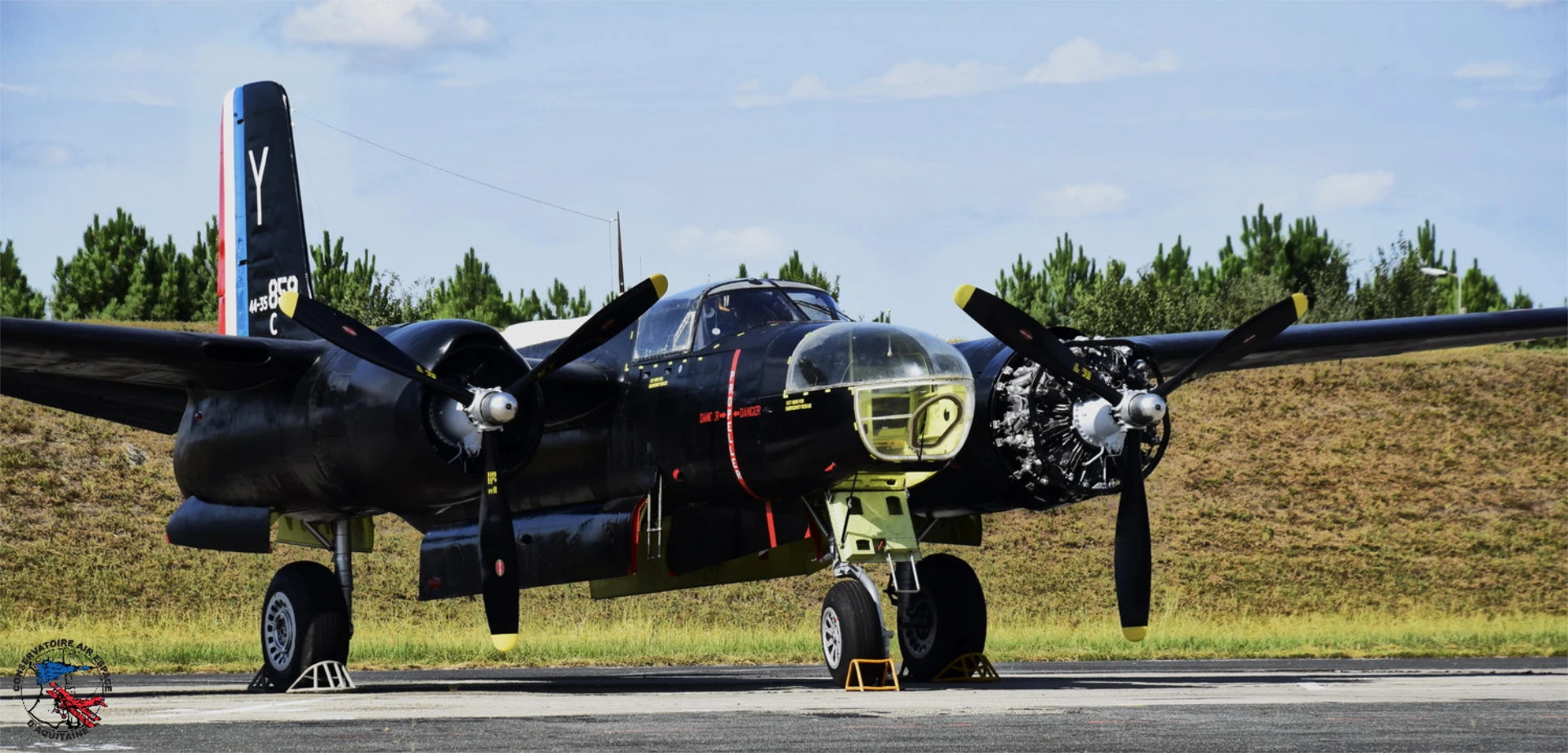
These squadrons flew a vast number of sorties during the war, providing essential air support that was highly valued by the infantry. During the Battle of Dien Bien Phu, arguably one of the most significant infantry battles of the post-World War II era, the B-26s made numerous passes but were unfortunately unable to save the French troops. It should be noted that, unlike the B-26B, the C-model featured a glazed nose equipped with a Norden bombsight, enabling low-altitude level bombing; other versions, by contrast, had to gain altitude to release their ordnance during a shallow dive in order to maximize accuracy.
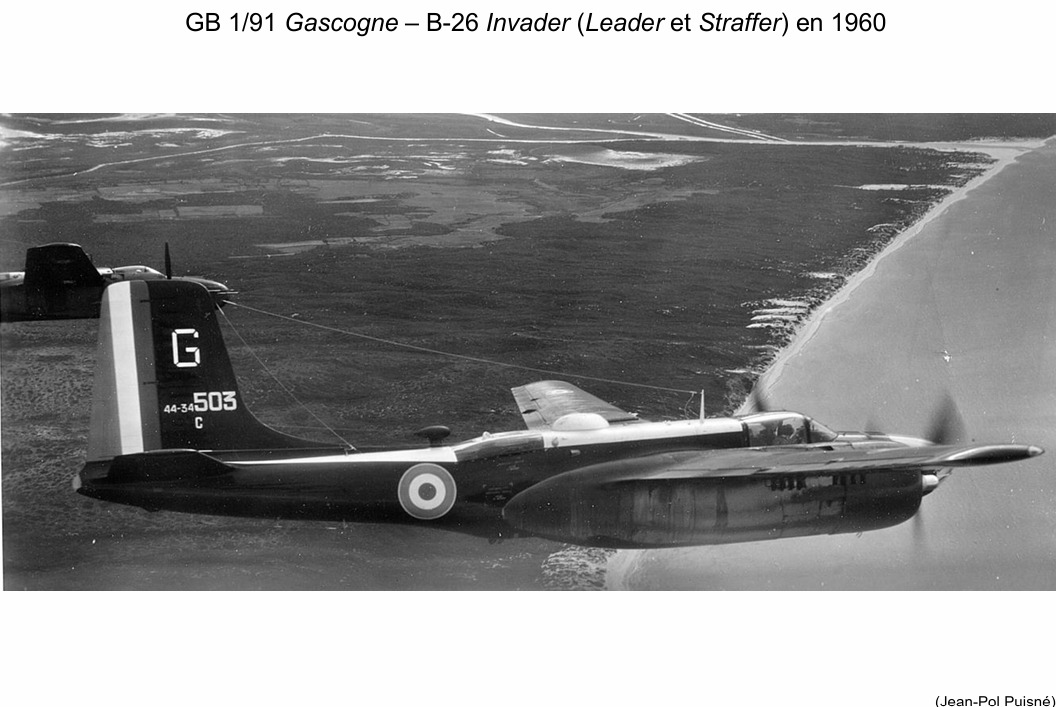
At the end of the war, the B-26Bs returned to France but were immediately redeployed to Algeria, which was then in the midst of its war of independence. They saw combat there once again, though under vastly different conditions, as anti-aircraft defenses were far less prevalent. A number of the aircraft underwent field modifications.
This aircraft can be incorporated into the game in various versions; the B-26C was a modular aircraft- though not quite to the same extent as the B model, it came close) that could be modified according to crew needs and mission requirements. The available configurations primarily depend on the number of defensive turrets. Originally equipped with two (one dorsal and one ventral), the aircraft soon lost their ventral turret and, towards the end of their service life, the dorsal turret as well.
During the 1960s, the end of colonial wars and cuts to military budgets led to the retirement of numerous aircraft, particularly propeller-driven light bombers and ground-attack planes. The B-26 was no exception; it was withdrawn from service starting in 1962 as squadrons transitioned to more modern aircraft.

Characteristics
Length : 15.47 m
Width : 21.35 m
Height : 5.56 m
Mass :
- Empty : 10.365 tons
- Full : 15.880 tons
The aircraft is powered by two Pratt & Whitney R-2800 engines, each delivering 2,000 hp, enabling it to reach a top speed of 570 km/h and a maximum range of 1,450 km. The crew consists of three people: a pilot, a co-pilot, and a gunner who operates the machine-gun turrets used to defend the aircraft and operate the visor during bombing runs.
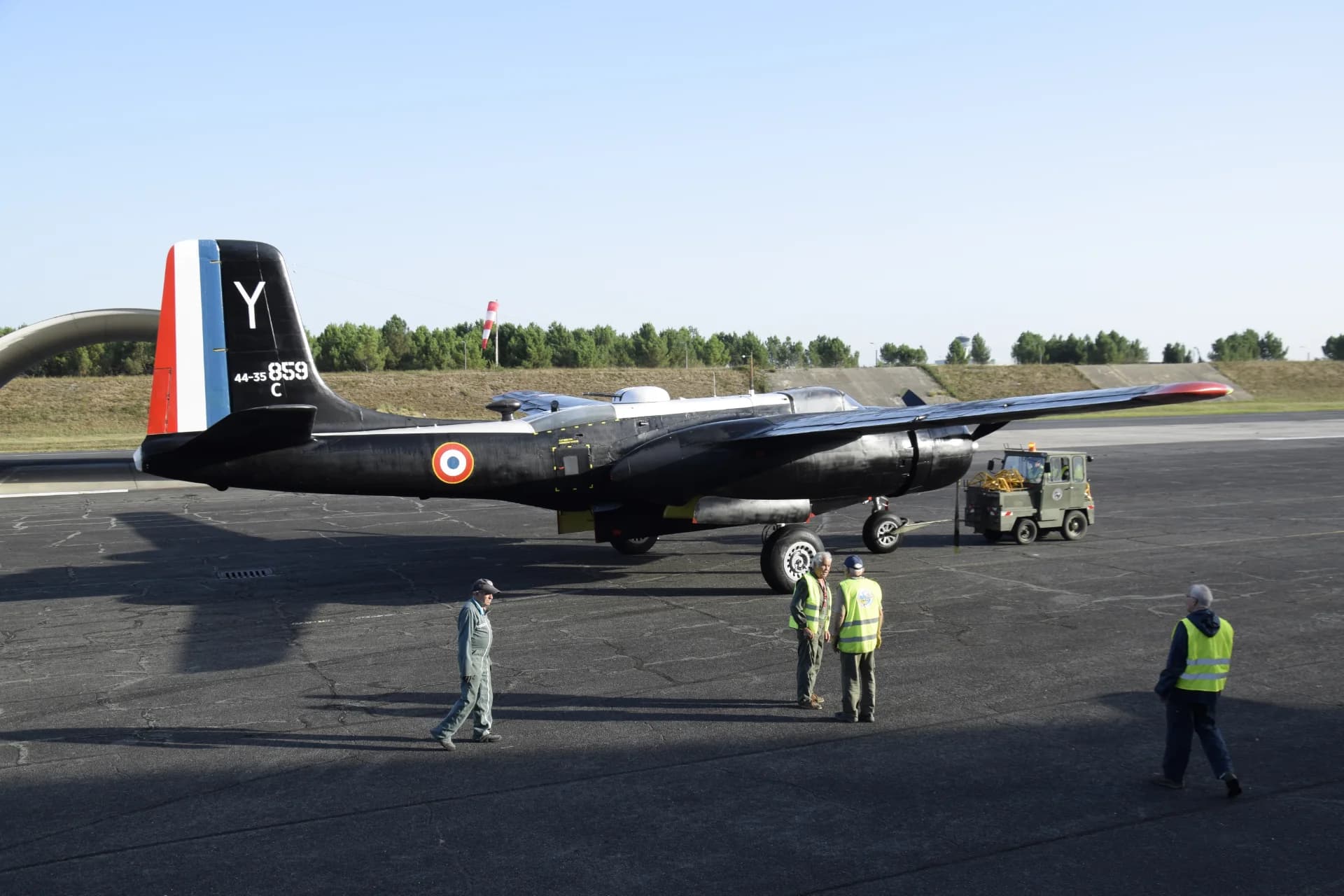
Visually, the vehicles initially retained their exposed metal bodies, like the American versions, but with French markings, before being modified and painted black with a white roof, particularly in Algeria.
Equipment
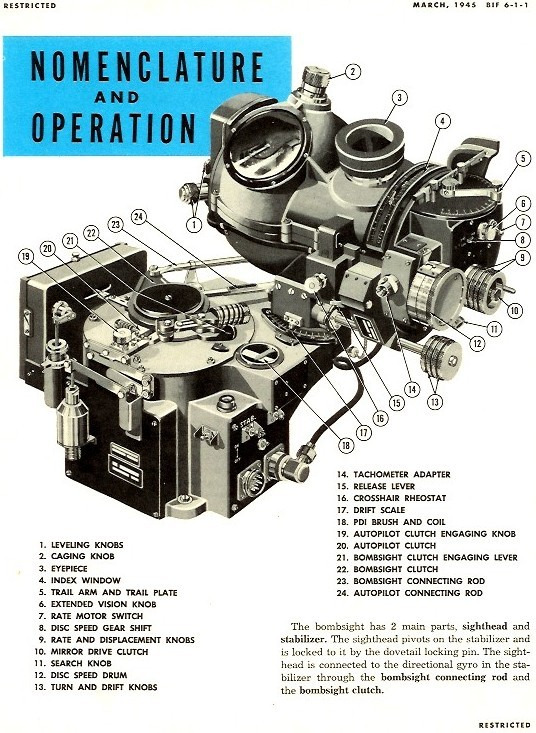
As previously mentioned, the aircraft is equipped with the Norden bombsight in the glazed nose, enabling bomb releases at lower altitudes and without diving toward the target, thereby enhancing the effectiveness and survivability of both the aircraft and the crew.
Weapons
The aircraft’s armament is virtually identical to that found on aircraft operated by the US military, comprising the following:
Offensive armament:
- 4 or 6 x 12.7mm machine guns in the wings
Defensive armament:
- 1 or 2 twin 12.7mm machine gun turrets (one dorsal and one ventral)
Secondary armament:
-
Internal bomb bay:
- 16 x AN-M30 100lb bombs
- 8 x AN-M57 250lb bombs
- 6 x AN-M64 500lb bombs
- 4 x AN-M65 1000lb bombs
- 6 x Napalm tanks (100kg)
- Cluster munitions
-
Under-wing:
- 4 x AN-M30 100lb bombs
- 4 x AN-M57 250lb bombs
- 4 x AN-M64 500lb bombs
- 14 x HVAR rockets
- 4 x Napalm tanks
- 2 x 2 12.7mm machine guns pods
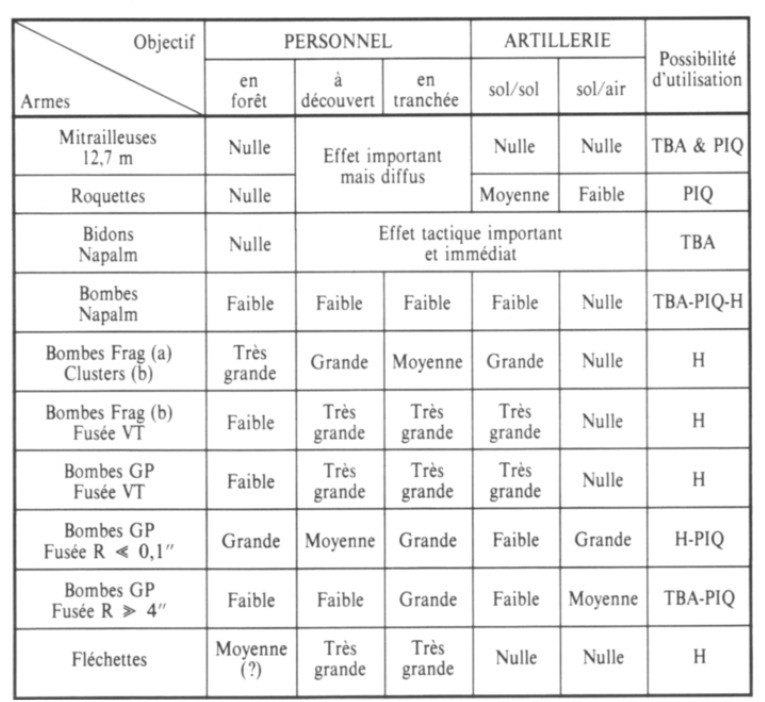
This aircraft would be a particularly interesting addition to the French tree, providing a medium-sized ground-attack aircraft with a substantial and diverse armament capable of engaging all types of targets, thereby effectively completing out the tree.
Sources
- ImagesDéfense - Les bombardiers A-26 B sur la base aérienne de Cat Bi à Haïphong.
- ImagesDéfense - Largage de bombes par des avions Douglas A-26B Invader sur le secteur de Phu My.
- ImagesDéfense - Vérification d’un avion A-26B par les mécaniciens sur le terrain d’aviation de Cat Bi.
- Invader - CAEA
- Les B 26 à Dien Bien Phu - Persée
- 22 - Douglas A/B-26 “Invader”. - Le blog de Avions de la Guerre d’Algérie
- Douglas B-26 : Au secours des fantassins
- Douglas A-26 Invader — avionslegendaires.net
- ImagesDéfense - Opération Picardie avec les chasseurs-bombardiers B-26 du GB 1/19 Gascogne dans la région de Ha Tinh-Vinh.
- SAL 28 Escadrille de traditions du GB I/19 Gascogne Haiphang Indochine
- Escadron de Bombardement