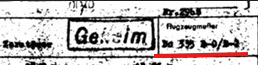
Update this is the B-2/B-0
Fuel System
Internal Fuel
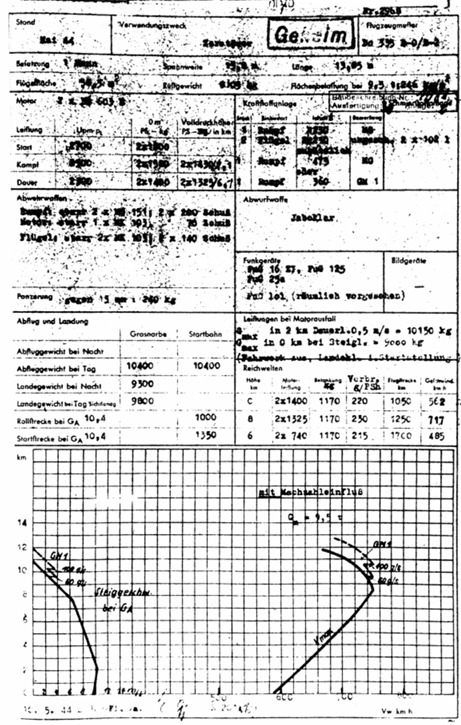
Main fuselage tank: 1230 litres.
Two wing tanks: about 210 litres each.
Total internal fuel approximately 1650 litres.
External Fuel
475 litre drop tank option.
Alternative Equipment
360 litre GM-1 installation in place of the drop tank option.
in game
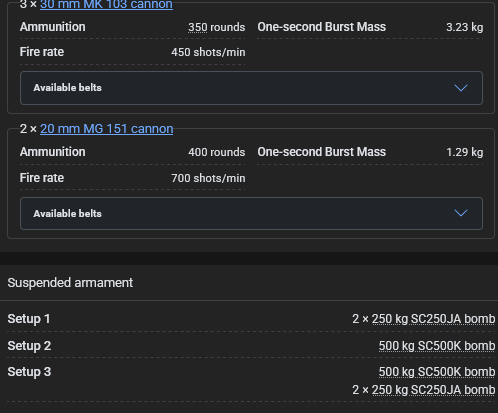
and what i found out Do 335 B-2 can carry two 500 bombs and 50 kg bombs
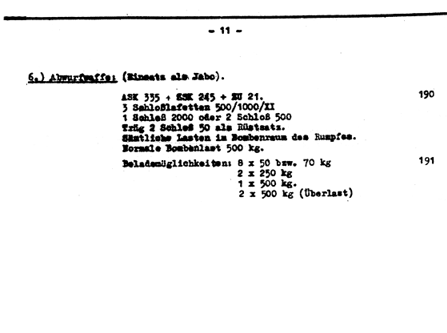
Internal bomb bay loads include:
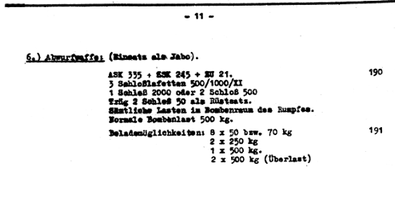
- 8 × 50 kg bombs
- 8 × 70 kg bombs
- 2 × 250 kg bombs
- 1 × 500 kg bomb
- 2 × 500 kg bombs (overload)
This:
- Light Bombs: 8 × 50 kg bombs or 8 × 70 kg bombs.
- Medium Bombs: 2 × 250 kg bombs.
- Heavy Bombs (Standard Max): 1 × 500 kg bomb.
- Overload Configuration: 2 × 500 kg bombs designated as an overload (uberlast) configuration.
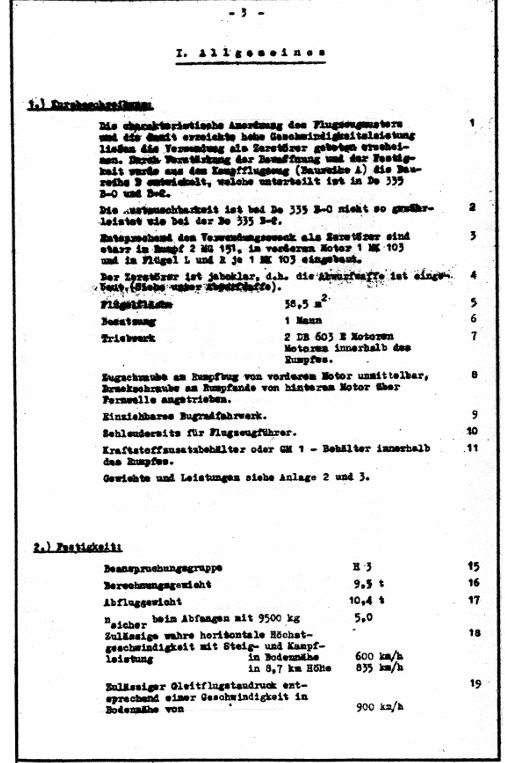
- Safety Features: Equipped with an ejection seat (Schleudersitz) for the pilot.
- Fuel/Boost Systems: Auxiliary fuel tank or GM-1 (nitrous oxide injection) tank located inside the fuselage.
it could install it but am not sure if it was installed in war.
Structural Strength Limits (Festigkeit)
| Specification |
Metric Value |
Details |
| Load Category |
H 3 |
Structural stress group rating |
| Design Calculation Weight |
9.5 tons |
9,500 kg |
| Maximum Takeoff Weight |
10.4 tons |
10,400 kg |
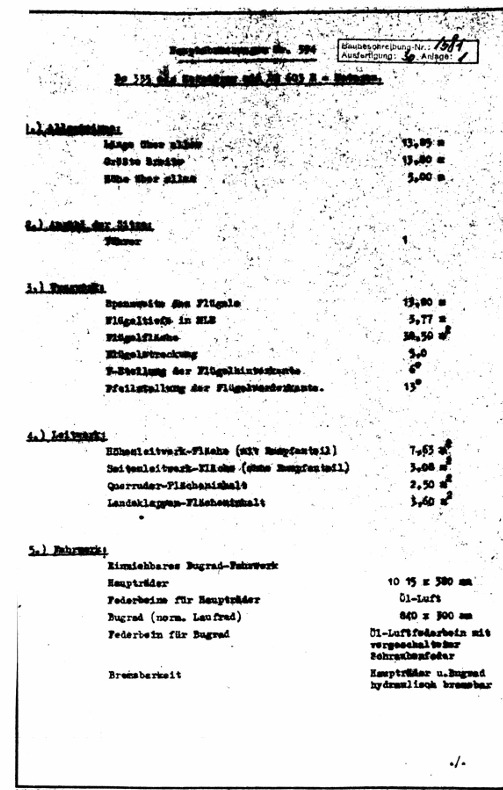
| Safe Load Factor ((n_{sicher})) |
5.0 |
Ultimate safe g load during pull out at 9,500 kg |
| Max Horizontal Speed (Sea Level) |
600 km/h |
At climb/combat power |
| Max Horizontal Speed (8.7 km Altitude) |
835 km/h |
At climb/combat power |
| Maximum Permissible Dive Speed |
900 km/h |
Dynamic pressure limit equivalent at sea level |
in game
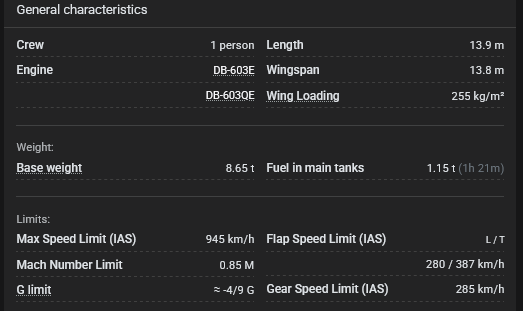
another image
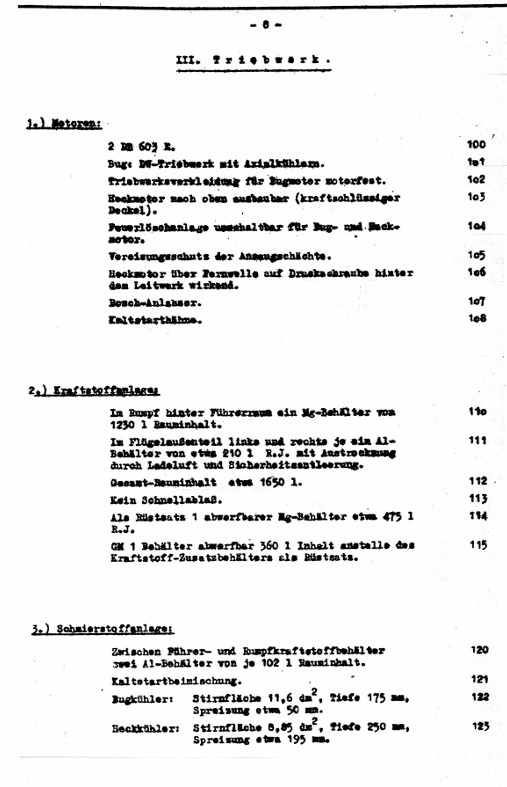
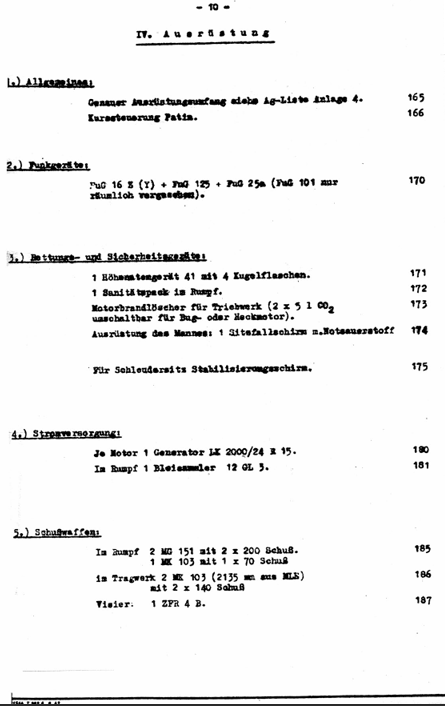
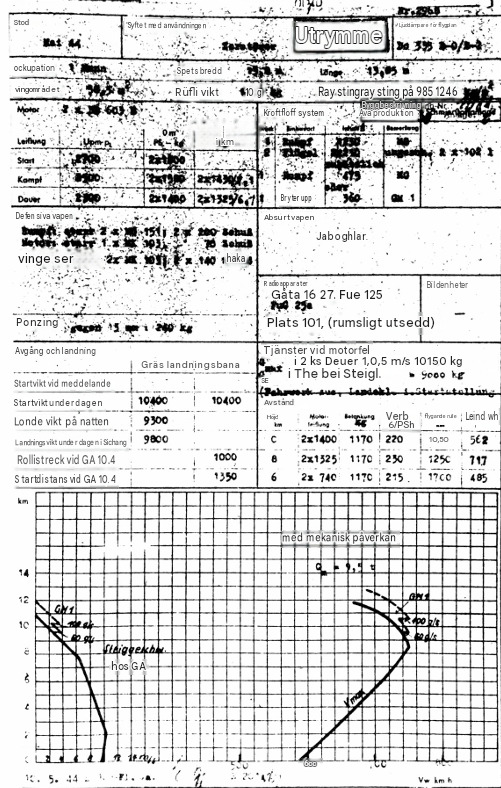
Drop Tank (Field Modification Kit):As a field conversion kit (Rüstsatz), one droppable magnesium tank of approximately 475 liters can be fitted.
GM-1 Tank (Field Modification Kit): A GM-1 tank with a capacity of 360 liters can be installed as a field conversion kit in place of the auxiliary fuel tank.
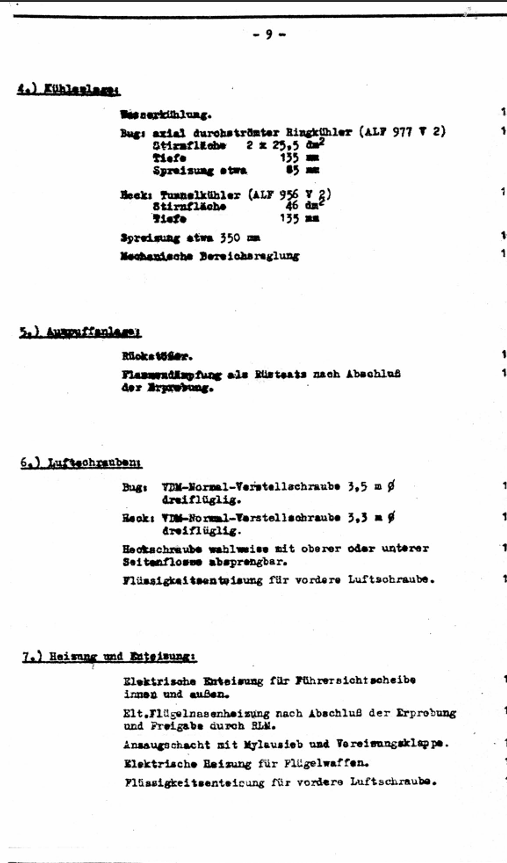
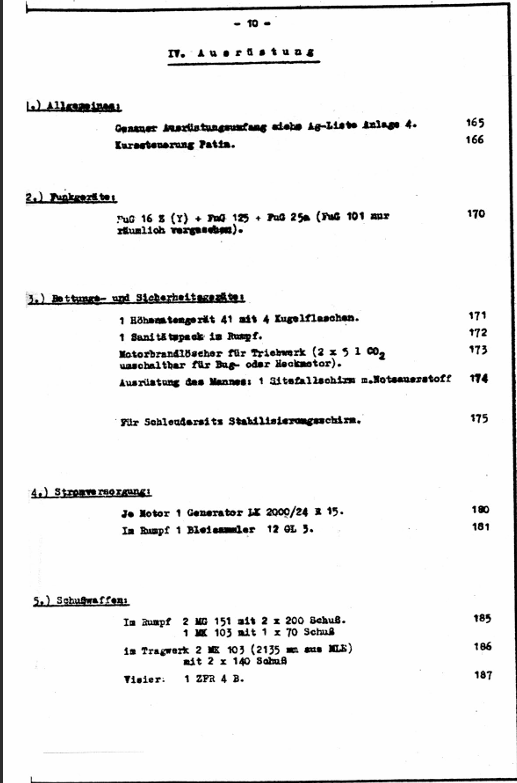
Onboard Systems: Equipped with FuG 16 Z (Y) + FuG 25a
Altimeter:The FuG 101 radio altimeter is only spatially provisioned/planned for (FuG 101 nur räumlich vorgesehen).
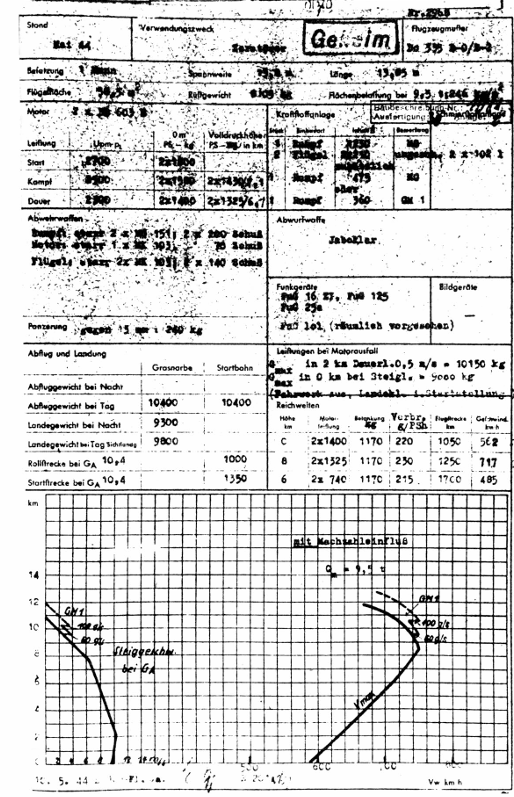
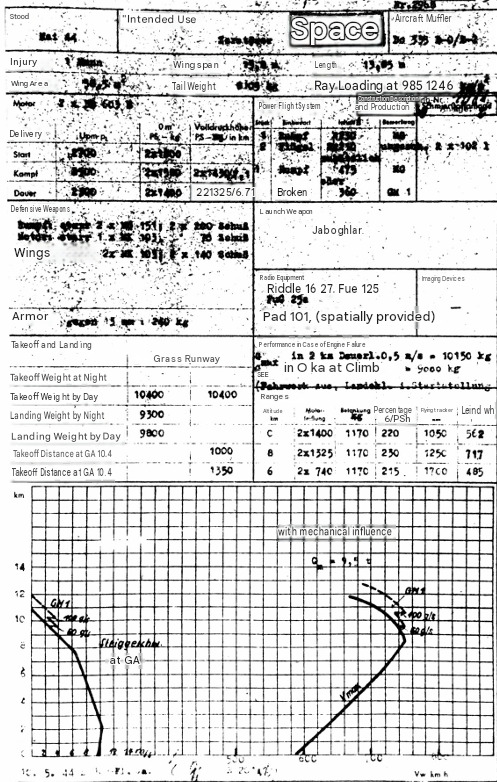
the Performance Charts :
The graph maps altitude (Vertical Axis: 0 to 14 kilometers) against flight speeds (Horizontal Axis: V in km/h).
The Right Curve: Maximum Speed V_{max}
This displays the aerodynamic profile at a standard flight weight of 9.5 tons ((G = 9.5
At sea level, the top speed sits right around 600 km/h
As it climbs into thinner air, the speed sweeps drastically to the right, peaking at 763 km/h at roughly 8 kilometers altitude.
The GM-1 Deflection the dotted line branching off at the top right labeled GM-1. When nitrous oxide injection is turned on at high altitudes, the speed line resists dropping off, pushing the aircraft’s high altitude envelope out to nearly 12 kilometers high while maintaining speeds over 700 km/h.
The Left Curve: Rate of Climb (Steiggeschw.)
This shows the time/climb performance at maximum takeoff weight ((G_{A}).
The aircraft climbs aggressively from sea level up to about 4-6 kilometers.
Above 8 kilometers, standard engine power drops off severely (the solid line sharply moves left toward 0).
The GM-1 Boost: Engaging the GM-1 system creates two secondary dotted trajectory lines (160 g/s and 400 g/s injection rates). This chemical boost vastly increases the climb rate at high altitudes, allowing the heavy fighter to claw its way up to a 11.4 km ceiling instead of hitting a hard wall at 9.5 km.
translation could be wrong ! not 100% right !
here in English
and in meatballs
all of this from factory documents