- Yes
- No
Hello everyone, and welcome to this new suggestion.
Today, I am presenting a new prototype French aircraft that could be added to the game: the precursor to the Super Mystère B2, the little-known Super Mystère B1.
In the early 1950s, Dassault had already established itself as one of the leading aircraft manufacturers in Europe with the success of the Ouragan and Mystère families. However, while the Mystère IV represented a major step forward for the French Air Force, Marcel Dassault was already looking beyond it. Rather than waiting for an official requirement, the company decided in 1953 to privately fund the development of a new fighter capable of achieving what no Western European aircraft had yet accomplished: sustained supersonic flight in level flight.
To achieve this ambitious goal, the Saint-Cloud design office retained the fuselage of the Mystère IVB but completely redesigned the aircraft’s wing. The new wing featured a 45-degree sweep angle and a much thinner airfoil, significantly reducing drag at transonic and supersonic speeds. The aircraft also introduced new manufacturing techniques, including integrally machined wing structures and the extensive use of titanium for fasteners and structural components. Since the French Atar engine was not yet sufficiently mature, the prototype was powered by a British Rolls-Royce Avon RA.7 turbojet, allowing development to progress without delay.
The sole prototype was completed at Dassault’s own expense and made its maiden flight from Melun-Villaroche on 2 March 1955, piloted by Paul Boudier. The flight proved highly successful, and only one day later, on its second flight, the Super Mystère B1 exceeded Mach 1 in level flight. This achievement made it the first aircraft in Western Europe capable of sustained supersonic flight without entering a dive, marking a major milestone for both Dassault and the French aerospace industry. The prototype continued its flight-test program successfully, confirming the soundness of its aerodynamic design and validating the concept of a truly supersonic French fighter.
Despite these impressive results, the Super Mystère B1 was never intended to become a production aircraft in its original form. The French Air Force preferred to standardize around the domestically produced SNECMA Atar engine rather than rely on the British-built Avon. Dassault therefore redesigned the aircraft around the Atar 101G turbojet, enlarging the center fuselage to accommodate the new powerplant. This evolved version became the Super Mystère B2, which entered mass production and became France’s first operational supersonic fighter. Because of this decision, only a single Super Mystère B1 prototype was ever built.
Although its operational career ended before it truly began, the Super Mystère B1 occupies an important place in aviation history. More than simply a prototype, it served as the technological bridge between the Mystère family and the production Super Mystère B2 while demonstrating that the French aviation industry had reached the forefront of supersonic fighter development. Its successful flight-test program directly paved the way for one of the most significant milestones in post-war French military aviation and laid the foundations for the generations of Dassault fighters that would follow.
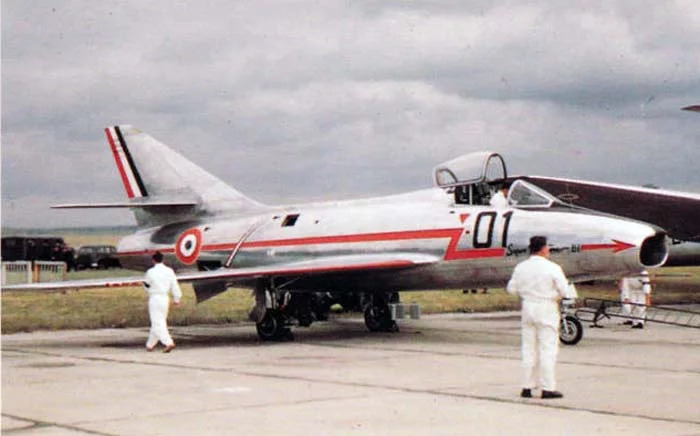
Characteristics
The exact technical specifications of this aircraft were never truly published; however, the airframe remains the same as that of the Mystère IV B, as indicated by Dassault. Consequently, the aircraft retains the same dimensions, though its weight has changed.
Length : 11.12 m
Width : 12.85 m
Height : 4.46 m
Mass : unknow for now
The aircraft is powered by a different engine than the Mystère IV, being equipped with the Rolls-Royce Avon RA 7, a more powerful engine that allows it to break the sound barrier in level flight without afterburner. It is flown by a single pilot.
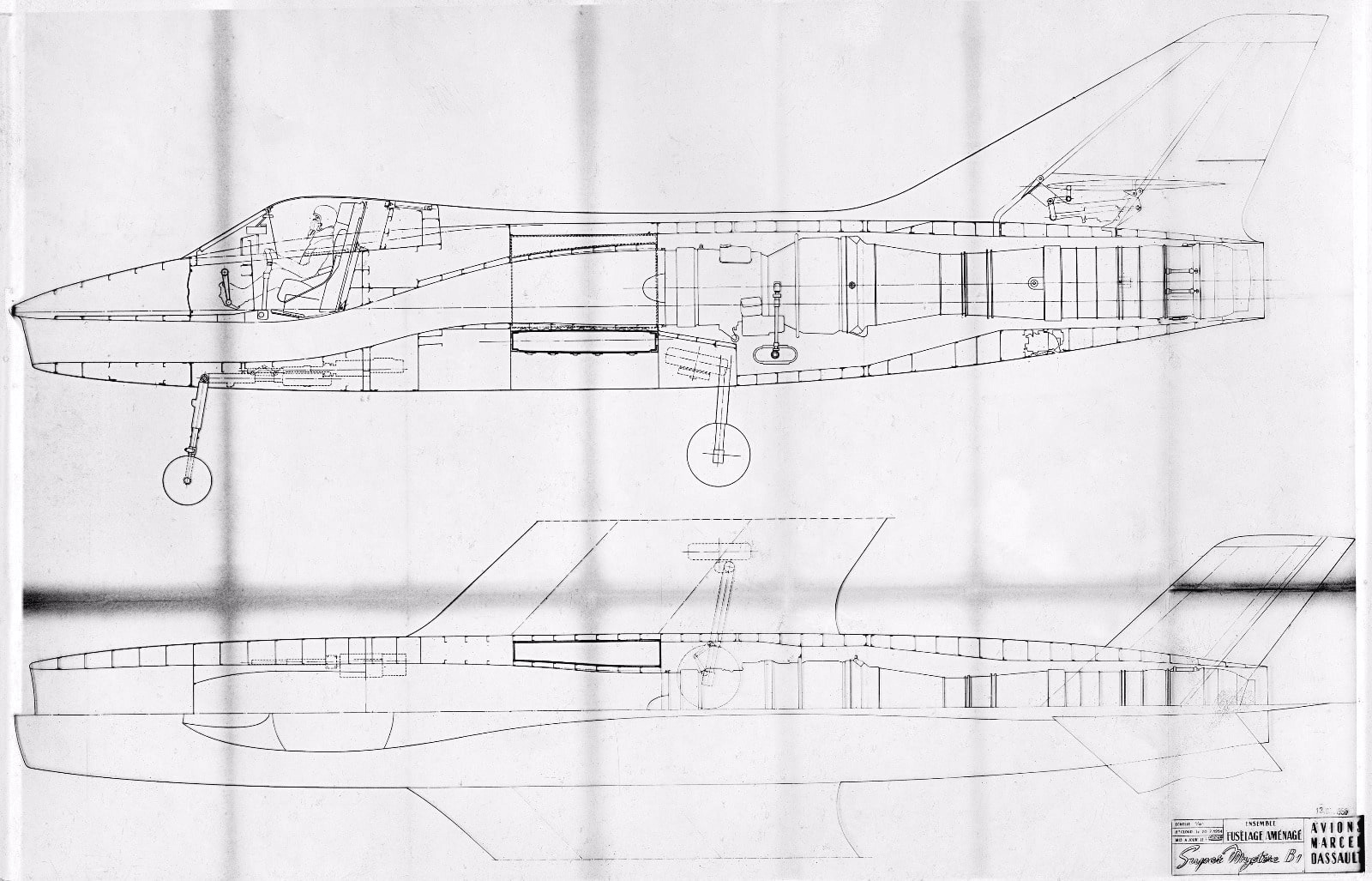
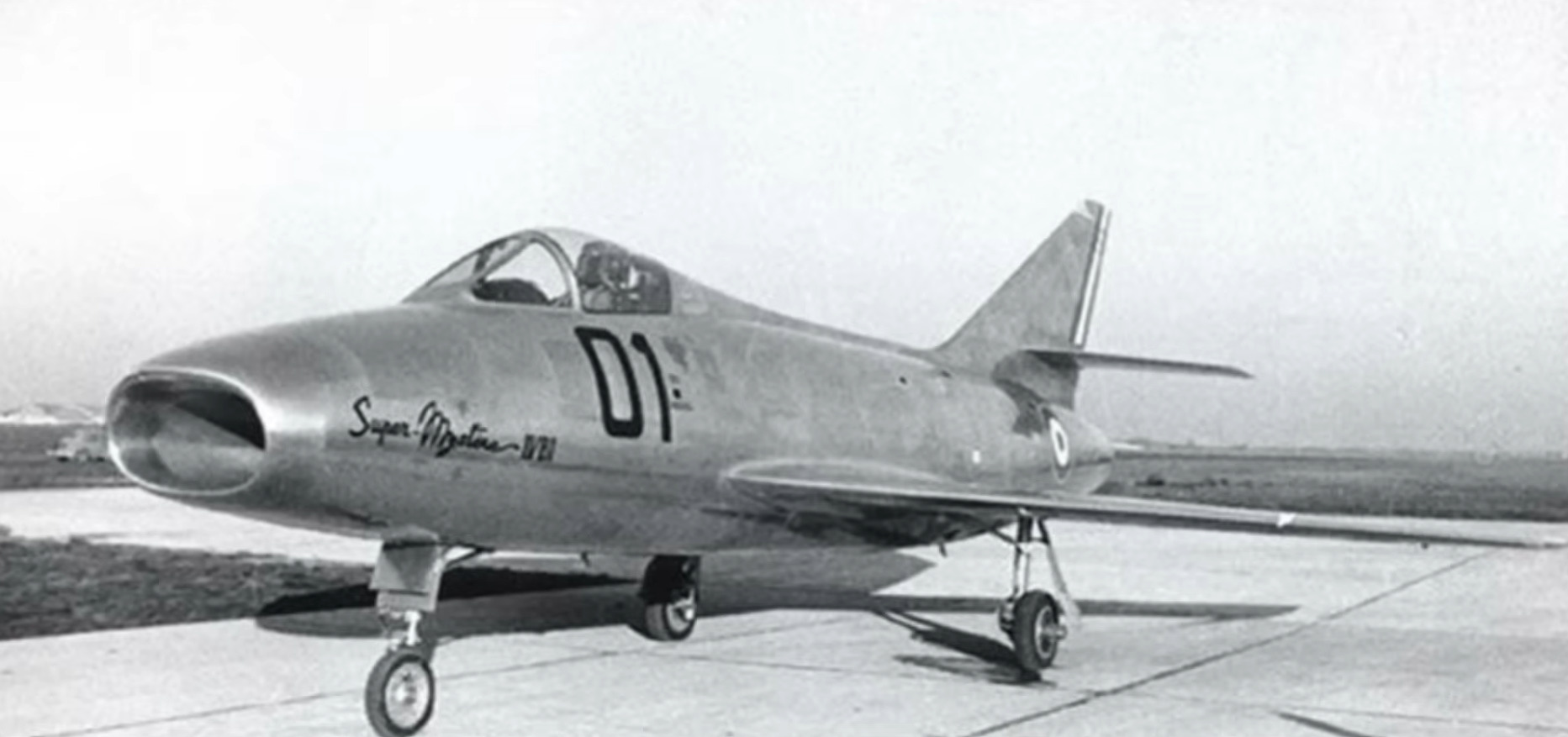
Weapons
The aircraft’s armament is simple, to say the least; as a prototype intended solely to validate new aerodynamic concepts regarding wing shape, it was never fitted with the hardpoints required to carry external stores. Consequently, the aircraft relies exclusively on its two ventral 30mm DEFA cannons.
In-game, this aircraft would be an interesting addition, offering a dedicated air-to-air fighter with capabilities falling somewhere between those of the Mystère IV and the Super Mystère B2, thereby effectively rounding out the French tech tree.
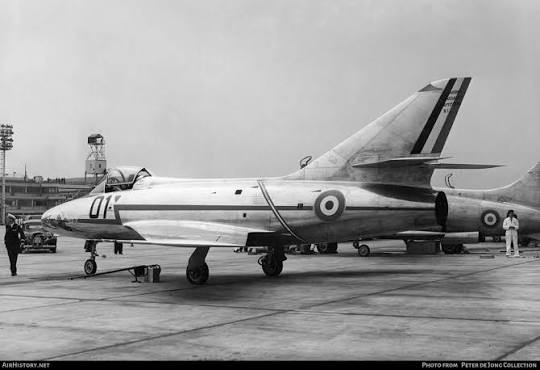
Pictures
Sources
- Super Mystère : origines, caractéristiques et performances
- 2 mars 1955 : premier vol du Super Mystère B1 de Dassault. | Theatrum Belli
- Dassault Super Mystère B.2 — avionslegendaires.net
- La cellule d’un avion de chasse
- Dassault Super Mystère B1 — Wikipédia
- Le Dassault Super Mystère B1 était un projet d’avion de chasse datant de 1955 qui se présentait comme une extrapolation de la version la plus évoluée du Mystère IV. Il comprenait une voilure en flèche à 45 degrés, un turboréacteur équipé d’une postcombustion et d’un cockpit à visibilité accrue. Le prototype fera son premier vol le 2 mars 1955 équipé d’un réacteur anglais Rolls-Royce Avon RA7R. Dès le lendemain, il atteindra Mach 1 et il deviendra le premier avion français capable de dépasser le mur du son en palier. Toutefois, l’Armée de l’Air insistera alors pour équiper l’avion d’un réacteur français, le SNECMA Atar 101G, ce qui aboutira, après modifications, au programme du Super Mystère B2, construit en série… - Avions moches, bizarres, ratés, projets abandonnés et aviation insolite. | Facebook