- Yes
- No
Hello everyone, and welcome to this new suggestion.
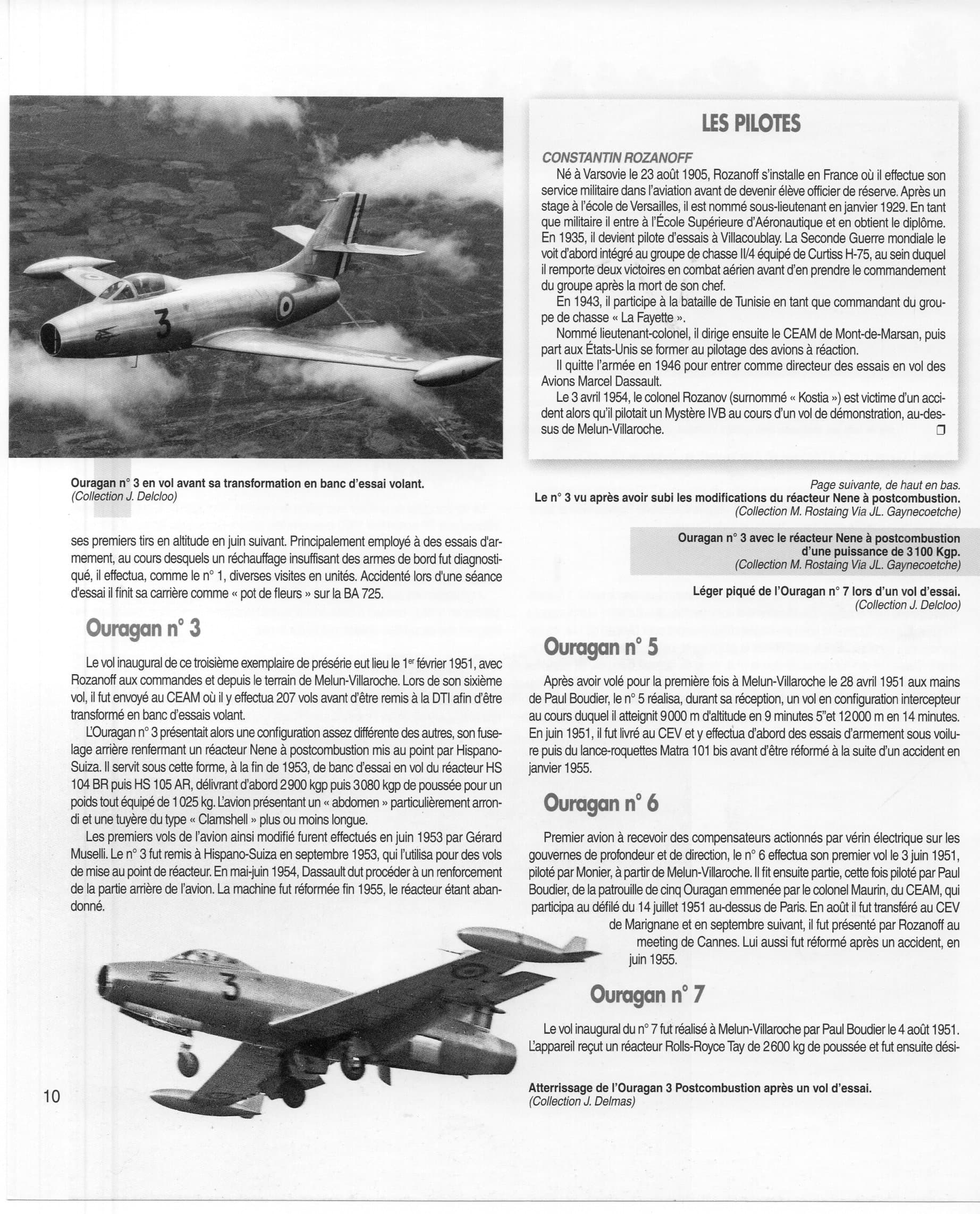
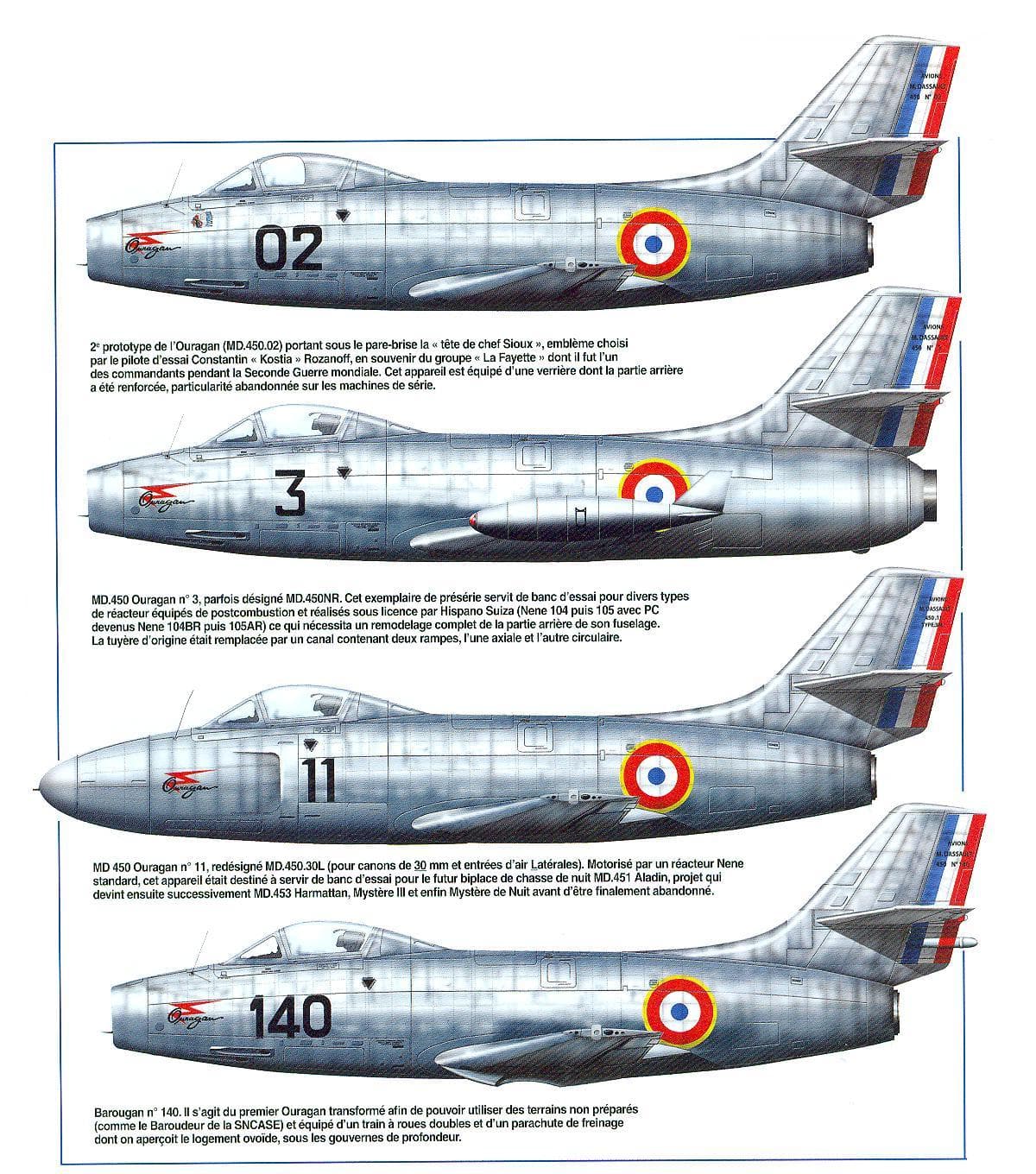
Today, I am presenting a new French aircraft prototype: the MD.450 No.3, a particularly interesting variant of the Ouragan.
In the late 1940s, the French government made considerable efforts to restart the country’s aviation industry and develop a domestically produced jet fighter. Following the Second World War, much of the French aerospace industry had to be rebuilt, making the development of a modern jet aircraft a particularly ambitious undertaking. By the beginning of the 1950s, Dassault had successfully completed its design and development work on what would become the MD.450 Ouragan.
The aircraft was a relatively simple and robust jet fighter, designed to be easy to manufacture and operate. It entered service with the French Air Force in 1951 and quickly became an important part of the country’s post-war fighter fleet, with several hundred aircraft eventually being produced.
Because of its relatively straightforward design, a number of prototype and pre-production aircraft were retained for development and testing purposes. One of these was the MD.450 No.3, which should not be confused with the prototype designated No.03. The aircraft presented here was a pre-production example and was operated by the CEAM in 1951, where it was initially used for a variety of trials before eventually becoming a dedicated flying testbed.
The main focus of its later testing was the aircraft’s powerplant. Although the Ouragan offered respectable performance for its time, its Rolls-Royce Nene 104B engine produced only 2,270 kgp of thrust. This limited the aircraft to a maximum speed of roughly Mach 0.7 and resulted in relatively poor acceleration, particularly when compared with the increasingly powerful jet fighters then entering service.
To investigate possible solutions, the MD.450 No.3 was successively fitted with more powerful versions of the Nene engine. It was first equipped with a Nene 104BR fitted with an afterburner, increasing thrust to approximately 2,900 kgp. The aircraft was later re-engined with a Nene 105AR, also equipped with an afterburner, which produced around 3,080 kgp of thrust.
These modifications had a significant effect on the aircraft’s performance, particularly its acceleration and maximum speed. The MD.450 No.3 subsequently carried out numerous test flights with these engines over the following years.Despite the promising results, however, these modifications were never introduced on production aircraft. The additional cost and complexity of installing an afterburning engine made the modification unattractive, especially as a new generation of French fighters was already being developed. The arrival of the Mystère II was particularly important, as it offered substantially improved performance and was capable of exceeding the speed of sound in a dive even in its standard production configuration.
As a result, the need to further develop the Ouragan gradually disappeared. The MD.450 No.3 was nevertheless retained as a test aircraft for some time, continuing to contribute to French jet-engine and aircraft development before finally being withdrawn from service and dismantled in 1955.

Characteristics
Length : 10.74 m
Width : 13.16 m
Height : 4.15 m
Mass :
-
Empty : > 4,150 kg
-
Max : > 7,900 kg
The aircraft is powered by an afterburning Nene 105AR jet engine delivering a maximum thrust of 3,080 kgf. While exact performance figures are unknown, it can be assumed that this engine, more powerful than the standard version (2,270 kgf for the production model), allows the aircraft to reach higher speeds.
The crew consists of a single pilot.
Weapons
The aircraft’s armament remains identical to that of the production version, retaining its four 20mm Hispano 404 cannons and two underwing hardpoints capable of carrying various bombs and rockets, such as T10 140 or 151 rockets and 500 lb or 1,000 lb bombs.
In-game, this aircraft would be an interesting addition; it introduces a new variant of a plane already present in the game but with vastly different performance characteristics, thanks to its superior engine, thereby rounding out the French air tech tree.