- Yes
- No
 Churchill Mk. III - Red Winston
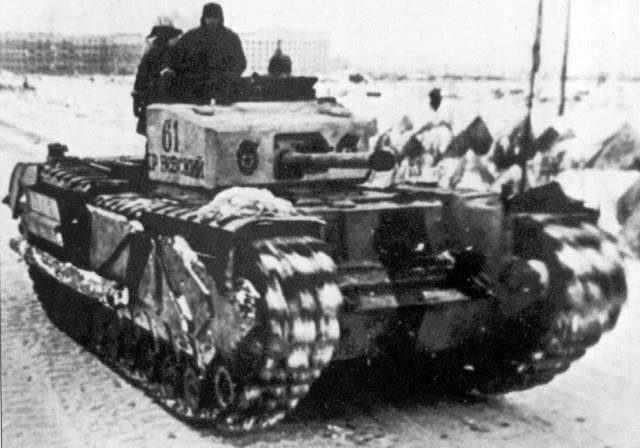
Churchill Mk III “Alexander Nevskiy” of the 49th Separate Heavy Guards Breakthrough Tank Regiment traverses a snowy road near Leningrad in 1944
History
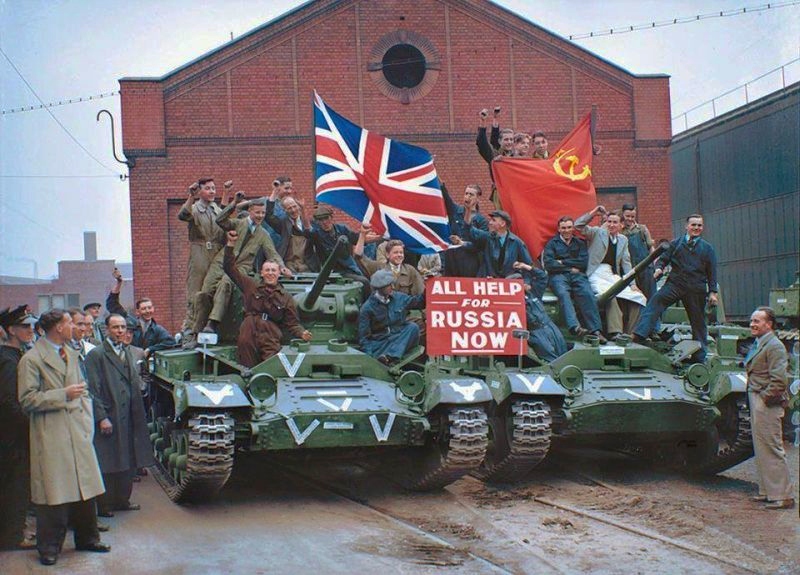
In 1942, the Soviet Union was desperate for heavy tanks to counter the German panzers. The British sent 301 Churchill tanks, mostly Mk. III and Mk. IV models. When they first rolled off the ships at the Arctic ports of Murmansk and Archangel, Soviet engineers were impressed by the sheer thickness of the armor.
At the time, the Churchill had thicker frontal plating than almost anything the Soviets were producing, including their own KV-1. However, the Soviets were less impressed by the 6-pounder gun. While it was accurate and fast-firing, it lacked a high-explosive shell early on, which made it difficult for crews to deal with German anti-tank guns and infantry.
The Churchill earned its reputation during some of the most brutal fighting of the war. Most notably, they were assigned to the 47th and 48th Guards Heavy Tank Regiments.
During the Soviet counter-offensive at Stalingrad, these tanks were used as breakthrough vehicles. Because the Churchill had a specialized heavy suspension, it could climb steep slopes that German tanks and even some Soviet tanks struggled with. On several occasions, Churchills surprised German defenders by appearing at the top of hills or ravines that were thought to be impassable.
By the time the Battle of Kursk rolled around in 1943, the Churchill was showing its age. While the armor was still decent, the German Tigers and Panthers could now pierce it from a distance.
Soviet crews had a love-hate relationship with the machine. They loved the protection and the fact that it was mechanically reliable if you treated it well. However, they hated the narrow tracks in deep mud and the fact that the side sponsons tended to trap dirt and rocks, which could jam the tracks.
By 1944, the Soviets stopped requesting Churchills. They had perfected their own heavy tank, the IS-2, which had a massive 122mm gun that far outclassed the British 6-pounder. The remaining Churchills were used in secondary sectors or for training until the end of the war.
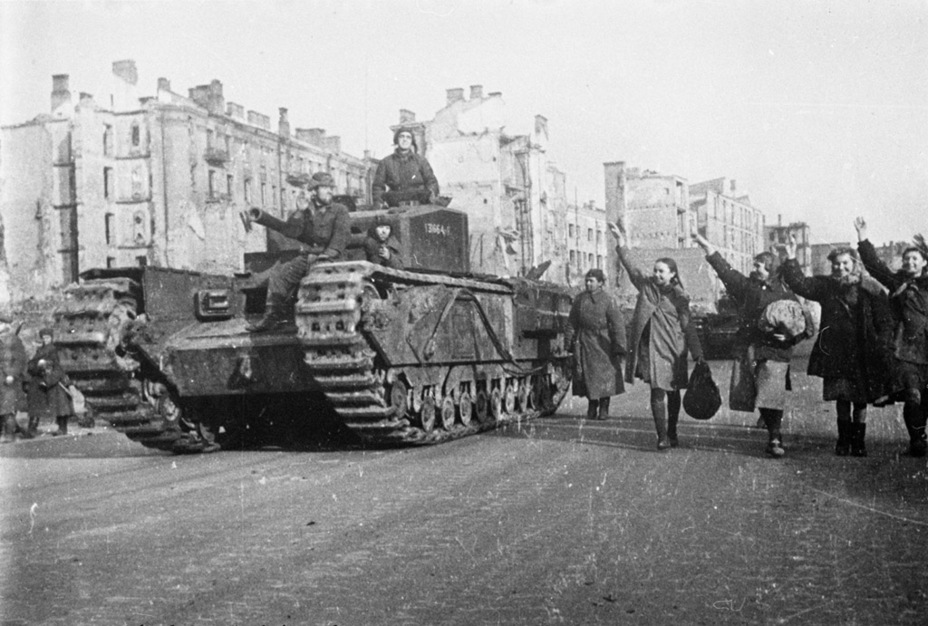
Specifications
General Information
- Origin: United Kingdom
- USSR Received: 301 sent (approx. 253-258 arrived)
- Crew: 5
Dimensions
- Length: 7.44 meters (24 feet 5 inches)
- Width: 3.25 meters (10 feet 8 inches)
- Height: 2.49 meters (8 feet 2 inches)
- Weight: 39.6 tons (approx. 87,000 lbs)
Armament
- Main Gun: 57mm Ordnance QF 6-pounder Mk III
- Ammunition Capacity: 84 rounds
- Effective Range: 1,000 meters (1,094 yards)
- Secondary Armament: 2 x 7.92mm Besa machine guns (one coaxial, one hull-mounted)
- Ammunition Capacity: 4,950 rounds
Armor
- Hull Front: 89mm
- Hull Sides: 64mm
- Turret Front: 89mm
Mobility
- Engine: Bedford 12-cylinder gasoline engine (350 hp)
- Top Speed: 24 km/h (15 mph) on roads / 13 km/h (8 mph) off-road
- Range: 145 km (90 miles)
- Transmission: Merritt-Brown 4-speed manual (plus reverse)
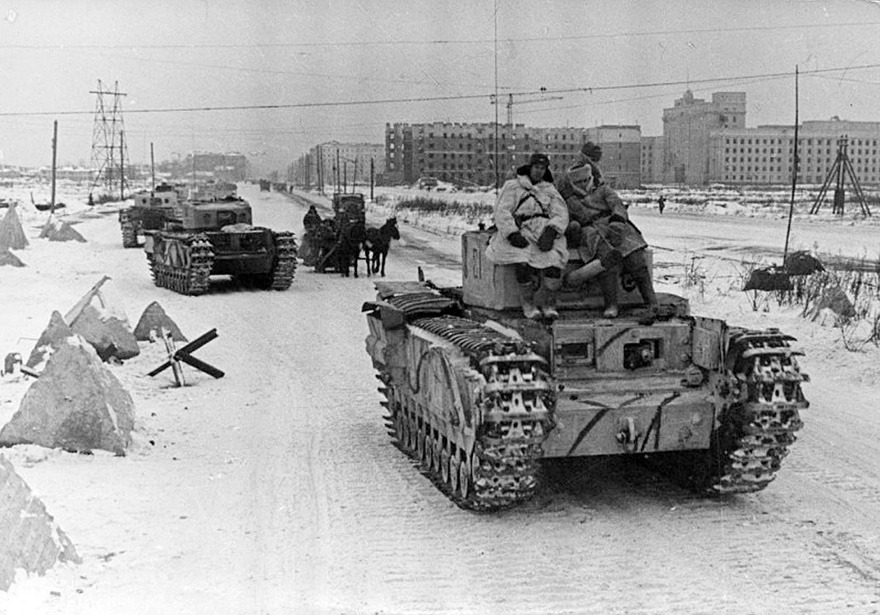
Be sure to check out my lend leased Churchill Mk. IV post
More Soviet lend lease equipment when Gaijin