- Yes
- No
- North Korean sub-tree in China
- United Korea tech tree
- Other
- I said no
주체90년식 중땅크 ≪천마-214≫

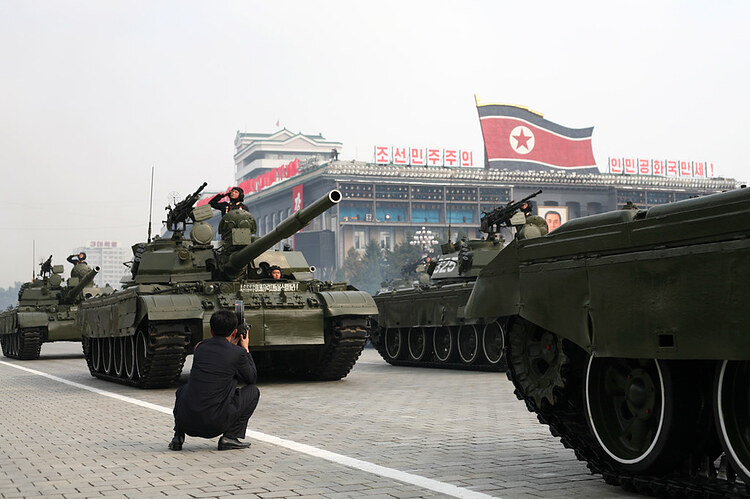
TL;DR: Variant of North Korea’s Ch’ŏnma-series of T-62-based MBTs, equipped with appliqué armour
History
North Korea, officially the Democratic People’s Republic of Korea (DPRK), formed in September 1948. Two years later, war began between the Soviet-backed North and US-backed South. During this time, North Korean tank forces were equipped almost exclusively with T-34s (76mm and 85mm models) and SU-76s. Following the end of the war in 1953, North Korea was re-armed with Soviet and Chinese tanks, primarily the T-54/55 and the Type 59, the Chinese counterpart.
North Korea adopted the T-62 as their MBT in the 70s, replacing their antiquated T-34s and T-55s (although over 2000 T-55s were still in service as of 2023). They were produced domestically, with the first leaving the production line in 1976. These were designated Ch’ŏnma (roughly meaning ‘Pegasus’) – ‘Chonma-ho’ is often used online, but this designation is fake and not used by North Korea. The Ch’ŏnma has been extensively upgraded. First upgrades were minor, with turret bustles introduced in the early 1980s, and laser rangefinders in 1985 (first observed [although North Korea had produced LRFs before for export, and experimentally fit various models to the Ch’ŏnma, the 1985 model was the first model to properly enter production for the KPA]). First spotted in 1992 was the Ch’ŏnma-92, referred to (incorrectly) in Western sources as Ch’ŏnma-ho III, featuring a new welded turret and ERA across the front and sides.

Unmodified Ch’ŏnma during a parade in the 2000s
Upgrades for the Ch’ŏnma continued to be developed during the late 1980s and 1990s. Around the same time, North Korea received delivery of a singular T-72 ‘Ural’, likely from Iran, in the mid-to-late 1980s. This allowed them to reverse-engineer the 125mm 2A26M2, and likely also composite armour. At least one Ch’ŏnma was fitted with a thermal sleeve during this time period, and it may have been experimentally armed with a 125mm cannon. However, this remained a prototype, and it is likely that the lessons learned from it (such as a lack of turret space) directly led to the development of the 125mm-armed Sŏn’gun-915, which reportedly entered production in 2009, and featured a much larger turret.


1. Ch’ŏnma-92 during a parade; 2. Ch’ŏnma with a potential 125mm main gun
Following the collapse of the Soviet Union, North Korea’s closest trading partner at the time, the country entered a severe economic crisis and famine from 1995–2000. This drastically slowed the development of new armoured vehicles. The Ch’ŏnma-98 was produced around 2000, and compared to the Ch’ŏnma-92, only featured a slightly remodelled turret, and lacked the ERA. The Ch’ŏnma-214 was produced around 2001, and featured appliqué armour on the turret, small modifications to the hull, and possible FCS modernisations. The Ch’ŏnma-214 was produced in much larger numbers than the Ch’ŏnma-98, which has been seen very rarely. This vehicle’s official designation is Chuch’e 90-model heavy tank ‘Ch’ŏnma-214’ [주체90년식 중땅크 ≪천마-214≫]. In Western sources, it is incorrectly referred to as the Ch’ŏnma-ho V or Ch’ŏnma-ho Ra. The date of 2001 (Chuch’e [Juche] 90) suggests that the Ch’ŏnma-214, along with the Ch’ŏnma-98, was developed in parallel with the more extensively upgraded Ch’ŏnma-215 and -216, which were reportedly already being tested in 2002 (despite North Korea ascribing them the years 2003 and 2004 — which may then instead refer to when they entered service).
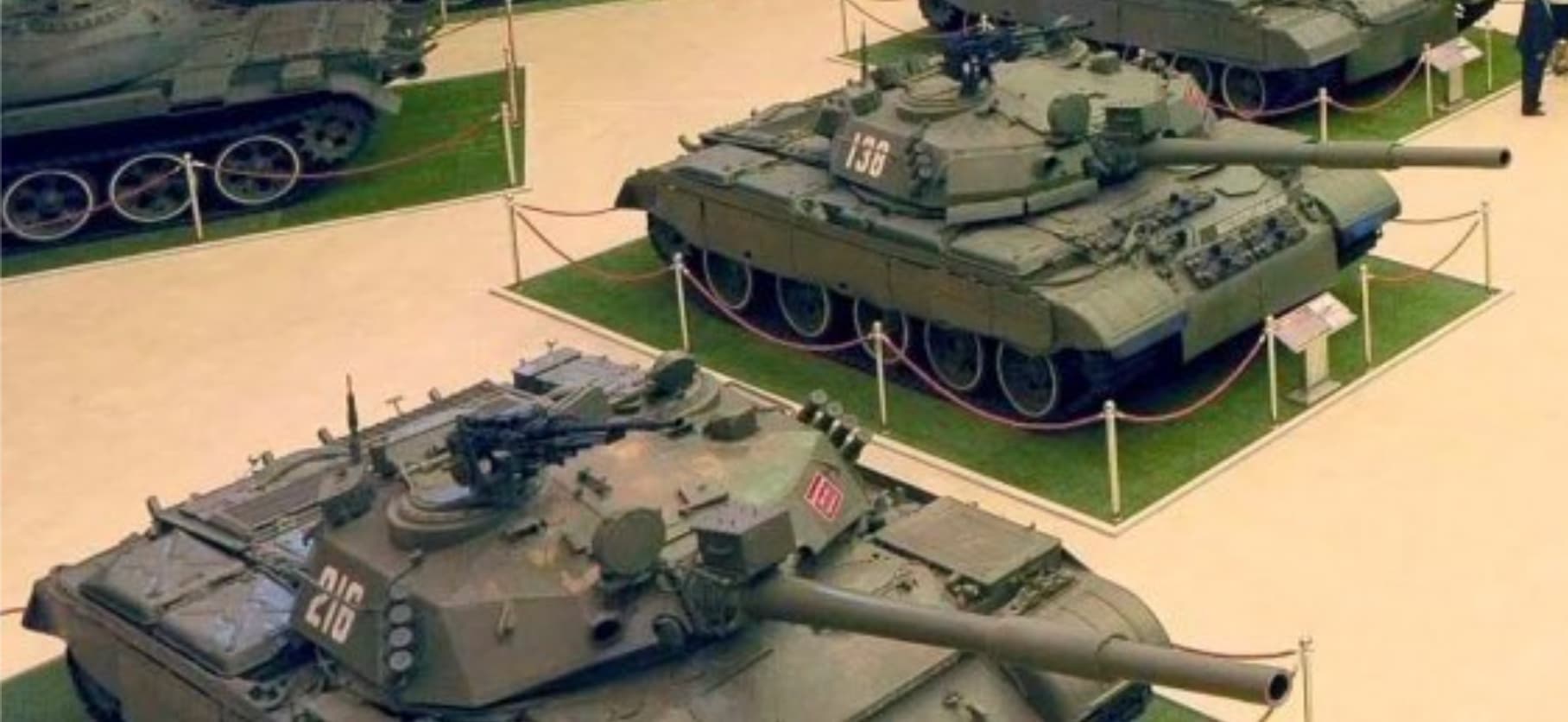
Ch’ŏnma-98 (No. 216) and Ch’ŏnma-214 (No. 138) on display at the KPA Exhibition of Arms and Equipment in Pyongyang in 2012
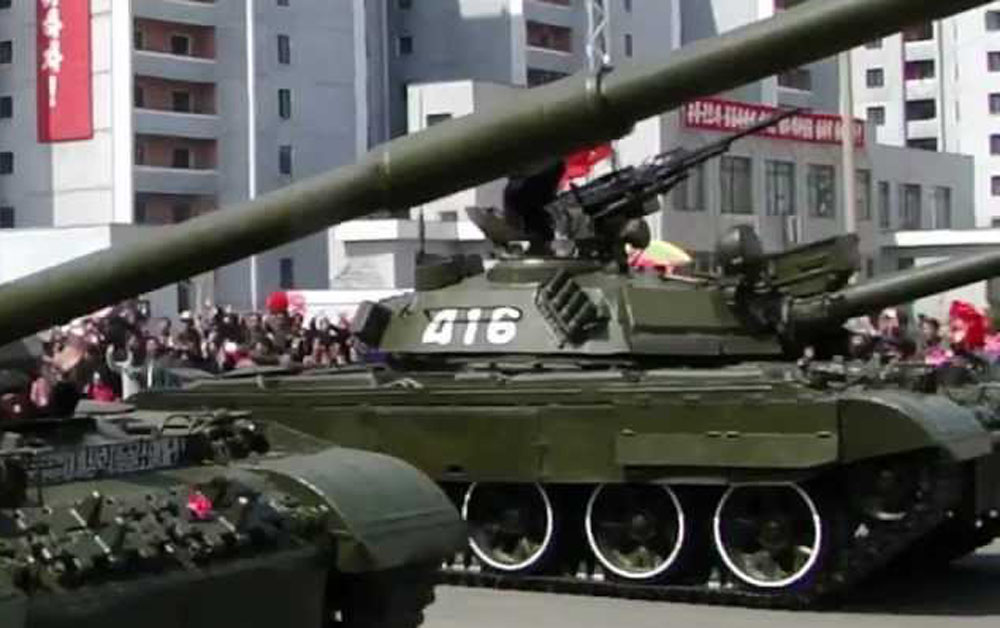
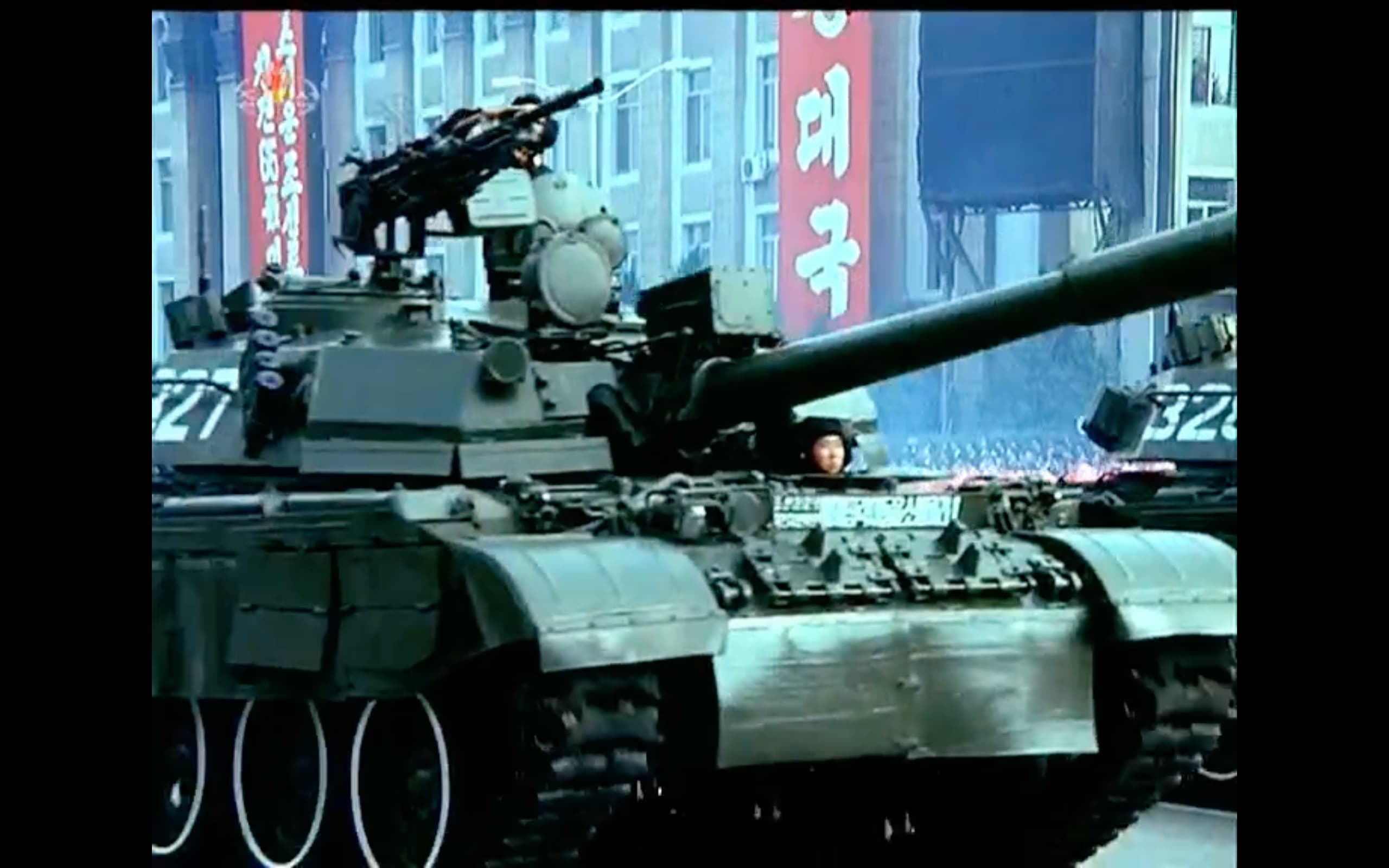
The Ch’ŏnma-98 likely served as a pre-production prototype (it remains unknown how many were produced, but only one has been seen) to the Ch’ŏnma-214, which, aside from the additional armour, is more or less the same vehicle. The Ch’ŏnma-214 appears to share a few similarities with the T-72, although nothing to the extent of the Ch’ŏnma-215/216. Images of the Ch’ŏnma-98 are very rare, and the angles known do not allow us to determine whether those same changes are present, although I suspect they are. Most notably (and still very subtle), the front drive wheel was changed from the original T-62 design to one much closer to the T-72. The Ch’ŏnma-214 was first spotted publicly in the 2010 parade, celebrating the 65th anniversary of the ruling Worker’s Party of Korea. It has been seen relatively infrequently since, largely overshadowed by the Ch’ŏnma-216 and Sŏn’gun-915.

Ch’ŏnma-214s in a factory, likely sometime in the early 2000s
Characteristics
The Ch’ŏnma-214 is equipped with a stabilised 115mm U-5TS main cannon. While we have no information on North Korean 115mm rounds, it is likely that along with domestically-produced / upgraded APFSDS rounds, it fires export Soviet rounds. 3BM28 APFSDS penetrates 396mm @ 0° @ 10m. 3BM36 APFSDS penetrates 385mm @ 0° @ 2000m. The most modern 115mm round, developed by Russia in the 2010s, can allegedly penetrate around 480mm @ 0° @ 2000m, although it is unlikely North Korea have access to this round or have domestically produced a round with equivalent performance. 3BK15M HEAT-FS penetrates 500mm @ 0°. The gun is not compatible with GL-ATGMs. North Korea use both 3OF11 and 3OF18 HE rounds.
The Ch’ŏnma-214 has a laser rangefinder mounted externally above the barrel. The quality of the sights and FCS is unknown, however, the gunner appears to keep the same TPN-1-41-11 night sight as on the T-62. The commander’s sight is unclear, and could be the original TKN-3, or the upgraded TKN-4S that appears to be present on the Ch’ŏnma-216. Neither have thermal sights, and the retention of the IR spotlight to the right of the main gun further supports this. The Ch’ŏnma-214 has a coaxial 7.62mm Type 82, a domestic variant of the Soviet PKT, along with a roof-mounted 14.5mm KPVT, capable of firing AP rounds that can penetrate 49mm @ 0° @ 10m. Four smoke grenade launchers are fitted on either side of the turret, for a total of eight.
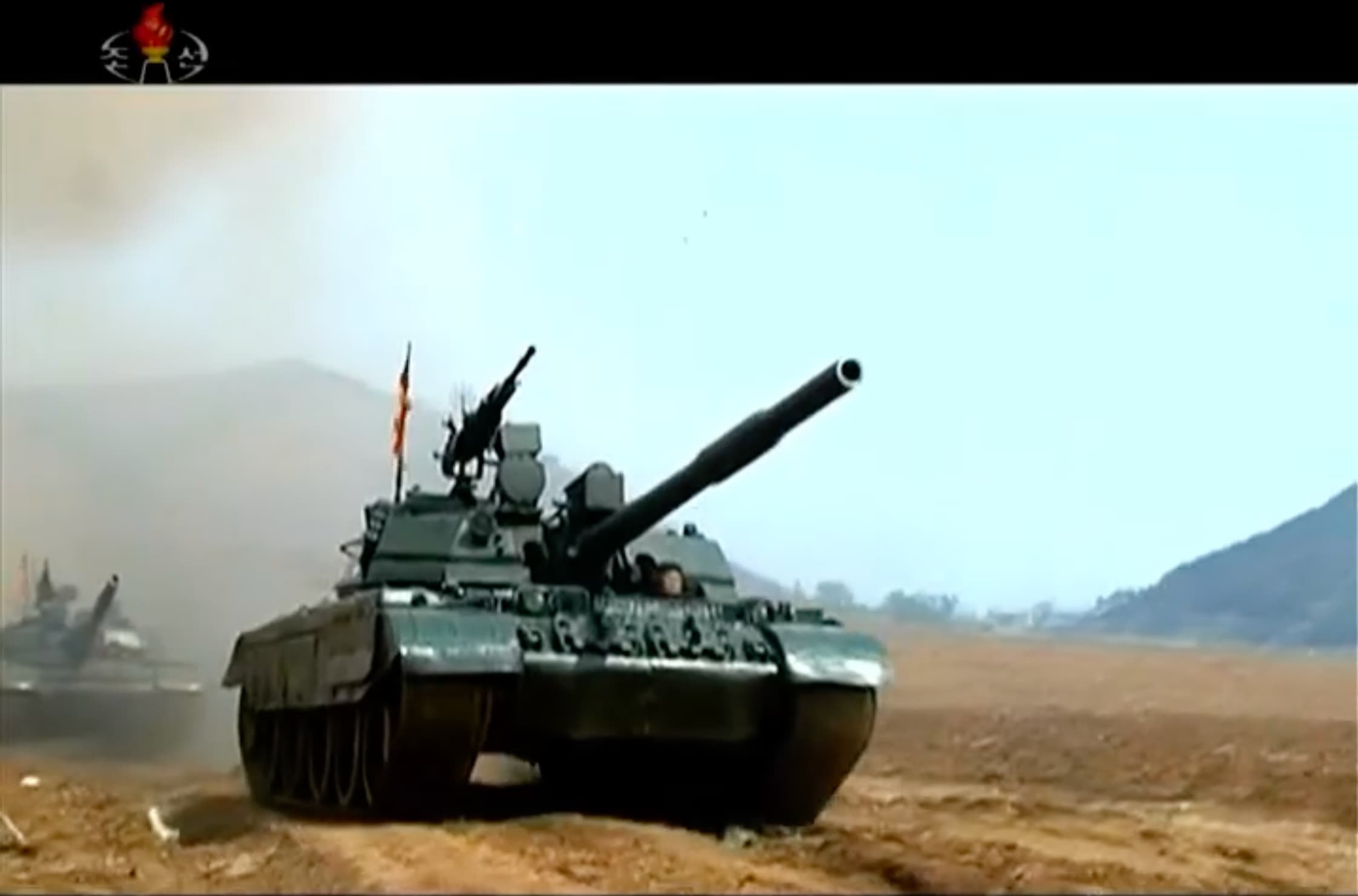
Ch’ŏnma-214s during training exercises
The Ch’ŏnma-214 uses a welded turret, which does not appear to have changed much at all since the Ch’ŏnma-92. Notably, however, the Ch’ŏnma-214’s turret is fitted with appliqué armour and rubber flaps. The exact composition of this armour is unknown, but has been estimated to provide ~100mm of KE protection, and ~200mm of CE protection. The turret itself appears to be around 300-400mm thick, on par with the T-72M1 — although this is based on observations of the Ch’ŏnma-216’s turret, which may be internally different to that of the Ch’ŏnma-214. It is possible that the turret is fitted with composite armour, although no details are available and it is unlikely to be as good as that fitted to the T-72.
The hull largely remains the same as the T-62, but has been fitted with appliqué armour on the upper front plate, as well as rubber flaps covering the lower plate. Once again, the composition of this armour is unknown, but is likely on par with Soviet BDD armour (which the later Ch’ŏnma-215/216 use on the turret). The base armour is likely the same as the original T-62: 100mm @ 59° on the UFP, 80mm @ 0° at the sides, and 45mm @ 2° at the rear.
The Ch’ŏnma-214 very likely retains the original V-55 engine from the T-62, providing 580hp. The top speed likely remains 50km/h. North Korea claim the Ch’ŏnma-214 weighs 38t, only a 1t increase over the original Ch’ŏnma. If true, this gives it a power-to-weight ratio of 15.3hp/t.
Conclusion
The Ch’ŏnma-214 would be an excellent addition to a United Korea Ground Forces Tech Tree. It would likely sit at a BR of 9.0, effectively being a North Korean equivalent to the T-62M-1, albeit without the improved mobility (but with the possibility of better ammunition).
Specifications
Armament
- 115mm U-5TS
- Two-plane stabiliser
- Ammunition
- 3BM28 APFSDS
- 396mm @ 0° @ 10m
- 229mm @ 60° @ 10m
- 3BM36 APFSDS
- 385mm @ 0° @ 10m
- 225mm @ 60° @ 2000m
- 3BK15M HEAT-FS
- 500mm @ 0°
- 3OF11 HE
- 31mm @ 0°
- 3OF18 HE
- ~32mm @ 0°
- 3BM28 APFSDS
- 1x 14.5mm KPVT
- API-T/AP-I(c)/API-T/IAI belt
- 49mm @ 0° @ 10m
- API-T/AP-I(c)/API-T/IAI belt
- 1x 7.62mm Type 82 (coaxial)
- AP-I/API-T belt
- 13mm @ 0° @ 10m
- AP-I/API-T belt
- Laser rangefinder
- NVDs
Armour
- Hull
- Front - 100mm at 59º + appliqué (at least 100mm KE, 200mm CE)
- Sides - 80mm at 0º
- Rear - 45mm at 2º
- Turret
- Front - Unknown, possibly on par with T-72M1 + appliqué, likely similar to Soviet BDD (est. 100mm KE, 200mm CE)
- Sides - Unknown
- Rear - Unknown
Mobility
- Speed
- +50km/h / -9km/h
- Weight
- 38t (stated)
- Engine power
- 580hp, 15.3hp/t
Images




Sources
Spoiler
The Armed Forces of North Korea: On the Path of Songun — Stijn Mitzer and Joost Oliemans
https://tanks-encyclopedia.com/chonma/
https://tanks-encyclopedia.com/modern/north_korea/chonma-216/