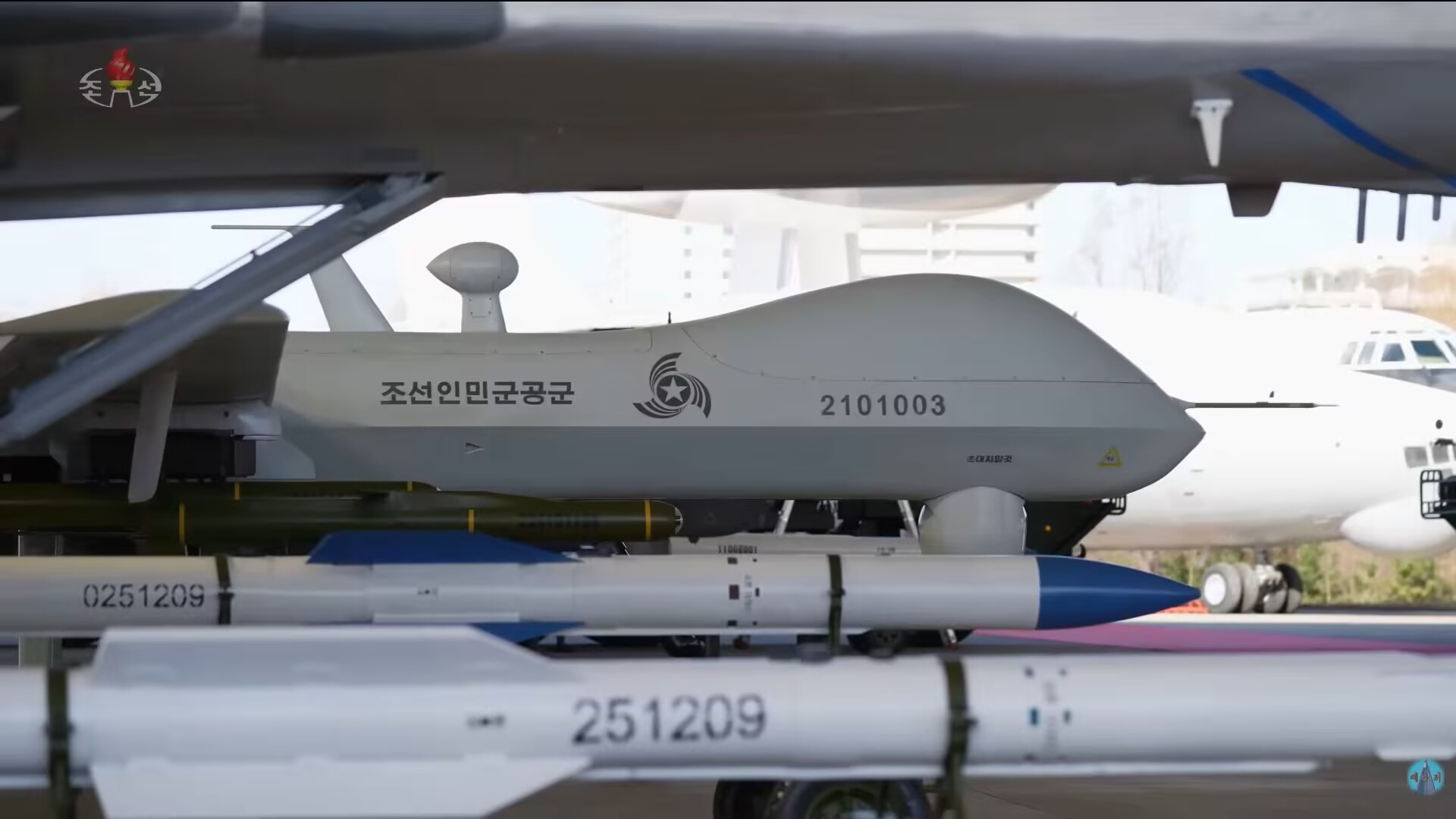
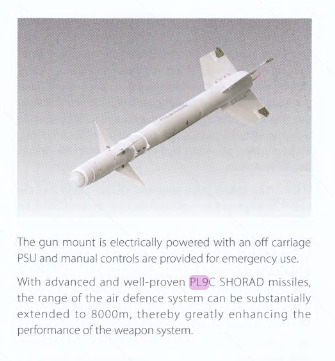
Part 2/2 of a monologue about PL-12 vs AIM-120.
Tangential arguments/context
On the importance of range
The most important topic of concern is the inability to use PL-12s at long range. The argument that “Range doesn’t matter” is overused, yet perplexing to me, because engagements at long range (>30km distances) are common at top tier. What many people don’t realize is that the perceived uselessness of the range of Fox-3 missiles is only attributable to their own failures as a player to effectively use their weapons. Anybody who disputes this would be arguing in bad faith.
Long range missiles have the greatest match presence, and for Fox-3, it is more important still, as a few launches can scare or destroy a decent amount of the enemy team on the opening phase of the battle. In high-altitude BVR encounters, the differences in missile range are substantially increased.
Comparing history in-game
Let’s examine the disparity between the PL-12 and AIM-120 variants at range. Since “Seek and Destroy” in June 2024, the AIM-120 has consistently stayed the most powerful active radar homing missile in BVR role at top tier, with minimal nerfs. It isn’t as great overall as the MICA or R-77-1, but is still a top contender.
I think everyone can agree that the implementation of Fox-3 missiles into the game was disastrously inaccurate, and still is to this day. Everybody, including US mains, was disappointed in this or that missile, some more than others. However, the best-performing and closest to real life capabilities was the AIM-120A/B. The addition of PL-12, in comparison, disappointed all Chinese tech tree players tenfold, since even the AIM-120A was better than it. There used to be much debate over this imbalance, which clearly favored the US top tier air, but not much after the EF and Rafale meta we now have.
The later addition of AIM-120C-5 would be a disappointment on a similar scale, but even still, the range wasn’t as gimped as the PL-12’s range was. The AIM-120A/B/C5 stayed the best at BVR engagements throughout this entire period and still is, while PL-12 was/is among the worst, being close to R-77 in this respect.
Guidance Logic of PL-12 in WT
The real issue with the PL-12 isn’t the high drag and lack of energy retention, it’s the missile’s control logic itself that is bugged. If you’ve ever used the PL-12, you may have noticed the fact that the PL-12 wobbles and falls out of the sky starting at ~15-20km (even when given optimal parameters such as Mach 1.1 launch at 1-4 km altitude.). The following is a detailed explanation of why this phenomenon happens to the PL-12, and why other missiles do not have this problem.
PL-12 has very unique PID terms compared to all other ARH missiles in-game. The proportional term is 0.0046, the integral term is 0.0375, and the derivative is at 0.00015. To understand this relatively:
Selected Parameters of 3 Active Radar Homing Missiles
| Missile |
PID P |
PID I |
PID D |
I/P |
D/P (damping vs snap) |
Wing area mult |
Max fin AoA |
| AIM-120C-5 |
0.0091 |
0.051 |
0.00025 |
5.604 |
0.02747 |
1.225 |
24.2° |
| R-77 |
0.0076 |
0.005 |
0.00025 |
0.658 |
0.03289 |
1.45 |
41.5° |
| PL-12 |
0.0046 |
0.0375 |
0.00015 |
8.152 |
0.03261 |
1.4 |
33.7° |
The table explains exactly why the PL-12 is one of the worst performing ARH missiles at medium to long range. First off, damping of the missile’s maneuvering, which is primarily controlled by the derivative term. The PL-12 has the lowest D value by 40% from the other missiles here, which already makes it more prone to oscillation. This is still within reasonable bounds, so it wouldn’t be significant by itself.
Except for the fact that the I value of PL-12 is ridiculously massive in relation to its P value. I integrates the error over time, and is slow to react to changes. An high I is useful in eliminating steady-state error in stable systems. But the absurdly high ratio of I/P, over 8.1, means that the PL-12 is prone to overcorrecting even in response to relatively slow changes in error. This is something not seen in perfect testing scenarios, but practically guaranteed to happen in real battles.
But why doesn’t the AIM-120 suffer the issue despite also having a high I/P of 5.6? This is because the AIM-120 makes up for it in both having the highest P and high D, meaning it ends up being responsive with good damping. That doesn’t mean it flies perfectly straight, but the oscillation is so small it is a non-factor. Additionally, the very downside of the AIM-120, its maneuverability at close range, ends up being a major advantage when it comes to long range, and vice versa for the PL-12/R-77. With the lowest wing area multiplier and lowest max fin AoA, the AIM-120 is both stable and efficient.
You may also wonder, why doesn’t the R-77 wobble out of control even though it has the highest maneuverability (50G, large wing size, very high max fin AoA) by far? Again, it is the overall picture that matters. R-77 has a miniscule I of 0.005. That’s only 13% of PL-12’s value and less than 10% of AIM-120! R-77 reacts the fastest and isn’t burdened by integration building up.
The PL-12 has the worst possible combination. The f**ked up PID, in combination with the higher maneuverability, are the exact factors which make it among the lowest-range ARH missile in War Thunder, quite possibly THE single lowest range ARH. Even with small changes in the target aircraft’s path, the PL-12 will overreact heavily. Low authority (low P), high stored change (strong I), and weak damping (low D) combine and multiply this negative effect. It plays out exactly as described:
PL-12’s Requiem
- Small change in target aircraft’s path causes some error.
- Low P means the missile is sluggish to react.
- The error over time is integrated (integration as in calculus), building up quickly due to high I.
- The missile overreacts/over-turns, now the error is on the opposite side from the start direction.
- The missile begins oscillating as I accrues.
- Oscillation becomes increasingly severe, D is too low to save it. At this point it doesn’t matter if the target goes exactly head-on with the missile, it is hopeless.
- Missile bleeds energy fast due to constant high AoA turns, and literally falls out of the sky.
The issue was reported on the CBR site shortly after release, now more than a year ago. It was accepted without incident shortly after, but it has since been ignored to this day. All Gaijin would need to do to fix this basic issue is massively lower I, increase D, and increase P. 3 variables. Gaijin couldn’t care less. This is not to mention the tons of other issues with the PL-12 in War Thunder, such as having less than half of its IRL range, inability to reach the documented top speed, and engine lacking almost 100 m/s of ∆v. The incompetence and ignorance of CBR site managers borders on malice, after all. We can only hope of change.