To understand the performance of the WS-10, one must refer to the CFM56 (CFM56 | GE Aerospace).
The core engine of the CFM56 is derived from the F101 military turbofan engine that General Electric (GE) developed for the B-1 bomber. This choice made it the most successful case of ‘core engine derivative development’ in aviation history, and it gave rise to the world’s highest-production series of commercial engines. In the early 1970s, the French company Snecma sought to develop a new generation of civil engines with low fuel consumption, low noise, and low pollution. To reduce risks and costs, they chose to cooperate with GE in the United States to develop the engine based on the core of the then most advanced F101 military engine. This choice was very successful, with mature and reliable technology that shortened the development cycle.
The F101 is an afterburning turbofan engine developed by General Electric (GE) for the B-1A strategic bomber. The engine was developed based on the GE9 core and is GE’s first afterburning turbofan engine. Its development fully adhered to the ‘Engine Structural Integrity Program’ (ENSIP) formulated by the U.S. Air Force in 1969 and underwent extensive ground and flight tests. By the time the B-1A project was terminated in 1977, more than 12,000 hours of testing had been completed, including 400 hours of flight tests.
CFM56 Core Engine: The engine adopts a twin-spool structure. The core engine consists of a high-pressure compressor (9-stage axial flow), a combustion chamber (annular combustion chamber), and a high-pressure turbine (single-stage axial flow).
The F110 and WS-10 both utilize the CFM-56 core engine, which means that in practice, the performance of these two engines overlaps to some extent (under low-altitude and low-speed idle conditions).
Why do I mention the F100 in this article? There is a misconception that the core engines of the F100 and F110 are two different engines, namely the JTF22 and GE1/10 (that is, the CFM-56 core engine), but both are fitted for use on the F-15 and F-16. In fact, the performance parameters of the F110 surpass those of the F100, but this article will not extensively discuss the F100.
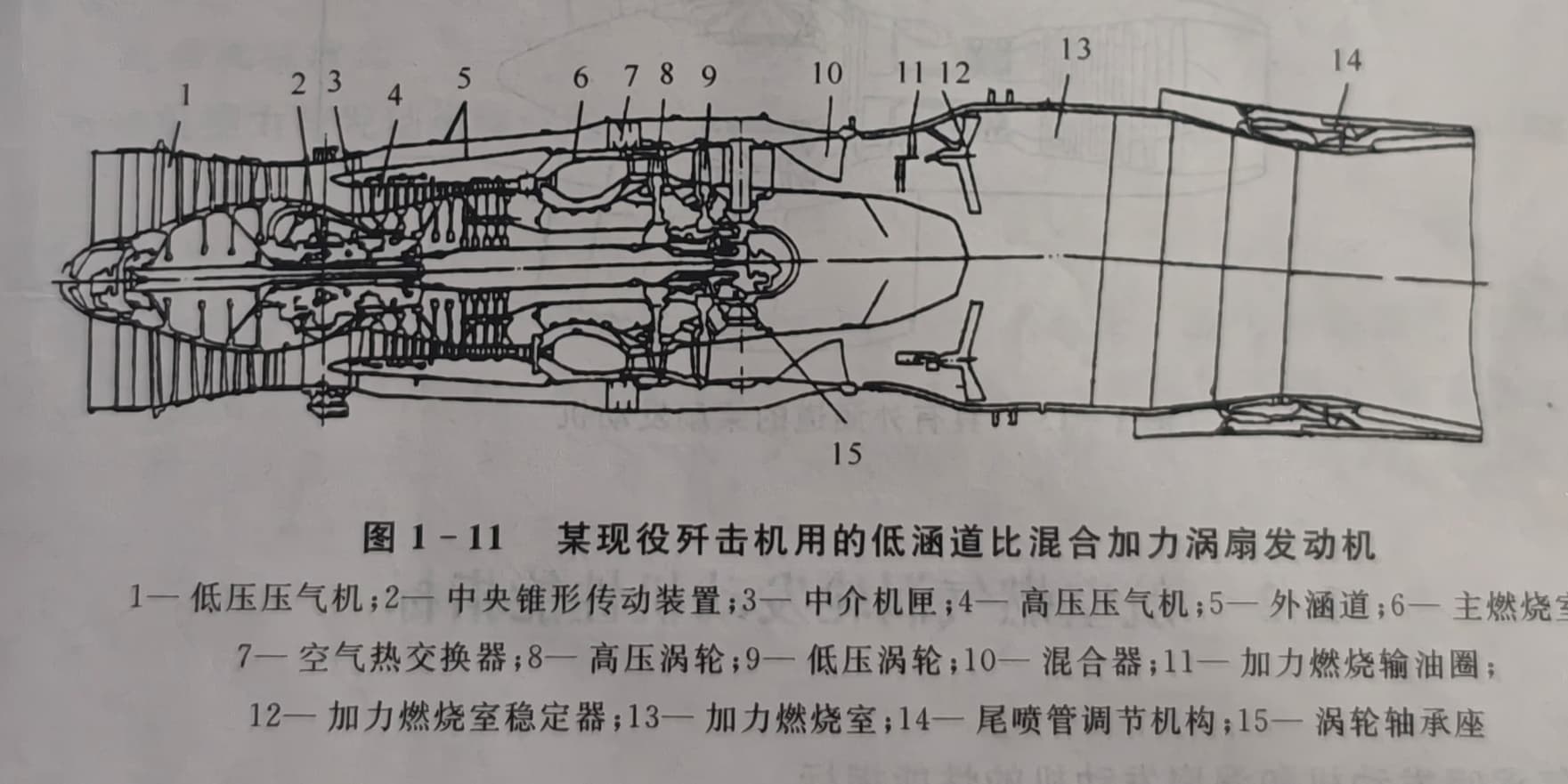
Do you think it looks very similar to the WS-10? However, I cannot say for certain that it is, please understand (sourced from ‘Principles of Aircraft Engines’ published by Northwestern Polytechnical University, different editions may vary).
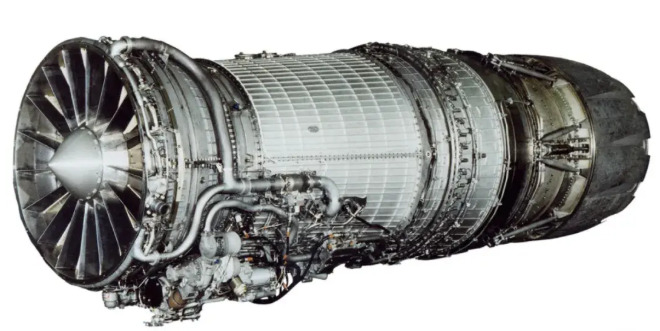
F101-GE-100
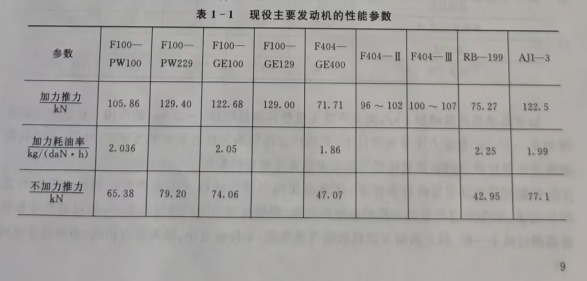
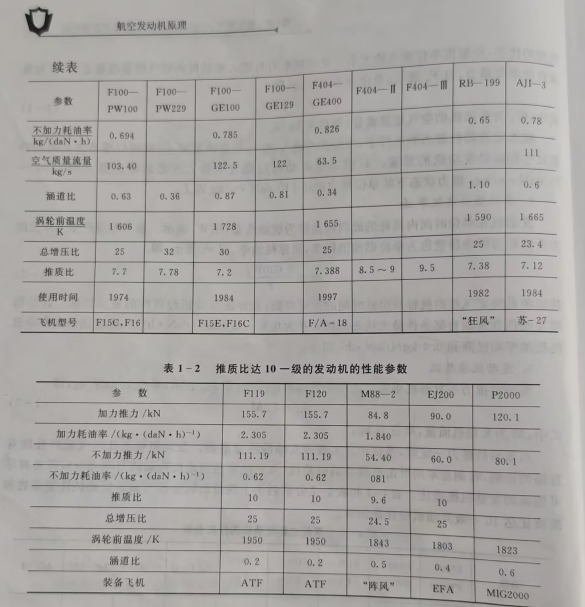
WS-10 Series Basic Data
-
WS-10: Its military thrust is 89.17 kN, maximum afterburner thrust is 132 kN, with a thrust-to-weight ratio of 7.5.
-
WS-10A: Its standard thrust is 77.6 kN, afterburner thrust is also 132 kN, maintaining a thrust-to-weight ratio of 7.5.
-
WS-10B: Its maximum thrust is increased to 138 kN, with a thrust-to-weight ratio of 8. The structure consists of a 3-stage fan, 9-stage high-pressure compressor, 1-stage high-pressure turbine, and 1-stage low-pressure turbine. The bypass ratio is 0.78, and the turbine inlet temperature is approximately 1800 K.
-
WS-10C: This is an advanced variant developed for the J-20. Thrust is further increased to 147 kN, and it adopts a serrated nozzle design to enhance stealth performance.
F110 Series Basic Data
-
F110-GE-100: An early model of the series.
-
F110-GE-129: Currently one of the most widely used models. Military thrust is 73.9 kN, with maximum afterburner thrust of 131 kN. Thrust-to-weight ratio is approximately 9.5, and overall pressure ratio reaches 30.7:1.
-
F110-GE-132: This is the high-thrust model of the series. Its maximum afterburner thrust is increased to 142–145 kN, while its bypass ratio slightly decreases to 0.68:1.
-
F110-GE-400: A model specially designed for the F-14 fighter. Its afterburner thrust at sea level is 104 kN, and at a speed of Mach 0.9, thrust can be increased to 134 kN.
(The data is publicly available; some data are not missing but lack precise figures)
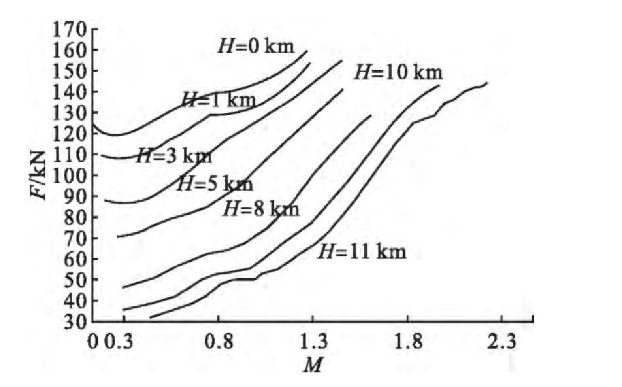
Suspected WS-10 Engine Thrust-Speed Characteristics
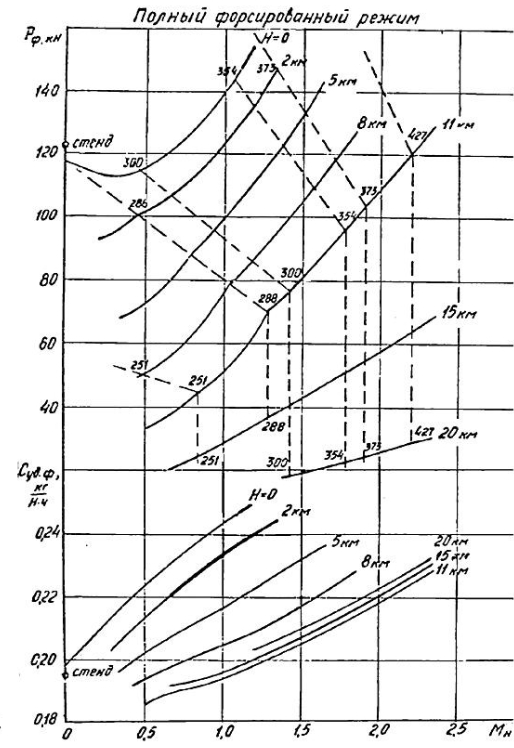
AL-31F
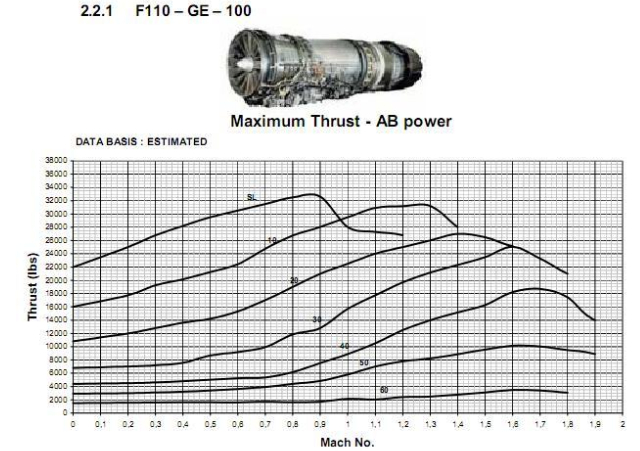
F-110-GE-100
As can be seen from the figure, the WS-10 achieves a thrust of 170 kN at Mach 1.5 at sea level, far exceeding the 140 kN of the AL-31F.
Under high-altitude, high-speed conditions, only the WS-10 and F110 engines exhibited significant thrust fluctuations, which is due to their sharing a common core. However, from the chart, it is evident that the performance of the WS-10 is significantly superior to that of the F110. This is because China has adopted variable inlets similar to the AL-31F, enhancing ramjet effects and increasing the intake per unit, thereby improving thrust per unit.
As can be seen in the figure, at an altitude of 5 kilometers and a Mach number of approximately 1.5, the thrust of the WS-10 is 20 kN higher than that of the 31F. This means that an aircraft equipped with the WS-10 engine has better acceleration performance and more stable loitering capability.
Therefore, in fact, the performance of the existing WS-10 falls far short of expectations, and in practice, the entire WS-10 family should have enhanced output performance at low to medium altitudes.