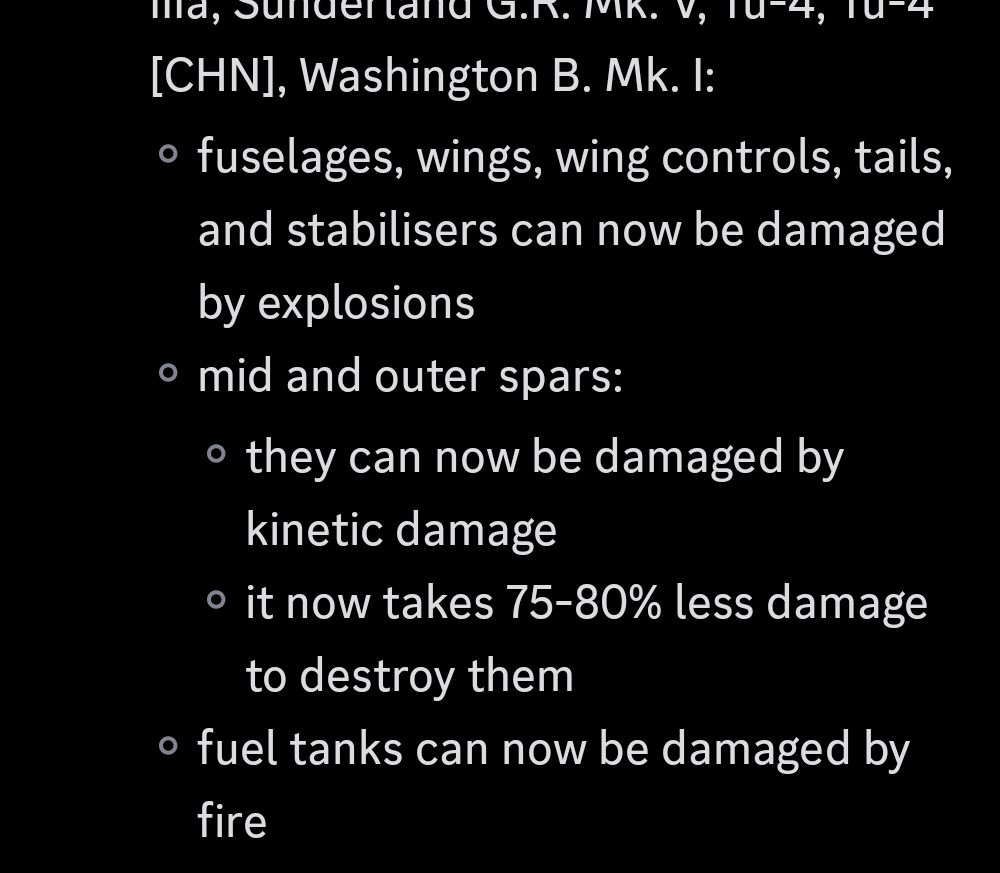
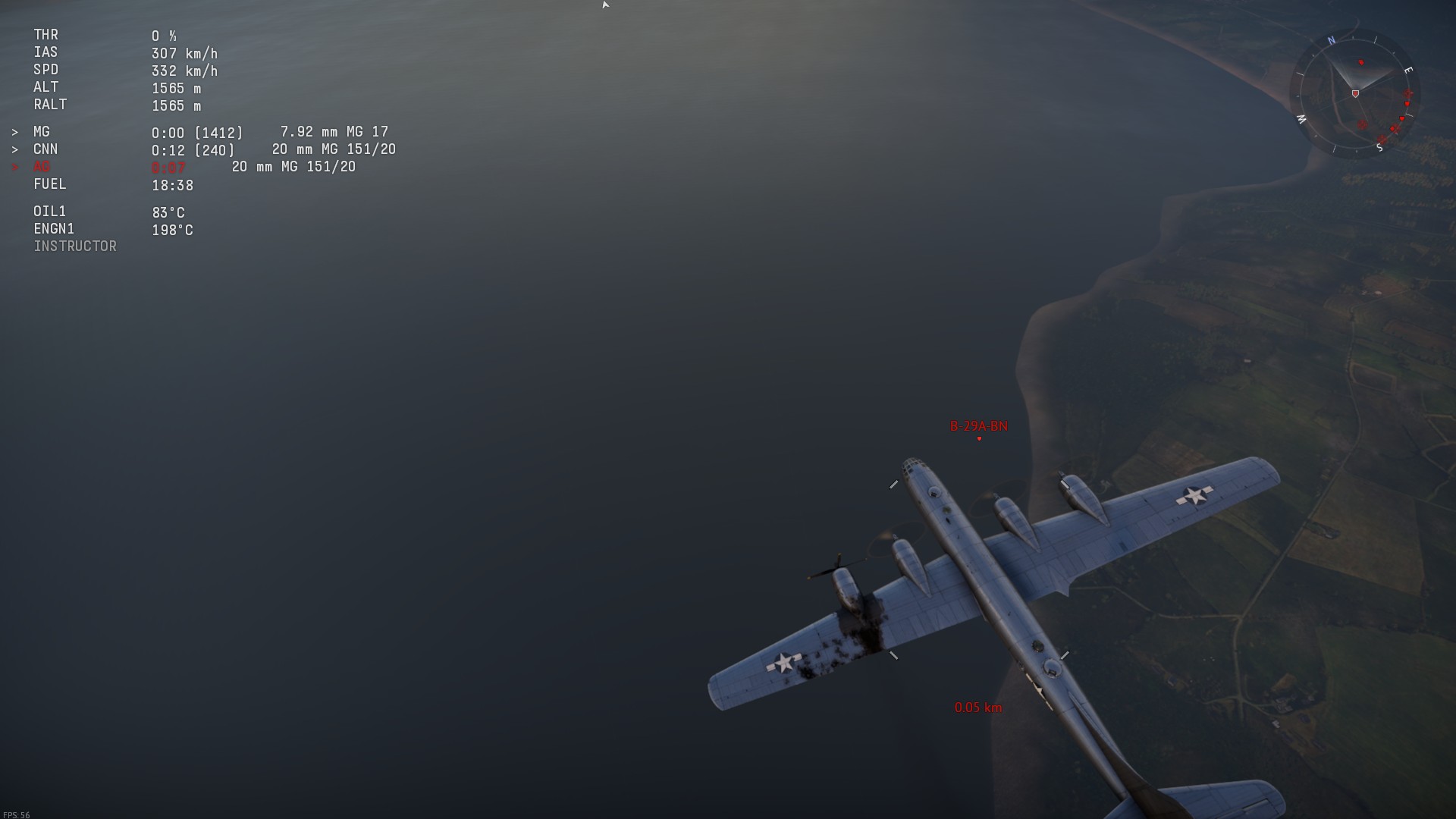
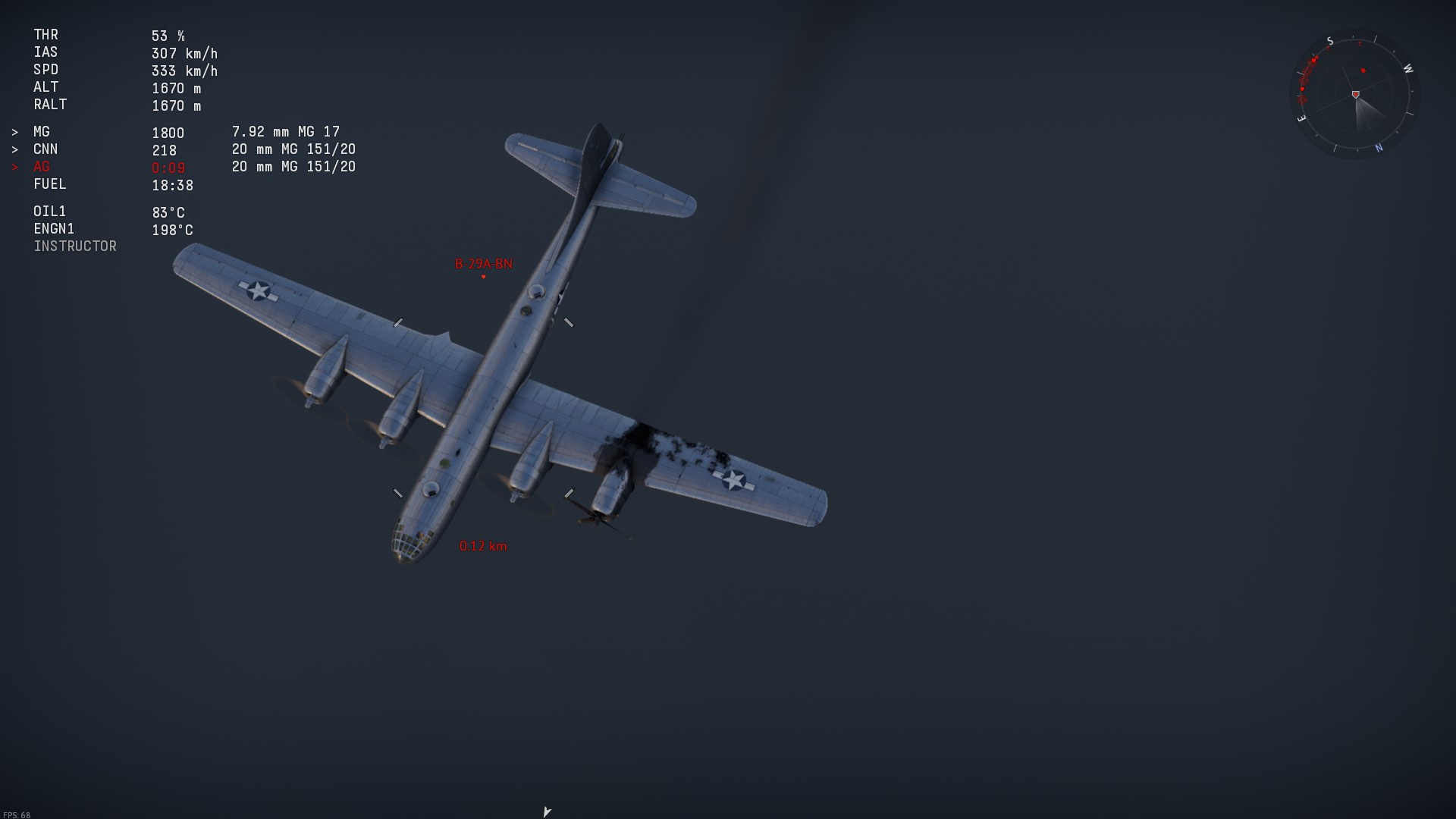
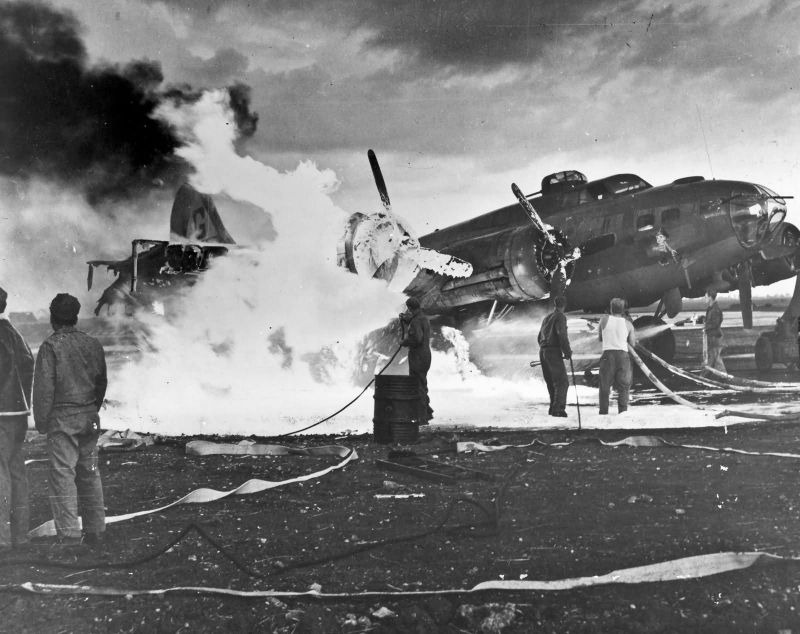
This requires a dynamic structural strength calculation. Dynamic pressure rises with the square of speed, so battle damage that is still survivable at low speed can become critical once speed (and therefore dynamic pressure) increases. Your example is therefore spot on.
From my point of view we currently have mainly a static view on structural strength.
I tested this with a B-17E and a G8N1:
- Bomb load had no measurable effect on wing-snap or G-warnings.
- High-G warnings and structural limits are clearly speed-dependent (TAS).
At 4–5 km the B-17 starts giving max-G warnings above roughly 300 km/h, the G8N1 around 500 km/h.
This shows that War Thunder already applies a speed component to the clean airframe.
What is still missing (or just not visible) is the interaction between existing battle damage and rising dynamic pressure. A damaged structure that holds at low speed should fail earlier or more easily once dynamic pressure increases. That part does not appear to be modelled (or is modelled only very weakly).
The same logic applies to the P-61 discussion:
- Size and potential bomb load do not automatically create high combat damage tolerance. The structure is sized for the expected flight envelope (including design dive speed and limit loads).
- Once that envelope is met, extra resistance against battle damage is not automatically present.
- What matters is the remaining structural margin once damage exists — and how that margin shrinks with rising dynamic pressure.
- That means at which point your inflicted damages weakens the structure enough to make it collapse.
That distinction between “strong enough for the design loads” and “damage-tolerant under combat loads at speed” is the core issue of this whole thread.
Have a good one!
@DirtyOldCommie - hidden behind a spoiler as imho off-topic:
Summary
Even as it looks like we had a misunderstanding and clarified that- i just finished a match which proved this previous statement:
I finished a match (replay link) showing a typical Air RB match:
-
More or less uncoordinated player actions leaving me playing a 2 vs 4 after 8 minutes and 1 vs 4 after 15 minutes. In classic shooter a clear defeat especially considering that my P-47 faced 2 BR 3.7 Spit Mk Vs, a 4.0 Ki-43 and a 3.7 Ki-44 - those guys fly circles around me below 6 km and my sole advantage is a way higher top speed above 6 km and a way higher dive speed.
-
My B-25 did his best to defend himself vs 3 attacking aircraft and damaged 3 of them (thx to bomber damage model upgrade) but the most dangerous opponent tried to pitch up which denied me to thin out their numbers by strafing them when repairing - i could have killed one or 2 repairing on the undefended airfield but resetting my energy advantage vs the Ki-44 would have taken too much time.
Based on my experience the only way to win was to drag all enemies above 6 km and away from my ground units, kill one or two of them and use my superior dive speed to turn the tickets very late game denying the enemy team to counter this move.
Worked perfectly:
3 guys went for me, a single Spit groundpounding wasted his ammo and killed just one pillbox (which granted me the option to win by tickets with a single pillbox kill) and i killed a Mk V Spit at around 6 km alt (22:58 game time). All i had to do was to fly a large loop to keep the Ki-44 behind me, use my superior dive speed and time my pillbox kill so that the Ki-44 and the Ki-43 could not catch me before the timer ran out.
I killed the pillbox at 24:39 game time whilst both JP planes had zero chance to catch me before the game ended after 25:10 game time.
Matches like these are the reason why i still play wt even after 30k matches.
Have a good one too!