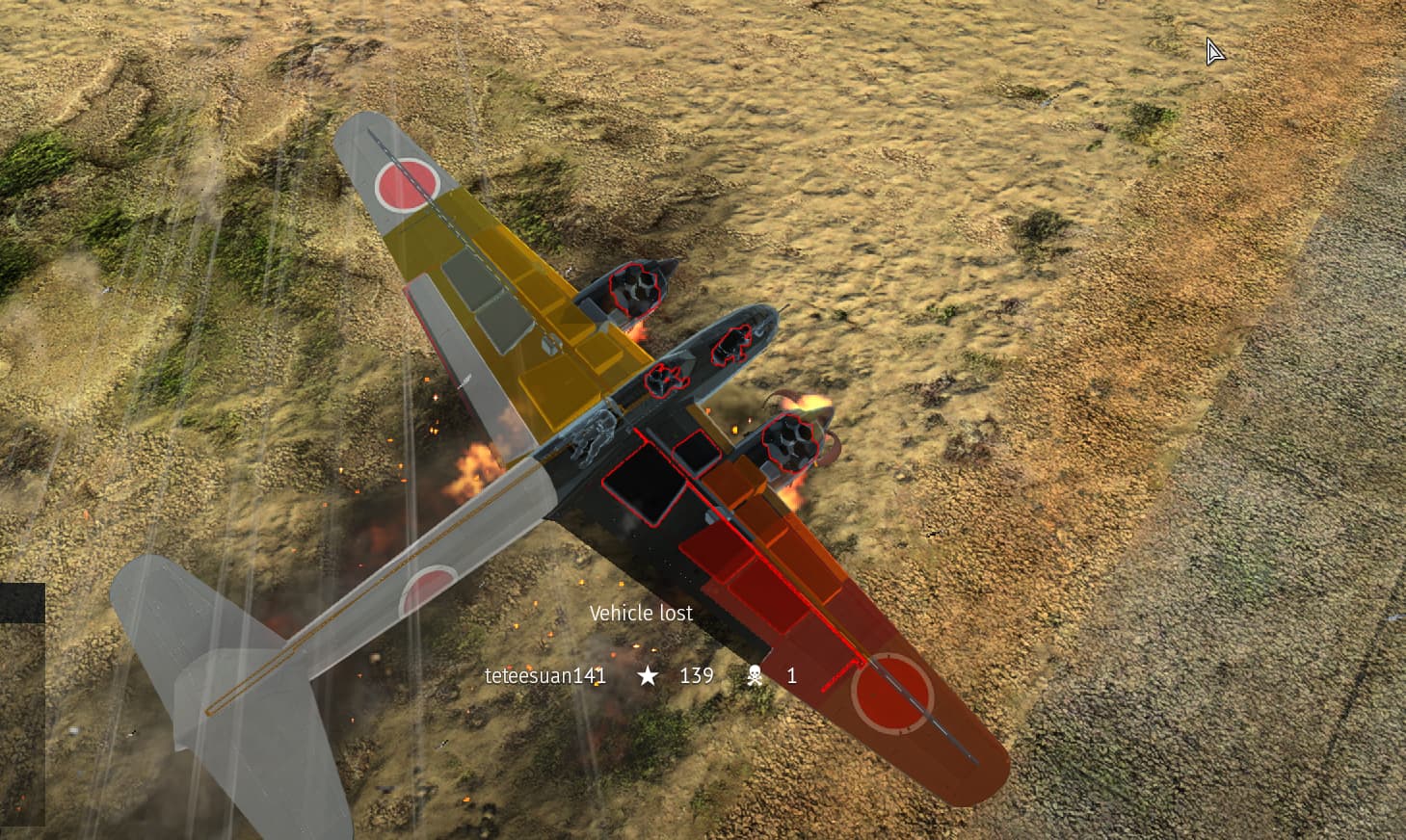
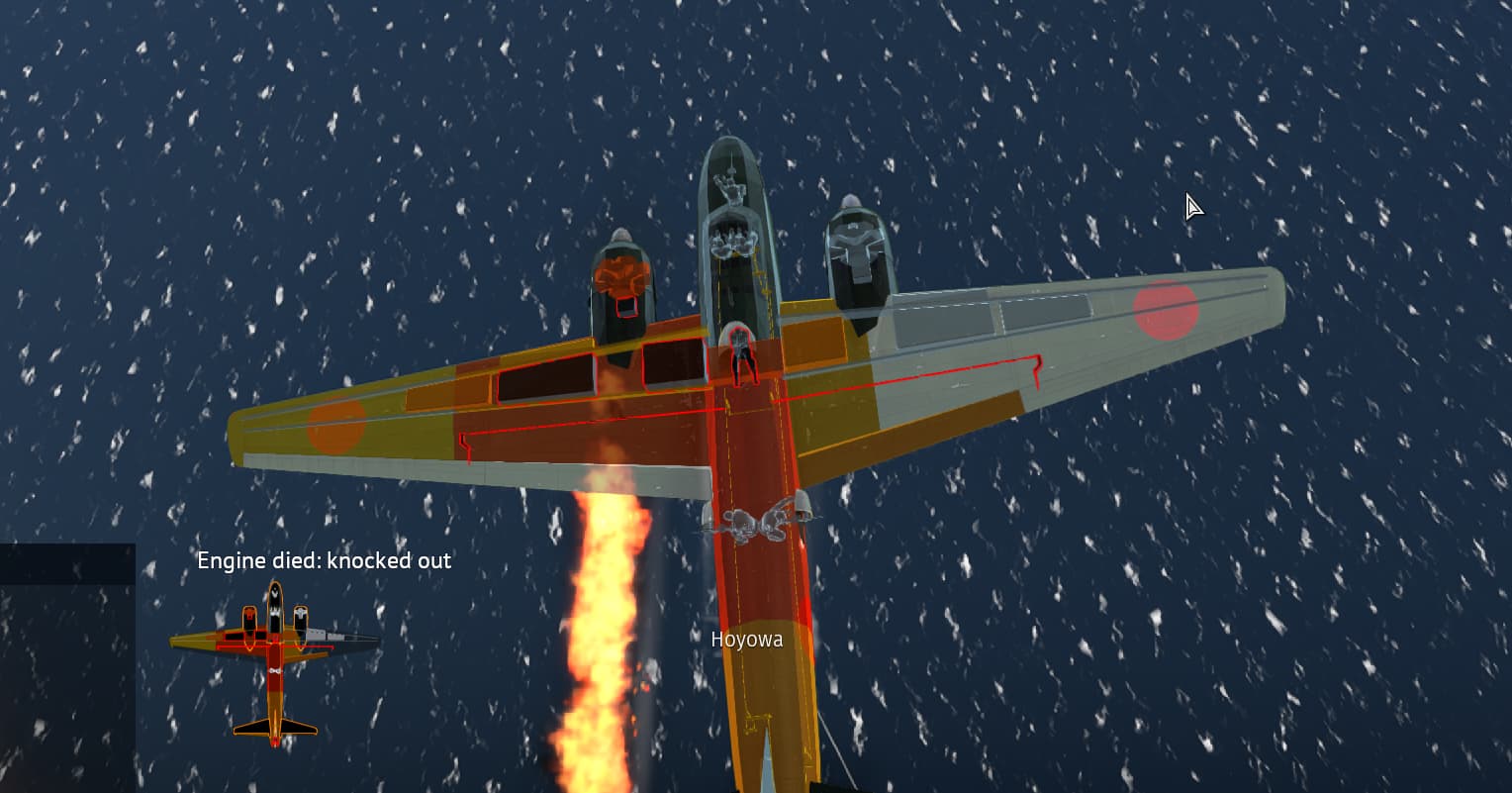
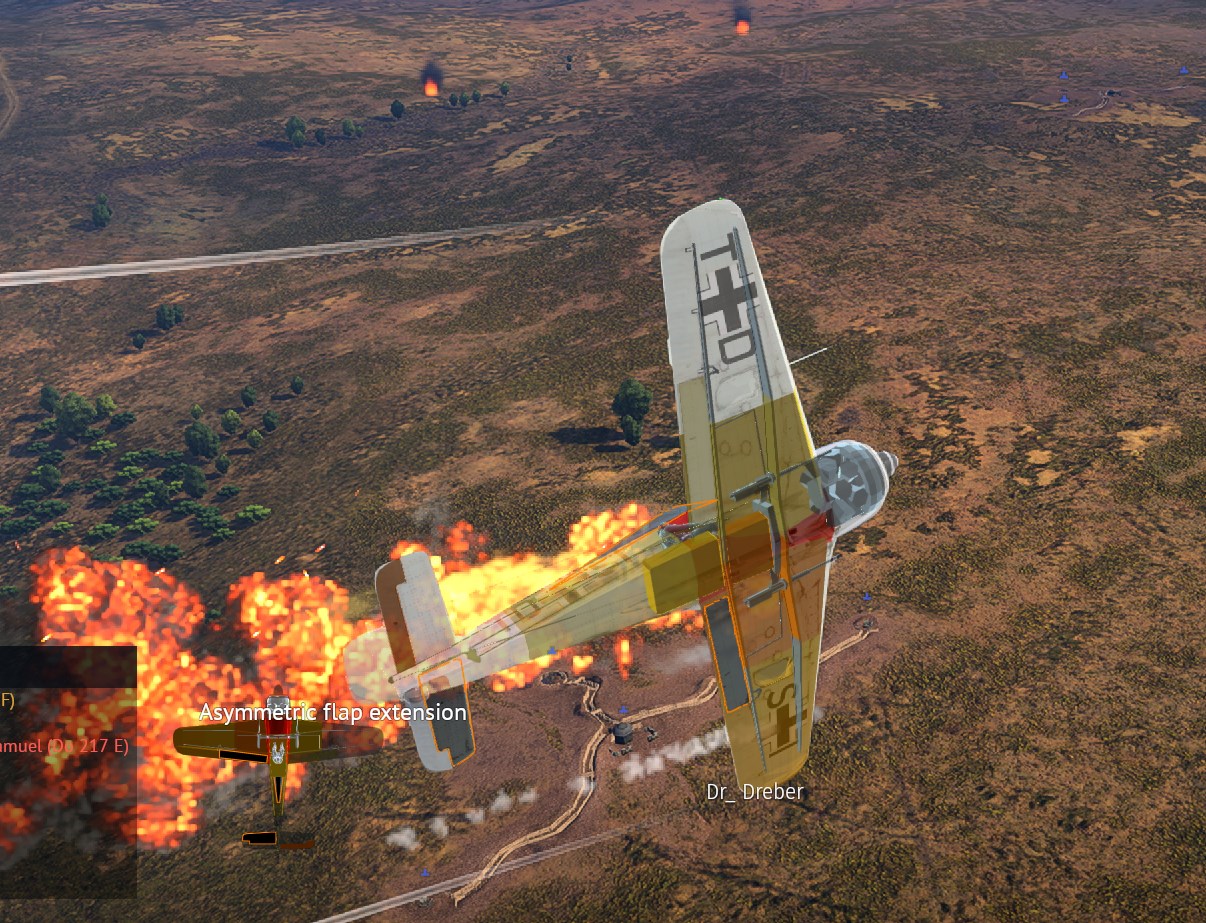
Make them a valuable target both to defend and to attack and it will be more interesting in ARB.
In GRB they are integrated enough, just a big bomb mass against ground, a normal thing.
Make them a valuable target both to defend and to attack and it will be more interesting in ARB.
In GRB they are integrated enough, just a big bomb mass against ground, a normal thing.
i dont disagree with that
Even in GRB the only really useful bombers are the light or medium bomber kind, stuff like the Tu-2.
Heavy bombers have a “funny” aspect to them but they are far from particularly useful.
Well, at least they can fly to the bombing point in GRB, in ARB its either a dice roll or a suicide bombing on jets.
Hope they will do more complicated rewards system for them, idk. I want them to fly in groups (to get more reward), to be defended by fighters in groups (to get more reward), and to give waaaaay more reward for killing a bomber in these groups.
Like, ideally, every ARB match will have a group of bombers + players who are covering them for more reward. And a group of attackers who fly towards an enemy group of bombers and fighters.
Simple to implement an economic incentive that will shape players’s playstyle towards it.
Even the one with 0 HE is basically a low explosive grenade that can and will overpressure wing segments and break them apart, and it did so in British Spitfire tests.
Thank you for proving me right about you just regurgitating what Grok says, because petaling is a result of the plate being bent rather than sheared.
See: https://www.sciencedirect.com/science/article/abs/pii/S0734743X99000287
Quote: “Their solution was based on an energy balance in which the energy absorbed by the plate consists of that due to crack propagation, petal bending, and plate dishing.”
So let me reiterate what I and @FeetPics have said: BS in, BS out. You have no darn clue what you are talking about.
For the past few years I’ve looked a bit into stuff like tank armor and that the idea I got was that sheering is when a plug is driven out of a plate, stuff like petalling is a result of bending and ductile penetration.
However I’m not enough of a metalurgist to really say the differences.
Shearing is this:
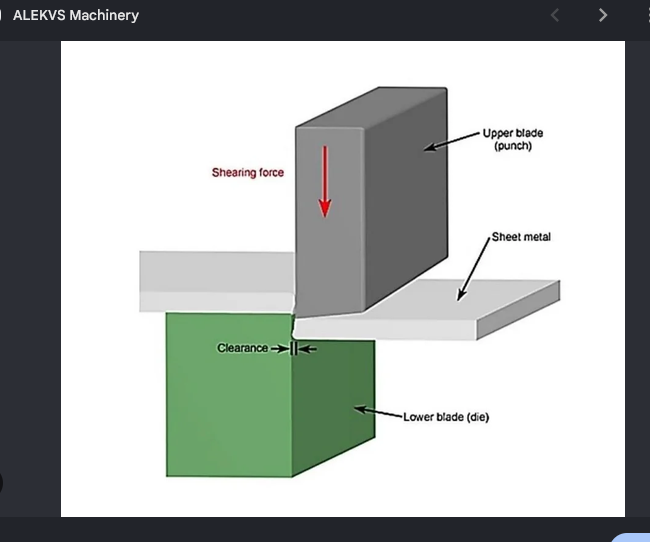
You apply a force along a backed area of the metal, overcome the tensile strenght of the plate itself and get a mostly clean cut.
With bending on the other hand you essentially overstretch the outside of the bent area, causing it to tear.
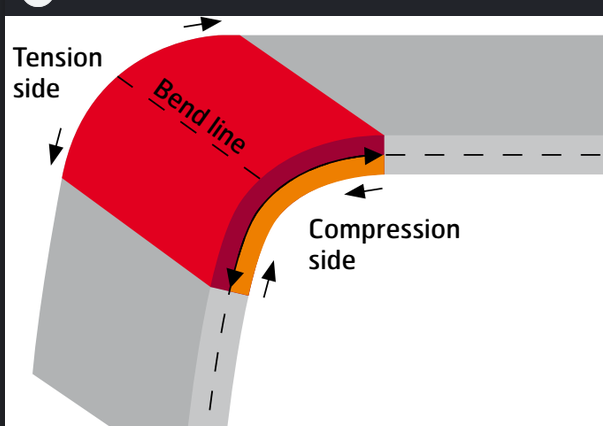
Sort of like this. As you can see, you have a lever arm, meaning that the forces required are typically smaller than those required for shearing.
However this gets very fucky-wucky, as the explosion introduces cracks, fractures and whatnot. No two explosios are going to be the same, as no two plates are the same.
Even with modern metallurgy you can end up with the same alloy behaving very different. I am not a metallurgist, just a machinist though. I have had cases were when switching over to new bar from a different supplier, the same alloy that just chipped nicely was now machining bad with long stringy chips, this is were I take that last statement from.
Whenever I think of bend vs shear this is the only thing I imagine.
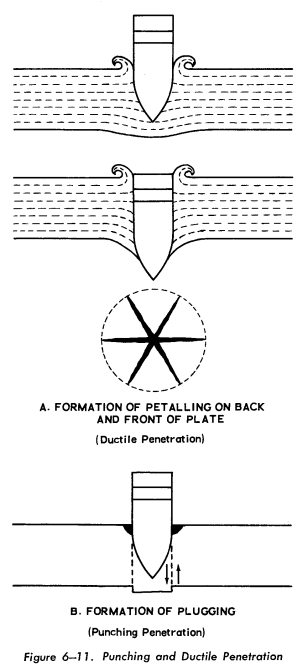
Since bending is what creates petals with kinetic armor penetration, I suppose it makes sense that bending is also what creates petals in explosive penetration.
The rest of this text is locked behind an organisation sign in. Do you have one?
Shearing can be applied to the petaling process, which I was using to determine the overall diameter of a blast hole made for a certain amount of tnt filler, and its matches up to real life examples from guncam footage and tests of rounds blowing up on the surface. It is a grossly simplified way of coming at the problem, but its proven accurate for its intended application.
Now im not stupid enough to sit here and say AI is better than literal scientists and mathematicians, or that this is the IDEAL equation to use. But I will say that when put picture to picture with an external blast irl, it matches the diameter of the hole within 10%
But until we got the full proper formula for this particular issue, this is the best (or least shit) option on hand to answer a specific question, as soon as someone gives me something better, something more official, I will PERSONALLY go back and disprove my own work, and admit I was wrong, because that would be undeniable evidence that it was infact wrong, get what im saying?
In the meantime ill stop referencing that equation. How about that
To be honest, I haven’t seen a single difference before and after bomber changes. Im still getting wings shot off with 1 or 2 bullets, not even cannon shots, and my bombs are still exploding from machinegun fire. I don’t know if its just that British bombers were not affected or something, but they aren’t taking any more damage than they were pre-nerf.
is this on live server? as it was only on dev server and isnt yet implemented, will be with next major update. large bombers were majorly improved (lots of lighter ones were forgotten sadly)
Ohh that explains a lot, thank you very much.
If the metal doesnt shatter yes.

To reinforce your argument.
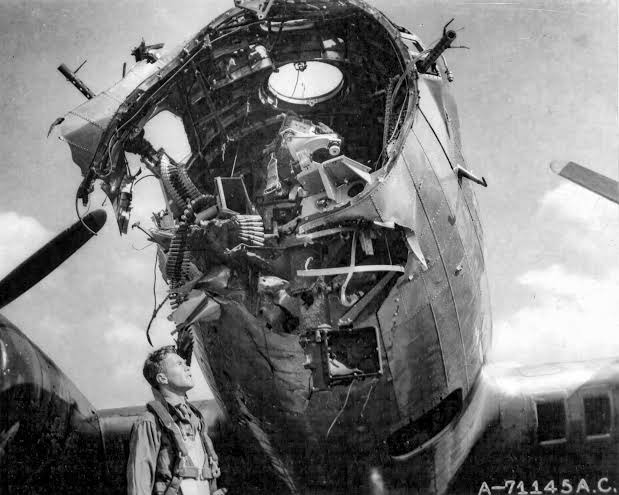
If a B-17 can fly home and land without a cockpit, he’s got no excuses.
In fact, a B-17 landed without a crew. On its own. Which remains a mystery.
notice how that plane after taking a direct flak hit flew home
Its autopilot got a fluke landing, not quite the Mary Celeste of the skies but pretty close
And for the one that landed, thousand didn’t make that with less damage.
Just because one person survived dropping out of a plane without a parachute doesn’t mean we can all forego parachutes, does it?
One thing is, if Gaijin is going to make it where you need to light fires to kill bombers. They need to rework incendiary as a whole.
This is from the live server
Only engines will commonly catch alight. Fuel tank damage only seems to affect the leak rate and that’s basically it. It doesn’t affect flame chances. This makes it where any incendiary based rounds are already going to have huge problem lighting targets up, flame chances should scale based off fuel tank damage. leaking fuel shouldn’t disappear into the ether. If a tank is sufficiently damage. No amount of self-sealant or inerting gas is going to stop it.
I even tested 20mm incendiaries and they are having issues as well and are doing really no better either.
That doesn’t mean fuel tank fires are impossible
But they’re more surprising to see happen due to how rarely they show up
What I think is happening is that the “onkill” stat for engines has the flame chance is super high.
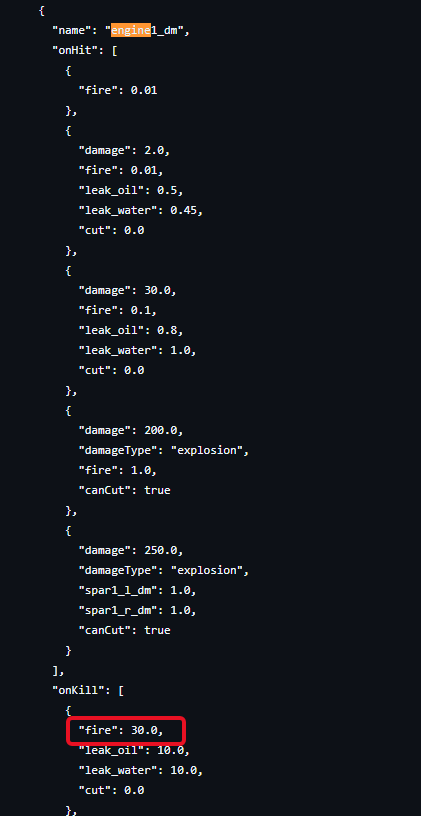
Stack on top the round multiplier. This makes it where it makes it where a good damaging shot to the engine will catch it alight, or if you kill it.
Nice to see 20mm incendiary tracer and 30mm incendiary go from current dogshit to ultra super dogshit. Gaijin had a chance to fix it by making these shells actually a viable anti-bomber weapon and they simply said 'no".
I think there is room for debate over exactly how much structural damage WWII era 20-30mm cannon should cause to heavy bombers.
However, if post-war cannon such as the ADEN, DEFA and NR-30 are also struggling to bring down bombers in War Thunder, then I think something is clearly wrong.
These weapons were designed for jet combat, where firing opportunities were extremely short and a fighter needed to inflict serious damage very quickly. The Hunter carried four 30mm ADENs, the Mirage IIIC carried x2 30mm DEFAs, and the MiG-19 was has x2 or x3 30mm NR-30s.
There are also real-world examples. MiG-15s armed with 23mm and 37mm cannon inflicted severe losses on B-29s during the Korean War. In 1960, an RB-47H was shot down by a MiG-19 after cannon fire struck its wing and engines, eventually sending it into a flat spin.
The point is not that every 30mm hit should instantly rip a wing off.
An aircraft can be killed without physically disintegrating. Damage to engines, fuel systems, hydraulics, flight controls, crew or the airframe itself can make an otherwise intact aircraft uncontrollable.
Making bombers less likely to turn into “LEGO” after a few hits is reasonable.
But there is a major difference between “the aircraft should not immediately break apart” and “the aircraft can absorb repeated bursts from post-war 30 mm cannon and remain controllable.”
If ADEN, DEFA and NR-30 are having serious difficulty disabling large aircraft, then I think the current damage model has gone too far in the opposite direction.