If there aren’t any delays. What happen alot
Not really but hey whatever you think lol
This is again assuming no delays or major changes during the development time
If there aren’t any delays. What happen alot
Not really but hey whatever you think lol
This is again assuming no delays or major changes during the development time
Delays equally apply to Challenger 3 so that’s a silly cop out. M1E3 is a pretty big deal to the Army right now and is getting funded as such. Currently the program is on schedule and being accelerated.
Why shouldn’t they? Both NATO countries, both entering service within a few years of each other, both pitched as a deep upgrade to an existing hull, both having a new turret. That’s like saying you shouldn’t compare the M1A2, Leopard 2A5, and Challenger 2.
Comparing the Challenger 3 to say a M1A2 SEPv3 is more disingenuous. The SEPv3 reached IOC in 2020, 7 years before Challenger 3.
The Challenger 3 can undergo delays or ‘bugs’ throughout it’s program run as well, not sure why you’re applying this to one but not the other.
They gave you a well reasoned and argued response as to why they can be compared, and all you came come up with is: ‘‘Nuh uh’’ ?
You’re pulling the same trick as with your IFV -vs- MBT comparison. You saying they’re not valid comparisons doesn’t magically make it so.
Unmanned turret designs offer benefits across the board and for virtually all AFV designs.
Why would weight savings not be relevant to an IFV? Why would improved crew protection not be relevant to an IFV? Etc.
Tanks don’t fix themselves, ask the Russians how much fun it is when you have 3 crew members to make repairs, tension tracks and even just security of the tank. Having 4 or crew reduces the burden significantly.
Leclerc operate with tank support teams that have backup crewmen in other vehicles to assist the tank for maintenance, repair and security.
Not for tanks, unmanned concept seems great keep the crew out of harms reach. But then the autoloader jams, or the gun fails to fire you can no longer in a combat environment try to rectify that problem. I don’t ever see a world where we do not have manned turrets for tanks. IFVs are different as they are not designed to fight but to support, an IFV takes a hit in a crewed or uncrewed turret is going to be combat ineffective and will withdraw. if the gun jams or fails the IFV can again withdraw. if you have to withdraw your tanks from the LOC because the crew cannot access the turret in combat then you are losing massive capability.
Even the best autoloaders can jam or fail as seen on the Pzh 2000s
Let alone the disadvantages in normal combat too.
Isnt switching ammo on an autoloader quite a major pain?
Soviet MBT’s have utilized autoloaders for 60 years now and demonstrated they work consistently and reliably.
Proposed autoloader upgrades for the M1 and CATTB demonstrated many thousands of reload cycles in testing without a SINGLE significant failure.
Where is this nonsense coming from that autoloaders are these wildly unreliable mechanisms that require constant care and attention from it’s crews? Are we seriously proposing that the US cannot produce a reliable autoloader in 2026 whilst they already demonstrated the capability in the early '90s?
And if you mistrust the reliability of an autoloader so much that it should be excluded, why not mistrust an engine? Let’s get rid of the engine then? What about fire control systems? Those can fail, let’s get rid of those and revert back to the Mk.1 Eyeball because it’s oh-so-much more reliable.
Then you’ve been living under a rock, because there are already numerous unmanned AFV’s in service, and have been for decades.
Did you truly think this through before typing this out?
If your vehicle is struck and it has disabled one of the fundamental systems that allows the tank to fight, then the crew isn’t going to be able to fix it right then and there either, regardless of where the crew are located.
This is a completely meaningless point.
All of these but one are IFVs, how are these in any way comparable to an MBT?
Despite what you claim, the benefits are not “universal” as armoured vehicles of different types can have wildly different requirements.
The key difference here is that the autoloader in Russian tanks (excluding the T14, which isn’t in service) is that the autoloader is in the crew compartment.
If the autoloader jams, the crew can actively attempt to unjam the system and continue firing. If that fails, it is still possible to manually load the gun (even if it is inefficient). Early Russian autoloaders did in fact have reliability issues, but as time progressed they were ironed out. Creating an unmanned autoloader from scratch is not the same as reusing an existing one.
Unmanned turret autoloaders cannot be repaired by the crew in any way if they malfunction and manual loading is impossible.
Plenty of systems have proven reliable during trials but have faced issues when actually entering service, trials almost never account for the almost limitless variables vehicles face in combat.
Not tanks, we have seen prototypes that have all not been progressed. Abrams X, T-14 if it worked and the benefits were real we would see it now. Even 130mm gun tanks will have crewed turrets.
Russians are in the turret if the autoloader or any part of the firing system malfunctions. They can try to rectify it they can even load the shell manually. So they may malfunction and we would not know. I gave the example of the Pzh 2000 which has failed and is one of the most advanced and modern autoloader systems in use.
Finally you forget about maintenance, in conflict vehicles will not get their scheduled maintenance meaning parts wear faster, components fail entirely or systems just do not operate as smoothly. If you are unable to access these systems the vehicle can be rendered combat ineffective.
The primary purpose of a tank is it’s fire power if it cannot fire reliably then it is a liability.
You’re being extremely dishonest here.
The Abrams X is a private venture by GDLS, it was never built with the purpose of entering service, it’s merely a technology demonstrator.
The T-14 Armata is another dishonest example, as the reason why that’s not gone anywhere has much more to do with overal costs and complexity as well as re-tooling of the factories required, all whilst refurbishing and upgrading existing T-72, T-80 and T-90 stocks were far more monetarily efficient.
The fact that the T-14 uses an unmanned turret is not the reason why it has not entered service.
Hence why the M1E3 program is using an unmanned turret.
Once again assuming the autoloader fails frequently enough for the crew to be positioned nearby the system.
Feel free to provide any sources that indicate these autoloaders fail on a frequent basis.
No, you’ve stated it, but you’ve not provided a source to indicate it actually occurred and to what degree it occurred, or even why the autoloader on the Pzh 2000 failing at times would equate to any other autoloading system also being prone to failure because of it.
This is truly awful logic, you’re essentially saying that just because the engine in a Renault Megane is unreliable, that must therefore mean any (any manufacturer) current and future car engine must also be unreliable.
You’re also implying that unreliable systems cannot be made reliable during development, which is another silly argument to make.
Unmanned turrets still have access hatches for the crew to perform maintenance of the components. During long periods of conflict vehicles are still maintained to fighting standards, and if systems do fail, it’s not something you’re going to fix, as you said, on the LOC.
Did you seriously think these unmanned turret designs weren’t built with maintenance in mind? That the designers were so short-sighted?
Your argument in regards to Soviet vehicles also works against you, as the Russians clearly decided to isolate the crew from the autoloading mechanism in the T-14, clearly the crew being seated next to the system to perform fixes wasn’t a big enough concern to have the crew remain in the turret fighting compartment. That in itself already proves the autoloading mechanism is reliable enough and does not need frequent crew intervention.
Is it mission critital?
In systems we have contingencies and redundancies.
Why do tanks have backup sights? When Thermals are so reliable?
Why does an M1/Leopard 2 have a manual blast door overide.
Despite the door being tested for thousands of cycles?
Things can be damaged, things will fail.
Maintenance you miss the point again. In intense combat tanks will not get maintained to the. This becomes even more of a factor when combat is 24 hours a crew outside of a tank can be spotted by a drone and targetted so crews stay by or in the tank. This is the same for both manualy and automatically loaded systems.
No doubt the crew have access to the turret or gun for maintenance, question is can they access it during combat? Tank takes a hit loader is not cycling, can they jump up and resolve the issue?
Unmanned turrets will come but they will likely be part of unmanned vehicles.
Absolutely
I’m losing brain cells as I read the thread.
Let’s put aside the unmanned turret discussion for a second.
Are we still discussing the reliability of auto loaders ? Sure, you can argue that the now reliable t series auto loaders can be fixed by the crew, or they can manually reload the shells, but here you are completely ignoring the Leclerc, type 90/10 and K2, all of which have a similarly placed automoaders which do not accept manual loading from the crew. It’s also virtually impossible to access them from the crew compartment. And yet, I’ve never heard from them that they had any reliability issue.
The Leclerc also was involved in a war with the UAE, and publicly there doesn’t seem to have been any reliability issue of the vehicle at large.
Discussing autloadzr reliability when there has been several system in the past 40 years that use an inaccessible system (in combat) which have not been shown to be unreliable seems to be a bit of a cope out to me
Me too. I love British tanks and I love Challenger series, but clearly no one can deny Challenger 3 is ‘old’ doctrine compared to what other nations do.
It is not rational to advocate Challenger 3 by making other tanks insane or premature.
Yes.
Anyone who says otherwise simply does not understand modern tank doctrine.
Supposedly the Leclerc had some autoloading issues early on, but only when firing faster than what was recommended, and the Type-90 may have had some issues reloading on the move.
I’m not 100% sure on either of these, but if these are the case then the problems seem to have dissipated in the modern day through improvements.
Yes. The auto loader can go as fast as 4 second per shot, but operationally only goes to 6, maybeeeee 5 with an emergency mode (this is not confirmed hence the maybe).
The thing is, this kind of system is now pretty well tested and understood, and all the prototypes from the west - abrams E3, Leo 2 ARC, EMBT ADT140, all use auto loaders using the same cinematic; a carousel on the back to put the correct munition in front of the breach, and then a rammer. They also use single piece ammunition which mechanically makes things simpler than Russian tanks.
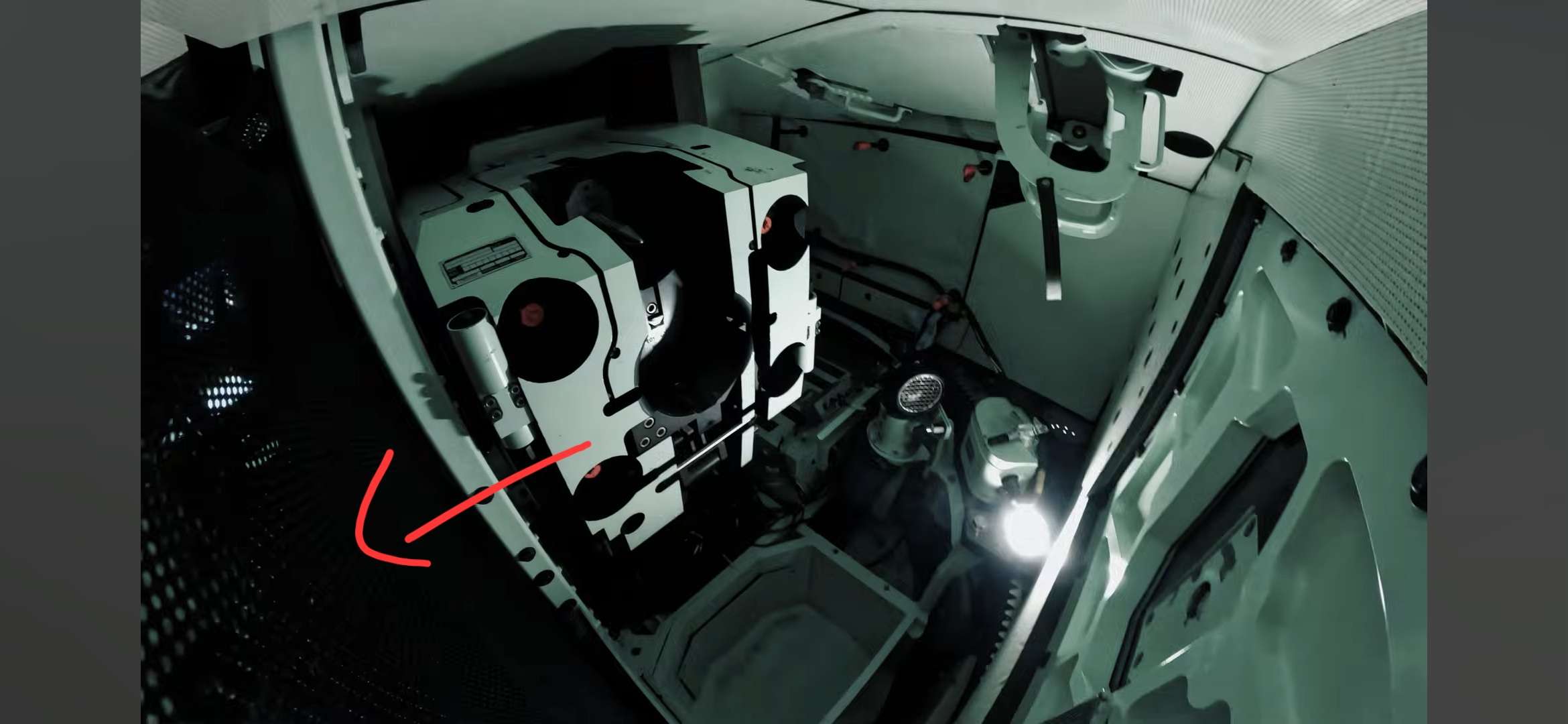
Also, from the testing of the EMBT ADT 140 (using the ASCALON 140mm gun), they do mention that manual loading is possible, and in the pictures you can kind off see an access hatch, so it’s still possible in an unmanned turret to have emergency manual modes
Anyways, I think I went kind of off topic, so I’ll stop here
Due to the lack of funds, the British had already designed and tested both tail-cabin and wheel-cabin ammunition loaders in the 1980s. These two devices are currently located in Bowenton
In the last century, after the MBT80 project was forced to end, the British inherited the design and technology of the MBT80 into the Challenger 2 PIP design for the Chieftain replacement project, and this design was also exhibited at Bovington. The Challenger 2 PIP adopted a new structural design, resulting in a lower and shorter hull, using a transverse 1500-horsepower CV12 engine, and a wheel-fed ammunition loader. The frontal armor could achieve a penetration resistance of 550mm. However, in the 1985 tender, due to the high cost and the fact that the prototype chassis could only be manufactured in the mid-1990s, which did not meet the British Army’s need for a rapid replacement for the Chieftain, the Challenger 2 PIP design was also terminated. Because of the termination of the Challenger 2 PIP, Vickers could only come up with a tank design that was lower in cost and did not require changes to the original Challenger 1 structural design, which is now the design of the Challenger 2