How about you look that up and see where that leads you rather than trying to ask for info on a War Thunder forum?
I can tell what you have been able to understand given that you think sending a screenshot (twice) of an LLM saying ‘the probability of a kill, provided a hit is achieved, is equal to the probability of a kill, provided a hit is achieved’ is actually in any way informative or useful.
So - you DON’T certainly know I haven’t read or understood them. In fact your entire issue seems to be my choice of illustrative screengrab that was plainly simplified for the sake of making my point.
Fine. Rock on.
I was trying to explain to a totally different poster how PK isn’t just one factor - it’s more than one, in fact several.
Do you have an ACTUAL flaw you’d like to point out behind the above premise - or is your issue just that I used a screenshot as an example that you don’t much like? If you don’t - I really don’t see what your issue is besides wanting to pick a fight for it’s own sake.
1 Like
Yes, and I’ve very clearly pointed it out twice now? I’m struggling to see what you aren’t understanding here.
For pete’s sake. Let’s rewind this.
-
DOZOR Poster A argues that a PK of 0.5 means that 50% of the vehicle must be vulnerable.
-
I argue that no - a PK is based on other factors - including probability of hit.
-
DOZOR Poster B then asks - what do I mean probability of kill (PK)?
-
I rather quickly rattle off what it means - e.g. how probability of hit also goes into crunching the final figure for PK. I rather foolishly use a search result as an example of how an equation might look.
-
You…go bananas.
-
I post actual docs that go into the nitty gritty of the maths and methodology. Including how SSPK is used in wargaming simulations by NATO.
-
You still go bananas and state I cannot possibly know what those docs I have posted say or mean. Despite the fact that you probably haven’t seen or read them.
Leads us here…
Want to start again if I apologise for the rapid screengrab of an LLM to make a basic principle point rather than a mathematical argument?
1 Like
So, let’s consider this.
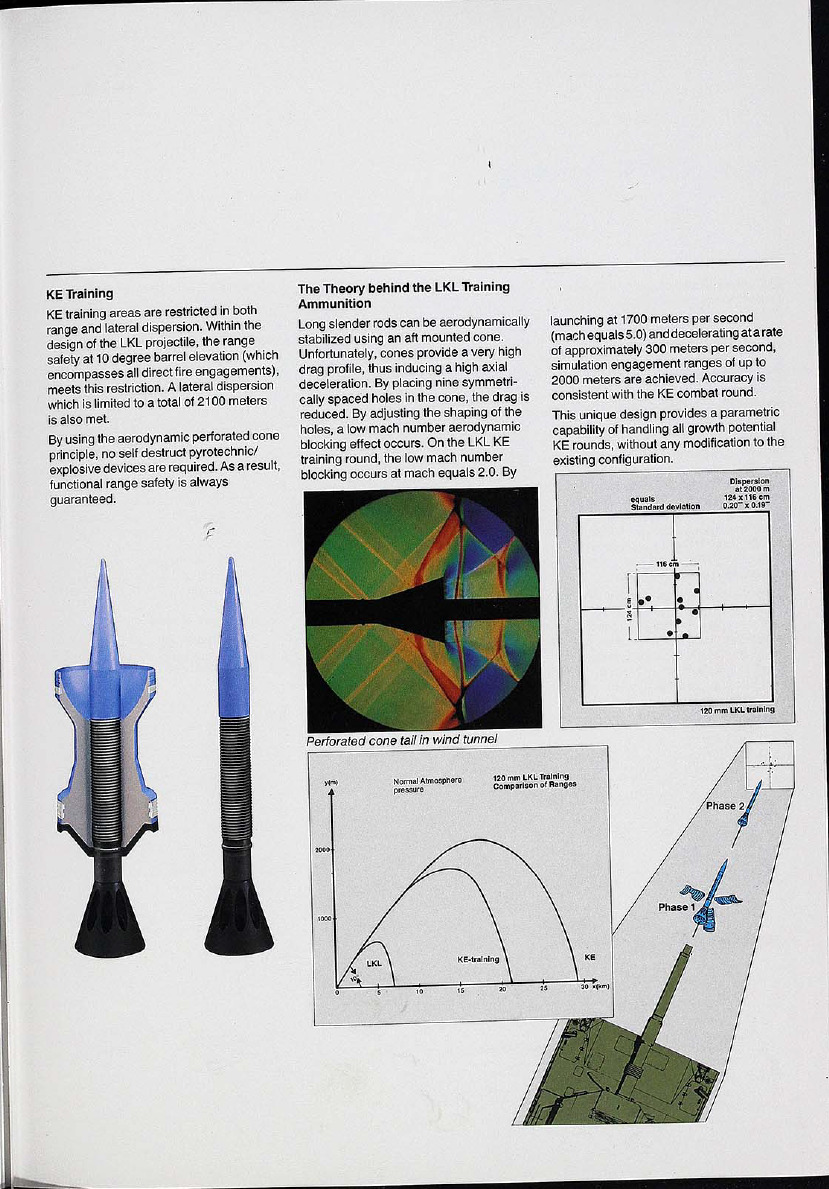
With the RH120, a ten-round group fits within a 120x120 cm square; if you project that square onto a T-80U, every shell hits the tank’s silhouette. The L30—being a rifled gun—is, according to British reports and statements, more accurate than the RH120. It would be foolish to consider the Challenger’s fire control system (FCS) obsolete; placing a round on a T-80 silhouette is its baseline task—had it failed to meet that requirement, the FCS would never have been adopted into service.
Thus, the equation implies that the SSPK is the product of the probability of a hit and the probability of a kill given a hit. SSPK = P_h*P_kh
In this scenario, the value of P_h approaches 1. Since it approaches 1, its influence becomes negligible effectively a margin of error and can be disregarded; consequently, the SSPK becomes equal to the probability of a kill given a hit. So… Either you think the Challenger’s gun/FCS is extremely inaccurate, or you don’t understand your own math.
We need to examine the issue further. What exactly is the value P_{kh}? We already know the shell has hit the target, meaning errors associated with the gun or the fire-control system have no bearing here. What is this value? What does it represent? In other words, if we fire 100 rounds and this value is 0.5, does that mean 50% of the shells will penetrate the target while the other 50% will not?
I go bananas? Because I called a screenshot of a meaningless equation meaningless? (and I do mean this literally, that screenshot is 1 incredibly basic step of simplification away from saying X=X)
I’ve never seen someone digging so deep to defend some shoddy LLM maths in my life hahaha.
Would you prefer crabby?
I’m apologising by the way - I’ll happily delete them if they offend you. I’m not defending them and agree I should have probably taken more than 30s to try to explain further.
Do you have any issue with the logical arguments (LLM notwithstanding) I have made?
Bearing in mind that the DOZOR crowd are basically trying to argue that PK is something it plainly is not (e.g. a percentage of the T-80U with K-5 that is vulnerable to L27) rather than an expression of probability.
Simple - for the purposes of SR(L) 4026 - they worked on some assumptions.
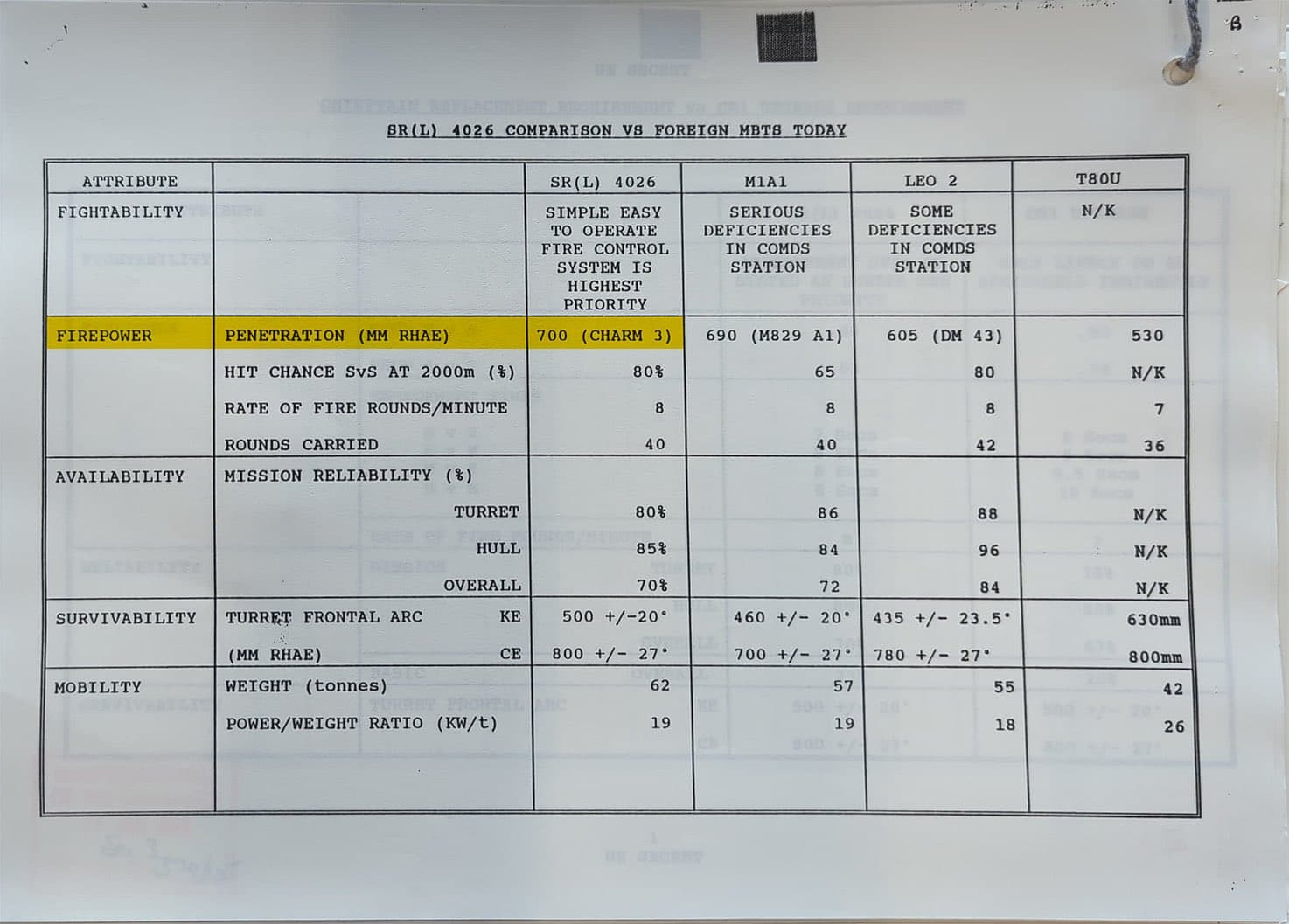
Assuming 80% hit rate at 2000m. Far from negligible if that feeds into a larger calculation of SSKP.
Are you? I don’t see one.
They don’t offend me? My criticism remains the same as my very first comment - they are fundamentally useless in terms of the basic maths they are trying and failing to convey, and a perfect encapsulation of why you should always be wary relying on an LLM to do any kind of maths at all really.
Again, if you re-read my messages you will notice I have never once commented on any of this. Unlike certain participants in this thread I am more than capable of holding my hands up and saying I’m not overly familiar with the intricacies of how the UK MoD calculated single-shot kill probability against its captured T-80U tanks in the 1990s, so if someone asked me, I would say as such, instead of screenshotting the first AI response I saw from Google.
I apologise unreservedly. I shall remove the LLM screenshots in question.
Okay, SSKP = 40% P_h = 80%
P_k|h = 0.4/0.8 = 50%
Surprisingly, I simply picked some numbers at random and ended up with exactly that 50%.
Without knowing the precise calculations used - there may be other factors besides probability of hit - your maths is guesswork as much as Gaijin’s.
The point remains that T-80U WITH K-5 was deemed to be vulnerable to L27 from the head-on aspect - given as a probability in excess of the SSPK.
1 Like
They also deemed the T-80U to possess 630mm RHAe, which is definitely a low estimate of it’s protection levels.
1 Like
You forget - they had an actual T-80U to study and measure. They didn’t need to ‘estimate’ to any degree when it came to dimensions and composition of armour if they had a physical example to study. We’re talking the 1990s here so ultrasound, x-rays and other NDT are very much available to any defence establishment to ascertain precisely what an armour array is made of.
Maybe the T-80U in the game is overtuned - having more armour than it actually does in real life? Which would also possibly explain why Gaijin is reluctant to look at the L27/T-80U interaction too closely…
It would also explain the eagerness of some posters who have come across from the Russian forum to desperately try to undermine a primary source.
1 Like
chally 2 thread is a dumpster fire again i see
3 Likes
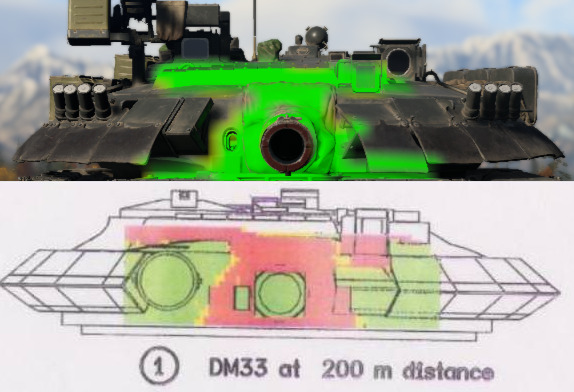
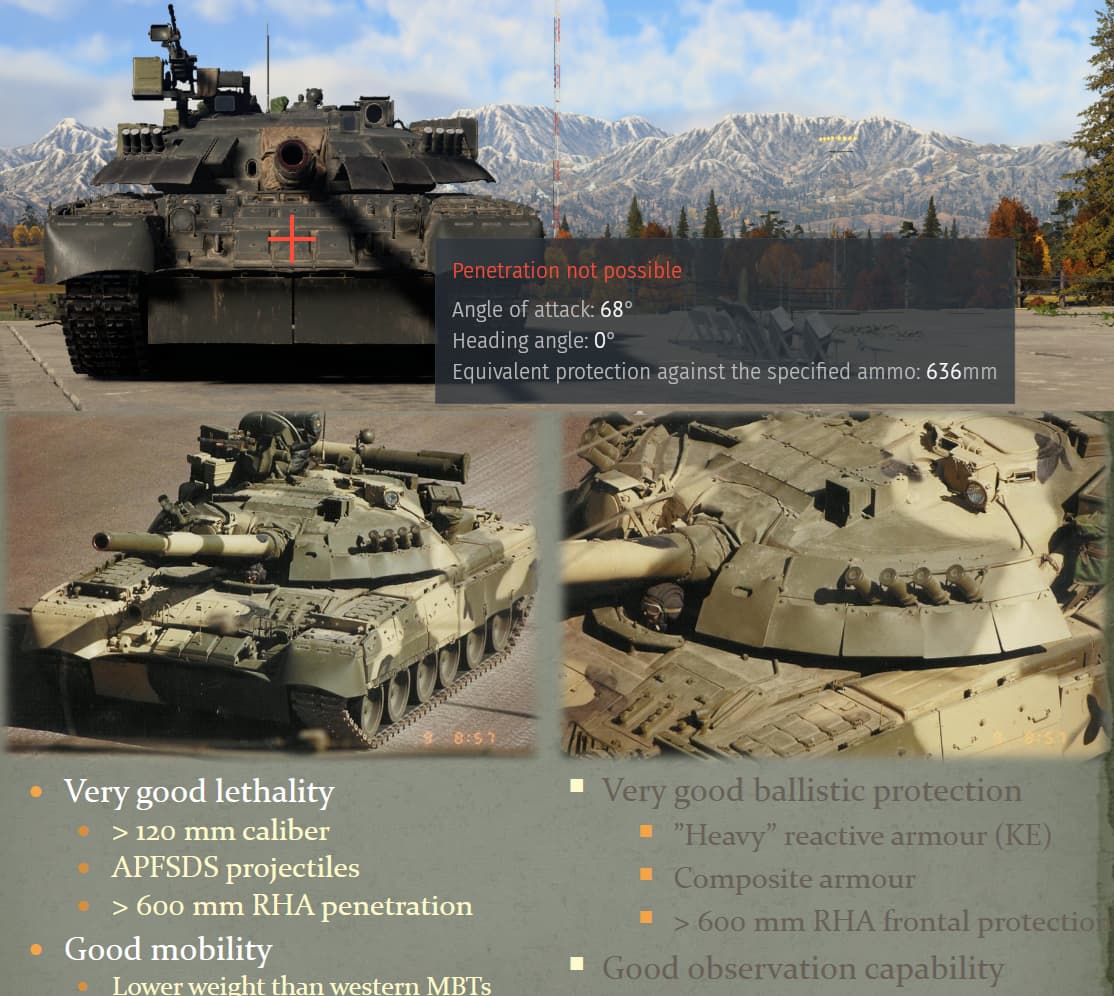
So did the Swedish, and they concluded the protection values were 600mm at a minimum, and that 40% of the turret front (they excluded the inert areas, which means 40% is closer to 60% when including inert areas) was equal to 670mm.
Besides, there’s no indication that the T-80U protection estimate was based off of an actual T-80U in that specific source, because the timeline isn’t clear either (I.E., when the T-80U was acquired and tested as opposed to when the document stating L27 could frontally defeat a T-80U was published).
Yet in sources we frequently see them stated as follows: ‘‘Assessed at [x]’’ whereas other vehicles are simply stated with the armour figure (in other words, they’re not ‘‘Assessed’’).
That implies they’re using estimates for the T-80U rather than known data. This even pops up in 1992 documents, which IIRC dates to after the document which states L27 is capable of penetrating the T-80U.
It also doesn’t help that the British change the T-80U’s protection values in every source, further evidence that they don’t really seem to know what it actually is.
If you have any evidence that shows the in-game 640mm UFP to be incorrect for the T-80U, feel free to share it.
Based off of known data, it seems to match quite accurately.
1 Like
When isn’t it?
when it falls silent
1 Like
I just find it kinda funny how hard people fight to nerf the CR2s/keep them nerfed
2 Likes