Your message is long and cluttered, but it’s pointless. I still don’t think you understand how ERA works technically, or why, for example, Kontakt-1 is worse than Relikt.
You ask for an explanation, then whinge it is too long. If anyone provides you with a source you’ll probably refuse to read it, refuse to believe it or generally not accept it.
I don’t think YOU understand how ERA works.
It isn’t some magical shield that negates any and all incoming rounds. It has been shown over the past three years to be a bit of a busted flush like pretty much every other wunderwaffe that was proclaimed as superior to that of the West.
Numbers don’t lie, after all. Check Oryx for the latest count.
3 Likes
So you haven’t said anything substantive. It’s just a big, empty text.
I’ll repeat myself: I don’t think you understand how ERA works and what its effectiveness depends on.
Actually, when they claim 1500mm of HEAT for one layer of ERA, that also suggests that the person doesn’t understand how it works.
Of course not, it doesn’t work anywhere in the game.
I can give you answers to your questions, I cannot give you the mental nous to understand them.
That’s a you problem.
1 Like
Okay, you’ve confirmed that you don’t understand how ERA works technically.
This isn’t an explanation of the principle. You don’t understand what determines the effectiveness of the ERA, or why the Contact-1 has no protection against KE, while the Contact-5 does.
Your level: Oplot has an ERA and the C2 has an ERA. If the C2 is worse, that’s unfair, despite the fact that they have completely different operating principles, structures, etc.
Relikt is an explosive sandwiched between 2 plates this isn’t some miracle of armour protection
5 Likes
Okay, let’s play ball. I’ll try and keep it as simple as the subject allows.
ERA basically creating a counter-blast to the incoming round - usually quite a thin panel of metal at standoff distance from the armour that would blast outward in the direction of the incoming strike. First gen stuff like K1 was very good at disrupting HEAT jets but not kinetic penetrators.
The next step was stuff like K5 - which has both the explosive effect of K1 but blasts a physcially bigger lump of metal into the incoming round. This works against HEAT and actually reduces the effectiveness of a kinetic round to some degree.
Relikt adds an angled component of the explosive pattern - effectively trying to hit the incoming round at an angle to chop/divert/negate a kinetic dart as it strikes the ERA array.
These are the favoured systems of Soviet tank designers. Gaijin models them to be very effective - often TOO effective.
Western NERA works more like composite armour but with a reactive effect upon being struck. It bulges, deforms, twists, etc to disrupt a HEAT jet or incoming penetrator. Gaijin consistently model these to be LESS effective than the NATO documentation states.
Was that too long for you?
7 Likes
Now that’s a reasonable explanation. Now consider whether the ERA C2 contains thick metal plates being thrown.
Another very important aspect is the length of the thrown plate. If the plate is long, the area of impact on the KE is much larger—as is the effect.
So, you can increase the durability of the ERA by increasing the plate thickness and length.
Which of these features does the ERA C2 have?
What’s so incredibly effective about the Relic’s 200-250mm of armor penetration if its shells can penetrate 600-650mm of armor? That’s about 30-35%.
K-5 gives much less, ~20%
Id like to see this
Edit , are art station responsible for gaijin models?
zabi literally just posted them 😭
Art Station is just a website for individuals or organisations to showcase (mostly digital) artworks. Either just to show things off as one would use social media, or as a portfolio for their professional services. As such, some people and groups who have made content for War Thunder and other Gaijin games, use it to promote their talents and services to potential employers/customers.
Some users offer products such as 3D models through Art Station store, but Art Station itself is not an entity directly involved in producing video game content.
While the artist Dan Gumeniuk, discloses that the models of the OPLOT etc. that he has produced there were created with the intention of them being included in War Thunder through the long-running Community Revenue Share project, I can see that the model is not the exact OPLOT that has ended up ingame (model topology is different).
So it’s potentially now been made by someone else, or Gumeniuk’s model has undergone significant revisions since those images were published in order to meet the standards Gaijin require of community-submitted content
1 Like
Look at the bug reports i can’t make it more obvious. Go to the challenger 2 overhaul thread they have linked the reports there and go to the old wt forms and look at the reports there on VAMAR !!
4 Likes
I don’t see any report anywhere that proves this.
For example, here they talk about a maximum of 600mm, although there’s no real evidence in the report.
In fact, the entire argument is based on the premise, “They definitely meant the RPG-7VR.” However, I don’t see a single source that explicitly states this.
https://community.gaijin.net/issues/p/warthunder/i/hUjNza9bvJyP
-
How long have you been following Challenger thread for. Since the OG forms are the new current forms.
-
Do you understand how multi layer’s of different add-on armour work’s.
-
Have you seen evey single bug report done on both challenger 1 and 2 add-on armour.
-
Do you understand how tandam warheads work and what NATO STANAG rating is ??
1 Like
So they’re just models with the possibilities of being added to wt or even other games.
I appreciate the detailed run down mate explains a lot, especially if we see them in game different from said platform jt isn’t really a reliable source for it, there are models for stuff that have existed for over 8 years that have never been added so.
One of the worst composite armour kits on any tank in-game I’ve is the Olifant Mk.2’s and worst internal composite armour is the TTD’s. The TTD armour is equal to that of the M1A2 and Leopard 2A5 but in-game isn’t even close to a T80U
4 Likes
2 more bug reports for the pile
Challenger 2 Aiming Drives clip through spall liner
https://community.gaijin.net/issues/p/warthunder/i/g3G35BtnQ2BA
Challenger 2 Vulnerable to low calibre HE Overpressure on Driver
https://community.gaijin.net/issues/p/warthunder/i/oUKPJBBvm1pq
1 Like
Fixed: spall liner removed
Added to my overhaul post list ready for the next major update
5 Likes
I’m just looking at the Challenger’s damage models and them seem a bit off.
Firstly, why are there notches either side of the driver’s port? These aren’t present on any photos of the Challengers (1-3) except a single photo of a Challenger Mk.1, which we don’t have ingame. These notches have no armour, they are just empty space.
The 15mm armour over the composite also dosen’t connect with backing plate very well.
I’ve reported the notches.
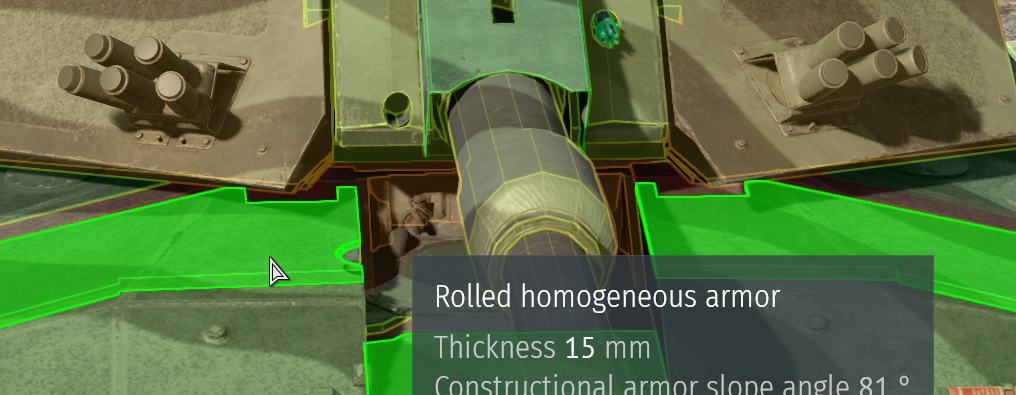
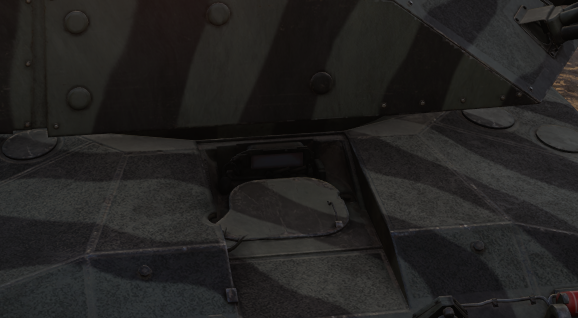
Secondly, the visual model and the damage model for the entire UFP seem to be a bit off.

If you look at the real Challenger 1’s hull, the area with composite matches with the weld lines of the armour partitians.
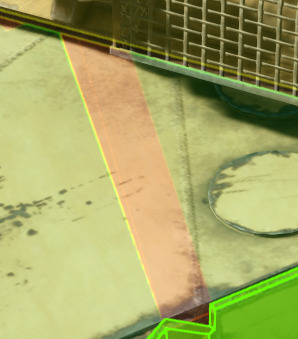
Ingame, the visual model of where the front plate ends and where the armour damage model ends is completely different.
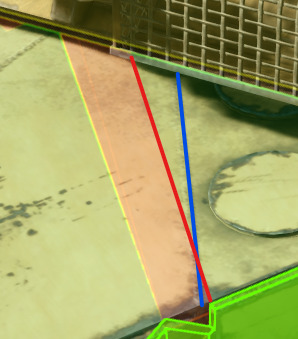
The red line (damage model) and the blue line (visual model) should match as the composite corresponds with the space in the front it sits inside. Ingame, they are at completely different angles.
Am I missing something or is the damage model or visual model not wrong?
And another thing…
The weld lines on the hull point inward for some reason, despite not doing this irl…

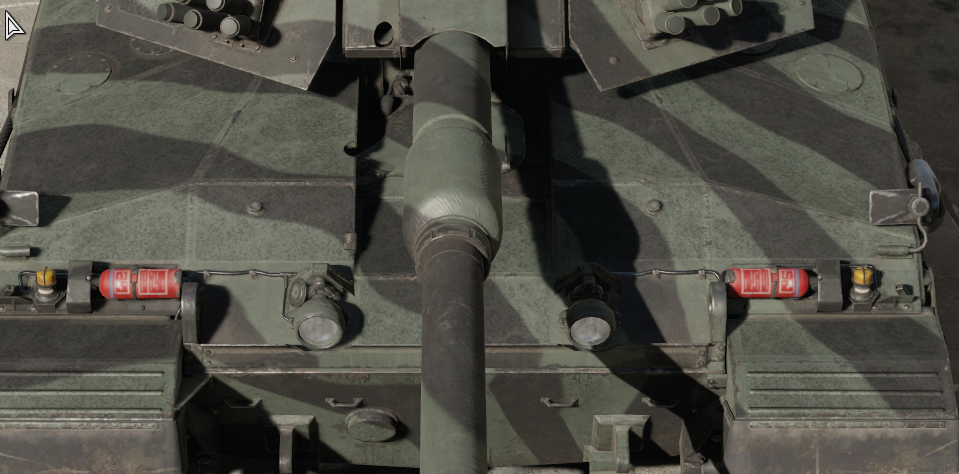
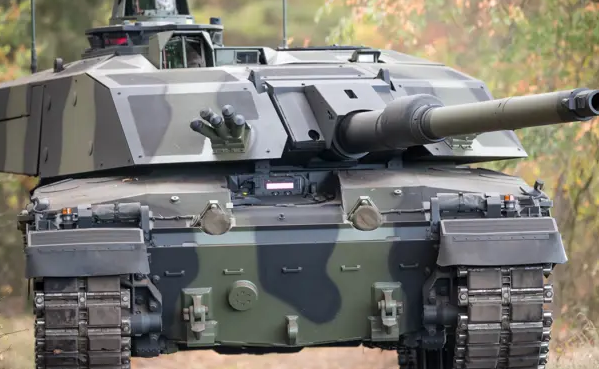
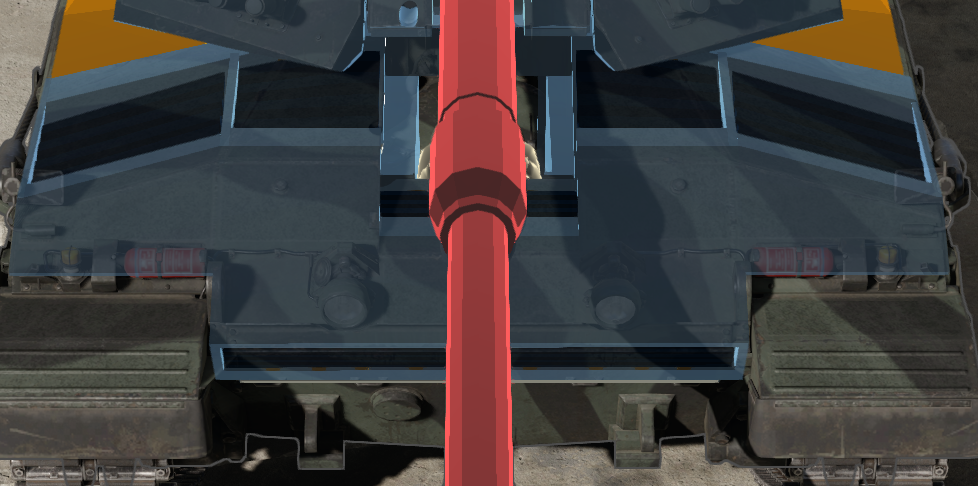
They should extend directly back along the vertical plates in the damage model. Im convinced they just employed a random homeless dude to model the Challengers in this game…
5 Likes