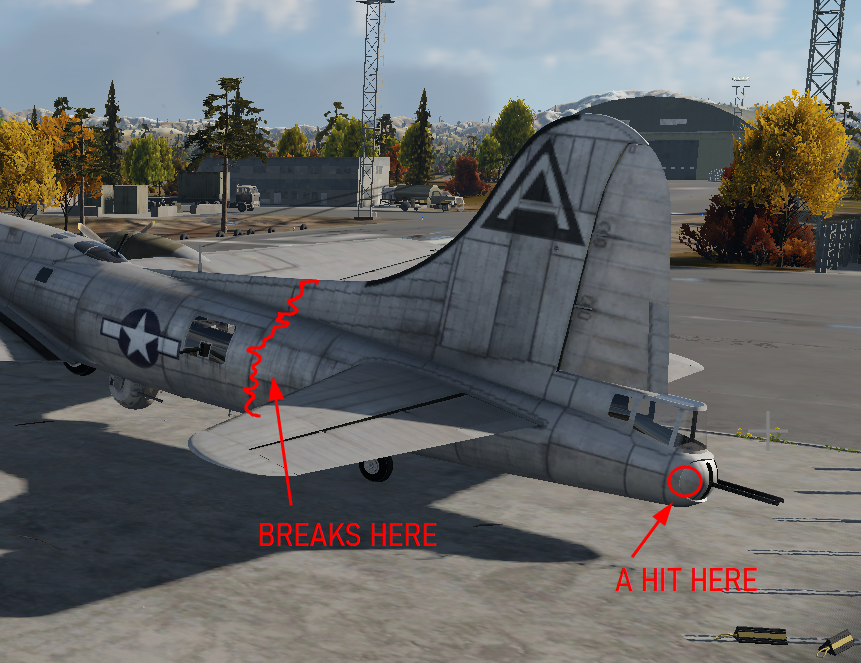
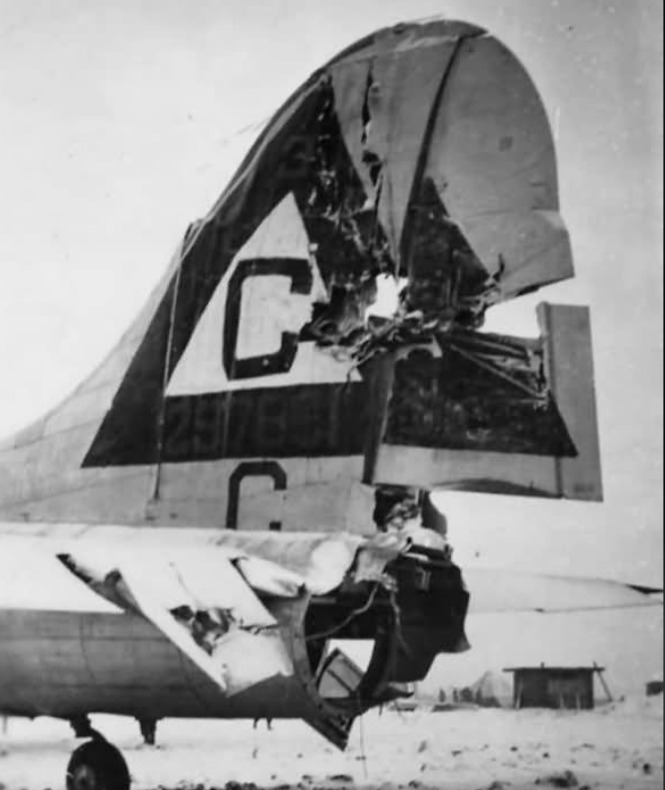
Cannons doing too much damge

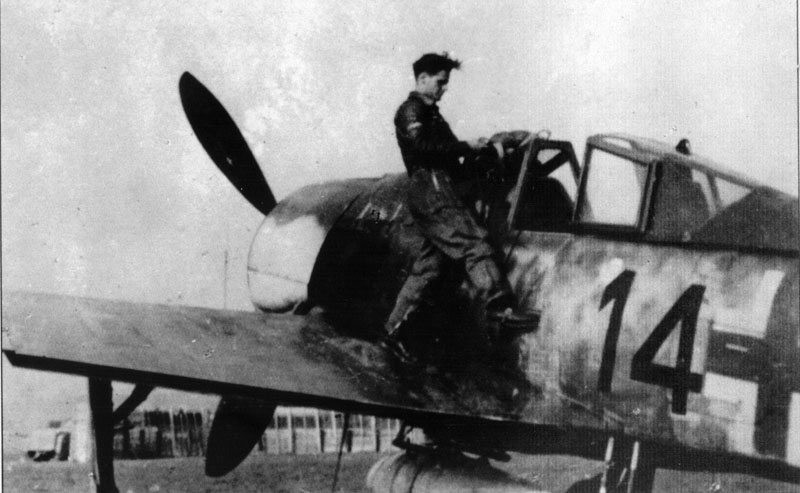
I’m reading a book about the Fw 190, and it’s interesting because, to combat heavy bombers, the Germans generally used Bf 109s to engage the escorts while the Fw 190s attacked the bombers, often trying to tie them down from above and head-on to try and destroy the pilots’ fuselages. They also mention that to destroy Il-2 Sturmovich bombers, German pilots generally attacked them in the same way to bring them down, with the Fw 190s being primarily responsible for this task. This indicates that aircraft of a certain size could withstand considerable damage, requiring heavy armament or an experienced pilot to know where to shoot to bring them down.

It’s clear that the damage from aircraft guns is somewhat exaggerated, as evidenced by how, as the war progressed, the Germans increasingly armed their aircraft with Mk108s to engage heavily armed enemies, while the MG151s were used to combat other fighters.
It would be interesting if they either reduced the damage from the cannons or increased the aircraft’s durability, but above all, if serious hits had a significant impact on the aircraft’s mobility and speed. In my opinion, ARBs should have cannons with realistic damage and accuracy to encourage closer combat, without enemy markings to allow for surprise attacks (as was common in real life), without the ability to hear the enemy aircraft’s engine (for the same reason as before), with aircraft damage accurately affecting performance by making the aircraft slower and less maneuverable, and also so that if a heavily damaged aircraft returns to the airfield, it can be repaired but counts as a loss for the aircraft that caused so much damage (if the match ends before it does, it will count as a loss).

4 Likes

The radial engine of the Fw 190 was more damage resistant. And it also acts as a shield to protect the pilot from incoming rounds.

For attacking B-17s and B-24s, some Fw 190s were equipped with additional armor plates.

But they would also remove the wing mounted guns, probably to maintain some level of maneuverability and not completely fall victim to enemy fighter escort.

At higher altitudes the Fw 190 didn’t have the performance so I imagined that for very high altitude interception Bf 109s were needed.

Afterall they could equip MK 108 gun pods.

Unlike the Ta 152, neither 109 or 190 were built for high altitude interceptions.

So they used them however it worked best for them.

1 Like

Since the Bf-109 had better high-altitude performance, it was the one that engaged the escort fighters, and the Fw-190s then attacked the bombers, because at high altitude they lost too much performance to reliably engage the escorts. The most specialized version for intercepting bombers was the Fw-190A8/R8, which replaced the MG151 mid-wing guns with Mk108s, added armored glass to the sides of the cockpit, and 5mm armor plating to the sides of the fuselage to protect the pilot.

PD:It would be interesting if the different (that have utility in the game) Umrüst-Bausätze and Rüstsatz kits could be added

2 Likes

And again, this is irrelevant in WT because we do not need it to oneshot, we can just fire again with no loss in accuracy.

And this is the point where any decent player will turn out and you are left chasing a target you will never catch up to.

WT is a simcade that prioritizes gameplay while allowing a high degree of realism.

But even in other sims you can use few 20mms to shoot down 4-engine bombers easily:

They don’t make a flashy explosion like in WT but they are unequivocally down in very little time and very doable from 800m away.

Hitting an elevator with a dozen 20mm HE shells, even if they’re the weakest, should result in a kill by removing the elevator. I stop caring about realism if all it achieves is only a few select nations being able to get easy kills.

Cannon damage is perfectly fine at the moment. They work as advertised. Most guns, right now, work well and it’s something we haven’t had in a while. Players actually get punished for flying in front of your guns regardless of what you’re flying, with the understandable exception of low counts of .30cal MGs.

In fact, due to cannon damage being mostly unified, we finally had the long-undertiered Yak-3 and J2M2 moved up, which is a huge improvement to the state of the game.

Last month the german 190 A-8 was one of the most played 5.3 planes, only barely behind the Ki-84s. It ranks even higher in total air kills, being above both 5.3 Ki-84s.

The 190 D-9 was played much more but the german A-8 is doing better than the german D-9 also in air kills. Obviously having two more cannons matters a lot still.

See above. 4.7 and 5.0 was more than fine when ShVAKs had bad damage. Stats take a while to catch up.

Is that a challenge?

We have Air Simulator with both of these things and also locking you in cockpit view since, generally, pilots did not fly their planes from a remote camera 20m behind their plane.
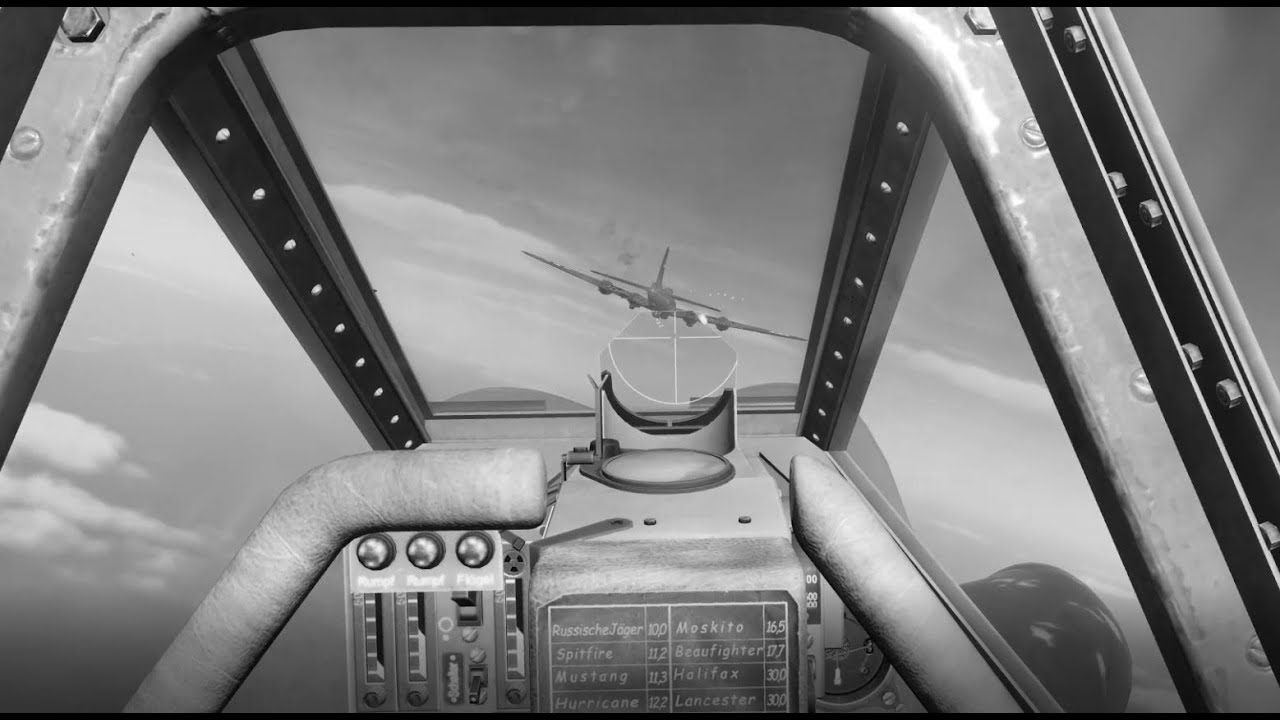
What other sim games do and what’s realistic are two completely different things.

I mean in DCS a fire is always lethal and they all look exactly the same.

Looks completely stupid when a bomber has three copy pasted fire animations coming out of their fuel tanks.

And on every sim games forum you will find threads about unrealistic or incorrect implementation.

Because at the end of a day it’s just a product that needs to sell and more often than not it’s just about what players and devs expect.

I mean with how often they make some changes in IL-2, makes you wonder why this implementation didn’t exist from the start when it’s suppose to be realistic.
But it’s very much a game that evolves over time.

German 20mm ammo belts for engaging bombers were HEI - IT - API

But the Mineshells lose their speed so quickly that you never going to hit with them from 800m, which only leaves API, which will just make holes into fuel tanks and IT which are going to have roughly a 66% chance to set a tank on fire.

But even with perfect aim, the guns aren’t going to be accurate enough to score a hit unless you fire like 20 rounds.
Best case scenario the MG 151/20 is going to have 2.4 mil accuracy for 75% of his, which is still almost a 2m circle at 800m to hit a maybe 50cm thick wing.

So one out of three shells has a chance to set a fire and you need to fire a lot to even get hits.

I can guarantee that DCS didn’t model any of that.
They didn’t even add reduced RoF for synchronized guns.

IL-2 recently made ShVAKs fire shells at 840m/s because the devs found one source and then were like: Well, correct until proven otherwise 🤓

Sound familiar?

1 Like

That’s my opinion. For me, ARB should be practically the same as ASB but with mouse guidance and the view outside the cockpit as the default. Also, I forgot something else: they should add back wing breakage due to G-forces, which I don’t know why they removed.
If people want to play with enemy markings and without wing breakage due to G-forces, they can play in AAB.

1 Like

No, you simply misread his post entirely. He didn’t say Marseille got only 4-5 kills. He said Marseille would have gotten 4-5 kills if he’d been flying against better opposition, and got 17 because the average joe trained to fly in WW2 still faced a massively uphill learning curve, magnifying the difference between a rookie and an experienced pilot.

1 Like

Made a bit of a damage compilation here for those thinking there’s nothing wrong.

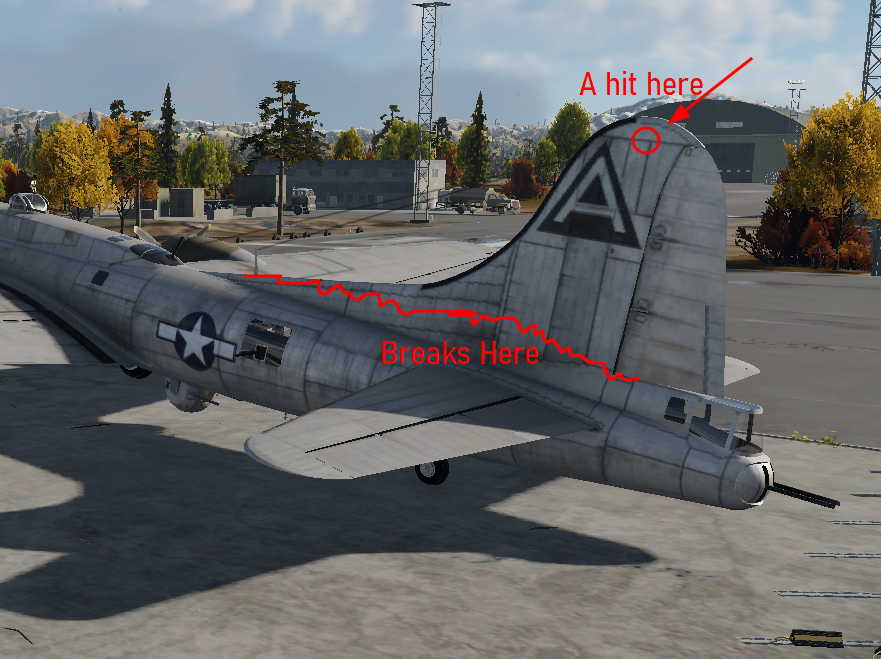
The Sea Fury footage was from last night, you can hear that I’m literally tapping the trigger to fire off as few rounds as possible and you can even blatantly see how few rounds even impacted those bombers. Yet wings were ripped clean off. Even a quick tap out of my convergence range on a bomber was enough to rip the tail clean off.

Other dishonourable mentions include.

2x Hispano rounds ripping the wing clean from a Stuka.
A last second snapshot with one Shvak on a medium bomber ripping its tail clean off.
.303’s literally detonating a bomber.
.303’s tearing tails clean off with short bursts even on supposedly tougher aircraft like Corsairs.
One MG-151 ripping a B-17 tail off in about 7 rounds and detonating a Mustang in 2x rounds.

Plus plenty more.

I’m actually missing some footage where my Sea Fury one tapped an La-7 causing an almighty explosion and another where you can see a tracer round from my LaGG-3 rip the tail clean off from a C.205.

If I get time to play tonight I’ll get some more footage if you want, Let’s be honest this isn’t exactly a rare occurrence is it… none of these kills really felt earned.

2 Likes

The damage being completely off is also apparent by just comparing the performance of 20mm and 25mm AA guns to 37/40mm guns.

20mm can already one shot many planes but a 25mm will also behave just like a 37/40mm cannon.

The Japanese 20mm AA has very good ballistics with a better RoF than larger guns but it’s simply as good or better in shooting down planes.

And of course Mineshells serve no purpose because every shell hits just as hard.

2 Likes

It wasn’t removed, they simply don’t break instantly now.

This is once again nonsense. The experience gap in Air Sim is far greater than amongst even expert and novice World War 2 pilots.

The sim player that I was comparing in my original post is some Korean guy who has thousands upon thousands of hours in different flight sims. It’s not even the Korean guy who fought against the DARPA dogfighting AI…but the guy that taught that guy.

As a general rule; Western-Allied pilots were trained about as well as their German counterparts at the start of the war and that training gap only grew as time increased.

The best way to fix the problem would be to make aircraft much more detailed in terms of damage models. However that runs into the problem of performance. Aircraft tend to have high tri-counts (triangle counts) in their models. The more high poly models you have being rendered, the worse the game performs. That’s why things have LOD and despawning the aircraft visually at a far enough distance. As it stands right now the damage models are incredibly simple, being probably under 1,000 triangles. The actual visual model is probably closer to 50k. (You can see its low poly due to the bubble cockpits not being truly rounded in the damage model).

That probably wouldn’t change much. You can always just average out the damage without the need to model everything perfectly.

The main culprit is that basically no shell behaves in a realistic manner.

  • Explosive bullets and shells lack their fragmentation amount and dispersion.

  • Wooden planes lack their natural structural weakness against explosive and incendiary ammunition.

  • 20mm AP shells break spars but don’t deal massive damage to fuel tanks. Pilots can sometimes survive 20mm hits, which is silly.

  • AP bullets or certain shells don’t tumble to decrease their AP penetration, which at the same time makes them leave larger holes in fuel tanks.

  • Incendiary bullets no longer penetrate aircraft like API, while larger Incendiary shells deal practically no damage or are as effective as 12.7mm API.

They also lack their ability cause structural damage, similar to explosive shells.

Deflagration doesn‘t turn shells into high velocity fragments like explosives do but that doesn’t mean it’s not going to create unhealthy amounts of pressure inside a plane.

  • Taking a hit to a fighters armored windshield has no consequences and can actually save you from being killed, even when it’s something ridiculous like a 50mm Mineshell. At least it should remove a fighters ability to fire his guns as he wouldn’t be able to see where he is aiming.

Doesn’t help that pilots have such a basic damage model with no consequences where they get hit.

  • Guns can’t be disabled, which would be another source to take an enemy out of a fight.

  • And of course ammo doesn’t cook off.
    Which is actually hilariously ironic, since gun powder is about 1000 times more liked to be set off than a bomb filled with insensitive explosive that requires a detonator inside of it to explode.

The larger the shell, the easier it is to inflict lethal amounts of damage to fuel tanks by causing massive fuel leaks that can easily turn into lethal fires.

Proper implementation and we get a natural progression in effectiveness of larger calibers, up to a point where ballistics and RoF have a bigger impact.

2 Likes

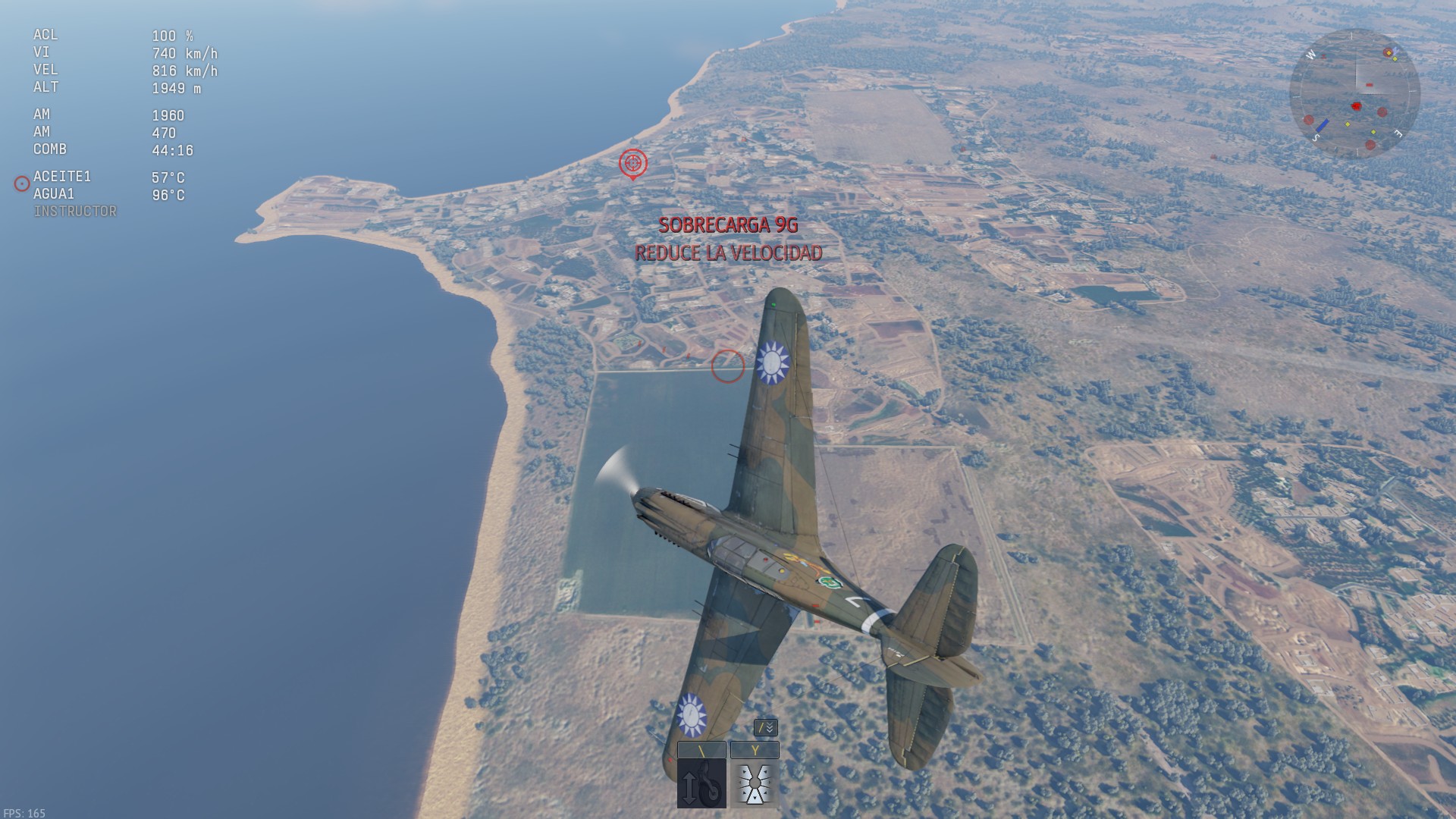
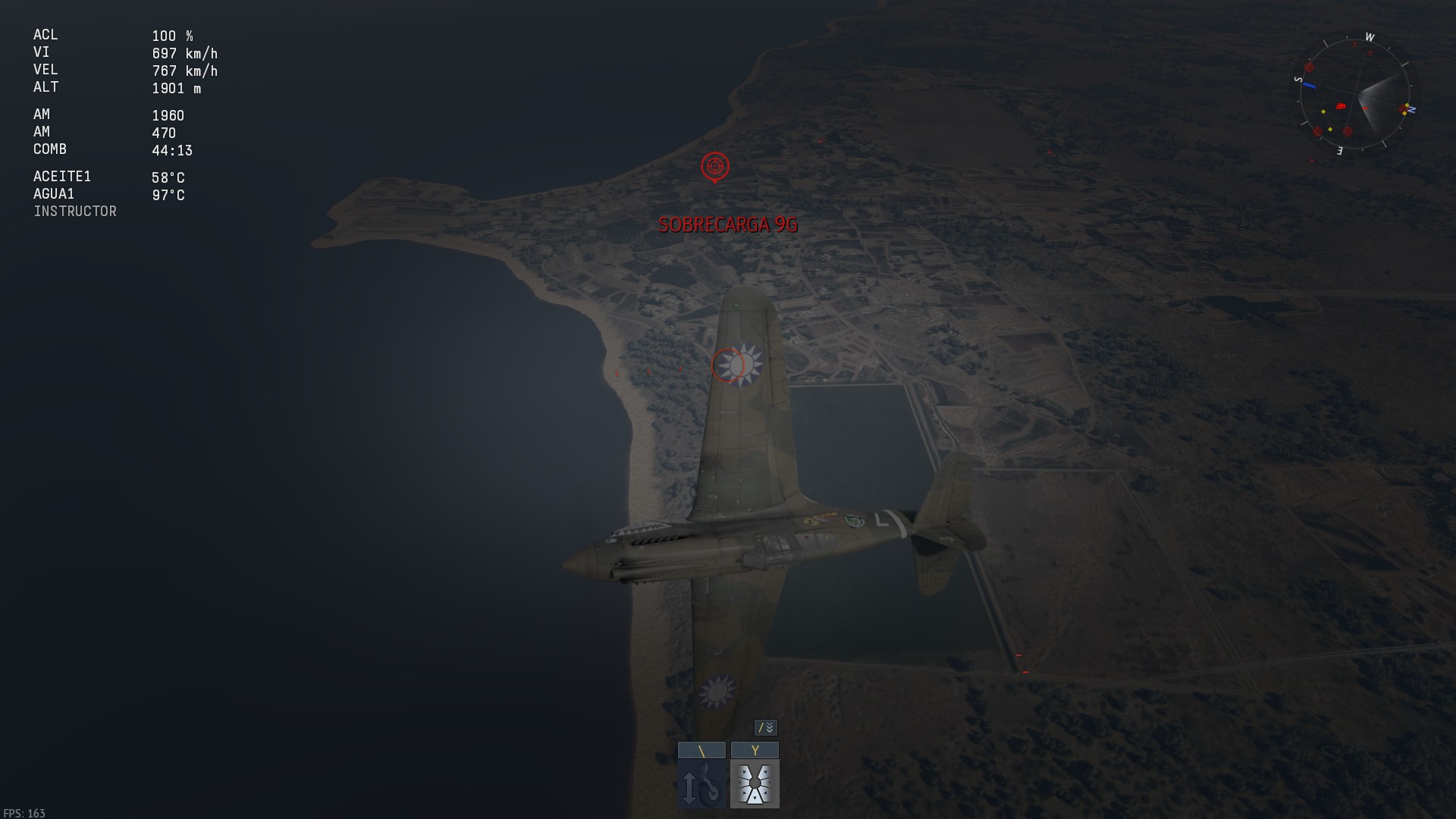
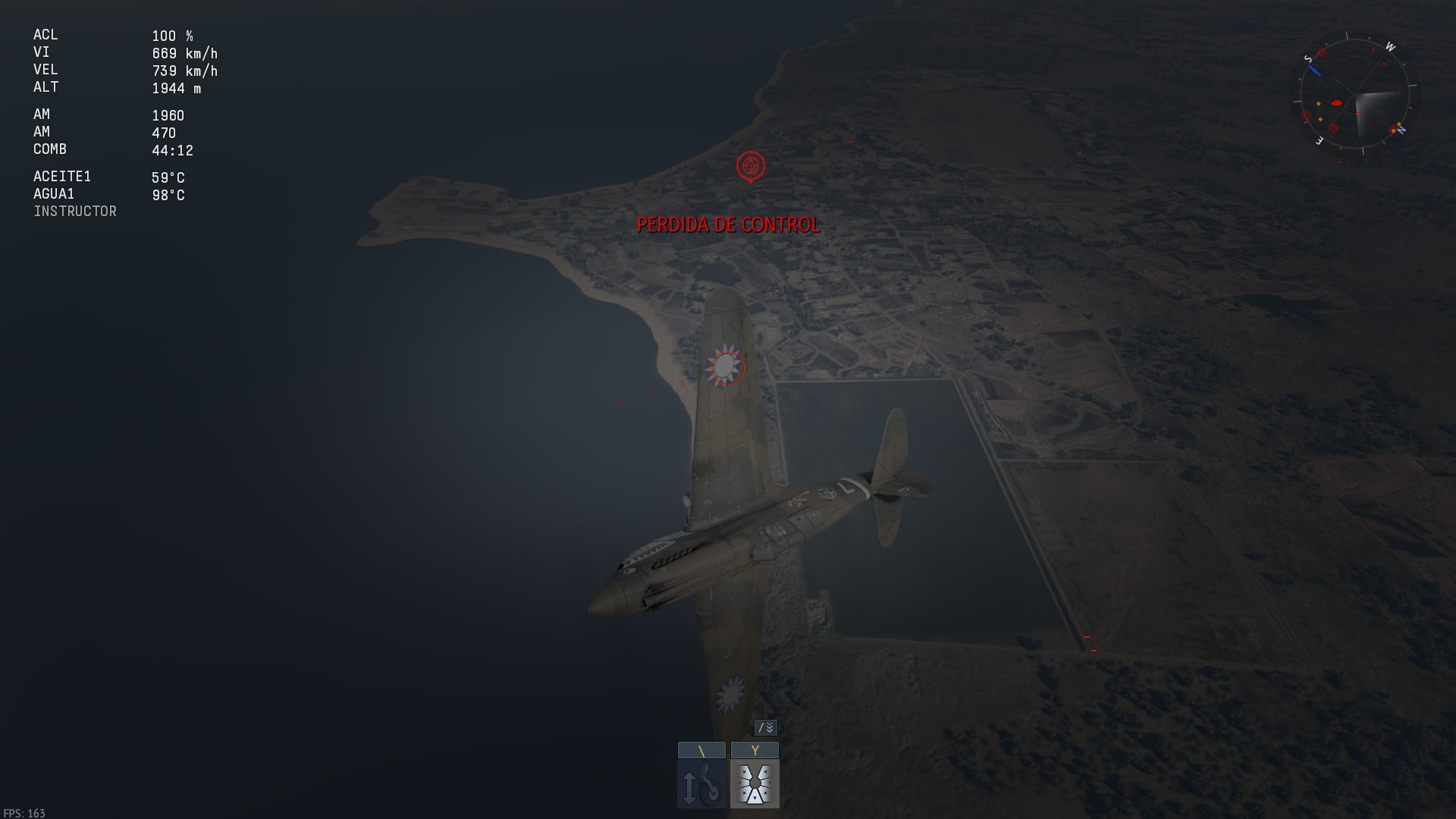
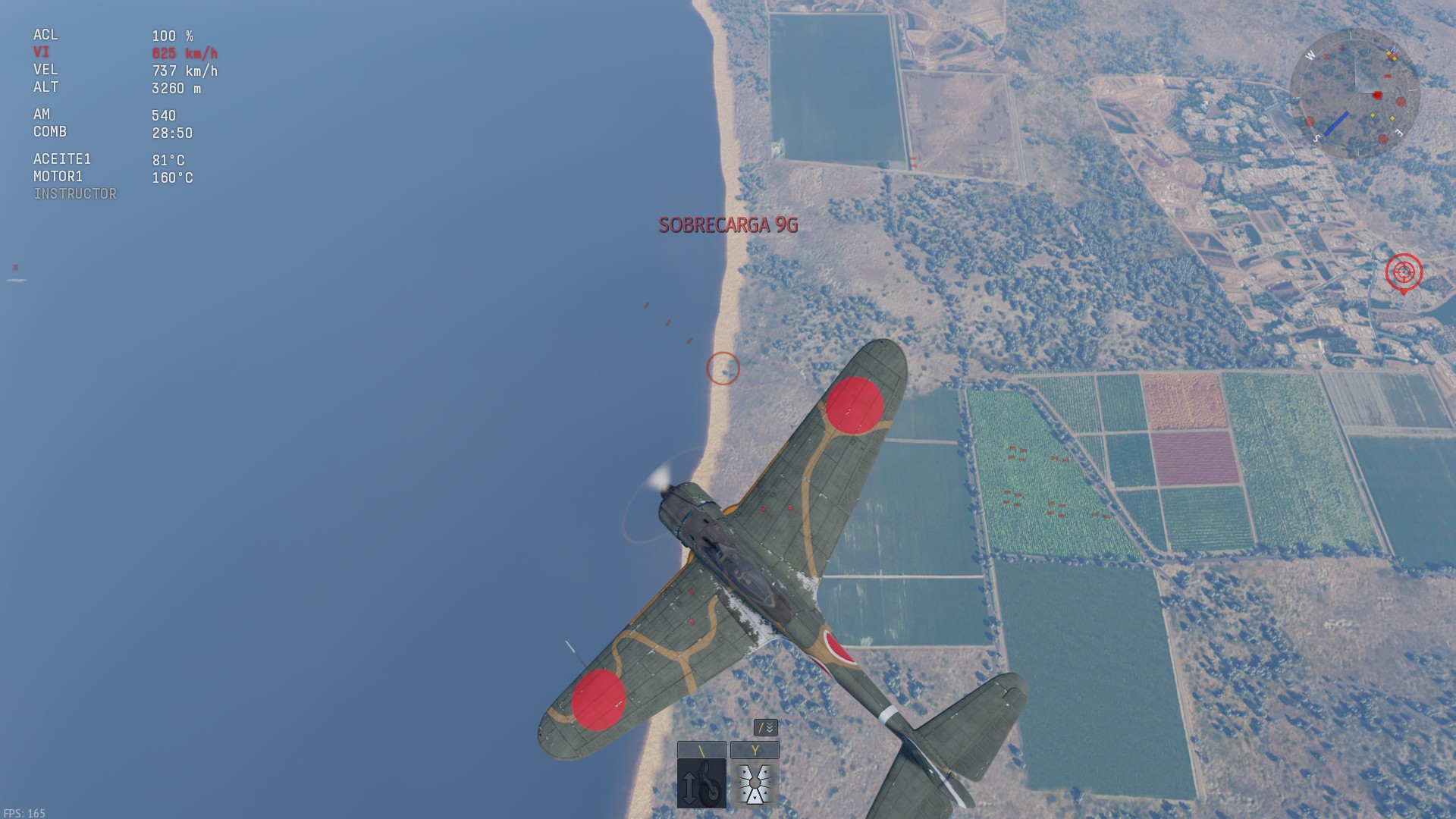
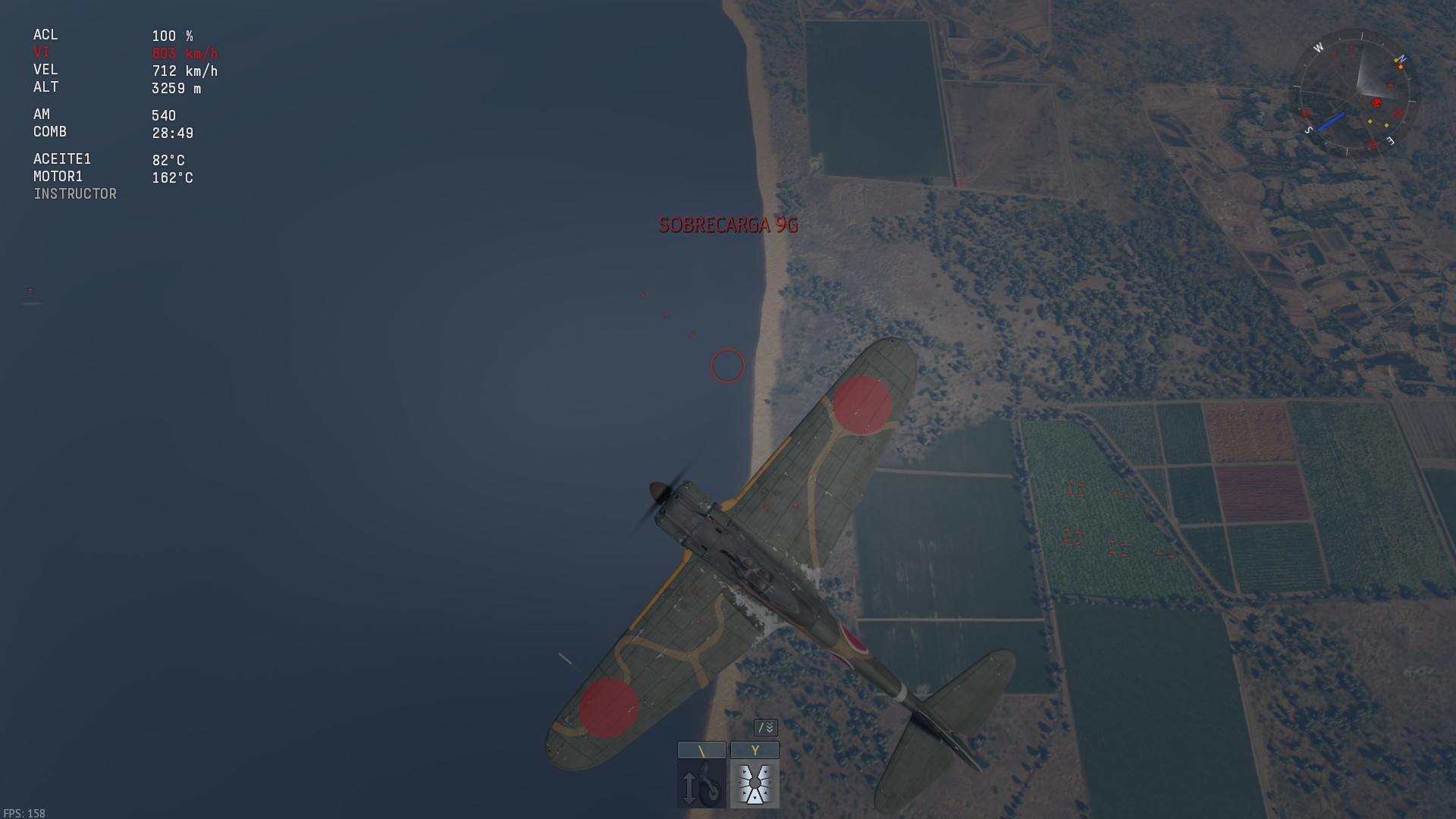
At least in the realistic test drive, they don’t break. Tight turns with planes after a high-speed dive, and instead of breaking, you end up completing the turn, instead of breaking the wings.


“Overload” here just means your pilot will eventually black out. It happens at 6G and above.

I assume you’re flying a P-40E, and with the 30% minimum fuel it will only rip its wings at 13G. It’s a pretty strong plane.

The short wing Ki-43s won’t rip either, but Ki-43-1 should still be able to do it. This was changed so going just over the G limit for your plane, even if it was for a very very small amount of time, does not result in your wings instantly exploding. That’s not realistic either.

How can you cause structural damage when the game doesn’t even model any internal structure to begin with, except for a vague spar? This lack of modeling must necessarily imply that the surface area as the only structural bond that keep sections together, rather than any internal framing. This is exactly why low-velocity fragments are capable of cleanly ripping off a tail, when they should only cause small holes in the skin.

If that is the case you can simply substitute modeled components with RNG, the likelihood it would happen.

In reality even the event of setting fuel tanks on fire was pretty much random and just the likelihood increased with different parameters.

And obviously an explosive shell will also create a random pattern of fragments of different sizes, even though there’s generally some relatively consistent parameters.

For example the fuze, bottom or tracer assembly will generally travel forward in the same direction of the shell.

German tests with 15mm shells showed the tracer assembly would either stay in one piece or break into two.

But US tests showed that even a 37mm had a relatively poor chance to cause a structural kill against a P-47, compared to dealing damage to engine, pilot and fuel tanks.
Oh, and the 20mm Incendiary was also credited with a higher structual kill chance than the 20mm explosive-incendiary shell.

In more detail, the 37mm HEF-T shell with almost 50g Tetryl filler had a three times lower structual kill chance than the 30mm HEI with 88g HA 41.
That’s because the Mineshell contained aluminized RDX, for extra blast damage, more explosive obviously, thinner walls that allow for a stronger blast, as well as a delay fuze that would detonate the shell inside the airframe, instead almost immediatly.

Against the B-25 the Mineshell had no advantage, since the size offsets the blast damage.

1 Like

I don’t know, using RNG to cover the lack of information feels fundamentally unfair, and its use should be minimized, especially when those specific effects can still be modeled directly.

If none of the outcomes actually emerge from the circumstances of the shot (not from where you aimed, what part you hit), then the system will inevitably end up rewarding only the QUANTITY of landed shots rather than any ACCURACY of those shots, which mean less intelligent targeting overall. That is not really the goal in a competitive game, is it?

I think you overestimated how accurate guns and pilots can hit enemy planes.

You’re basically talking about whether hitting 10cm above on impact point might have hit a structural component and would end up being lethal.
But we’re not talking about sniping weak points on tanks but simply firing at plane once you are able to make hits.

At this point, even when modeled 100% accurate to real life, the result will still be based on luck.
Since you don’t have that much control over where you’re rounds are going to hit.

What’s important is that it will take less 23mm hits on average to destroy or severely damage a plane than 20mm. Less 30mm hits than 23mm hits, and so on.

Then it comes down to how many hits is that gun going to make and how many hits is a target going not take.
Your WW2 30mm gun might not be that great compared to a modern 20mm.

Nothing, it doesn’t break. Apparently, what the game does is make the plane turn at exactly the G-forces it can withstand, which makes it impossible to break the wings due to G-forces. In fact, that’s not entirely true, since apparently there is only one plane that does break its wings due to G-forces, and that’s the A-4E Premium from the Israeli Tech Tree. Of the more than 30 planes I’ve shot down and recovered by pushing the rudder to the limit, this is the only one that broke its wings; not even the B-17E broke its wings when making a tight turn at maximum speed.