- Yes
- No
Hello everyone, and welcome to this new suggestion.
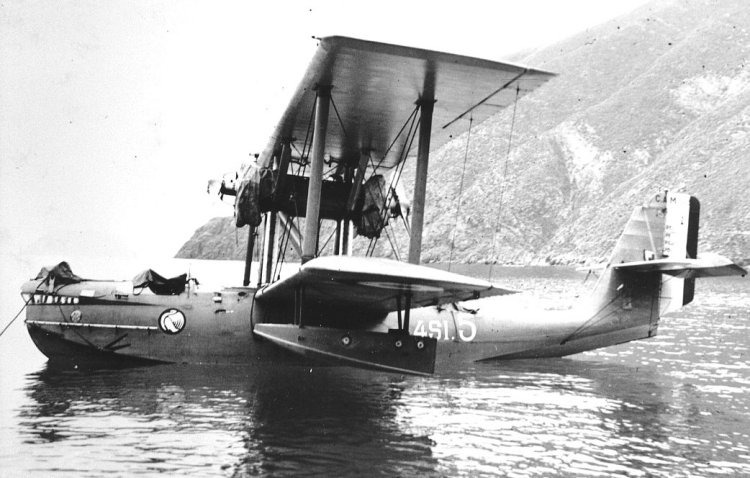
Today, I am introducing a new aircraft produced by the CAMS company: the CAMS 55-10.
In the late 1920s, the French Navy was looking for a new long-range patrol and light bomber seaplane capable of operating over the vast maritime areas covered by the French fleet, particularly in the overseas territories. CAMS, drawing on its experience with earlier flying boats, proposed a new aircraft based on the CAMS 51, an earlier design that had failed to meet expectations. This new development became the CAMS 55.
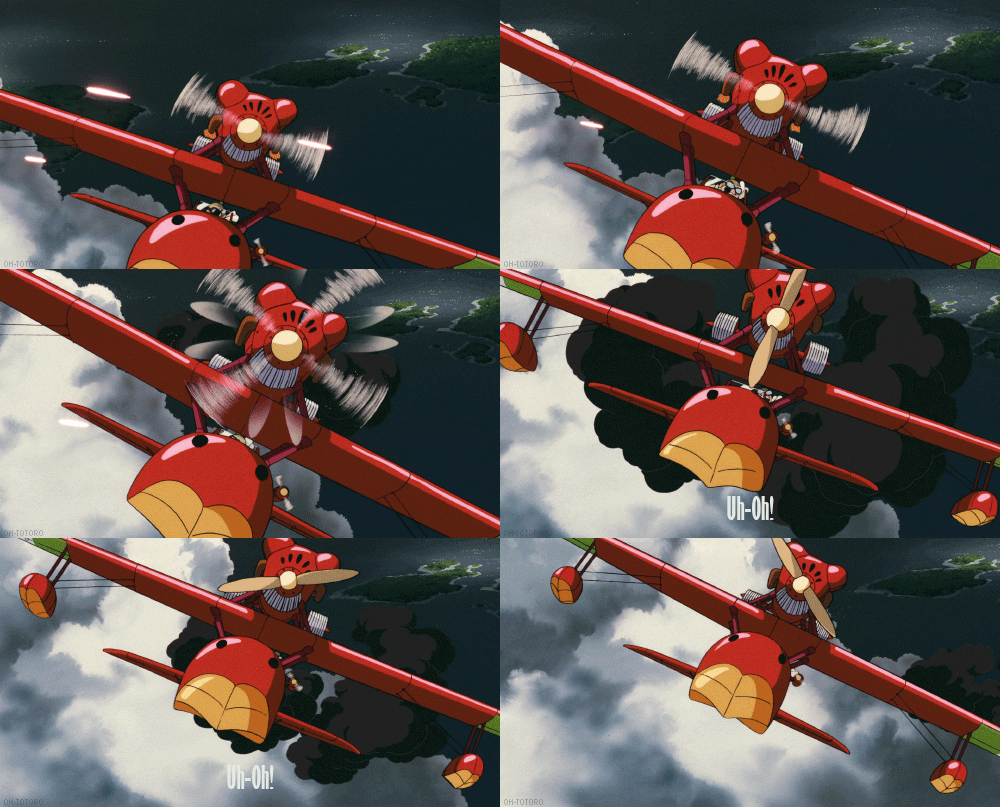
The CAMS 55 was a twin-engine biplane featuring a rather unusual “push-pull” engine configuration, with one engine mounted at the front of the nacelle and the other at the rear. This arrangement offered several advantages, including reduced asymmetrical thrust in the event of an engine failure and a relatively compact installation. However, it also introduced significant risks. The forward propeller was positioned directly above the cockpit, creating a particularly dangerous situation for the crew in the event of an accident. Several incidents occurred during the aircraft’s career, including at least one fatal accident.
The CAMS 55 was produced in several variants, with successive versions receiving different engines, power outputs, and aerodynamic modifications. These changes gradually improved the aircraft’s performance and reliability, allowing the type to remain in service for several years despite its unconventional design.
Among these variants was the CAMS 55-10, one of the most refined versions of the aircraft. A total of 32 examples were ordered by the French Navy (28 standard and 4 colonial variants) and delivered for service. The aircraft was powered by 500 hp engines, giving it one of the lowest top speeds of the entire CAMS 55 family but significantly improved its range . Its improved performance made it particularly well suited to the long-range patrol and reconnaissance missions for which the type had been designed.
The CAMS 55-10s were distributed among several French naval aviation squadrons and deployed across the French colonial empire. Their ability to operate from water made them particularly valuable in overseas territories, where conventional airfields were often limited or nonexistent. From their bases, they carried out maritime reconnaissance, patrol, and surveillance missions over large areas.
When the Second World War began, 29 of the 32 CAMS 55-10s remained in service. Despite being increasingly outdated compared with the newer aircraft entering service at the time, they continued to perform their assigned missions with French naval aviation units. The type remained operational until 1941, when the last remaining examples were finally withdrawn from service.
It is visually almost impossible to distinguish between the standard and colonial versions; therefore, some images may not show the correct version of the aircraft.
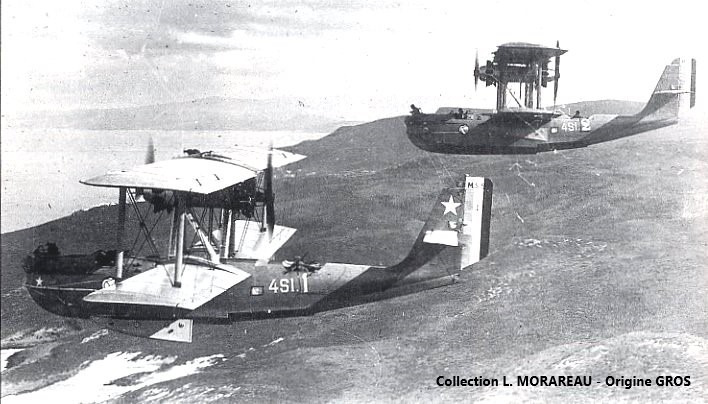
Characteristics
Length : 15.03 m
Width : 20.40 m
Height : 5.41 m
Mass :
- Empty : 4 590 kg
- Full : 6 900 kg
The aircraft is powered by two 500 hp Gnome & Rhône 9Kbr engines in a push-pull configuration, enabling it to reach a top speed of 195 km/h and a ceiling of 3,500 m. It has a range of 1,280 km.
The crew consists of four people: a pilot, a co-pilot, and two gunners.
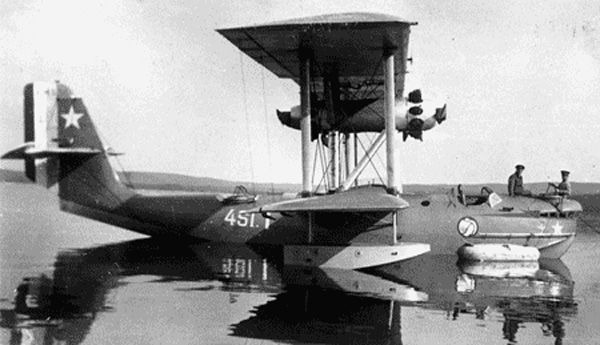
Weapons
For its time, the CAMS 55-10’s armament is quite respectable; indeed, although its bomb-carrying and release capacity is limited to 125 kg—a very low figure—the aircraft nonetheless boasts effective defensive armament, comprising two gunner positions (one forward and one aft), each equipped with a twin 7.5mm machine-gun mount.
In the game, this aircraft would be an interesting addition as a low-BR seaplane for the French tree, filling a gap since the tree currently lacks an equivalent.
Pictures