I have serious doubts about that. Considering that the KGV, for example, had very weak torpedo protection and was very small. This has been discussed extensively in many sources.
I can’t comment on the Venguard, but I strongly disagree with the KGV’s claim that it was “all good.”
could you give some sources for that?
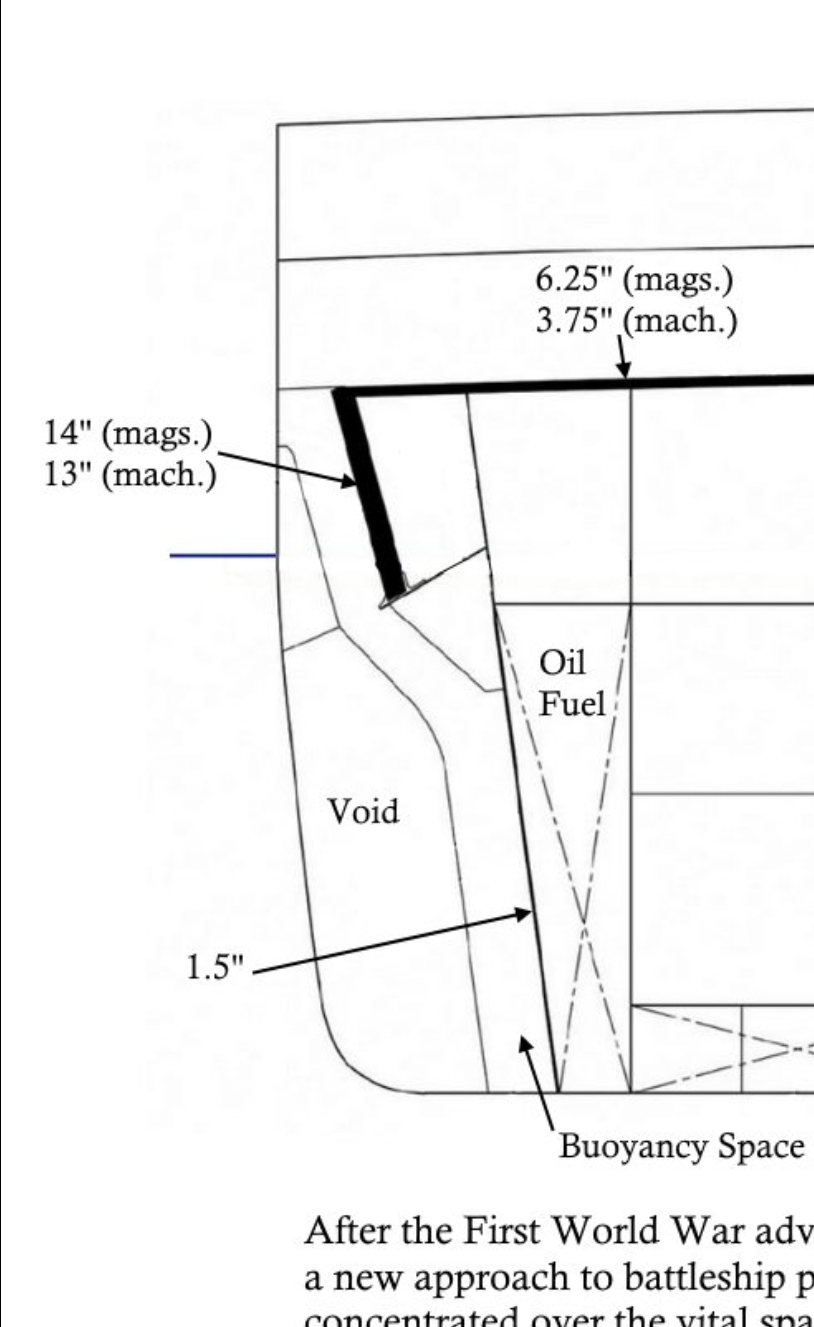
It might be down to both vaguard and POW using a torpedo protection system that sits behind the main belt so gajin didnt model it as a bulge since it technically isnt
That can’t explain Nelson class with similar system gets anti-torpedo bulge. Every battleship that has torpedo protection system, no matter of what kind it is, gets anti-torpedo bulge in x-ray except those two and Kriegsmarine’s.
2 Likes
Bit bizarre as yes it would function as a dampener for the initial explosion and as a secondary effect of the anti-torpedo protection system but still, its not a torpedo bulge its still required for reserve buoyancy.
This is just a myth that appeared due to the fact that it was not previously known what actually sank HMS Prince of Wales - in fact, her anti-torpedo bulkhead was not penetrated by Japanese torpedoes
Also, people only look at the depth of the anti-torpedo protection, forgetting that its height is no less important
1 Like
1 source doesn’t show anything
Disadvantages of the King George V-class battleship’s torpedo protection:
- The longitudinal bulkheads were insufficient in height—they only extended to the lower deck.
- Poor attachment of the bulkheads to the rest of the hull structure in the upper section.
- Possibility of flooding through the top of the torpedo protection, which was covered only by a lightweight bulkhead made of shipbuilding steel.
- Shallow gas expansion zone—less than 4 meters.
- With the first torpedo hit, the outer layer filled with water, reducing its effectiveness to zero.
And this says that “everything is fine” there?
I didn’t say that the anti-torpedo protection of King George V was perfect, but it was much better than is commonly believed.
Despite the disadvantages, the bulkhead withstood a real torpedo hit. Flooding through the upper compartments was mostly due to counter-flooding of the torpedo protection compartments and the port list from the previous hit.
. . .
If a torpedo hits the anti-torpedo protection, flooding of the outer layer is inevitable. In addition, it has little effect on efficiency.
1 Like
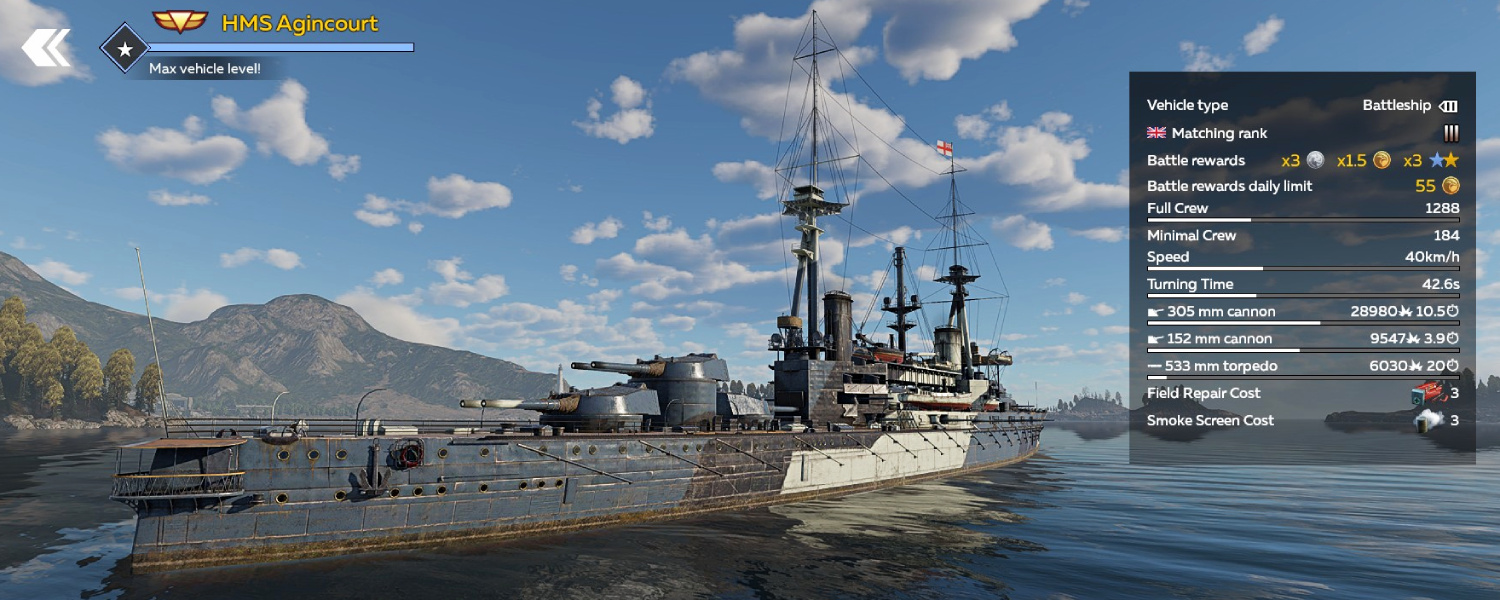
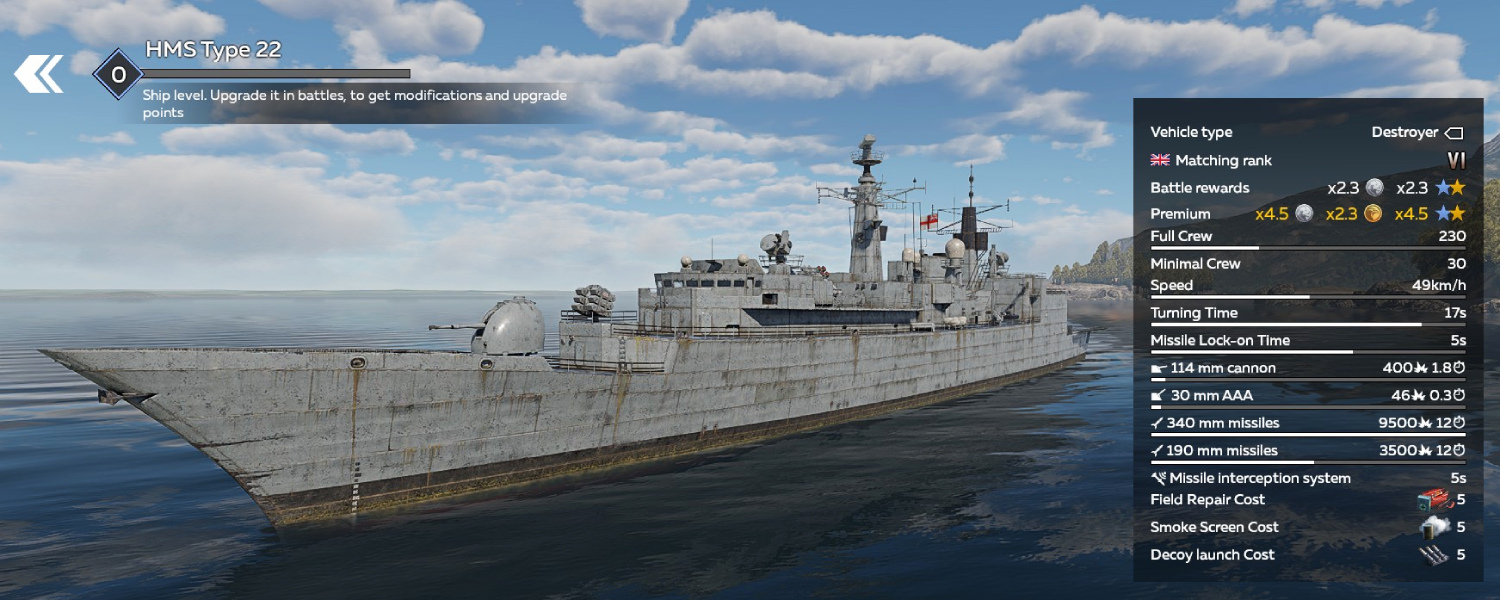
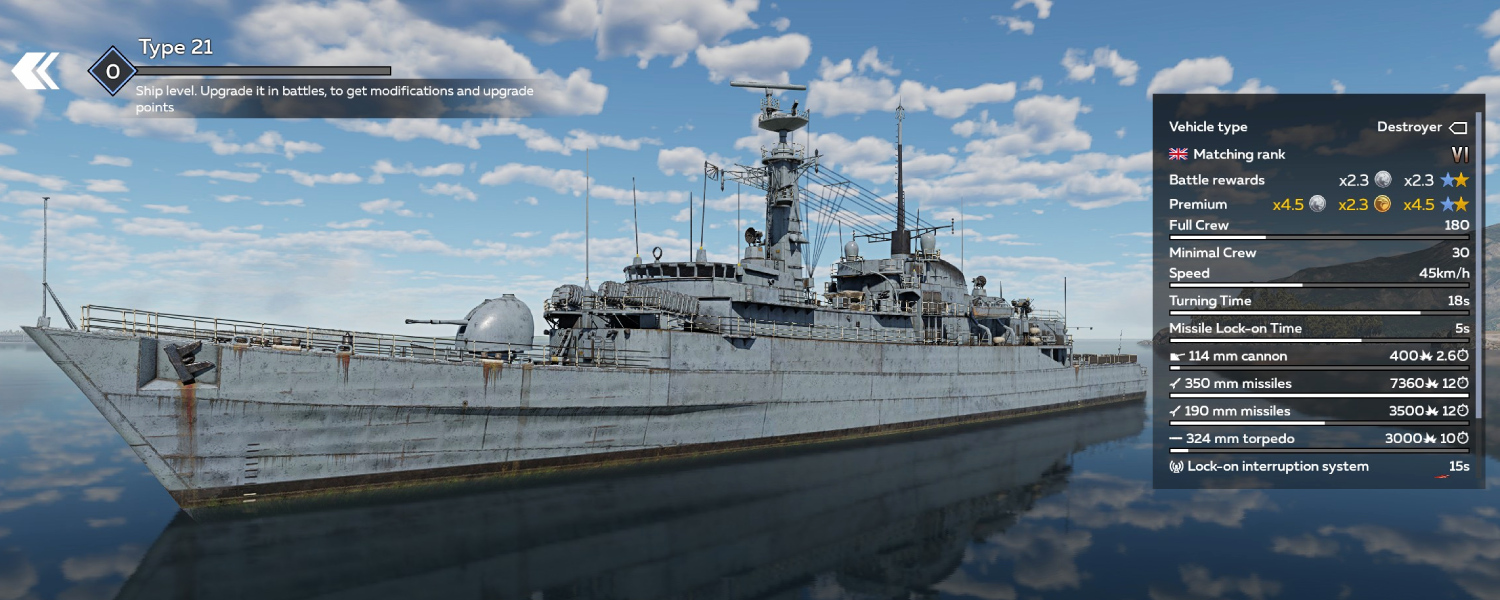
Looks like war thunder moblie is geting some better aditions to the UK naval tree than normal WT
HMS agincourt just got added along side type 22s and type 21s
7 Likes
Am actively working on finally finishing a County-Class DDG suggestion (Batch 1)
Other planned fleet additions include:
- County Class DDG (Batch 2)
- Type 82 HMS Bristol
- Type 22 Broadsword class Batch 3
- Type 42 Batch 3
The UK is slightly limited, in that we don’t have particularly good anti-ship armament or density, particularly whilst retaining guns, due to our specialised fleet performance and focus on air-launched anti-ship munitions. This will require diversification from other trees.
Additional commonwealth additions I would strongly recommend considering to flesh out our limited missile ship lines include:
- PNS Tariq (Ex-HMS Ambuscade, but upgraded with Harpoon and Chinese LY-60M SAM’s). (Pakistan)
- Warrior class Strike Craft (Patrol boat with 2 x OTO 76 and Scorpion ASHM’s) (South Africa)
- Perth Class destroyer (modified Charles F. Adams destroyer) (Australia)
- Rajput-Class destroyer (Modified Kashin class Pr.61ME twin AK-726, 4 x AK630M CIWS, 4 x Styx missiles, and both twin Goa Missile systems) (India)
- Adelaide Class (Modified Oliver Hazard Perry warship) (Australia)
- Godavari-Class frigate (Heavily modified Leander class frigate with Indian/Soviet systems in addition to the British ones) (India)
- Iroqouis Class destroyer (Canadian destroyer with an OTO 5", Sea sparrow and torpedo’s).
You’ll notice the absence of many British designs, that’s because they’re crap (for War Thunder and to a degree in real life).
2 Likes
While Tariq wont be available that as Pakistan is belong to China, yes British tech tree has lots of missile ship optiojln thanks to Commonwealth.
Meanwhile the biggest problem I forsee is lack of penetration for battleships.
Lion class would have similar penetration to Vanguard, which is already one of worst penetration for top rank battleship, with worse trajectory.
I’ve once saw that Royal navy consider using US SHS on Lions gun but I cannot find document
You could also add an Australian operated ANZAC-class Frigate to that list, as they have decent anti-ship missiles, but the early fits are pretty similarly armed to the Type 23, which should be preferred due to it actually being British.
The Aussie ANZACS will have either 2x4 Harpoon block I (2005-2011), 2x4 Harpoon Block II (2011-2019) or 2x4 NSM + 32 RIM-162 (2019-), meanwhile the Type 23 would have 2x4 Harpoon block IC (1987-2023) or 2x4 NSM (2023-).
Your mention of ANZAC’s just makes me want a MEKO 200 update for all nations.
This could be bypassed with submarines, god I hope gaijin introduces them this year.
1 Like
There’s other ships of the class for China. More importantly PNS Tariq (HMS Ambuscade) is being returned to the UK in her current decomissioned, configuration, which includes all her Pakistani modifications including a Phalanx Mount and her LY-60N launchers, this would make her a valid addition to the UK in that configuration.
(That’s if you wanted to stretch to get her to fit in the UK tree).
I’ve somewhat come to terms with that. There’s only a few ways to fix this issue. A. Lion class with the British extended length, heavier shells.
B. Lion class with American SHS shells, but I don’t know if that was actually a legit thing.
C. A G-3 class with the original revision down to 16.5" superheavy, high velocity guns. (The best option).
Definitely will be one to add to add to the list, it was a bit too good and also too new for me to consider adding to my ‘cold war era’ list of vessels.
Triples turrets. It can only be Lion class right? Hopefully it will make Britain a bit more competitive vs the top tier ships.
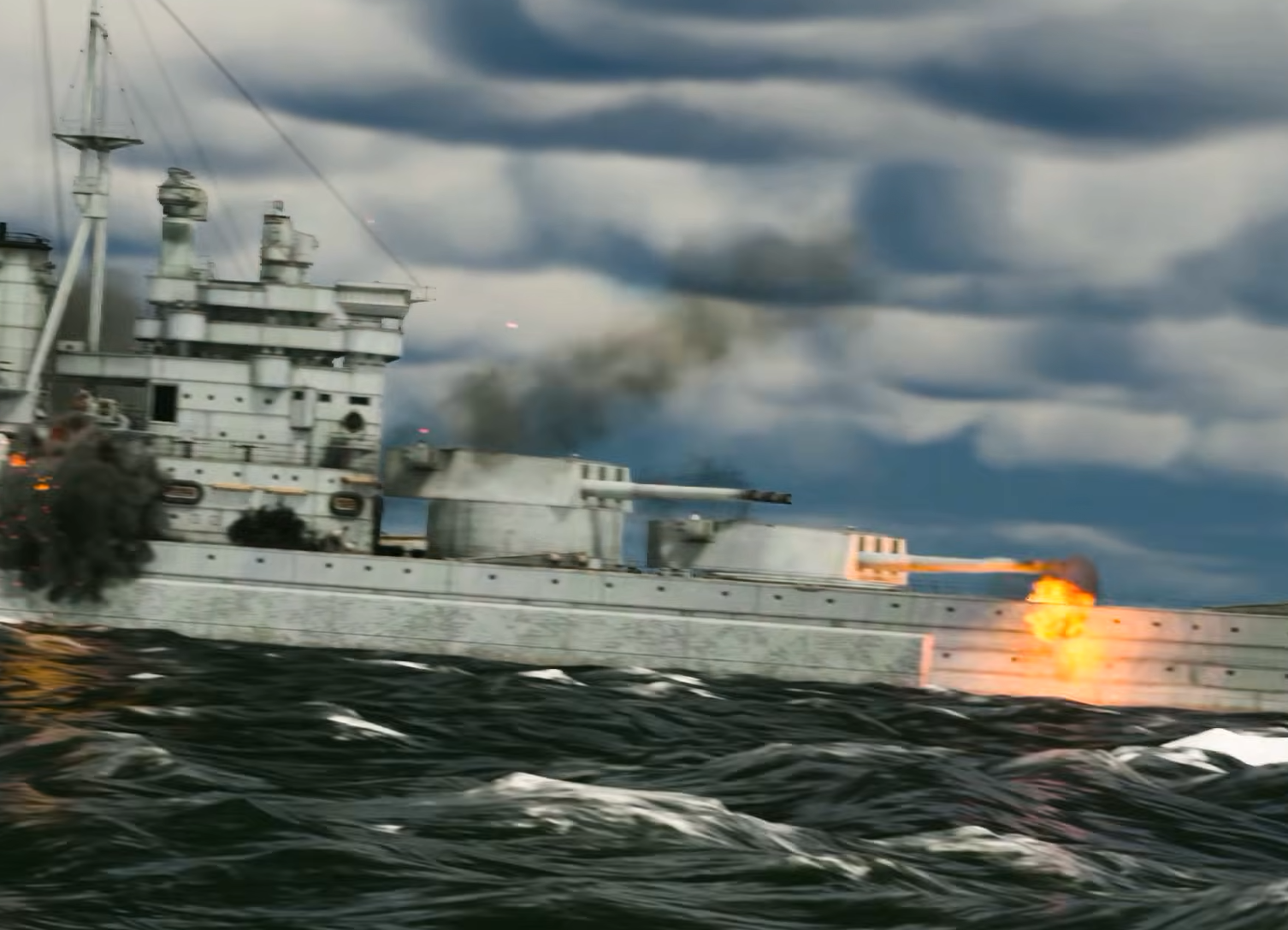
From the next update trailer.
1 Like
Eh… I dont think its gunna do anything vs a Soyuz still.
Should be solid vs anything else though, but Im fearing its gunna be 8.7 because Gaijin and thus guranateed to be facing Soyuzs every match
Wonder which configuration of lion it will be