
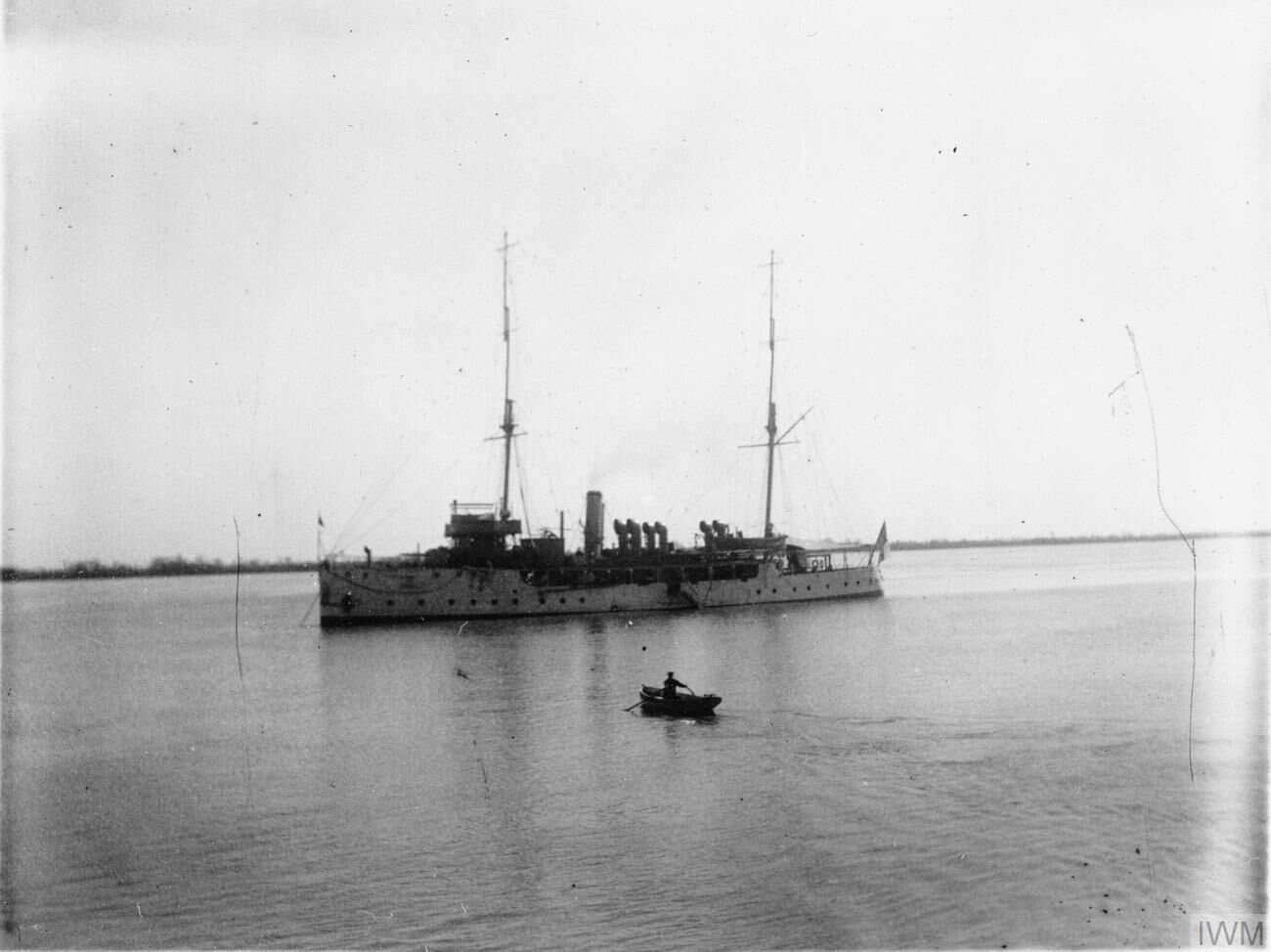
- Yes
- No
History: HMS Thistle is a Bramble class gunboat built to replace the Redbreast class. The boats were designed for colonial duties in shallow waters. Thistle in particular was the last of the Victorian gunboats in Royal Navy service as well as the final Royal Navy vessel to have a sail rig. The Bramble class didn’t seem to have a naming theme.
Thistle was laid down on the 22nd of June of 1899 and built by London & Glasgow Eng & Iron Shipbuilding Co. She would be completed 2 years later and preform satisfactory during sea trials.
HMS Thistles first deployment would see her station at the North America and West Indies station. She would visit several areas such as São Vicente, Cape Verde and New York.
Thistle would later patrol the Yangtze river to guard imperial interests abroad. She would later withdraw to Hong Kong during the 1911 Revolution.
During WW1 she along with several of the accompanying China Station gunboats were decommissioned to provide a ready crew for HMS Triumph.
4 years after her decommissioning, a decision was greenlit to bring HMS Thistle back into service in order to try and sink SMS Königsberg. This planned encounter however never came to fruition as HMS Mersey and HMS Severn would instead take HMS Thistle’s place and would sink SMS Königsberg with the aid from air attacks before HMS Thistle even set sail.
Despite her combat encounter never happening, HMS Thistle would still return to service. She saw action in the amphibious campaign against German East Africa alongside the monitors who sunk SMS Königsberg, earning the Commander the Order of St Michael and St George.
HMS Thistle’s moment of Valor came in the July of 1918. A German naval colloum was approaching the port of Quelimane. This was supposed to be guarded by the Portuguese unprotected cruiser NRP Adamastor but the captain decided to evacuate the port instead. HMS Thistle would act as the final line of defense, preventing a German naval victory.
Post war, HMS Thistle would see a much quieter role in service aka gunboat diplomacy. She had her mast altered many times and would still continue to use it alongside her motor engines. HMSThistle later recived a refit, replacing her secondary armaments and machine guns for Pom Pom guns.
HMS Thistle was sold for scraping in August 1926, marking the end of a peculiar vessel.
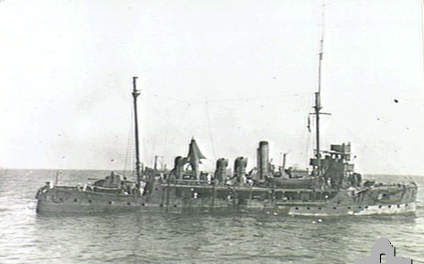
Specifications:
Max speed: 25km/h (Motor)
Displacement- 710t
Draught- 2.438m
Length- 54.864m
Beam-10.0058m
Crew- 85
Armament- 2x 101.6mm QF guns, 4x 76.2mm QF guns, 2x 40mm Pom Pom guns.
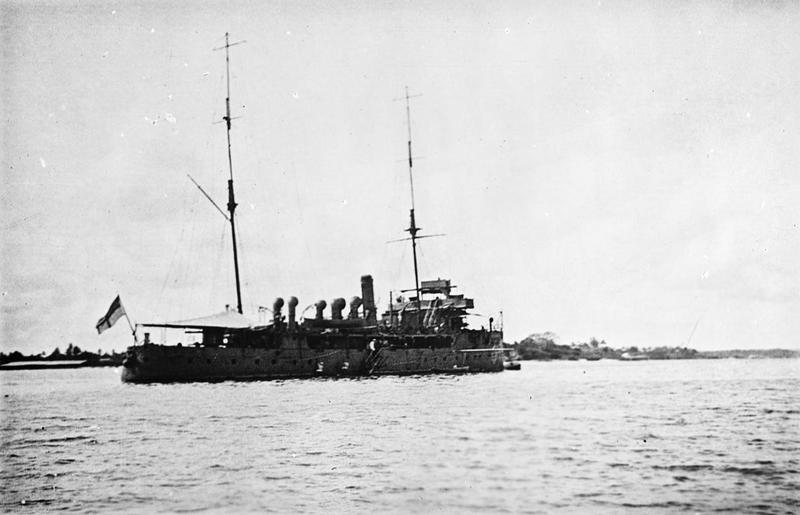
Sources:
https://www.greatwarforum.org/topic/218555-hms-thistle-a-sailing-ship/
Edward Paice, Tip & Run: The Untold Tragedy of the Great War in Africa
Efiong U. Aye, Hope Waddell Training Institution: Life and Work (1894-1978)
https://web.archive.org/web/20140714195954/http://www.clydesite.co.uk/clydebuilt/viewship.asp?id=8129