There’s surprisingly little discussion on how unrealistic this mechanic is for how much more frustrating it makes an already terrible part of the game, that being flying bombers in air battles. If bombs were set to explode on being hit in ground RB, ok, fine. Still not realistic, but slightly better considering we’re assuming the bombers are near the target and the fuses are in. However, with the amount of safety measures most nations have used since WWII to prevent premature detonation (fuses being inserted near battle, “safety pins” that only release upon drop, clockwork fuses that require a certain distance fallen to work), it’s really dumb to have one 20mm round set off a bomb that should be inert until it’s a good 300 feet below the plane.
I think you’re thinking about it wrong, all those safety measures are for the bombs fuse itself. The explosive filler is still going to be just as reactive regardless if the bombs fuse is active or not. The rounds hitting the bombs, penetrating the shell and hitting the explosive filler will make those rounds act like the bombs fuse. The rounds aren’t activating the bombs own fuse, they are themselves acting like the fuse.
How likely it then is for that bomb to explode depends of what type of filler is used.
how dose an AP round ignite and accelerate the burning speed of a high explosive to the point of detonation? And how dose a HE round pen the bomb casing?
Yes it’s possible to detonate a bomb, it’s no where near as easy as it is currently in WT. Nitro-glycerine, famous for it’s ease of detonation and instability can only be easily detonated by impact when there is a reasonably thick layer of it on iron or steel and being struck by iron or steel, it’s possible, but difficult to detonate if one of either the surface it’s on or the striking surface is a slightly softer material like brass. if one of those surfaces is lead, like in a regular (ball) bullet, it is actually very difficult to detonate via impact.
HE rounds still have a fuze delay and can even pen up to 10mm for a 20mm shell (at close range)
Most AP rounds are also incendiary
Which given the shape and thickness of a bomb casing would require an exceptionally lucky shot, even if they didn’t fuse when penetrating the aircraft itself.
irrelevant, it’s perfectly safe to light C-4 or gelignite and cook dinner on it, HE has to be heated for an extended period before it reaches “cook off” temperature
Kinetic energy.
This is an exaggerated example with nitroglycerine but you get the idea:
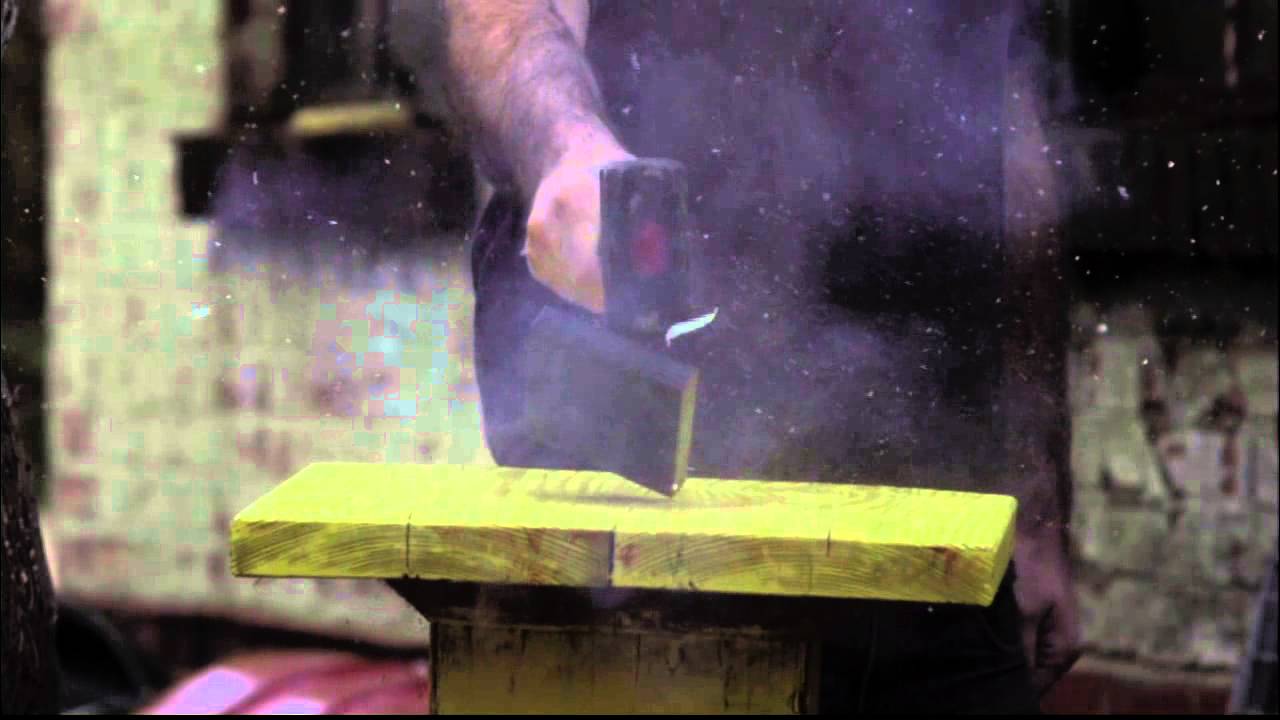
The same way a HE round damages a tank. Either by shrapnel penetrating thinner areas or by creating shockwaves and inner casing spalling.
That point I’ll likely agree to, i don’t have enough knowledge to say how easy it is IRL for any of the existing in game filler variants to explode from outside force.
I don’t think you understand how incendiary rounds work
GP bombs have relatively thin casings, far less than 10mm on their sides
and how many of the bombs in-game use C4 as a filler?
It’s not irrelevant as different fillers are differently sensitive.
depends on the type doesn’t it?
an example, I’m not about to start posting the compositions of various explosive mixtures for a number of reasons
Not really? Most if not all incendiary ammo burn at very high temperatures of over 2200C/4000F (and this is for civilian grade incendiary ammo)
sure but temperature alone doesn’t accelerate the rate of combustion to the speeds requires to detonate most high explosives, most have nitro-glycerine mixed in just to make detonation possible, the require the denotator to set off a booster to set of the main charge, for example Ammonium nitrate requires about half a stick of dynamite as a detonation device, which requires a detonator to initiate, remove the detonator and it burns like a candle.
*in most modern high explosives
I don’t think anyone would want to go near a bomb factory that is on fire. pressure buildup from heat will probably make detonation more likely. Think of solid rocket engines, if done incorrectly and not given a big enough exhaust they quickly turn into a bomb.
Explosives have an activation energy that’s measured in kJ/mol (energy per amount of atoms). Fire can exceed that activation energy if it burns hot enough and/or the explosives are in a container and can’t release the heat back out.
that’s pressure build up, that’s an issue with low explosive and completely irrelevant to high explosives, you will get the same result if you boil water in a sealed container.
High explosive do damage due to the shockwave created by the incredible speed of their combustion, low explosive need to be contained and build up pressure.
Think of a dust explosion in a flower mill, the flour particles are so fine they combust near instantaneously, creating a massive shockwave, even if the building has all it’s doors and windows open. High explosives are like that, they need an initiator explosion to turn them into dust and blow a flame through them to fast enough to cause the boom, otherwise it’s like setting fire to the wheat field, no where near as energetic.
It’s not irrelevant. if you put a sealed container in a fire the pressure inside will increase, the energy inside will increase, so the remaining energy required to be added for an explosion is going to be less.
So for example an incendiary round will not only have fire but will also increase the pressure at the point of impact with the filler. That energy has nowhere to go but out of the small hole the round entered through. if the energy out that hole isn’t fast enough then the point energy can exceed the activation energy triggering a chain reaction.
Gunpowder in a pile outside vs gunpowder in a container, very different results.
correct, but a HE round (like 20 or 30 mm) can be that explosion. Same with an AP round if it’s fast enough, at the point of impact there is A LOT of energy released that can trigger a chain reaction.
See the spark at the moment of impact:
( https://www.youtube.com/watch?v=jRi0NTwbcOs )
All that energy condensed to a tiny point.
Here is a 20mm round hitting steel plates:
( https://www.youtube.com/watch?v=kUWdH5NSRow )
Edit:
https://www.sciencedirect.com/science/article/pii/S0010218022002541
and gun power is a low explosive, not a high explosive, defined by the fact that it’s ignition when contained is different to when it is not… that is the entire point of separating high and low explosives, whether they need containment to generate pressure to detonate (low explosive) or if they simply burn so fast their mere act of combustion generates a shockwave.
yes, it can, but it has to detonate INSIDE the explosive INSIDE the bomb casing, Germany even developed the “schrage musik” cannons to do it,

but my point was never “It cannot happen” it is “it is FAR to common”
again, not impossible, but far from the current in game cases of .303 rounds detonating bombs,
in short, I think it should be a thing, but it should be a rare occurrence with high caliber ammunition, not like it is currently where a single .303 ball can chain kill an entire bomb load back to the bomber.
High vs low explosives is the difference if the speed at which the chemical reaction moves through the material is above or below the speed of sound. A contained low explosive will turn into a high explosive because that wave of reaction travels faster due to pressure buildup. Similarly a high explosive when contained will also detonate at a faster rate compared to uncontained due to the pressure buildup.
No it doesn’t, as long as the shockwave that travels through the filler is fast enough and at high pressure enough then the distance at which the initial explosion happened doesn’t matter, the shockwave will still trigger a detonation in the material.
I agree here. As i have from the beginning.
it will not be explosive if it is not contained, A high explosive will be explosive regardless as it’s combustion needs to be accelerated to supersonic to detonate it in the first place.
lol, yeah, that requires so much shockwave pressure that the compression heats the explosive well beyond flash point to ignition temperature, things are added into the explosives to to aid in this…
You know what, forget it, this is too hard of an argument to have when I cant actually talk about the details… It’s like trying to talk about boiling an egg but I can’t mention anything about a heat source, I’m stuck with “you put the egg in water and it gets cooked” I can’t talk about how you put it on a stove to heat it any more then I can go into the details of how you seed the high explosive compounds with “stuff” to act as incendiary initiators to spread the combustion as well as the shock wave.
Lets just leave it at bomb detonations should be a rare treat that happens with higher caliber ammo and leave it there, since that seems to be a point of agreement.
Which I wonder if its modeled.
Id get WW2 era shells being somewhat vulnerable to this, but I wonder if more modern bombs would be the same. Though hitting a B-52 with a redtop and creating a massive explosion is rather satisfying.
I do also wonder how many or even if any WW2 heavy bombers were destroyed because their bomb load exploded due to Flak or fighter fire. I dont think ive ever heard it happen IRL
You’re mixing up the terms. It’s not the initiation that needs to be super sonic for it to be classified as a high explosive. It’s the propagation of the chemical reaction that happens after initiation. A high explosive can be set of with VERY low temps or VERY low shock forces (e.g nitroglycerin) conversely a low explosive can be very stable and need lots of heat or lots of force to start deflagrating.
You can have a much stronger explosive but further away that results in the same shockwave pressure at point of contact with the filler as a weaker explosion does at a short distance. The pressure from an explosion decreases by one over the distance cubed (roughly). So if an explosion has a pressure wave of like 10 MPa at 1m it’s going to have a pressure wave of 1.25Mpa at 2m and a pressure wave of 0.37Mpa at 3m distance. This means that if you have an explosive that is 30 times more powerful then at 3m it will have the same pressure as the other one did at 1m.