- Yes
- No
Hello everyone, and welcome to this new suggestion.
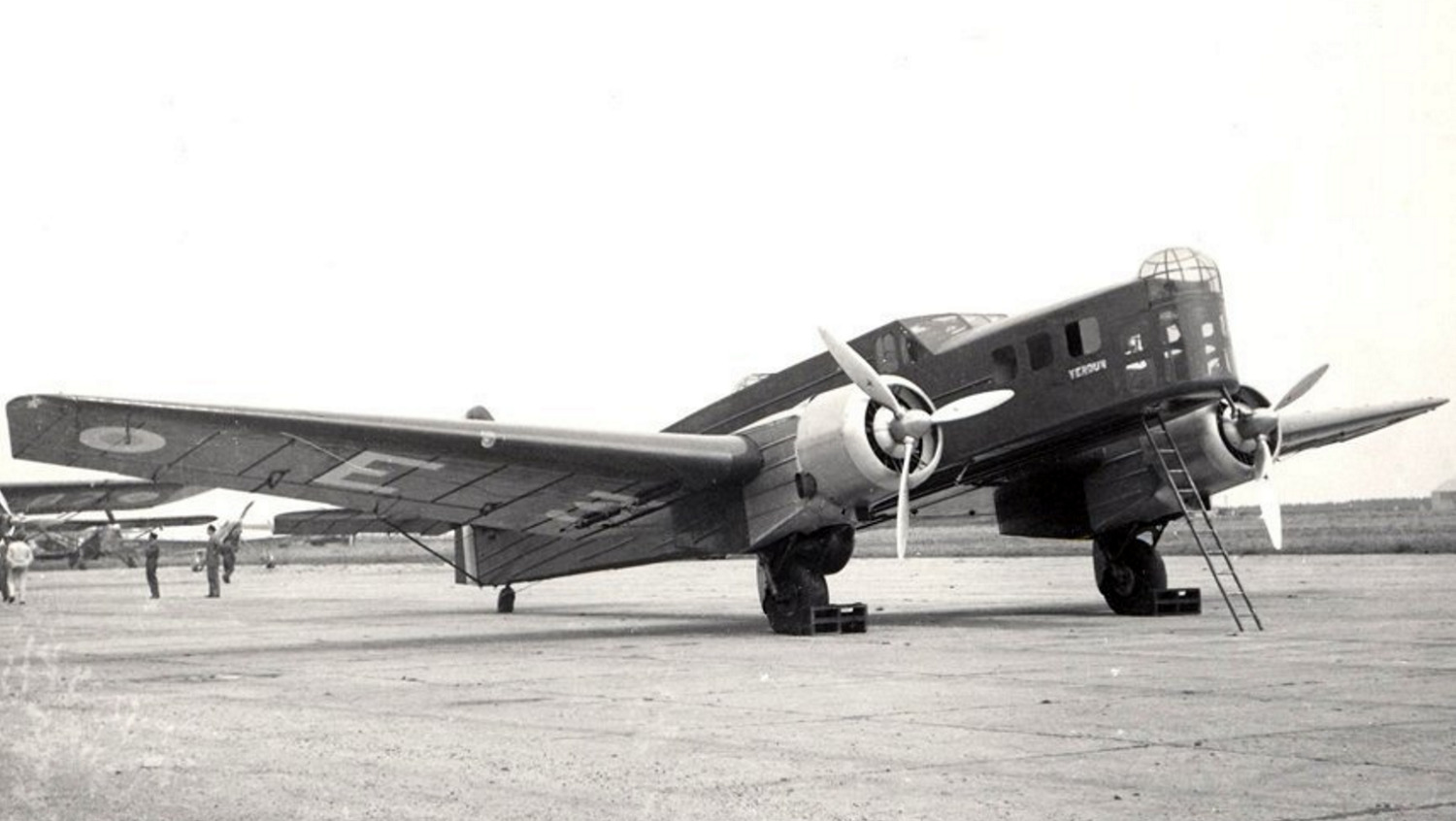
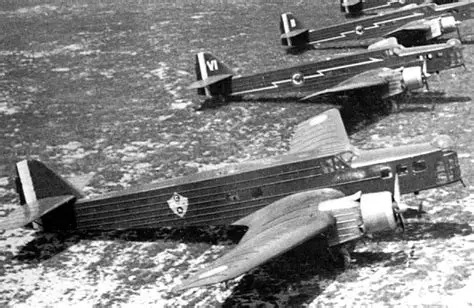
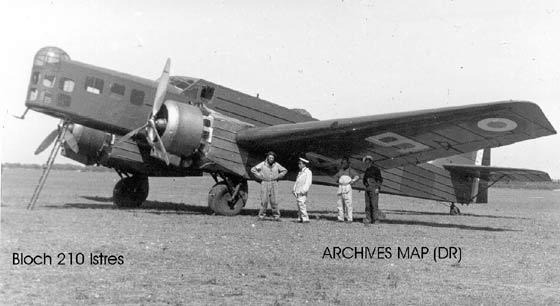
Today, I am presenting a new French aircraft from the interwar period and the early stages of World War II: the Bloch M.B.210.
In the early 1930s, Bloch began developing a new aircraft for the French Navy. The project was intended to produce a torpedo-carrying seaplane and was largely based on the company’s M.B.200 bomber. The new aircraft retained much of the M.B.200’s fuselage but featured a completely different wing arrangement. However, after several years of development and testing, the project was ultimately abandoned because the aircraft failed to meet the Navy’s requirements.
Meanwhile, the French Air Force, which had recently begun operating the M.B.200, was already looking for a replacement. The aircraft’s numerous shortcomings, particularly its underpowered engines and fixed landing gear, made it increasingly obsolete as aviation technology progressed. Bloch therefore proposed a new aircraft derived from the M.B.200, designated M.B.210, which was intended to correct many of its predecessor’s weaknesses.
Although the two aircraft shared a similar fuselage, the M.B.210 introduced several important improvements. Most notably, the high-mounted wings of the M.B.200 were replaced by a low-wing configuration, while the fixed landing gear was replaced by a fully retractable system. These changes significantly improved the aircraft’s aerodynamic efficiency, giving it a considerably better range and overall performance.
Following a successful testing program, the M.B.210 was approved for production. The aircraft proved to be a genuine success, with nearly 300 examples produced and several foreign operators eventually acquiring the type. The French Air Force itself received 274 aircraft, making the M.B.210 one of its principal bomber types on the eve of World War II.
When war broke out in 1939, the M.B.210 therefore represented a significant part of France’s bomber fleet. However, despite being considerably more modern than the M.B.200, it was already becoming outdated compared with the latest German aircraft.
During the Battle of France in 1940, M.B.210 units were heavily involved in combat. The aircraft carried out bombing missions against German forces, but suffered heavy losses. Some were shot down by German fighters, while others were destroyed or damaged on the ground during attacks against French airfields. Many surviving aircraft were subsequently withdrawn from frontline operations as the German advance made continued use increasingly difficult.
Following the French capitulation, a number of surviving M.B.210s remained in service under the Vichy regime, while others were taken over by the Germans. Some examples were temporarily employed by the Luftwaffe for training purposes, although their outdated performance meant that they were quickly withdrawn from active use.

Characteristics
Length : 18.90 m
Width : 22.81 m
Height : 6.15 m
Mass :
- Empty : 5 795 kg
- Full : 10 200 kg
The aircraft is powered by two 900 hp Gnome & Rhône 14Kirs engines, enabling it to reach a top speed of 334 km/h and a service ceiling of 9,900 m. It has a range of 1,000 km.
The crew consists of four to five people, including a pilot, a navigator/bombardier, a radio operator, a mechanic/gunner, and a second gunner.
Weapons
This aircraft’s armament is particularly impressive for its time, featuring a substantial bomb load and well-distributed defensive turrets.
Defensive armament:
- 1 x 7.5mm Mac 1934 machine gun (dorsal turret)
- 1 x 7.5mm Mac 1934 machine gun (nose turret)
- 1 x 7.5mm Mac 1934 machine gun (ventral position)
Offensive armament:
- 1,400 kg of bombs
- 10 x 64 kg
- 16 x 50 kg
- 1 x 1,000 kg + 2 x 200 kg
In-game, this aircraft would be a great addition to the French tree, providing a heavy bomber with a very large payload capacity and decent flight performance.