- Yes
- No
Hello everyone, and welcome to this new suggestion.
Today, I am presenting a new French bomber prototype: the Bloch M.B.134.
In the late 1930s, the French Air Force was operating the M.B.131 as one of its main reconnaissance and bombing aircraft. However, the aircraft’s relatively low speed made it increasingly vulnerable as foreign air forces introduced faster and more modern fighters. The General Staff therefore began looking for a replacement capable of significantly higher performance. The new specifications called either for a twin-engine aircraft equipped with powerful engines or, alternatively, a four-engine design, a configuration that had not yet been widely adopted by the French Air Force.
Marcel Bloch took up the challenge and proposed the M.B.134. Although the aircraft was derived from the earlier M.B.131, the new design was almost entirely different. The fuselage was considerably wider, allowing for a larger internal volume, while the aircraft received a completely redesigned wing and much more powerful engines. One of its most distinctive features was its twin-tail configuration, which gave the aircraft a very different appearance from its predecessor.
The sole prototype was completed in 1939 and made its maiden flight that same year. The new aircraft immediately demonstrated the benefits of its redesigned airframe and more powerful engines, achieving a considerably higher top speed than the M.B.131. A series of flight tests was subsequently planned to evaluate its performance and determine whether it could become the basis for a future production aircraft.
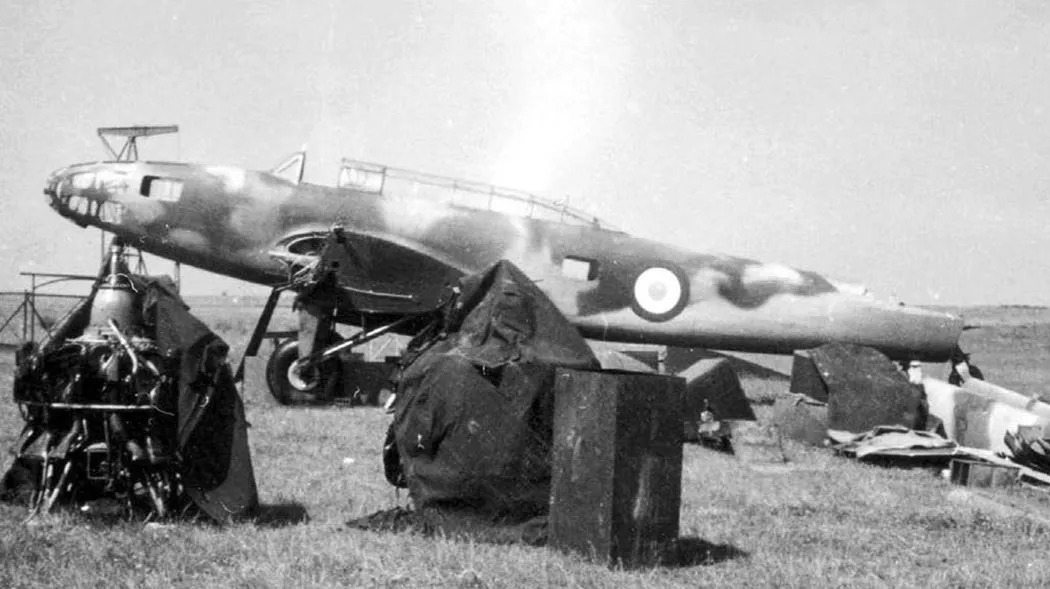
Unfortunately, the M.B.134’s development was quickly interrupted. A failure of the landing gear forced the prototype to remain grounded, preventing the continuation of its flight-test program. At the same time, disagreements between Marcel Bloch and the newly established SNCASO complicated the continuation of the project.
By the time these issues could have been resolved, France was already on the verge of war. The German invasion in 1940 brought the program to an abrupt end, and the sole M.B.134 prototype was ultimately destroyed to prevent it from falling into German hands.
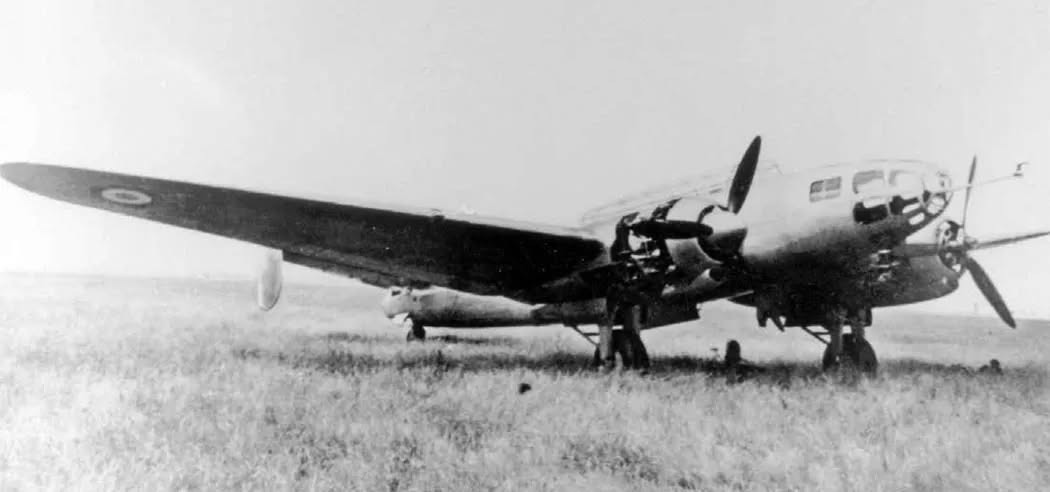
Characteristics
Length : 16.077 m
Width : 21.47 m
Height : 4.30 m
Mass :
- Empty : 5,417 kg
- Full : 8,825 kg
The aircraft is powered by two 1,015 hp Gnome & Rhône 14 engines, enabling it to reach a top speed of 520 km/h—an impressive performance for the time. Its range when fully loaded, at a cruising speed of 442 km/h, is 2,700 km.
The crew consists of four personnel: a pilot, a rear gunner (positioned on top of the aircraft), a ventral gunner, and a forward observer/bombardier.

Weapons
As development of this aircraft was halted at an early stage, it is difficult to determine its exact armament configuration. However, the following is known:
Defensive armament:
- 1 x 7.5mm MAC 1934 machine gun (ventral hatch; the turret-mounted gun was abandoned)
- 1 or 2 x 7.5mm MAC 1934 machine guns (dorsal position)
- 1 x 7.5mm MAC 1934 machine guns (nose)
Offensive armament:
- 1,350 kg of bombs (the fuselage is identical to that of the M.B.134 and M.B.135)
In-game, this aircraft would be an interesting addition to the French tree, offering a medium bomber capable of high speeds but lacking significant defensive firepower.
Sources
- MB 130-136 : origines, caractéristiques et performances
- Bloch MB.131 — avionslegendaires.net
- Bloch MB.134 French Bomber Prototype - Destination’s Journey
- Avions et hydravions Bloch en photographie
- Le Bloch MB 134 était un avion quadriplace de bombardement développé en France et qui était directement dérivé du médiocre bombardier MB 131. Il se présentait comme un monoplan aile basse de construction entièrement métallique. Doté d’une nouvelle voilure, d’un empennage double dérive et de moteurs Gnome & Rhône 14P de 1250 CV chacun, le MB.134 avait en réalité peu de pièces communes avec le MB.131. L’abandon du moteur 14P a entraîné l’abandon du projet initial et le développement d’un appareil entièrement nouveau, sans aucun lien de parenté avec le MB.131. Il se caractérisait en particulier par un fuselage élargi avec décrochement dorsal protégeant un mitrailleur. Construit à Courbevoie et assemblé à Villacoublay, le MB.134-01 a effectué son premier vol le 22 juillet 1939 avec des moteurs Gnome & Rhône 14 N48/49 de 1015 CV. Après quelques modifications dont une augmentation de ses surfaces verticales, il rejoignit le CEMA à Orleans-Bricy en janvier 1940. Le 21 avril 1940, lors d’un vol d’essai, une jambe de train s’effaça à l’atterrissage, conséquence d’une panne hydraulique. Gravement endommagé, il ne devait pas reprendre l’air et il fut détruit sur place pour ne pas être capturé par les Allemands lors de… - Avions moches, bizarres, ratés, projets abandonnés et aviation insolite. | Facebook