

History and introduction
The Dornier Viper was a West German/Norwegian air-to-air missile project, intended to replace the AIM-9 Sidewinder, in Luftwaffe service from 1975/76.
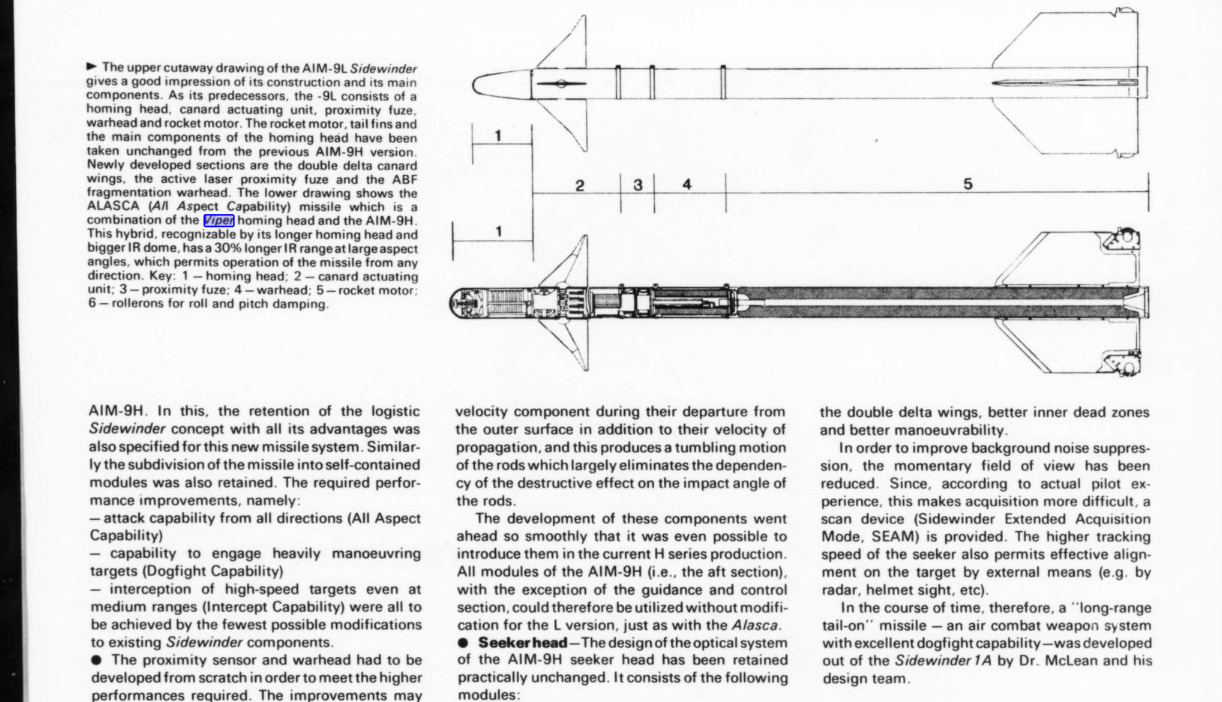
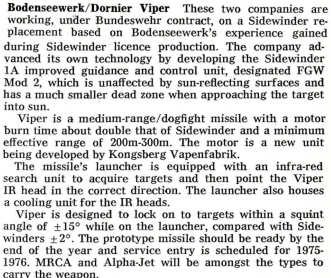
The Viper was developed by Bodenseewerk and Dornier Systems, using a new IR seeker and a new solid-fuel rocket motor by Kongsberg Vapenfabrik, intended to have twice the burn time of the Sidewinder.
The missile’s warhead was developed by BGT but Dornier was given the lead role because of them already having a team assembled for the task. Missile prototype(s) were made and the seeker was extensively tested by both Germany and Norway. It was found to have an impressive increase in range over the missiles of its time.
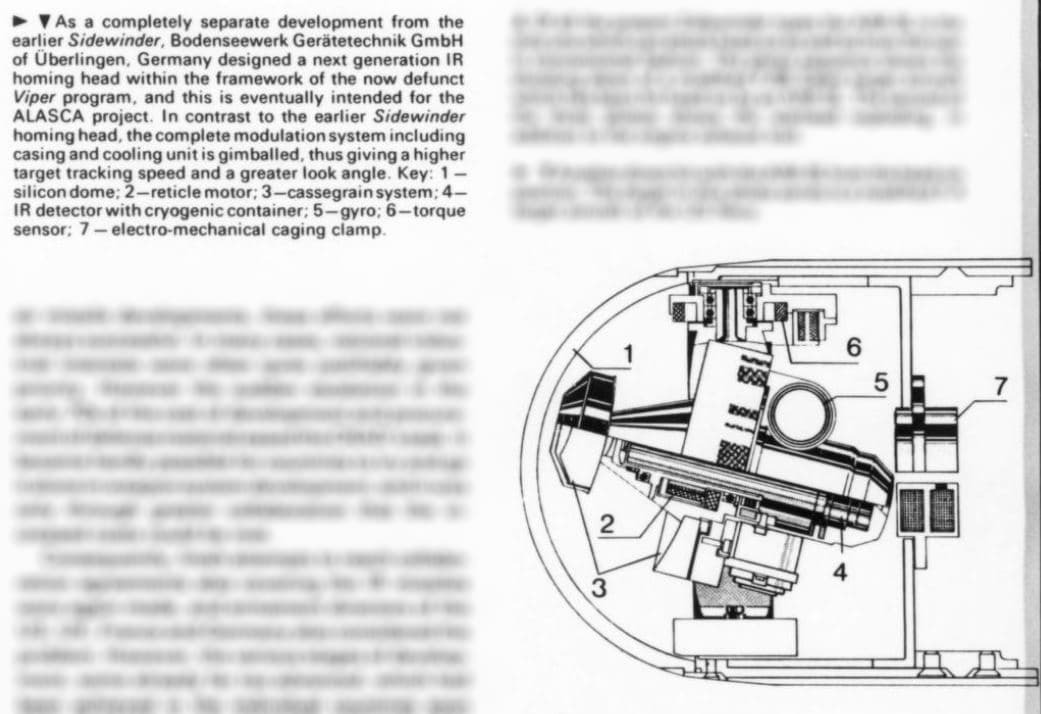
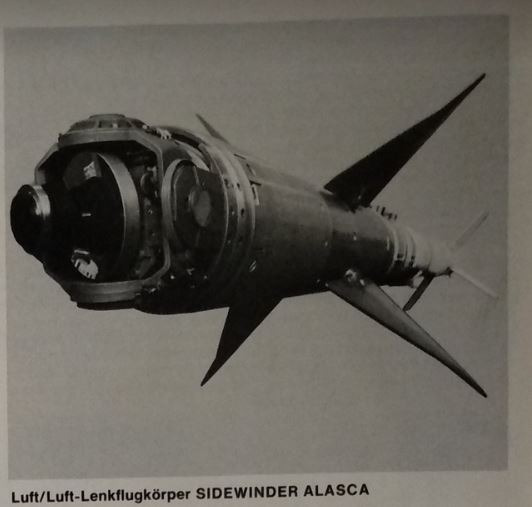
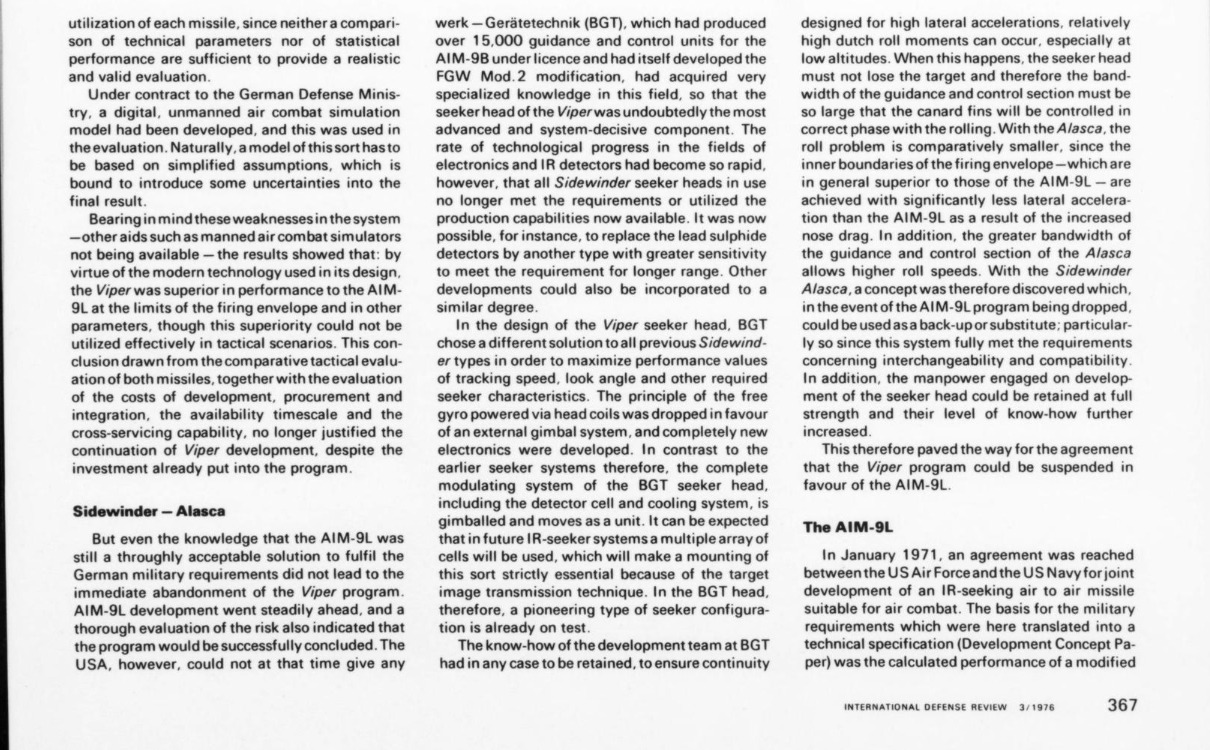
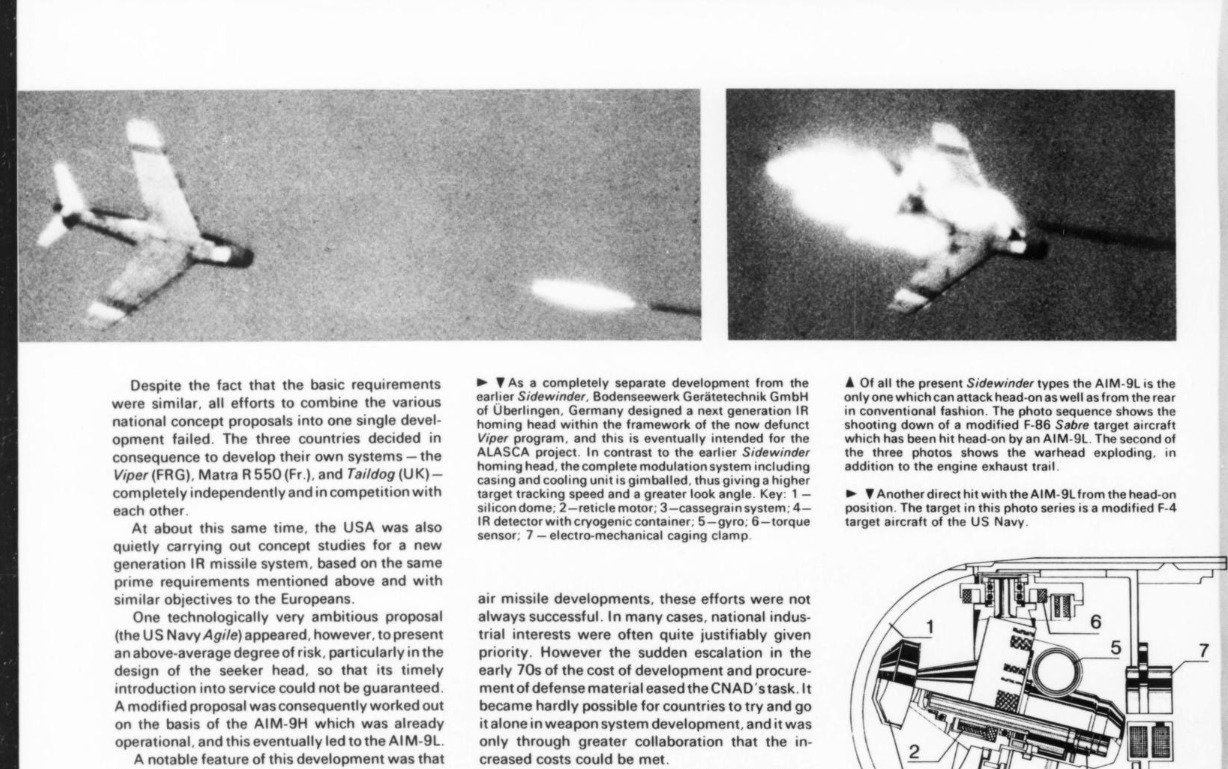
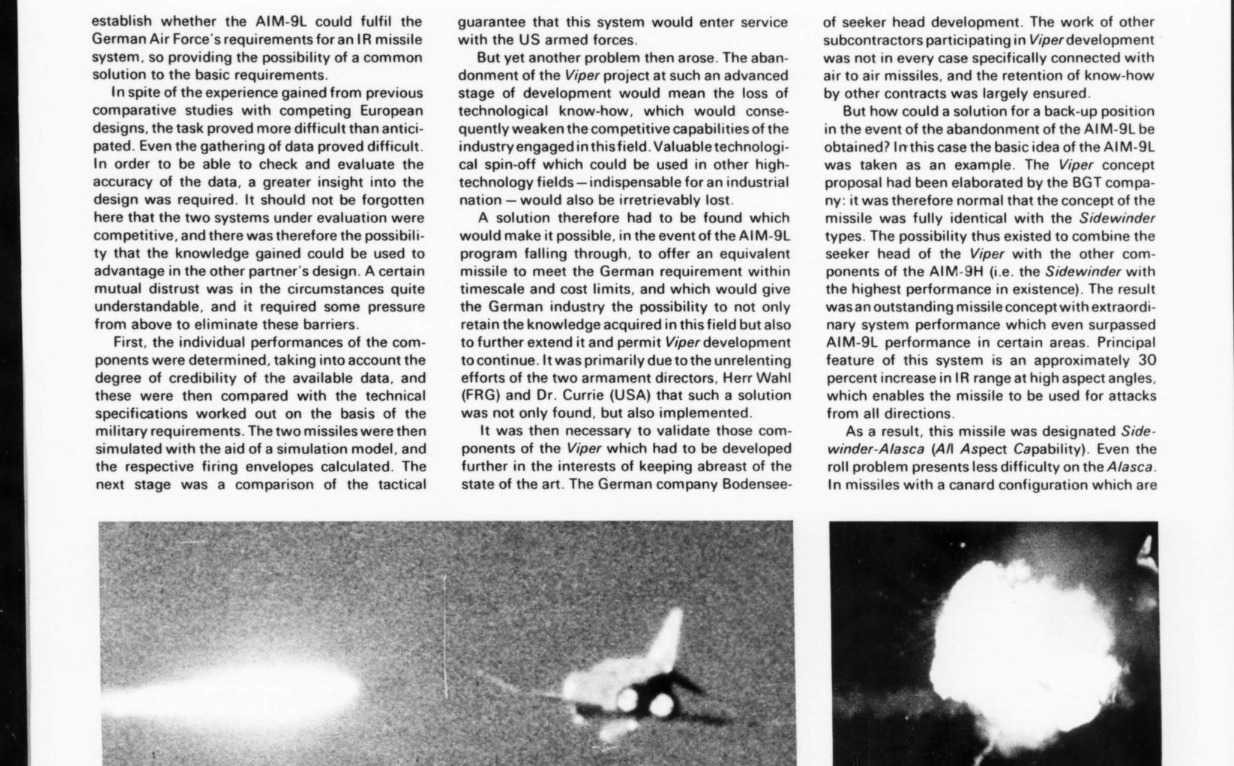
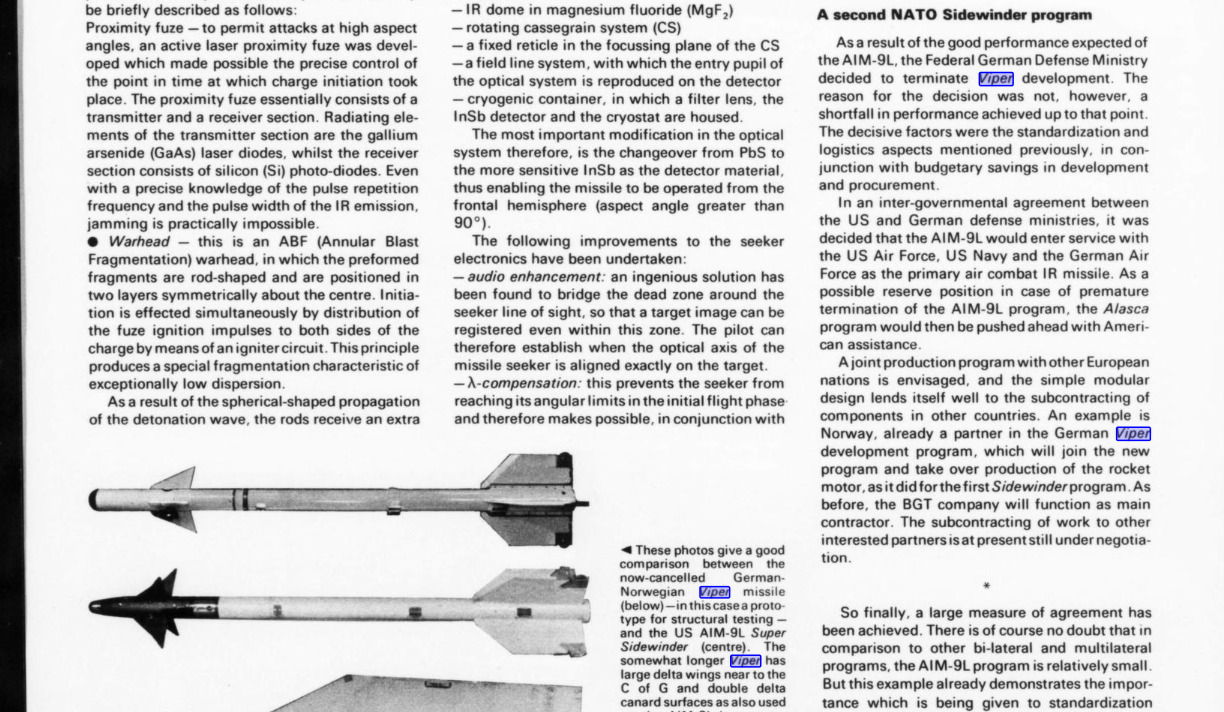
It was so good, that for a while, when the capability of the actual Aim-9L seeker made by Americans was at doubt, the Viper seeker was attached to the body of an Aim-9H and tested over China Lake under the name Sidewinder ALASCA. Compared to the Aim-9’s ± 2 degrees of squint angle, the Viper had a 15 degree squint angle. Unlike most other missiles, the Viper’s novel feature was that it utilised an external gimballed seeker system instead of a free gyro powered via head coils as was used in the Sidewinders. The entire assembly (detector and cooling system) moved as a single unit to point towards the target. This made it superior to the 9L even at the edges of the firing envelope.
My personal understanding as to why the Dornier Viper seeker was not chosen for the Aim-9L as standard was because despite the better technology, the American developed 9L seeker was not that much worse that they would be encouraged to rely upon a non american part for their new best AAM.
The missile’s motor was developed by Kongsberg Vapenfabrik, and while operated during closed environment tested, was never used within the missile body in an actual flight test. In tests, it had a burn time about double that of the Aim-9.
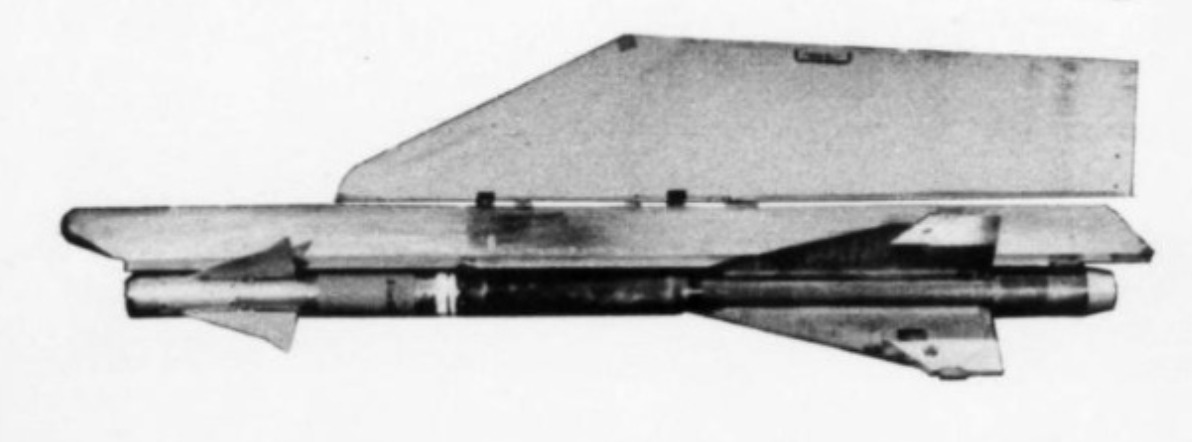
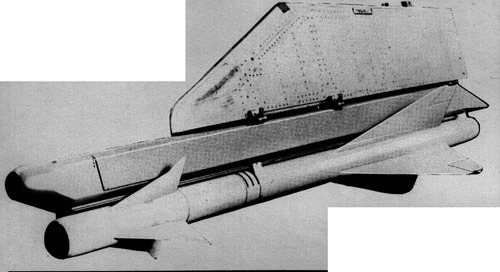
Much like the other experimental missile project of its time, the SRAAM, the Viper also featured a pylon with an integrated IRST. It was this system that allowed the pilot to lock onto the enemy aircraft, and this, in turn, oriented the missile’s seeker in the direction of the target. I presume this was to place the burden of pre-lock periods which would otherwise deplete the missiles seeker coolant system onto the part which wouldn’t need to be detached from the aircraft.
Aircraft planned to mount the Viper
The Viper was to be used by:
- MRCA (Tornado)
- F-4F
- LuftWaffe Alpha jet
- Luftwaffe F-104G
In fact, the image above shows an Alpha Jet pylon attached with a Viper IRST adapter and hanging below it is the Viper.
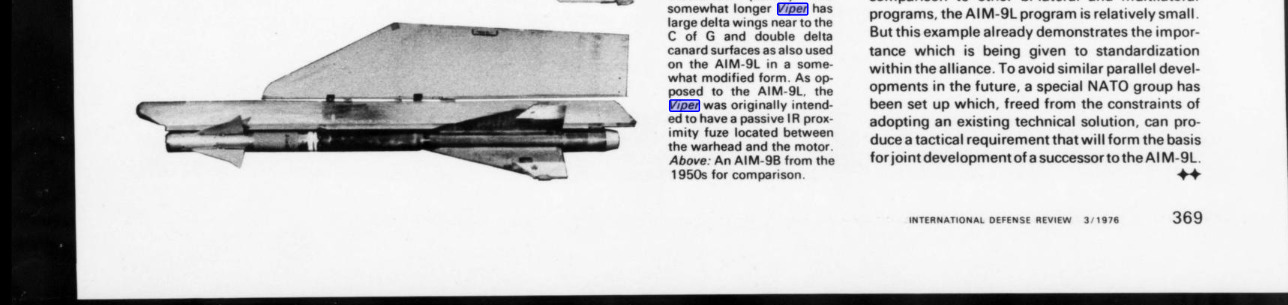
Overall, the Viper had a better seeker acquisition range than even the AIM-9H, better manoeuvrability, kinetic range, launch conditions when it comes to altitude, short-range dogfights and HOBS angles.
In 1974, the Viper was abandoned in favour of the new American AIM-9L Sidewinder missile.
Technical Specifications
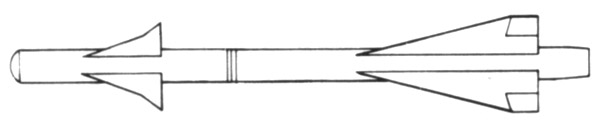
Missile calibre: 150mm
Launch weight: 80kg
Missile weight: < 80kg
Missile length: 2700mm
Missile Thrust: unknown
Maximum speed: unknown
Minimum range: 200m
Maximum overload: comparable to Aim-9L
Warhead weight: comparable to Aim-9 missiles
Maximum kinetic range: comparable to Aim-9L
Maximum seeker range: 7.15km (30% more than Aim-9H)

Sources




- Jane’s Weapons Systems 1974-75* p143
- Illustrated Encyclopaedia of the Worlds Rockets & Missiles* Bill Gunston, 1979 p213
- International Defense Review 1976-06: Vol 9 Iss 3 : Free Download, Borrow, and Streaming : Internet Archive
- https://apps.dtic.mil/sti/tr/pdf/ADA278261.pdf
- 1974 | 0987 | Flight Archive
- 1973 | 1567 | Flight Archive
- https://gallica.bnf.fr/ark:/12148/bd6t53332014/f28.image.r=viper
- Jane's Weapon Systems,1974-75 : Free Download, Borrow, and Streaming : Internet Archive
- The illustrated encyclopedia of the world's rockets & missiles : a comprehensive technical directory and history of the military guided missile systems of the 20th century : Gunston, Bill : Free Download, Borrow, and Streaming : Internet Archive
- AWST June 1973
- Yes
- No