As I understand it, Bf 109G-6 production was chaotic, varying across different factories and versions; that is why the decision was ultimately made to standardize production with the Bf 109G-14, equipping them all with the DB605AM engine.
In my opinion, I would have kept the early Bf 109G-6 (with the DB605A) at the same Battle Rating as the G-2—with one being faster and the other more heavily armed—and added the Bf 109G-6AS instead.
1 Like
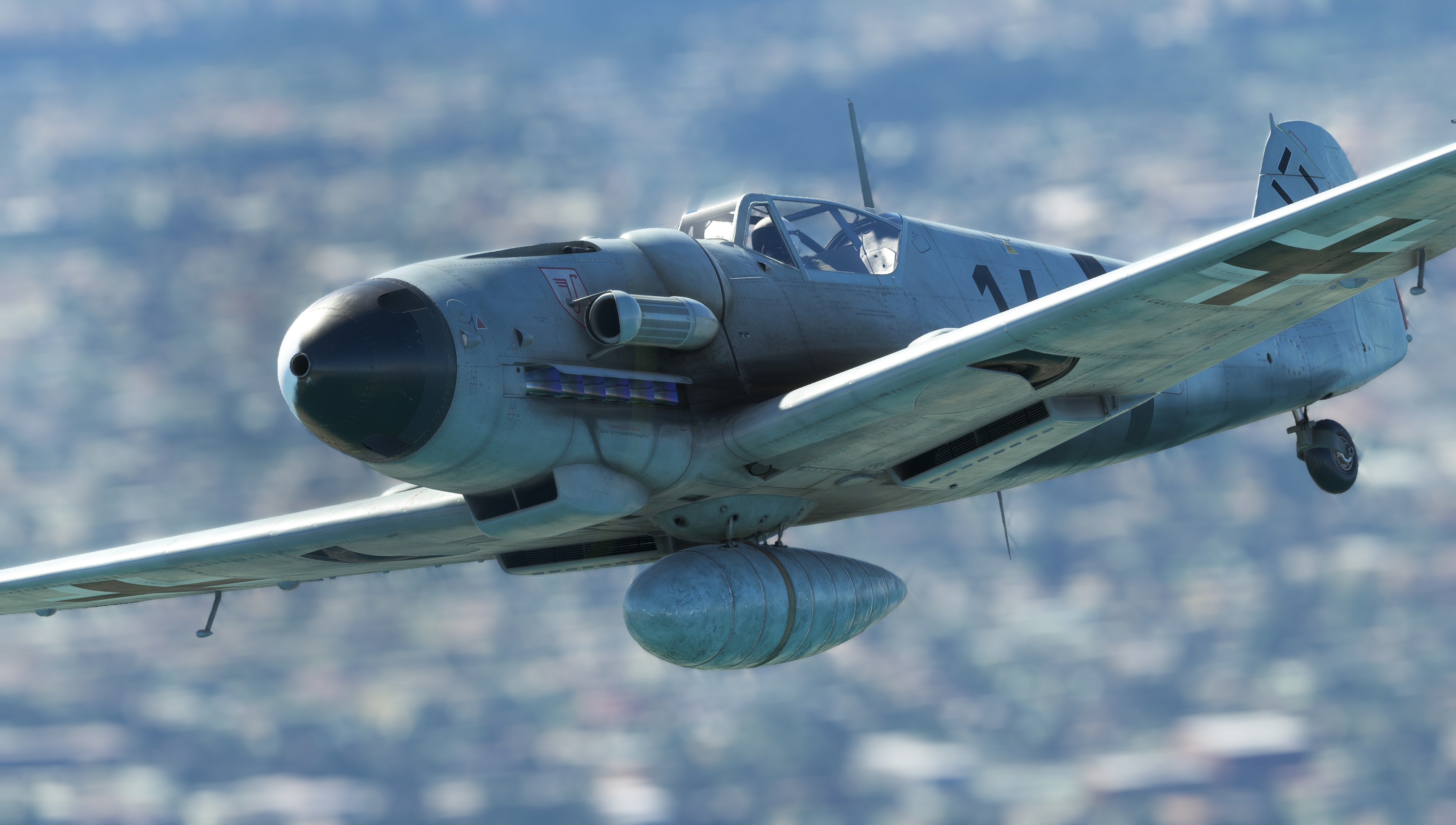
Yeah, it would be interesting if they added that; while they’re at it, they could also add the R8 modification for the Fw 190 A-8 (swapping the outer wing cannons from MG 151/20s to MK 108s and adding extra cockpit armor).
3 Likes
Agreed, whilst i am not sure if the additional armor is worth to consider (except from the immersion factor) as the R/2 had the MK 108s too:
3 Likes
As far as I can remember, there was also an R2 modification or a prototype designated U16 for the Fw 190 A-5. I believe it was a conversion that replaced the MG FF with the MK 108. I’m currently considering creating a Suggestion, but I don’t have the reference materials on hand…
3 Likes
You’re right; I have a book on the Fw 190, and it’s exactly as you say. The MG/FFs were replaced by two MK108s.
In any case, if I had to choose an Fw with that modification, I’d pick the A-8, simply because I believe it’s the version that featured that modification in the greatest numbers.
1 Like
It’s true—the Bf 109 performs better than the Fw 190. I just destroyed a Yak-3 that was tailing me while I was climbing; we ended up at nearly 7,000 meters, where the Yak-3 struggled to keep up. I set an energy trap for him and he couldn’t evade me—and that was while flying the Bf 109 G-6 in the G-6/U4/R4 configuration, which meant I was taking a performance hit. With an Fw 190 A-8, I wouldn’t have been able to get away like that by climbing.
2 Likes
I’ve been wanting to get back into the Fw 190 lately. Before the update I was flying the Fw 190 A-5 almost every day. Unlike the A-8/F-8, the A-5 seems to have had its flight model and 3D model slightly revised, and it now feels capable enough to hold its own in a dogfight against a Yak-3.The Bf 109’s controls lock up at high speed, so if I’m going for boom-and-zoom I prefer the Fw 190.
The change that slowed the flap extension/retraction speed has actually worked out in a positive way. Dogfighting the Yak-3 is more fun these days when I do it in the Fw 190 A-5.
I’ll probably give the A-5 a try once I’m done with the Bf 109, but I have to admit, I’m pretty mediocre when it comes to evading attacks and counter-attacking. I prefer keeping my distance and targeting enemies who are attacking my teammates, since I almost always lose in one-on-one dogfights with German planes (especially with the Fw 190 A-8).
1 Like
Okay, confirmed: German planes are just too poor for their current BR. As soon as you get into a one-on-one fight with a plane of similar (or lower) BR, you’re dead, because they simply don’t turn. In fact, I’m flying the Bf 109 G-14 right now, and it suffers from the same issue as the Fw: it turns worse than a bomber. I went up against a Spitfire Mk XIV and didn’t stand a chance; even with landing flaps deployed, I couldn’t pull off a tight vertical turn to catch him while he was doing the same—something I used to be able to do with any Bf a few years ago.
It seems like only the German planes were given a realistic flight model (or one worse than reality) and high-speed compression effects.
1 Like
Regarding the Bf 109, the current BR is fine. Especially in SB, it can fully utilize its turning performance, so it’s quite strong.
Regarding the Bf 109 E-4/E-7, I even feel that its BR is rather too low.
On the other hand, I think the Fw 190s need to be lowered. I believe the optimal would be A-4 to 3.7, A-5 to BR 4.0, U2/U12 to 4.3, A-8 and D-9 to BR 4.7. I don’t know much about ARB, but even if the BR is lowered, it would only be by about -0.3.
There are very few aircraft that can fight and win against a Griffon Spitfire… By the time you’re at a range that requires flaps, you’ve already lost.
I can guarantee that Zeros are only good when they’re the M2 and 4.3 M3.
The only reason the M5s keep moving up in BR is that newer players are still making the stupid decision of turnfighting a Zero.
I believe the biggest problem with aircraft in ARB is the simple fact that enemies are marked. This generally lets enemies know if they are about to be attacked, allowing them to react accordingly and take evasive action—something German planes cannot do. If enemy planes weren’t marked in ARB, surprise attacks would be possible, leaving the enemy no time to react; that would be the only way to put German planes on equal footing with those of other nations.
At the very least, the G-6 and G-14 handle quite poorly in turns in ARB; they aren’t as disastrous as the Fw models, but they do have issues—especially in vertical maneuvers, where they take far too long to complete a turn, even with landing flaps deployed. Low-speed roll rate is also abysmal, though I’m not sure if that is historically accurate.
It was an interesting encounter. I spotted him at an altitude of at least 5,000 meters; seeing him approach from above, I began to lose altitude while maintaining my distance. I headed toward a teammate flying another Bf, but I didn’t get too close to him—I didn’t want the Spitfire to target him instead. A short while later, almost down at ground level, the Spitfire spotted my teammate and turned toward him. I banked around to attack, but in the time it took me to turn, the Spitfire covered the 4 km separating him from my teammate. They went for a head-on pass and evaded each other, but the Spitfire pulled a tight, high-speed turn and got on the Bf’s tail before my teammate had even completed half a turn. I arrived just as that was happening; the Spitfire noticed me and dodged, so I climbed to gain altitude while he turned and pursued me. We went through several loops, but eventually, I couldn’t regain any speed—whereas he stayed airborne without issues even at 200 km/h—and he ended up shooting me down while I was practically stalled in mid-air.
1 Like
K-4 is a lot better than the Seafire Fr 47.
When a Yak has the altitude advantage over you, and on top of that you’re forced into a situation where you have no choice but to use the landing flaps in a Bf 109, it’s basically an 80% chance of defeat already sealed.
Turns with the landing flaps deployed have poor stability, so the only way to chicken race the Yak in a level turn is to constantly hold exactly 270 km/h.
Under ARB controls the instructor keeps arbitrarily applying the rudder and other inputs in an attempt to stabilize the aircraft, which makes the turn performance even worse.
The only correct course of action was to run straight back to base.
Never engage in a turning fight with late model Spitfires. Low speed regimes are completely out of the question.
If you botch the initial attack, maintain 310–390 km/h and keep making a slow left-hand turn while climbing. Then wait for the Spitfire either to give up on you, or for the chance to pull away at high altitude and set up another attack.
1 Like
No, it was me attacking a Yak-3; he dodged me, and I climbed upwards with the Yak in pursuit (it can pull 180-degree turns with almost no speed loss). I kept climbing to maintain the gap as we ascended. When we were both running out of airspeed, we both pulled into a loop; that’s when I deployed my flaps to try and turn faster and keep the nose steady for a shot. Even so, the turn took me several seconds, whereas the Yak—at that low speed—completed the turn in less than half the time it took me. By then, he had already regained a lot of speed while I was practically stalled in mid-air. Once I started picking up speed again, he was able to climb back up and catch me easily.
I know that with German planes, the best tactic is high-speed passes—and if you miss, you break away to a distance of 5 or 6 km. But when you realize it’s just you and two bombers left against five enemy fighters that outclass you in every way, you’re left with only two options. One is to try and attack someone and die without achieving much (or maybe getting one kill if you’re lucky), or—what I’ve been doing lately—return to the airfield, land, and quit the match, saving the plane at least.
The biggest problem I see is that German teams fall apart in four minutes.
The match starts and everyone climbs; they spot some bombers, and all the fighters dive in to attack them. They end up getting killed, leaving me alone in my G-14 against Yak-3s, Spitfires, and Bearcats—planes that can easily evade me and gain an energy advantage until they take me down.
The only solution I see when playing as Germany is to attack, and if you miss, land and quit the match to at least save the plane; team combat is practically non-existent for the Germans, even though they are the ones who need it most.
Another odd thing is that teammates seem to go out of their way to use you to secure kills. Whenever I go to help a teammate, they always pull a tight turn just as I’m about to catch the enemy; this forces me to overshoot, allowing the enemy to spot me and climb to shoot me down, while my teammate turns back and finishes off that enemy.
In general there is a huge discrepancy of flight model quality in game. Old ones often have quite a bit of inertia to them. You can feel the weight.
Many newer planes and ones with updated FM on the other hand feel VERY arcady, turning and rolling on perfect axis and responding to control inputs instantly.
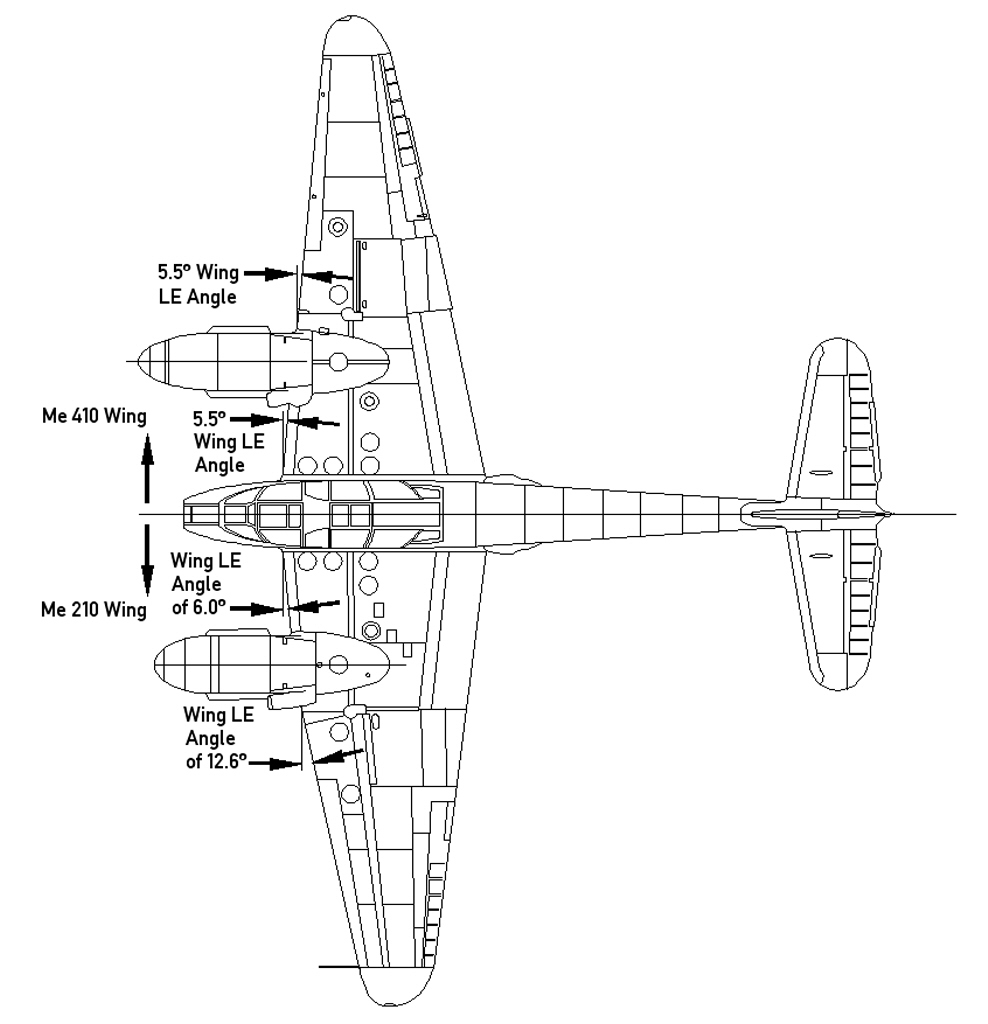
Try Me 410 vs Me 210 for example, very similar plane hut one has the new arcade style FM, the other doesn’t
5 Likes
It’s actually curious, since in real life the Me 410 replaced the Me 210 because the latter was highly unstable. The fact that, in the game, the historically flawed aircraft handles better than the model introduced to fix those very flaws explains a lot about what’s going on in the game.
2 Likes
I think the Me 210 and 410 have too many differences to be called similar planes. There are various differences such as the wing shape, engine weight, and so on. I wouldn’t go so far as to say that Gaijin has recreated them perfectly, but there should be significant differences in flight characteristics between the two plane.
1 Like