- Yes
- No
- In the French BeNeLux sub-tree
- In a future Belgian/BeNeLux techtree.
- I said “No” in the first question.
- Other (Please explain in the comments).
TL;DR: Belgian-ordered Douglas DB-7 with Belgian FN-Browning machine guns and Belgian bomb loads
History
History
In the late 1930s, Belgium sought to modernise and expand the capabilities of its military aviation force. Among the aircraft selected was the American Douglas DB-7, a twin-engined light bomber developed by the Douglas Aircraft Company.
Belgium ordered 16 DB-7 aircraft for the Aviation Militaire. These aircraft were part of the French procurement programme and were constructed to the DB-7 B-3 specification, with the B-3 configuration being a three-seat bomber arrangement.
The Belgian aircraft were to be powered by two Pratt & Whitney R-1830-SC3-G Twin Wasp radial engines. These early engines produced approximately 1,050 hp each and used a single-speed supercharger. This distinguished the aircraft from later DB-7 and Boston variants, which received progressively more powerful engines and other improvements.
The Belgian DB-7s were intended to be delivered with French-style equipment and Belgian armament. In particular, the proposed armament for the aircraft would consist of 7.7 mm FN-Browning M.36 No.3 machine guns, similar to the typical adoption of Belgian-produced FN-Browning-derived aircraft machine guns during the late 1930s on aircraft such as the Hurricane Mk I H-34 and the Fairey Battle I.
The aircraft’s bombing armament would consist of Belgian bomb types carried internally in the DB-7’s bomb bay. The proposed in-game configurations are:
- 64 × 10 kg Belgian fragmentation bombs
- 16 × 50 kg Belgian bombs
- 4 × 125 kg Belgian bombs
These configurations would give the aircraft a maximum proposed bomb load of 800 kg.
However, the Belgian DB-7s would never actually reach Belgium.
Following the German invasion of Belgium on 10 May 1940 and the subsequent Belgian capitulation on 28 May, the undelivered aircraft were diverted to Britain. The sixteen aircraft originating from the Belgian contract were completed and entered British service as Boston Mk Is, receiving the serial numbers AE457 - AE472.
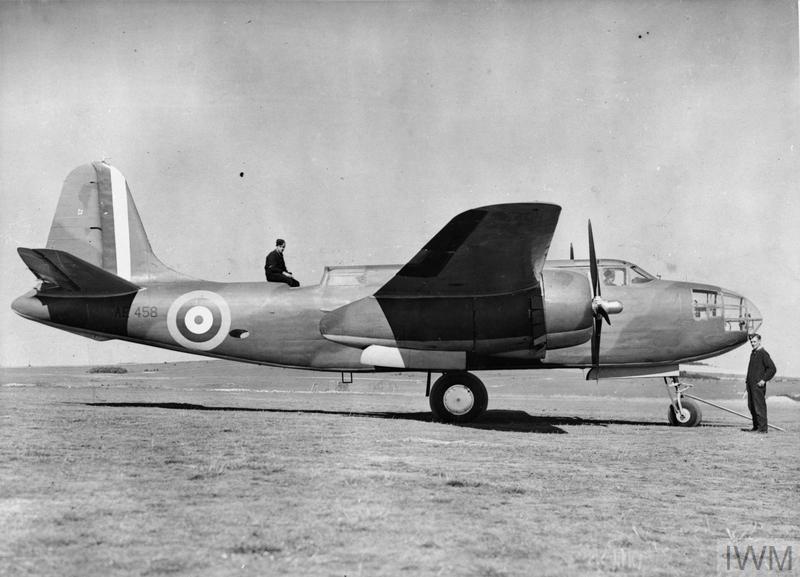
One of these aircraft was AE458, the aircraft depicted in the photograph above.
AE458 was photographed at Boscombe Down, Wiltshire, during an inspection of new American aircraft for the RAF by the Duke of Kent. The aircraft subsequently served as a crew trainer with Nos. 18 and 88 Squadrons RAF.
The Boston Mk I was an early form of the DB-7, and its single-speed R-1830 engines offered considerably less performance than the more powerful engines introduced on subsequent DB-7/Boston variants. Consequently, these early aircraft were not used in the same frontline bomber role as later Bostons and instead found use in training and evaluation duties.
The history of AE458 therefore provides a particularly interesting connection between Belgian and British military aviation. Although Belgium never received its DB-7s, AE458 was one of the sixteen aircraft originally ordered for Belgium and subsequently became an RAF Boston Mk I.
Boston Mk I AE458 at Boscombe Down.
Specifications
Douglas DB-7 B-3 Specification Crew 3 Length 14.43 m Wingspan 18.69 m Height 5.36 m Maximum take-off weight ~9,750 kg Fuel capacity ~1,230 L Powerplant 2 × Pratt & Whitney R-1830-SC3-G Twin Wasp Power 1,050 hp each (2,100 hp total) Supercharger Single-speed Propellers 3-bladed Hamilton Standard constant-speed propellers Maximum straight-line speed ~475–550 km/h, depending on altitude Service ceiling ~7,700–8,400 m Forward armament 4 × 7.7 mm FN-Browning M.36 No.3 Defensive armament 1 × 7.7 mm FN-Browning M.36 No.3 dorsal Machine-gun ammunition 500 rounds per gun (3,000 rounds total) Bomb armament 64 × 10 kg, 16 × 50 kg, or 4 × 125 kg Belgian bombs Maximum bomb load 800 kg Bomb carriage Internal bomb bay Bomb bay
Loadout Bombs Total mass Fragmentation bombs 64 × 10 kg Belgian fragmentation bombs 640 kg General-purpose bombs 16 × 50 kg Belgian bombs 800 kg Heavy bombs 4 × 125 kg Belgian bombs 500 kg
N.B.: The sixteen aircraft ordered by Belgium never entered Belgian operational service because they were diverted to Britain before delivery. Consequently, the proposed configuration represents the aircraft as ordered for Belgian service, rather than AE458’s later RAF configuration.
Place in War Thunder
The Belgian Douglas DB-7 would provide an interesting early twin-engined bomber for a BeNeLux aviation line. While the aircraft itself was American, the specific aircraft represented here has a direct connection to Belgian military aviation through the 16-aircraft Belgian order.
The aircraft would also be considerably different from the later Boston variants already represented by more powerful engines and expanded armament options. The proposed Belgian DB-7 would instead retain the early R-1830-SC3-G single-speed engines, giving it lower performance while carrying a relatively modest bomb load.
Its proposed armament would consist of five to six 7.7 mm FN-Browning M.36 No.3 machine guns, with four fixed guns in the nose and one or two defensive guns covering the rear of the aircraft.
The bomb bay would provide three historically appropriate Belgian configurations:
- 64 × 10 kg fragmentation bombs
- 16 × 50 kg bombs
- 4 × 125 kg bombs
With the 16 × 50 kg configuration reaching 800 kg, the aircraft would have a useful but comparatively limited bombing capability for a twin-engined aircraft.
The aircraft could therefore represent the Belgian procurement programme in a French BeNeLux sub-tree, or alternatively be included in a future BeNeLux technology tree.
Most importantly, this would not be a fictional Belgian aircraft. The aircraft represented by this suggestion was one of the sixteen DB-7s actually ordered by Belgium, with AE458 subsequently entering RAF service as a Boston Mk I after the Belgian contract was diverted.
Pictures
(If you have more, feel free to add in the comments!)
On the field and in the air
Boston Mk I AE458 at Boscombe Down, Wiltshire.
Sources
Sources
- Wauthy, J.-L., & De Neve, F. (1995, May). Les aéronefs de la Force Aérienne Belge (3e partie : 1920–1940). Le Fana de l’Aviation, (306).
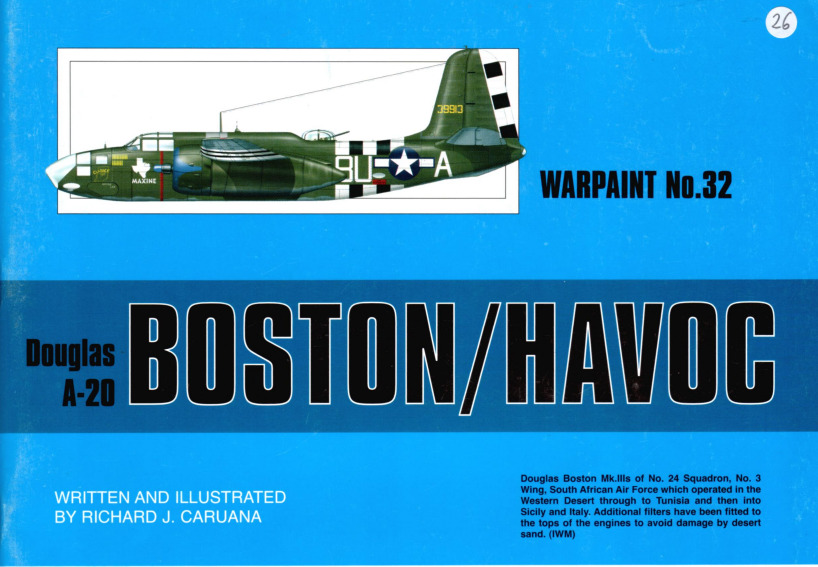
- Caruana, R. J. (2002). Douglas A-20 Boston/Havoc (Warpaint Series No. 32). Hall Park Books.
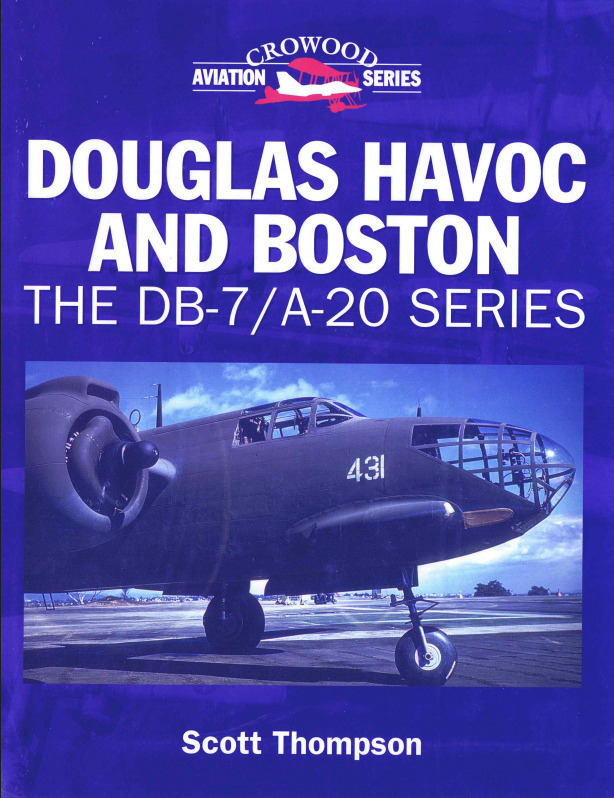
- Thompson, S. (2004). Douglas Havoc and Boston: The DB-7/A-20 series. The Crowood Press.
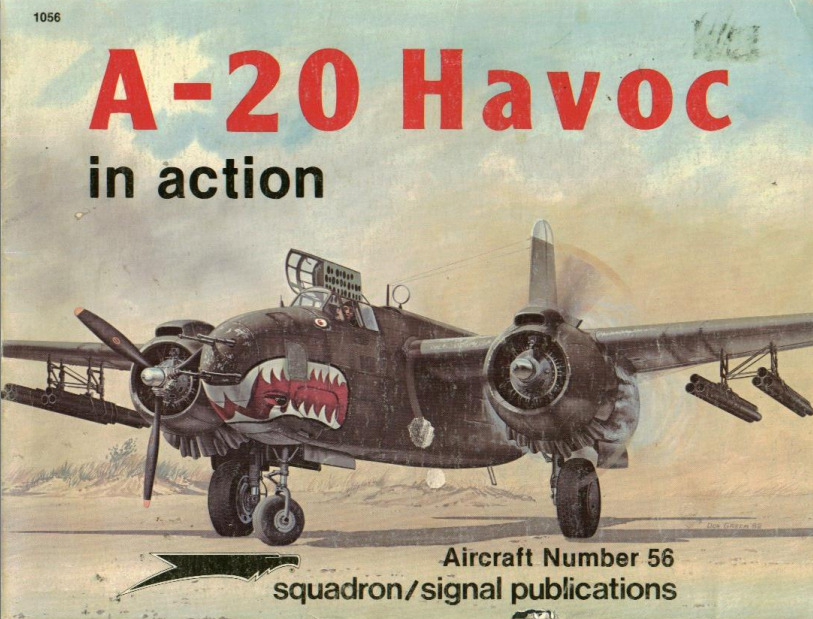
Mesko, J. (1983). A-20 Havoc in action (Aircraft No. 56). Squadron/Signal Publications.
Imperial War Museums. (n.d.). Boston Mark I, AE458, on the ground at Boscombe Down, Wiltshire, during an inspection of new American aircraft for the RAF by the Duke of Kent. IWM Collections. https://www.iwm.org.uk/collections/item/object/205126781
The Boeing Company. (n.d.). DB-7/A-20 Boston/Havoc attack bomber . Internet Archive. Historical Snapshot: Douglas DB-7/A-20 Boston/Havoc Attack Bomber
N.B. for the The Boeing Company. (n.d.). *DB-7/A-20 Boston/Havoc attack bomber*
(N.B.: This Boeing source provides useful historical information on the DB-7/A-20 programme and confirms that 16 aircraft were diverted to Belgium’s Aviation Militaire. Its listed technical specifications refer to a later DB-7/A-20 configuration and should therefore not be used as the specifications for the Belgian DB-7 B-3 proposed here.)