- Yes
- No
- (independent) BeNeLux tree
- France: BeNeLux subtree
- Other
- No/negative
TL;DR: Belgian BDX 4×4 APC equipped with the MILAN ATGM.

History
History
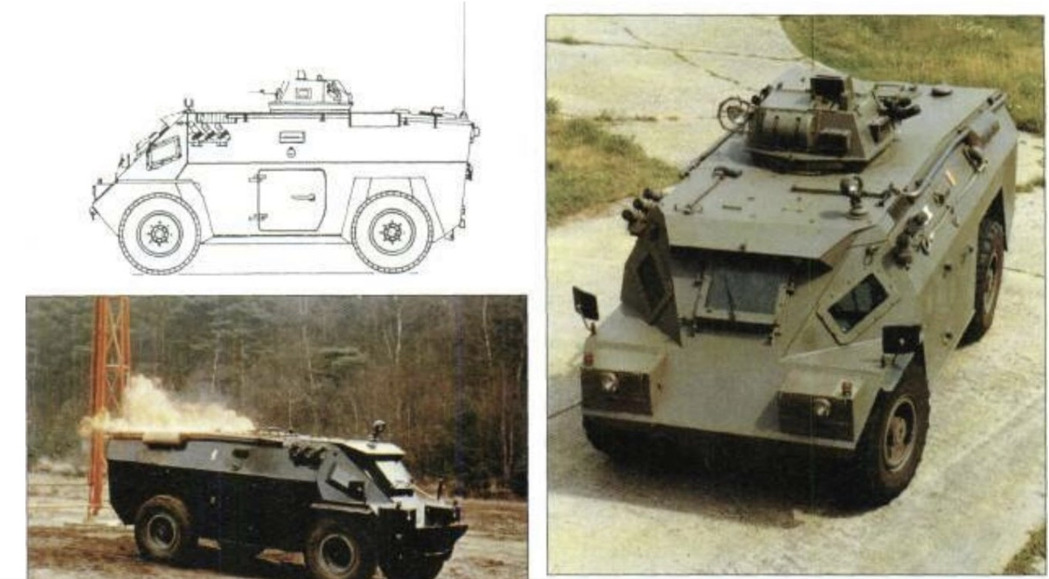
During the late 1960s, Belgium sought a modern wheeled armoured personnel carrier to replace a number of ageing vehicles in reconnaissance, command and internal security roles. Rather than purchasing a foreign design outright, the Belgian company Beherman-Demoen (BDX) acquired the licence to manufacture the Timoney Mk.2 armoured vehicle. Entering service during the early 1970s, the BDX became one of the few armoured vehicles to be produced domestically for the Belgian Army and formed the basis for numerous specialised variants.
One of the strengths of the BDX was its modular design. Besides the standard APC, the vehicle was adapted into command, reconnaissance, ambulance, police and internal security variants. As NATO increasingly focused on countering the growing armoured threat posed by the Warsaw Pact, Belgium also investigated mounting the newly adopted MILAN anti-tank guided missile on the BDX chassis. This resulted in a small number of BDX APCs being converted into mobile anti-tank carriers.
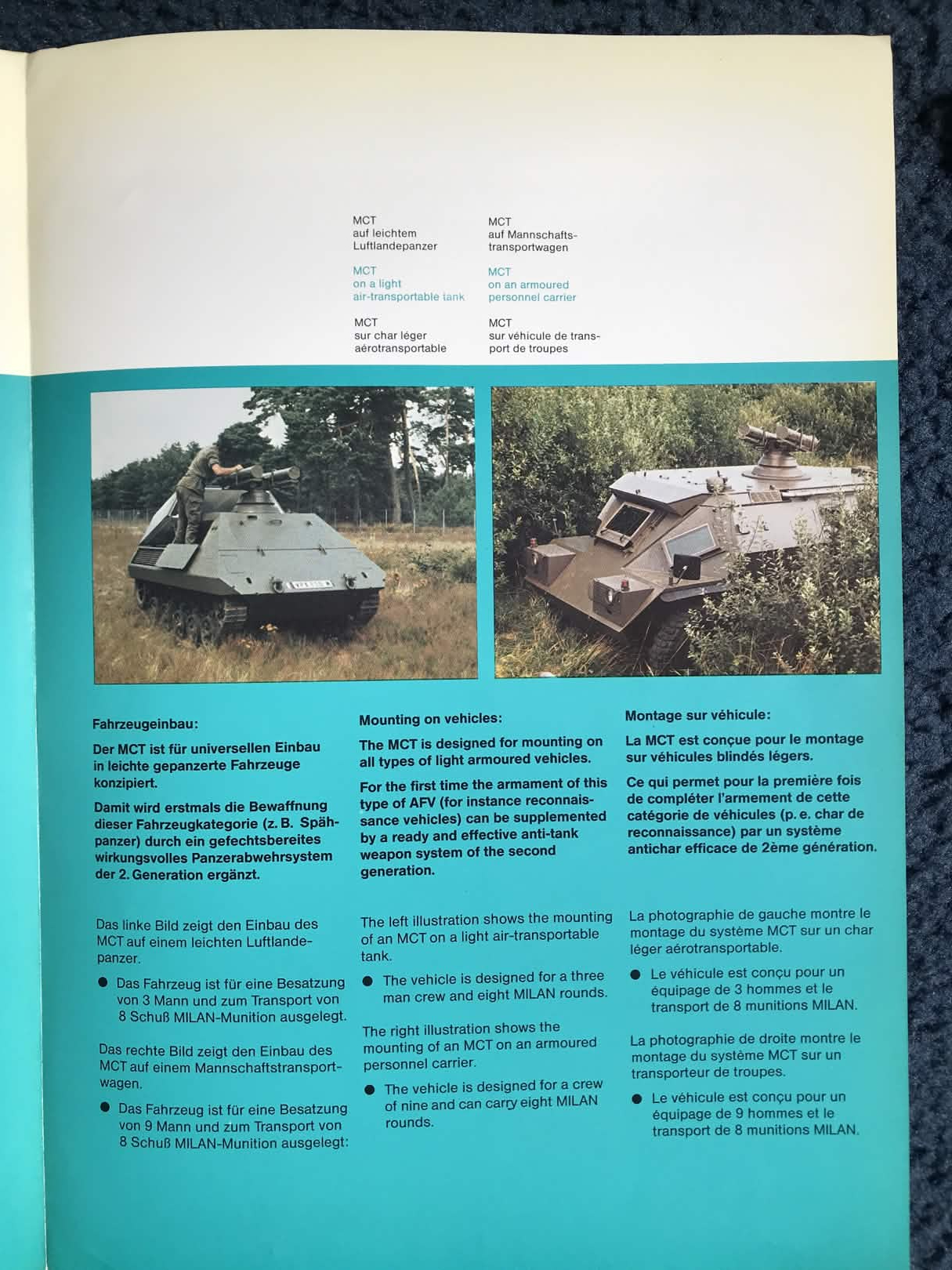
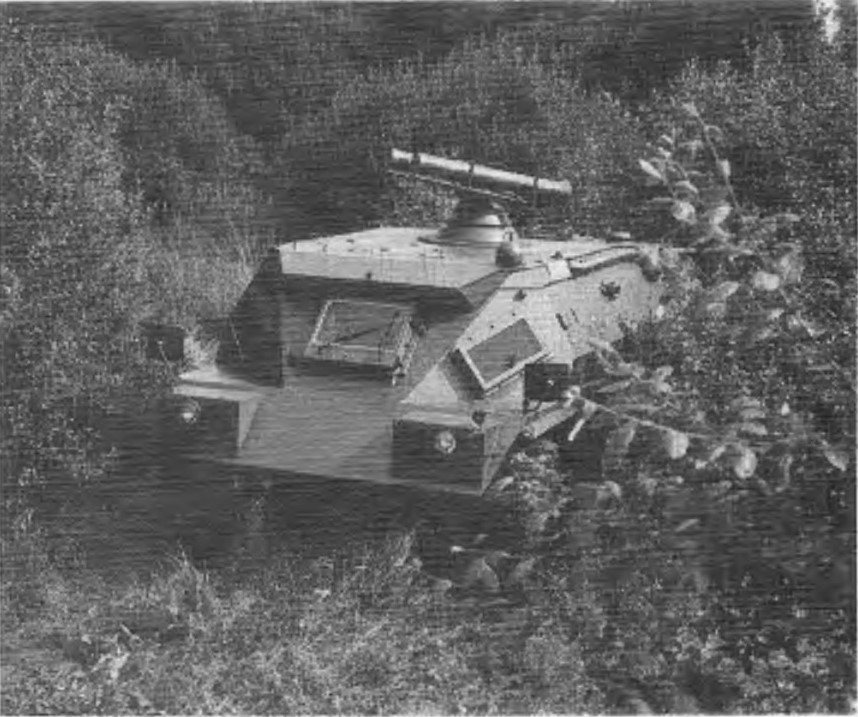
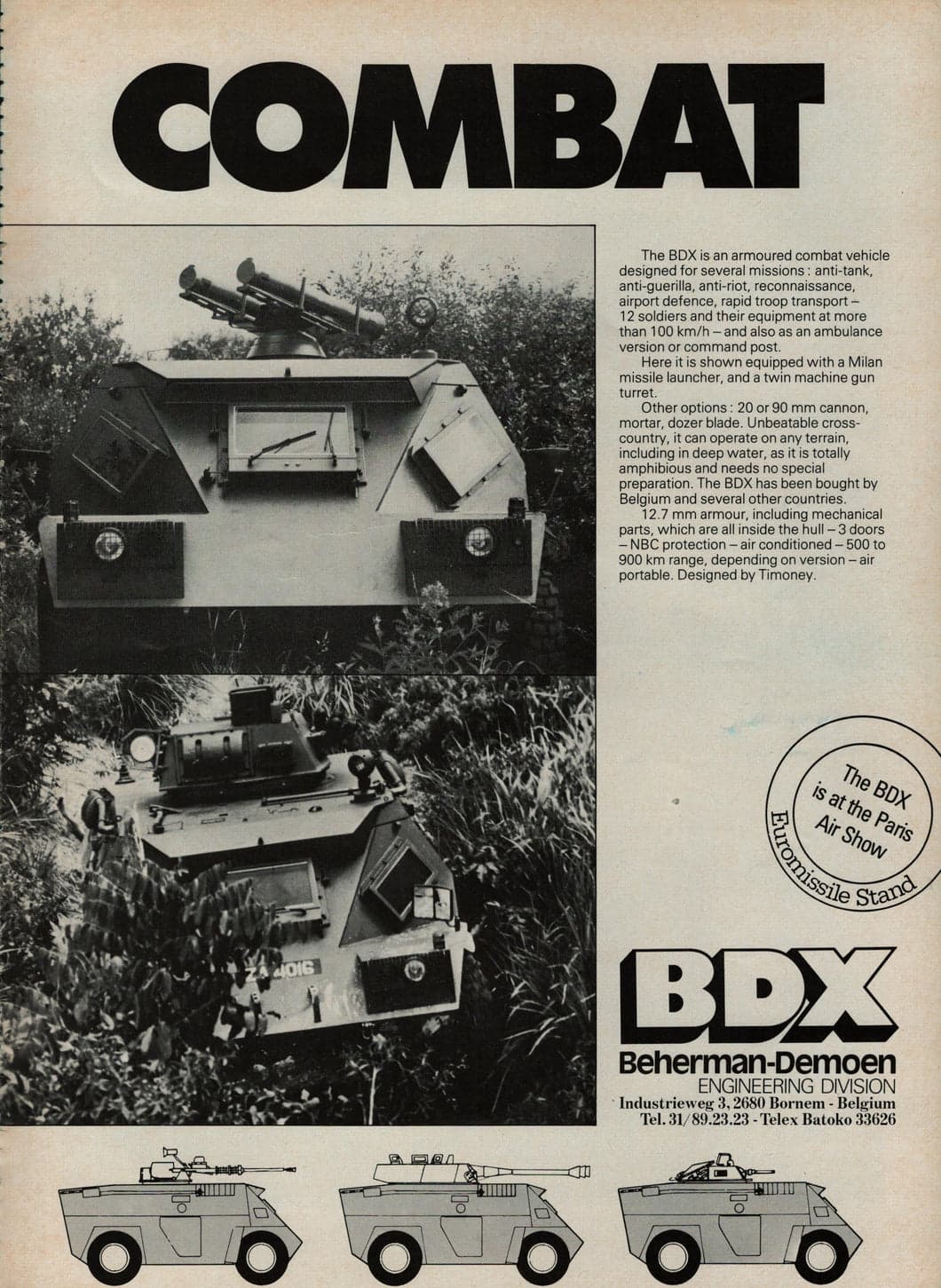
BDX with Euromissile Kompakt MKT 02 turretThe MILAN (Missile d’Infanterie Léger Antichar), jointly developed by France and West Germany, entered Belgian service during the 1970s and represented a significant leap in anti-tank capability. Mounted in the compact Euromissile Kompakt MKT 02 turret, the launcher gave the vehicle the ability to engage heavily armoured targets well beyond the range of conventional anti-tank weapons while preserving the mobility and rapid deployment characteristics of the wheeled BDX chassis. The enclosed launcher installation also provided greater protection for the missile and crew than the earlier open mounts used on several contemporary MILAN carriers.
The BDX APC (MILAN), however, was never intended to become Belgium’s principal missile carrier. Instead, it filled a transitional role during a period in which the Belgian Army was modernising its anti-tank capabilities. The AMX-13 Modèle 56 MILAN had already introduced the missile into Belgian service within the armoured forces, while the BDX offered a lightweight wheeled alternative for selected units. As mechanised infantry doctrine evolved, Belgium increasingly standardised on tracked missile carriers. The M113A1-B MILAN entered widespread service alongside the newly introduced FV103 Spartan MILAN, both providing greater cross-country mobility and better integration with Belgium’s mechanised formations.
During the 1979s these tracked carriers were themselves gradually serving with the AIFV-B MILAN, which became the Belgian Army’s standard dedicated MILAN platform paired with the Spartan. Consequently, the BDX APC (MILAN) remained a relatively uncommon variant, produced only in limited numbers and overshadowed by the more numerous tracked missile carriers that followed.
Although it never achieved widespread service, the BDX APC (MILAN) represents an interesting step in the evolution of Belgian anti-tank doctrine. It bridges the gap between the first-generation AMX-13 Modèle 56 MILAN carriers of the Cold War and the later M113A1-B MILAN, FV103 Spartan MILAN and AIFV-B MILAN, while also showcasing one of the few indigenous Belgian armoured vehicle designs to enter military service.
Design
Design
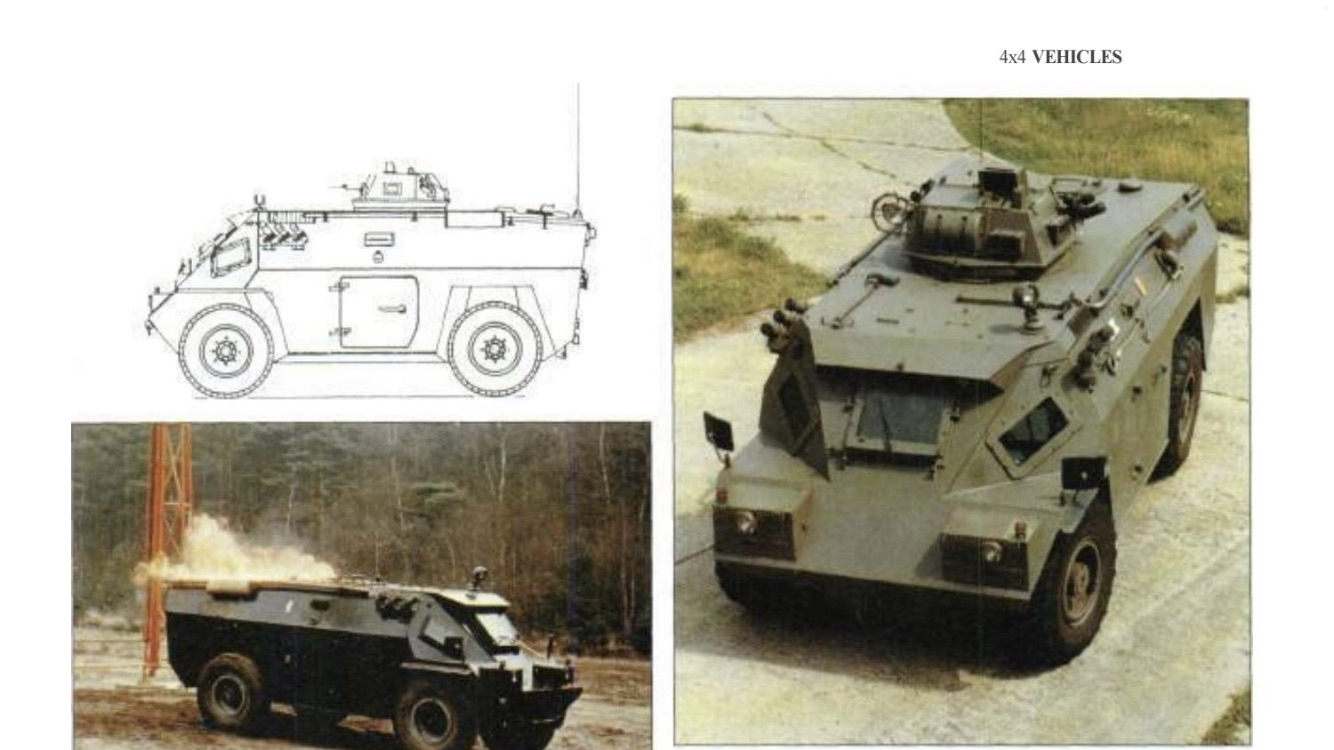
The BDX was developed as a versatile 4×4 armoured vehicle based on the successful Timoney Mk.2 design. Built under licence in Belgium by Beherman-Demoen (BDX), it featured a welded steel hull providing protection against small-arms fire and shell splinters while maintaining excellent road speed and mobility. Powered by a Detroit Diesel 6V-53 engine coupled to an Allison automatic transmission, the BDX was capable of speeds approaching 100 km/h, making it one of the fastest armoured vehicles in Belgian service during the Cold War.
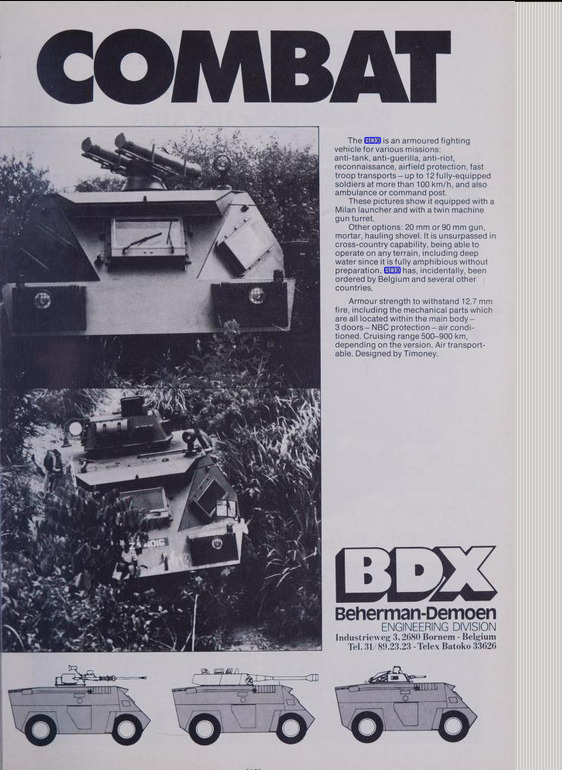
A key advantage of the BDX was its modular construction. Rather than being designed solely as an armoured personnel carrier, the chassis could accept a wide variety of mission equipment and weapon stations. Belgian service included APC, command, ambulance, reconnaissance and internal security variants, while export brochures also advertised numerous turret options ranging from machine-gun mounts to 20 mm autocannon turrets and anti-tank missile systems.
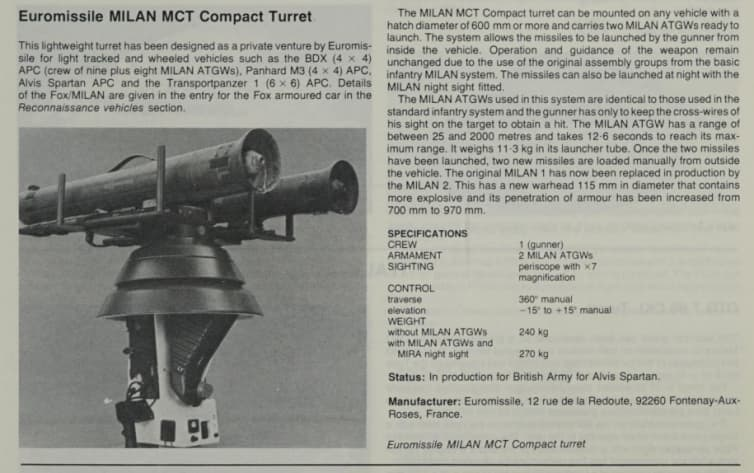
Euromissile MKT 02
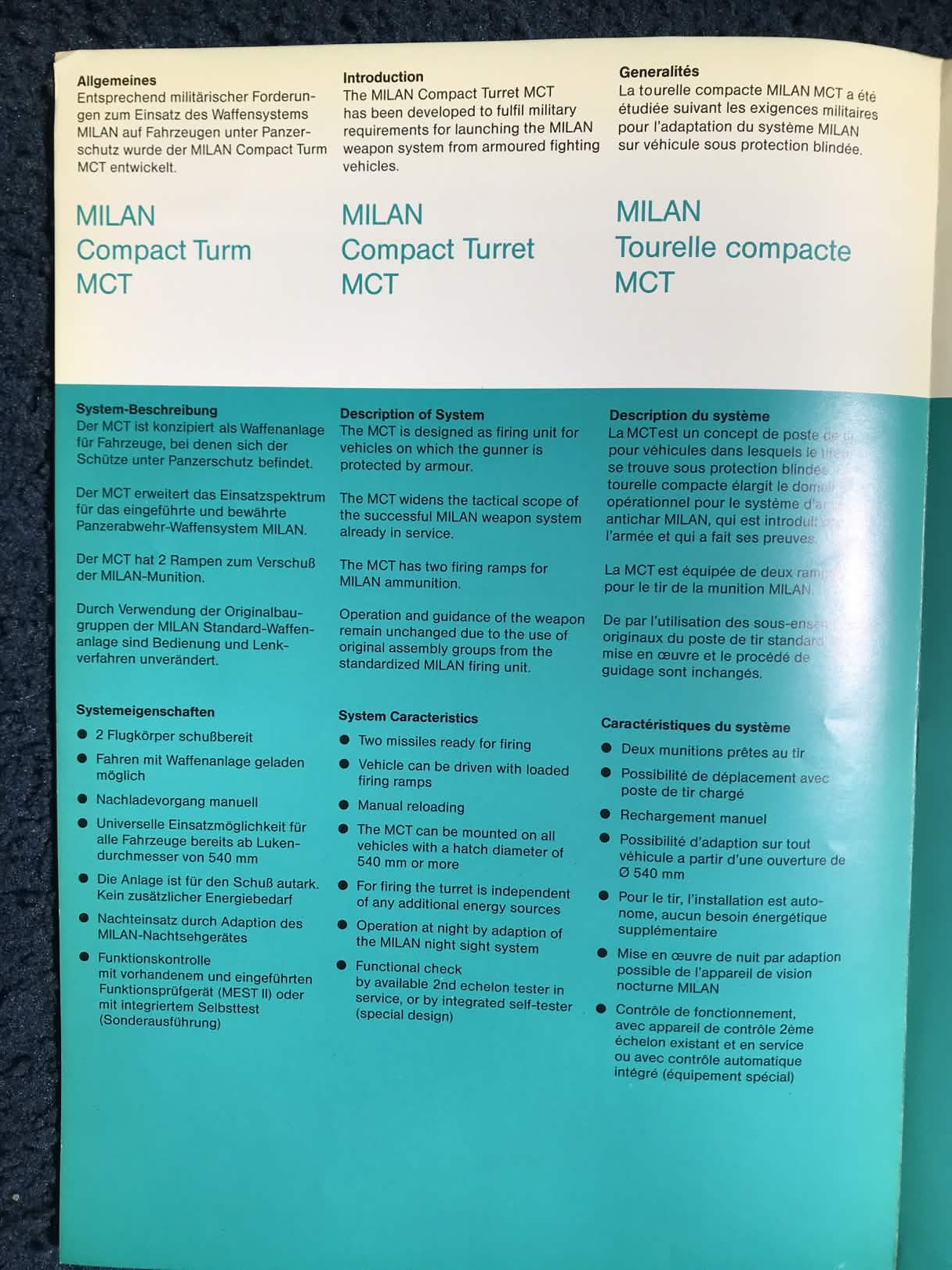
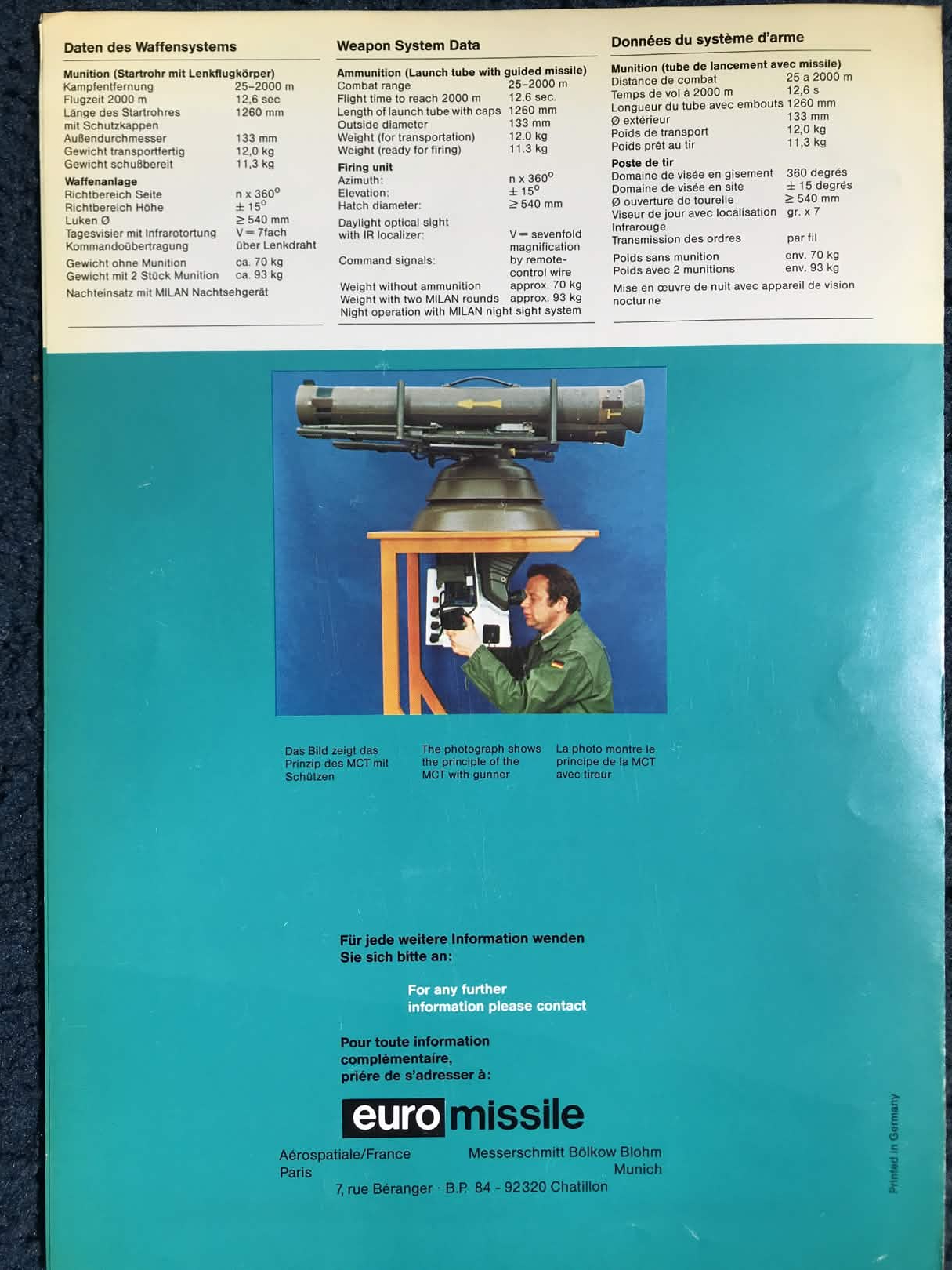
The anti-tank version proposed for the Belgian Army replaced the troop compartment with the Euromissile MKT 02 compact missile turret. Unlike the standard infantry-operated MILAN launcher, the MKT 02 integrated the complete firing post into a protected, traversable turret mounted on the roof of the vehicle. The turret carried two ready-to-fire MILAN missiles, allowing the crew to engage successive targets without immediately reloading. Reload missiles were stowed inside the vehicle and could be loaded under armour.
The MKT 02 represented one of the earliest dedicated vehicle-mounted MILAN systems developed by Euromissile. It combined the standard SACLOS guidance system, day sight and fire-control equipment of the infantry launcher with the protection and mobility of an armoured vehicle. This concept would later evolve into the better-known Milan Compact Turret (MCT) fitted to vehicles such as the British FV120 Spartan MCT and several other NATO missile carriers.
Armed with the proven MILAN missile, the BDX was capable of defeating virtually any contemporary Warsaw Pact main battle tank at ranges of up to 2 km. Its wheeled chassis allowed it to rapidly reposition between firing locations, making it well suited for ambush tactics and delaying actions. Although only a limited number of BDX MILAN vehicles were produced before Belgium standardised on tracked missile carriers, the vehicle represented an important step in the evolution of Belgian anti-tank doctrine and demonstrated the adaptability of the indigenous BDX platform.
Specifications
Category Details Crew 3 (Driver, Commander/Gunner, Loader) Weight Approximately 8.5 tonnes Dimensions L 5.39 m × W 2.50 m × H 2.25 m (roof) Main Armament 1 × 2 MILAN ATGM launcher Secondary Armament Optional 7.62 mm FN MAG pintle-mounted machine gun (not fitted on all vehicles) Ammunition MILAN HEAT missiles Missile Capacity 2 ready-to-fire missiles + approximately 8 reloads Guidance SACLOS wire-guided Maximum Effective Range 2,000 m Engine Detroit Diesel 6V-53, 6-cylinder diesel Power 212 hp (158 kW) Power-to-weight Approximately 25 hp/t Transmission Allison MT-643 automatic, 4×4 drive Maximum Speed 95–100 km/h (road) Operational Range Approximately 700 km Suspension Independent wishbone suspension with coil springs Armour Welded steel armour providing protection against small-arms fire and shell splinters
Place in War Thunder
The BDX APC (MILAN) would provide Belgium with an early dedicated ATGM carrier that bridges the technological gap between the AMX-13 (MILAN) and the later tracked missile carriers adopted during the 1980s and 1990s.
Unlike the AMX-13, which mounted the launcher on a conventional light tank chassis, the BDX used a wheeled armoured personnel carrier fitted with the purpose-built Euromissile Kompakt MKT 02 retractable launcher. This gave Belgium a considerably lighter, faster and more strategically mobile anti-tank platform while retaining the firepower of the MILAN missile system.
In War Thunder it would most likely fit around the same battle rating as other first-generation MILAN carriers. Compared to vehicles such as the French AMX-13 (MILAN), British FV103 Spartan (MILAN) or Belgian M113A1-B MILAN, it would trade armour and cross-country performance for excellent road speed and mobility.
The launcher would also provide an interesting gameplay feature, allowing players to expose only the launcher when firing before lowering it again behind cover.
Possible Battle Rating
- Around the battle rating of contemporary first-generation MILAN carriers, similar to Ratel 20.
Regarding nations
BeNeLux
As the BeNeLux subtree for France has now been confirmed, France is currently the most logical home for Belgian vehicles. Nevertheless, the BDX APC (MILAN) would also fit naturally into a future independent BeNeLux ground forces tree, where it would represent an important step in the evolution of Belgian anti-tank vehicles during the Cold War.
Pictures
Sources
Sources
Study / Review
- Forecast International. (1997, August). Military Vehicles Forecast: Timoney/BDX/Valkyr. Forecast International.
Books
Foss, C. F. (Ed.). (1993). Jane’s Armoured Fighting Vehicle Retrofit Systems 1993–94. Jane’s Information Group.
Foss, C. F. (Ed.). (1980) Jane’s armour and artillery. 1st ed. : 1979-80 Jane’s Information Group. Jane's armour and artillery. 1st ed. : 1979-80 : Free Download, Borrow, and Streaming : Internet Archive
Euromissile (198x) Promotional flyer MCT system.
Belgian
- Personal observations and notes taken at the War Heritage Institute and Brasschaat Gunfire Museum (2024).
Online
- Tank Encyclopedia. (n.d.). BDX Armoured Personnel Carrier. in: Kingdom of Belgium (Cold War) - Tank Encyclopedia
- Army Recognition. (n.d.). BDX APC. Army Guide