- Yes
- No
History:
The Bangor class minesweepers were a British built class of minesweepers made to replace the Halcyon-class and take part in minesweeping duties during WW2. While they partook in serval key theaters and events like D-Day, they would be criticised for being cramped. Each vessel in UK service would be named after a coastal town.
Many were made and served in the British, Canadian and Indian navies. The Bangor class was split up into 3 sub classes based on their propulsion. These would be Bangor (Diesel engine), Blyth (Reciprocating engine) and Ardrossan (Turbine engine).
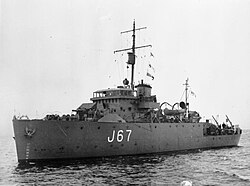
HMS Llandudno was part of the Ardrossan subclass and would be laid down on the 20th of October 1939, launched on the 29th of January 1941 and would enter service on the 20th of August that same year.
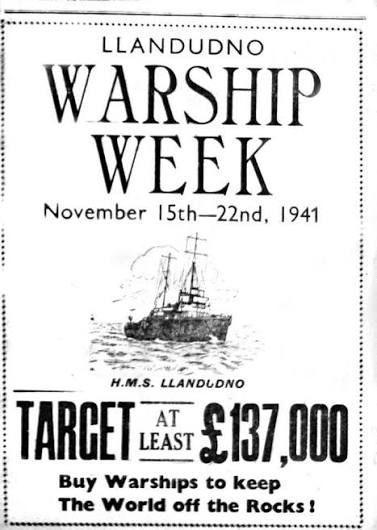
In November 1941, a fundraising event begun on the 15th, aiming to raise £137,000 to sponsor HMS Llandudno. In a week, the residents far surpassed the goal, raising £222,000. This not only helped fund more shipbuilding but also officially adopted HMS Llandudno, making it the only warship the town has officially adopted. In a sense of sad irony, HMS Llandudno would never once visit the town.
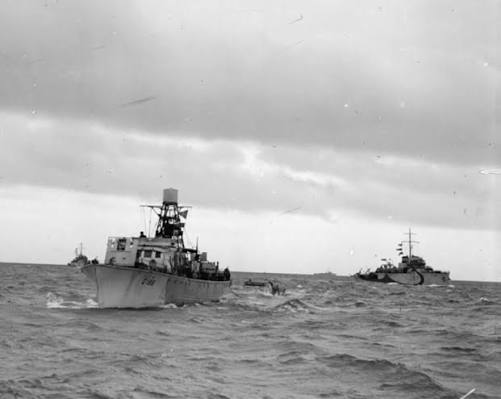
ML 196 sailing ahead of HMS Llandudno.
HMS Llandudno would take part in multiple exercises anti submarine exercises over the course of her career. This would include:
-
An exercise in Tobermory with HMS P 511, Dunbar, Asie, Foula, Storma and HMIS Orrisa from 11th to 12th of April 1942.
-
Another exercise alongside HMS H 34, King Sol, Lulworth, HMCS Prescott, Galt and Wetaskiwin in Lough Foyle on the 8th of December 1942
-
Yet another exercise off of the Scapa flow with HMS Viking, Seagull, Speedwell and Graemsay on the 6th of October 1943
Llandudno would also take part in D Day. She played her part by assisting clearing a way to Sword Beach. She would allegedly also act as a landing place for one exhausted pigeon carrying a despatch from a Canadian war correspondent.
She would survive the war without damage and would continue to serve until being sold into civilian service on the 8th of May 1947, renamed Rorvik. She would eventually be scrapped in 1952.
Her crest remains in Llandudno town hall.
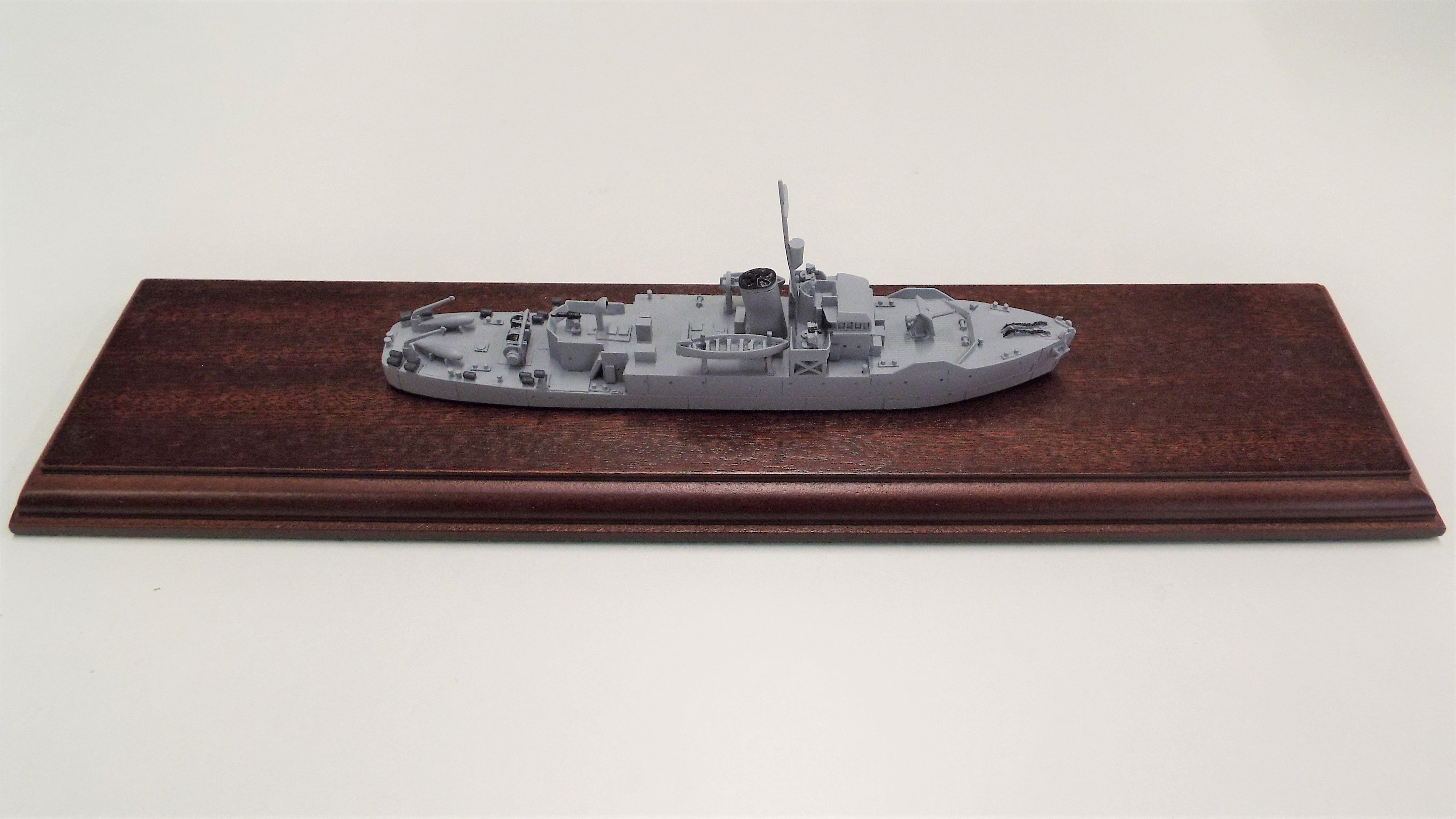
Model of HMS Llandudno
Specifications:
Crew- 60
Length- 53m
Beam- 8.7m
Draught- 2.5m
Armament- 1x 76.2mm QF 12-pounder 12 cwt naval gun and 1x 40mm QF 2-pounder Mark VIII
Max speed- 30km/h (2,400hp)
Displacement- 656t
Sources:
Chesneau, Roger (1980). Conway’s All the World’s Fighting Ships 1922–1946