BALLISTICS CALCULATOR FOR GROUND VEHICLES
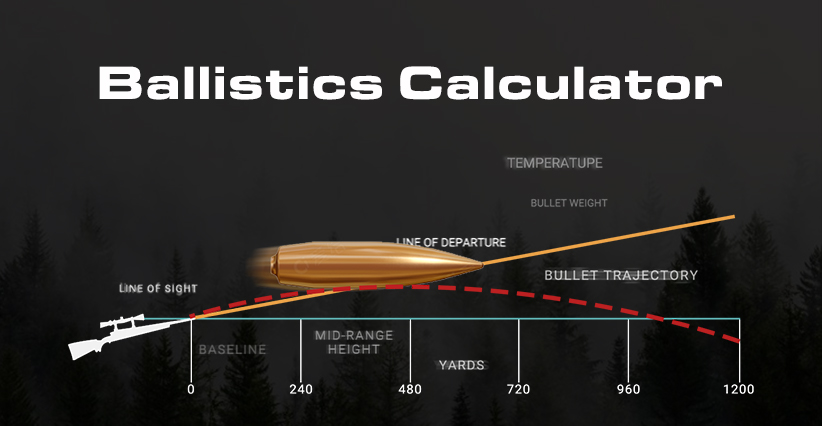
THE IDEA
Modern main battle tanks and infantry fighting vehicles, both with and without remote controlled turrets or lighter weapon stations has been equipped with some sort of ballistics calculator/computer. This is something we don’t have in Warthunder yet, and which i believe we should have. This would significantly increase the battle performance of many vehicles, and be an useful feature across all the three game modes, it would be particularly useful for light ifv’s with limited armor fighting capabilities that relies on speed and maneuverability for survival, giving them an opportunity to easier engage enemies while on the move.
There are many vehicles in game that has this option in real life, i can obviously not mention or explain all of them here, but here are some examples of ifv’s and mtb’s that got the ballistic calculator feature. Main battle tanks: US M1 Abrams, South Korean K2 Black Panther, Chinese Type 99, Indian Arjun, and upgraded Soviet/Russian tanks like the T-64, T-72, and T-90. Early examples include the M48 Patton (mechanical) and the M60A3TTS. Infantry fighting vehicles: BMP-2M, BMP-3, CV90’s, Puma, Type 86A (ZBD-86A), Centauro Wheeled Armored Vehicle, Ascod and so on. Of these the BMP-2M, T-72, Puma, T-90 just to mention a few are in game. This shouldn’t have too many balance issues, as its main advantages is just quicker range finding and increased accuracy when firing on the move.
i was thinking this could work in a way that the whole system is togglable under option’s, and the key binds are user selectable (Not set by default). Vertical and sideways calculation should be automatically and constantly updated after for example presses ALT + NUM 1, and to lock onto target/tag target you can press ALT + NUM 2 and the indicator adjusts and show’s how much you need to lead the target in order to hit it. In arcade battles this could be activated automatically when tagging any vehicle. Below are a couple visual examples for the game modes and an detailed description of how this works on tanks irl. (The Ballistics calculator would only work with tanks with the feature in real life of course).
HOW DOES BALLISTIC CALCULATOR WORK ON TANKS
Spoiler
1. Initial Target Acquisition and “Tagging”
- The operator, seated inside the vehicle, uses a control station with joysticks, displays, and sometimes helmet-mounted sights to slew the stabilized sensor suite (electro-optical/infrared cameras and laser rangefinder) onto a potential target. Once the crosshairs are on the target, the operator “tags” it by pressing a button to engage the Automatic Target Tracker (ATT). This isn’t a physical tag but a software lock: the system captures the target’s visual signature (e.g., shape, contrast, thermal profile) from the high-resolution day/night cameras (typically 30x zoom, with resolutions up to 1080p or higher). ATT uses computer vision algorithms—such as correlation tracking (matching pixel patterns frame-to-frame), edge detection, or modern AI-based object recognition to identify and follow the target’s centroid or key features. For example, in the Kongsberg Protector featured in-game on the VBCI-2 in the French tech tree, the ATT is standard and allows engagement of moving targets while the vehicle is in motion, similarly, the Samson’s turret featured on the Vilkas which is also in-game in the German tech tree, it’s ATT integrates with its fire control for automatic offsets.
2. Stabilization to Stay on Target During Movement
- The core enabler is the gyro-stabilized gimbal (often 2-axis for basic stabilization, or 2+2/4-axis in advanced DLOS—Detached Line of Sight systems like Protector RS4). Gyroscopes, accelerometers, and inertial measurement units (IMUs) detect vehicle pitch, roll, yaw, and vibrations (e.g., from tracks or bumps) in real-time, at rates of 50–100 Hz. Servomotors counter these motions, keeping the sensors (cameras and laser) locked on the target independently of the vehicle’s movement or the gun’s position. This “decouples” the line of sight from the platform, so even if the vehicle swerves or hits a pothole, the sights don’t drift off-target. Pitch and roll compensation is automatic and continuous, ensuring the tracker maintains lock without operator intervention. In Samson systems, this is supported by sophisticated algorithms in a 3rd-generation fire control system, while Protector uses similar stabilization to enable “keep sights on target” regardless of ballistic adjustments.
3. Constantly Updating Distance (Ranging)
- Distance is measured using an integrated eye-safe laser rangefinder (typically Class 1M, with accuracy 1–5 meters out to 5–10 km). Once tagged, the system pulses the laser repeatedly—often every few seconds or on-demand—to get fresh range data.While moving, the rangefinder operates in a “continuous ranging” mode, synchronized with the ATT. If the target moves, the tracker adjusts the laser’s aim to stay on it, updating the range dynamically. Vehicle motion sensors feed into this to correct for parallax or own-speed effects. In challenging conditions (e.g., dust, rain), the system falls back to thermal imaging for tracking, but ranging might switch to estimated modes based on prior data or manual input.
4. Calculating and Updating Lead for Firing
- Lead refers to aiming ahead of a moving target to account for projectile time-of-flight. The ballistic computer calculates this in real-time using:Target Angular Velocity: From the ATT, which measures how fast the target is moving across the field of view (e.g., degrees per second). Combined with range, this gives the target’s linear speed and direction relative to the vehicle.
Own Vehicle Data: Speed, direction, and acceleration from GPS/INS (Inertial Navigation System), odometers, and IMUs. This compensates for “own motion” effects, like the vehicle closing or opening distance. Ballistic Factors: Muzzle velocity, ammo type (pre-loaded drag models), environmental data (wind, temperature from sensors), and gravity drop. The computer solves differential equations for the projectile path, predicting where the target will be at impact. Updates happen in a loop (10–60 times per second): ATT refreshes target position/velocity rangefinder updates distance computer recomputes lead (azimuth offset) and super-elevation (vertical for drop) gun servos adjust automatically. For example, if the target is moving at 20 km/h perpendicular to you, and TOF is 2 seconds, lead might be 11 meters ahead adjusted instantly if the vehicle accelerates or the target jinks. In Protector, this includes cant/tilt compensation; in Samson, ATT provides automatic ballistic offsets for lead and elevation.
ARCADE BATTLES
Spoiler
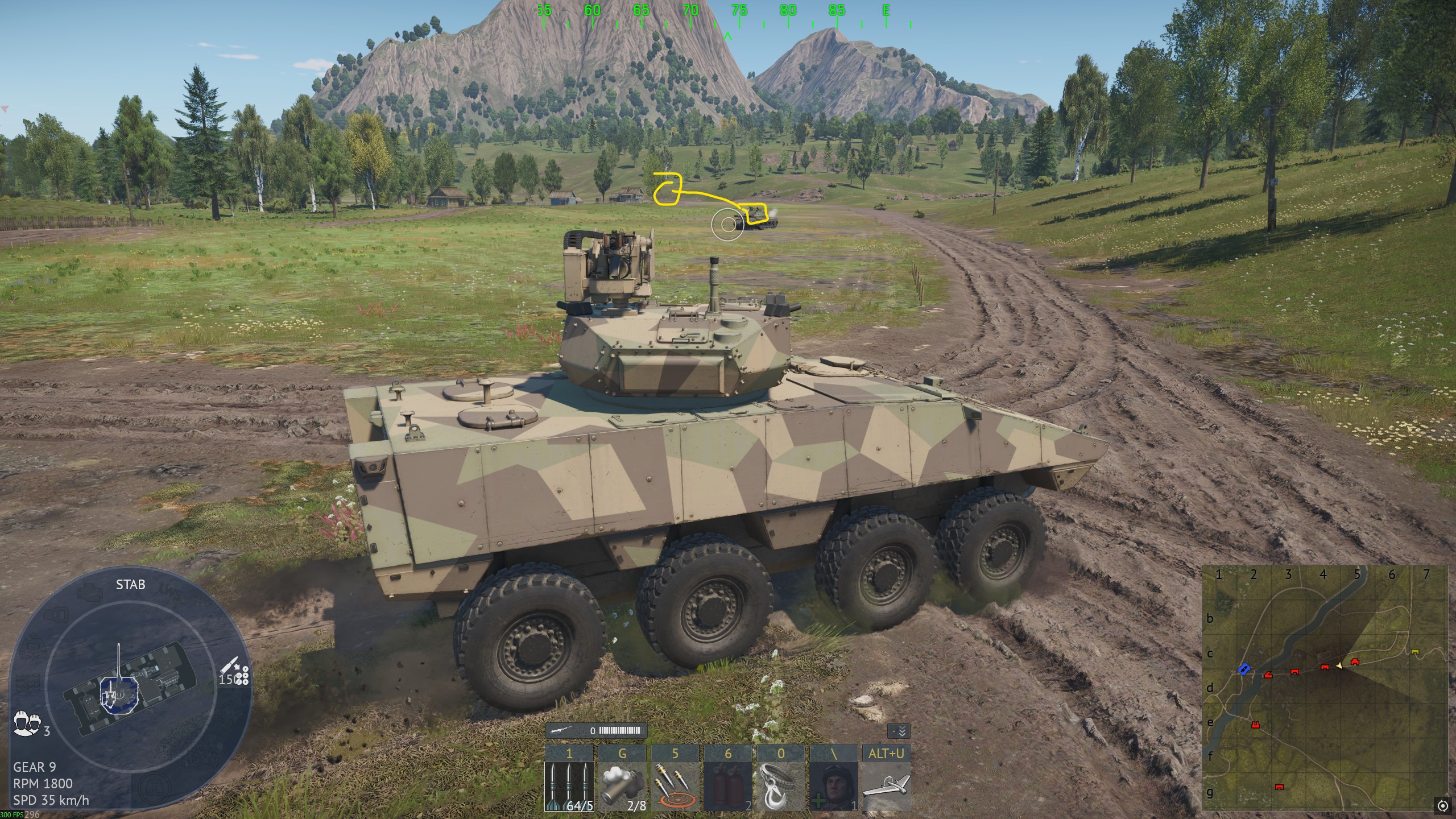
-Lead indicator similar to air tracking visible in 3rd person view.
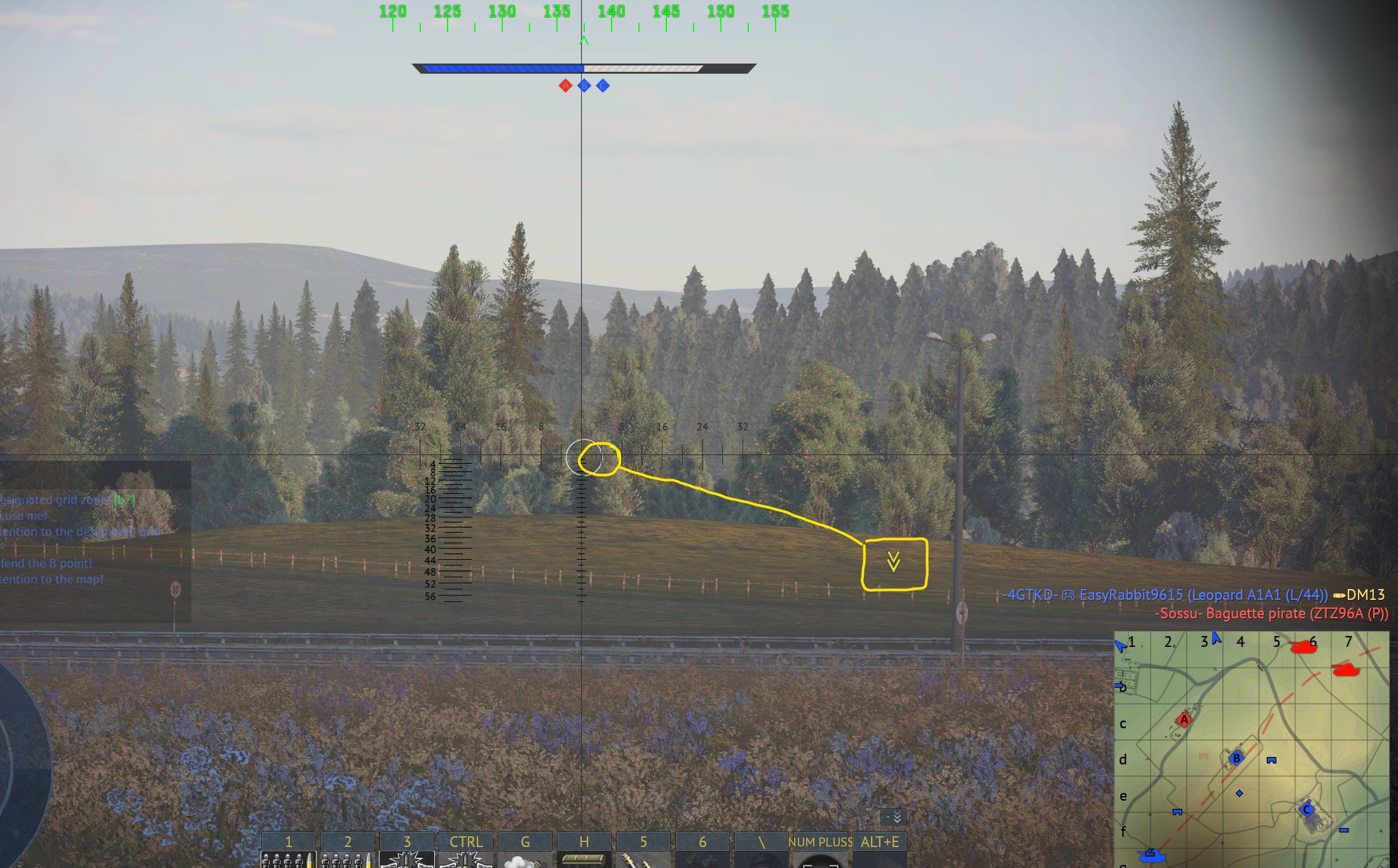
-Lead indicator while in sniper mode/sight
REALISTIC BATTLES & SIMULATOR BATTLES
Spoiler

-Similar indicator to the one featured on guns in Air battles, here with slight windage adjustment.
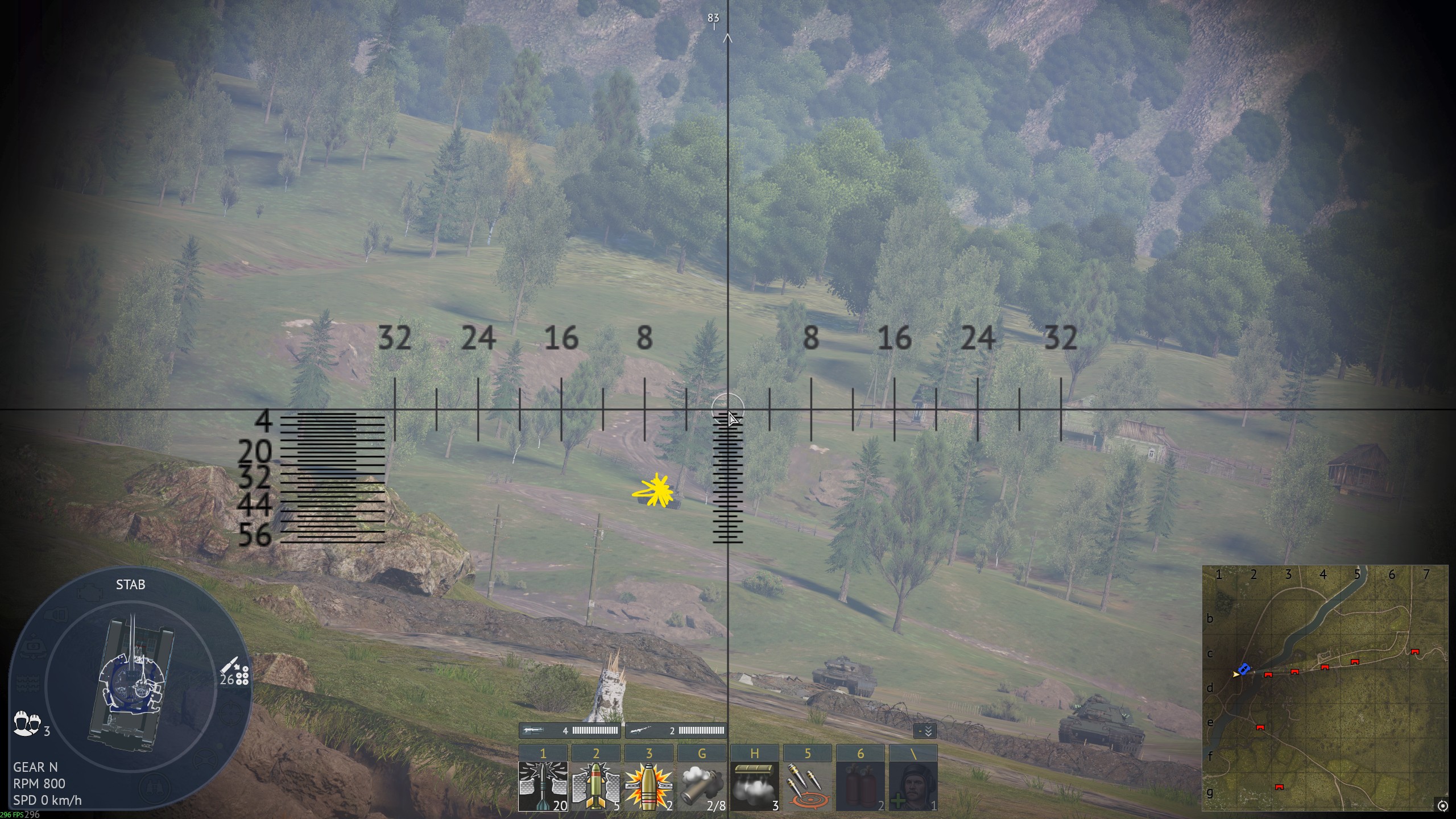
-Here shown perfectly vertical
-On the move after tagged vehicle in sniper mode/sight mode
POLL
- Yes
- No
SOURCES
Spoiler
My own in game and edited photos
header: https://pard.com/global/blog/detail/51415
other
PROTECTOR RS4 - KONGSBERG - an international technology group
Rafael unveils Remotely Weapon Station Samson Dual 30mm M230LF
Trackfire | Saab
OneArc
https://www.elbitsystems.com/naval/surface-warfare/weapon-systems-munitions/remote-controlled-naval-weapon-station’
https://nationalinterest.org/blog/buzz/computer-guided-gun-ar-15-uses-tank-tech-hit-difficult-targets-111056
Army Guide