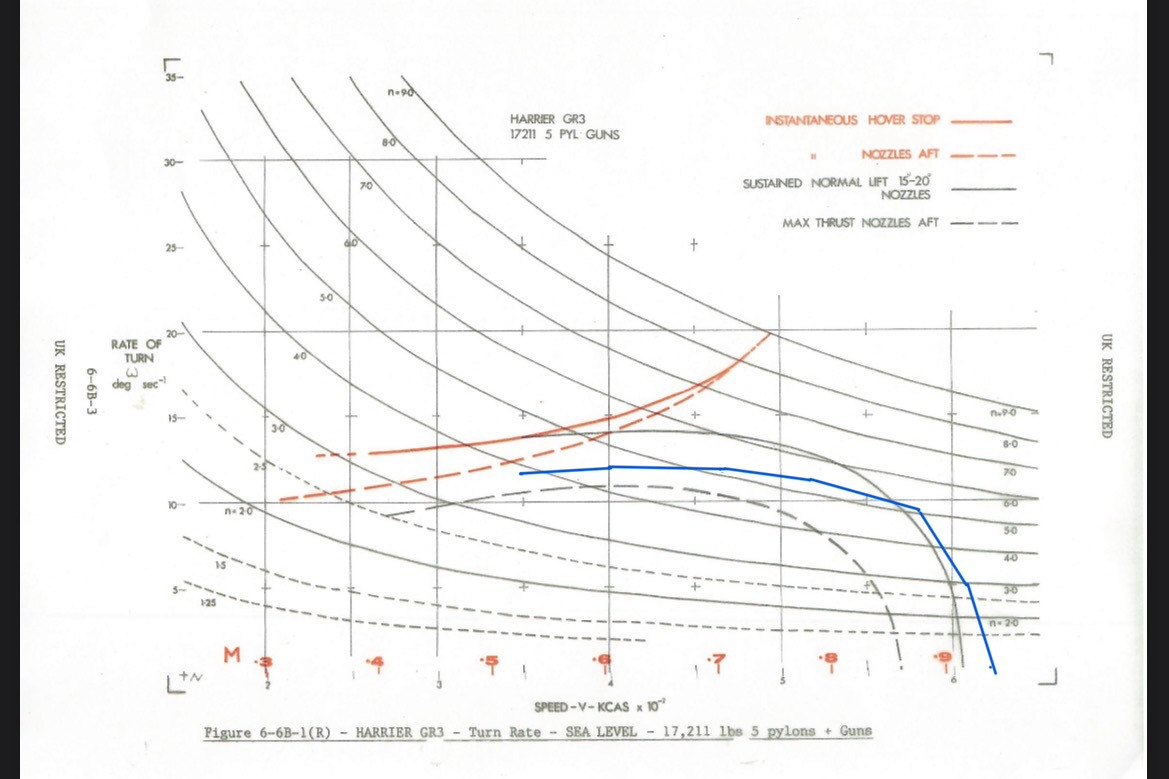
Note that this chart you like to use shows a lower maximum ITR an Instantaneous Hover Stop. So what is the weight of the aircraft in this document vs the other one.
??
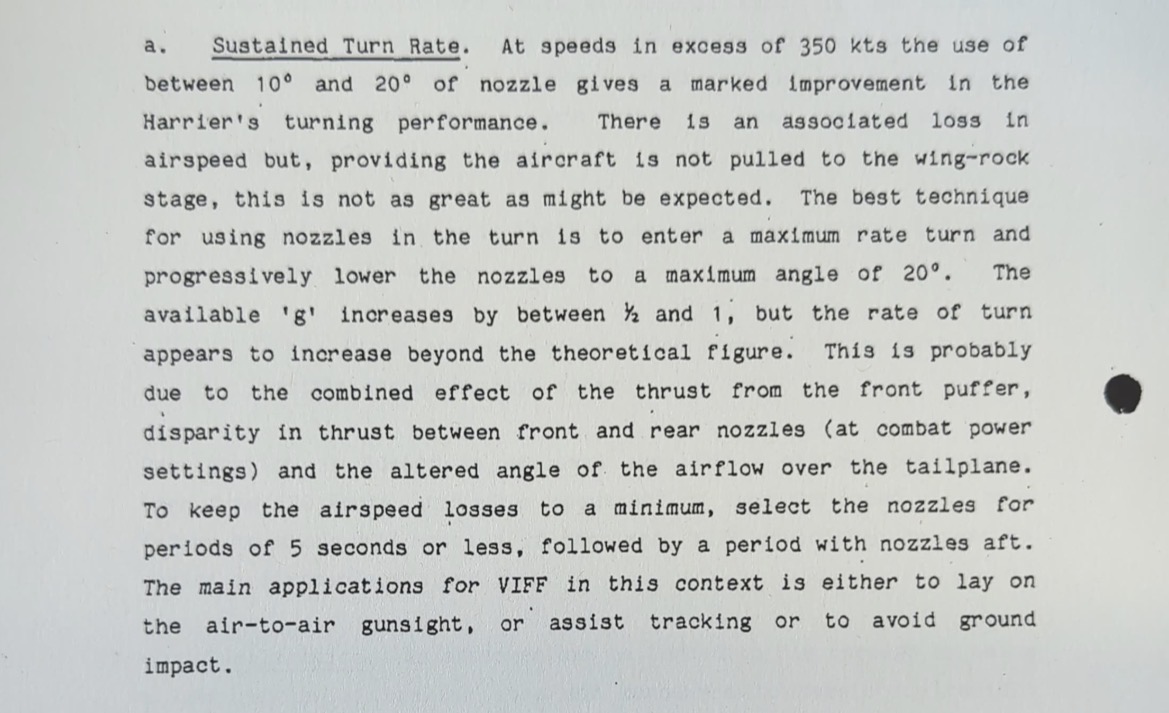
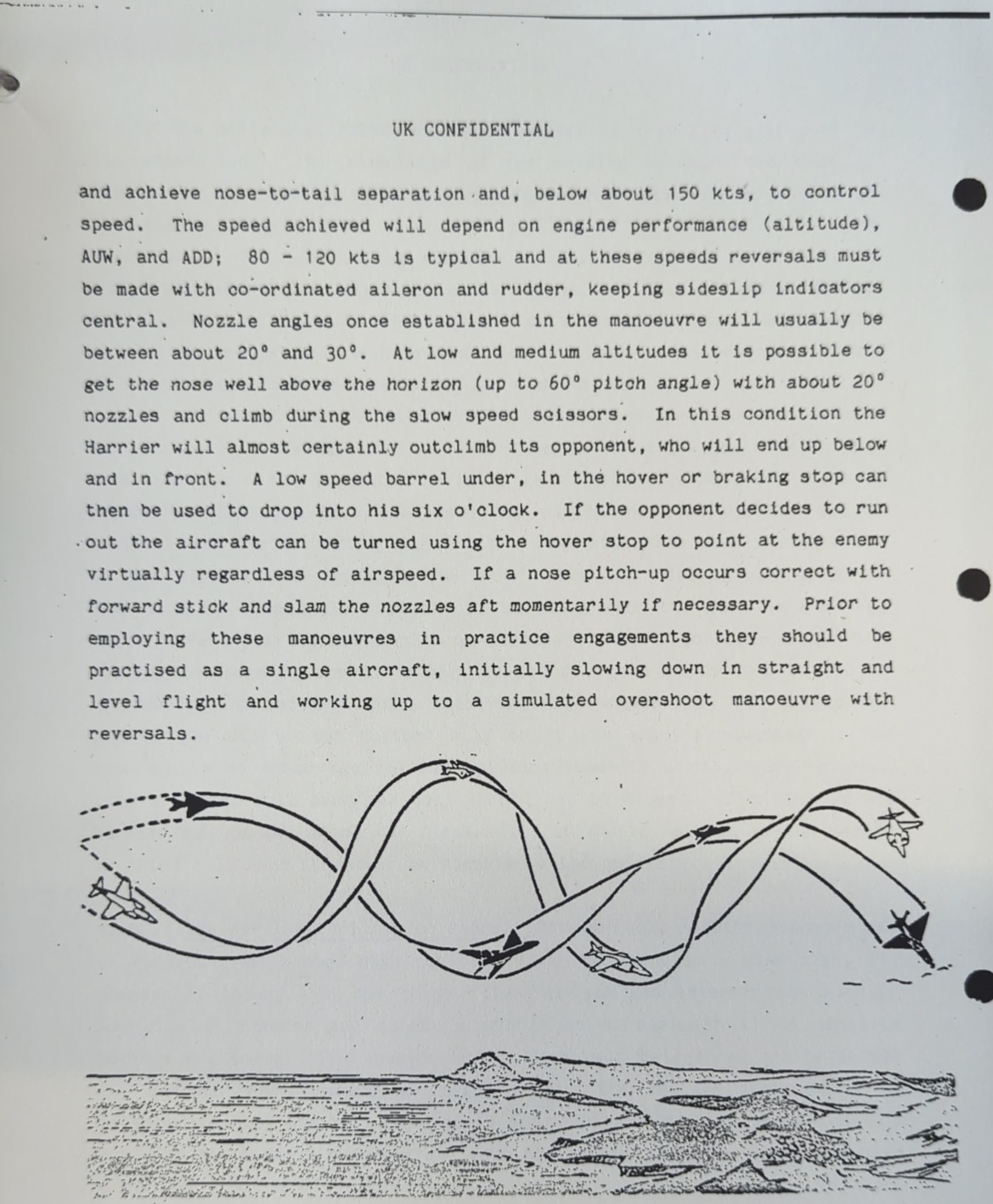
The other document literally says going beyond 60 degrees makes it turn worse dude
Hover stop it’s 86 degrees or so
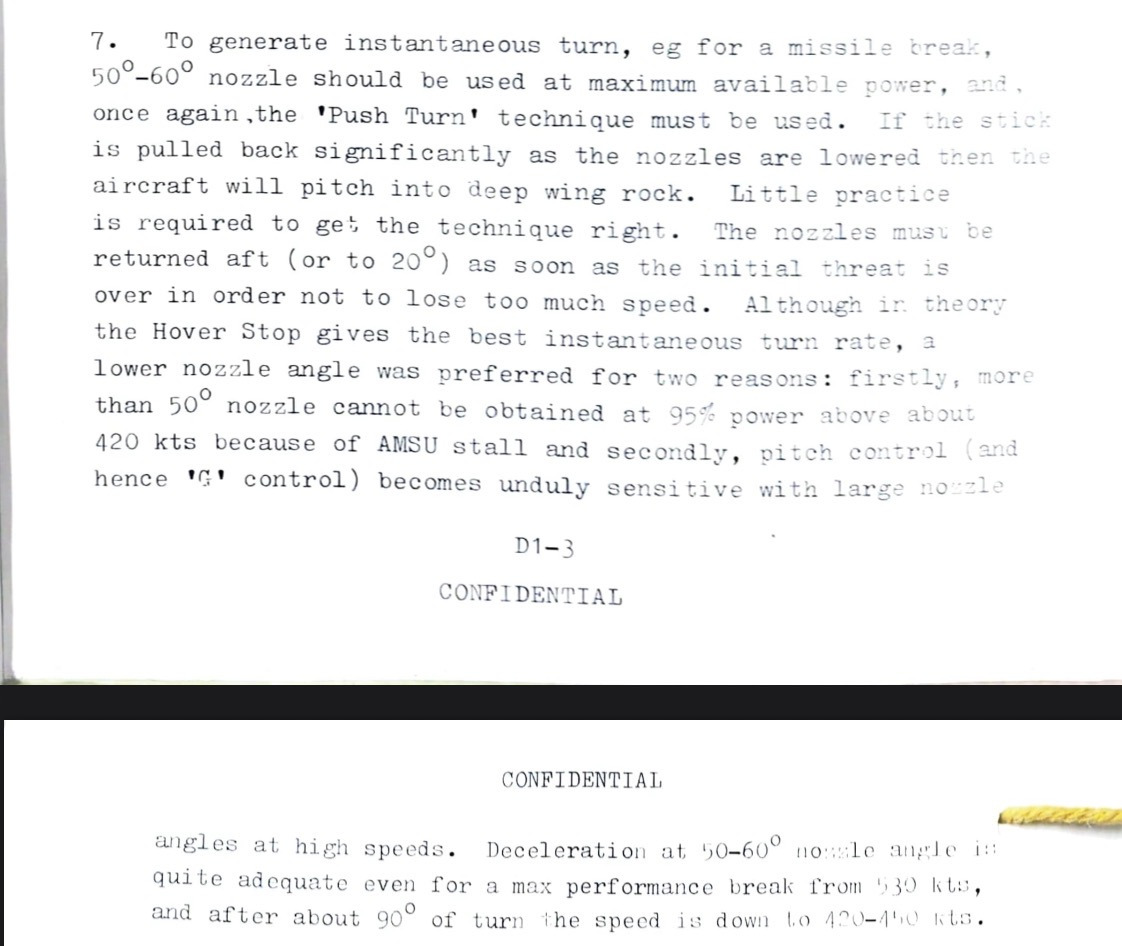
And this one says the theoretical maximum is with at hoverstop while the chart you like to post shows data for that and data for aft. So what gives and why is the snippets seemingly inconsistent?
As others have said earlier actually posting the sources and not just snippets would allow people to make a better assessment as opposed to the “just trust me bro its good” approach you seem to take.
This was before they did the scientific tests
The idea was to run air combat to see if VIFF was even the slightest bit useful
So they didn’t waste time and money if it wasn’t
If that turn rate is used it actually decreases the bleed rate
Seeing art 100 knots and 90 degrees of turn doesn’t change
Ok now post the whole thing and not just snippets.
Like I could take ESR-D document and just use snippet where guy says MiG-29 is comparable to Eurofighter and go off to the races with that. Would it be accurate? Well it does say that in the document. But the rest of the document provides much more comparison and context.
Or the reference weight in the tactics manual is lower and we are using a light loaded harriers bleed rate as indicative of a heavy loaded harriers bleed rate.
And this seems to have been a trend that you have done in the past. I.E 25% fuel Lightning vs 85% fuel Phantom + F-16A etc.
The E-M chart is from the tactics manual
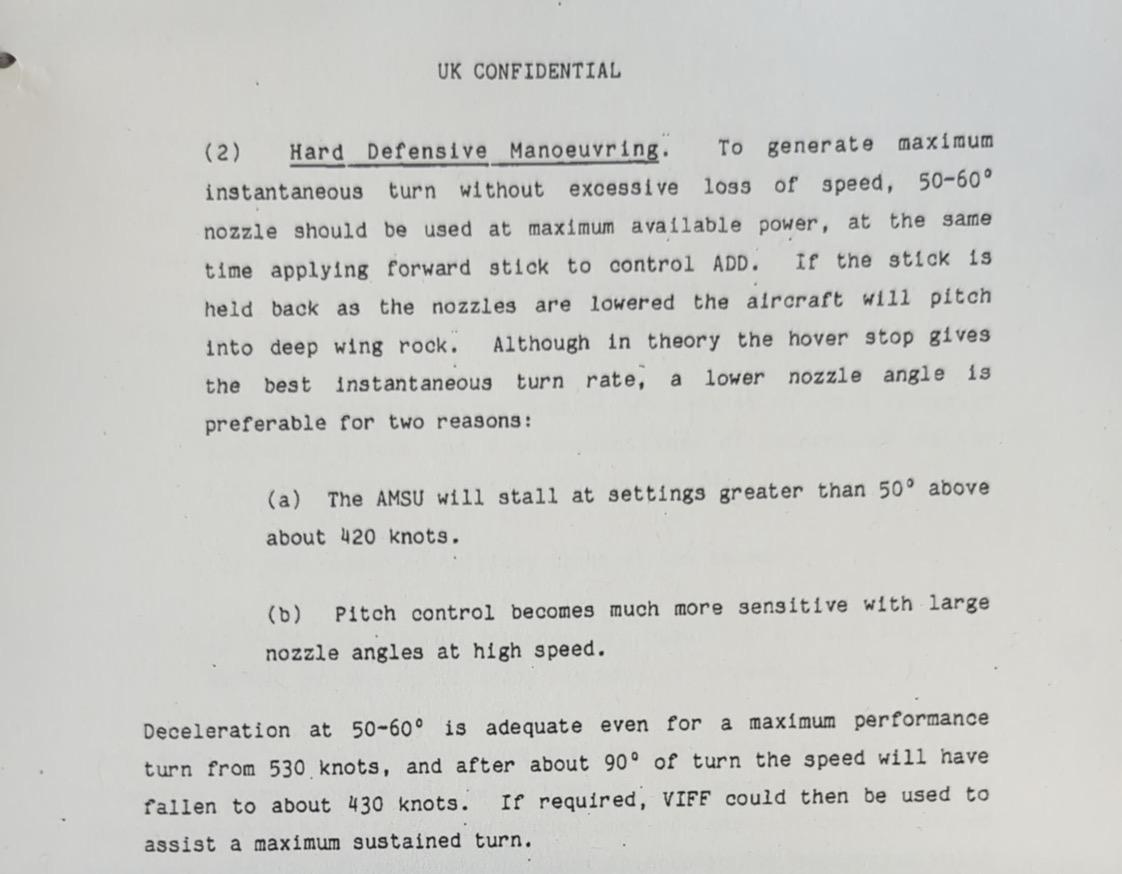
WTH does it mean by the rate of turn appears to increase beyond theoretical figures?
Use it as much as the throttle

I actually think this is what Sharkey was doing against the F-5 based on the little picture it provides
Using 20-30 degrees of nozzle initially pulling up and around and then braking stop used to decelerate in and behind and then hover stop to point and kill.
Being a first year mech engineering student this entire conversation has been extremely hilarious and a good change of pace from getting molested by linear algebra and physics 1.
Pretty informative too if you actually listen lol
4 Likes
Glad I can provide comedic value if nothing else
1 Like
Got real confusing during the argument about simple vector diagrams… How the hell do you even get this heated about that lol…
2 Likes
Idk it’s not even unit vectors it’s just high school Pythagoras pretty funny still.
Had me doubting myself for a second because i was just not getting where the problem in translation was and just assumed it was more complicated than it looked.
About what i wrote?
English is not my first language so unit vectors are called versores here

Yes the harrier was so cool. Then the Americans got hold of it, decided to change it and made it worse at everything other then carrying bombs.
In theory a Gr.3 in realistic battles if at low level and in a level turn should never drop below 400 knots. In mouse aim pulling 18 degrees AOA with 0 loss in airspeed.
Its faster, climbs better, turns better, bleeds less, and accelerates better.
Ive never seen a harrier 1 pilot say the plane didn’t accelerate well in and out of a turning fight.
Ive only heard harrier 2 pilots say that.
Gaijin said they reviewed in in full so it has to mean that it can sustain 18 degrees AOA at 400 knots.
18 degrees AOA is the limit it pulls in mouse aim. So naturally it should never slow down below 400 knots.
That’s incredible energy addition and extremely low bleed rates.
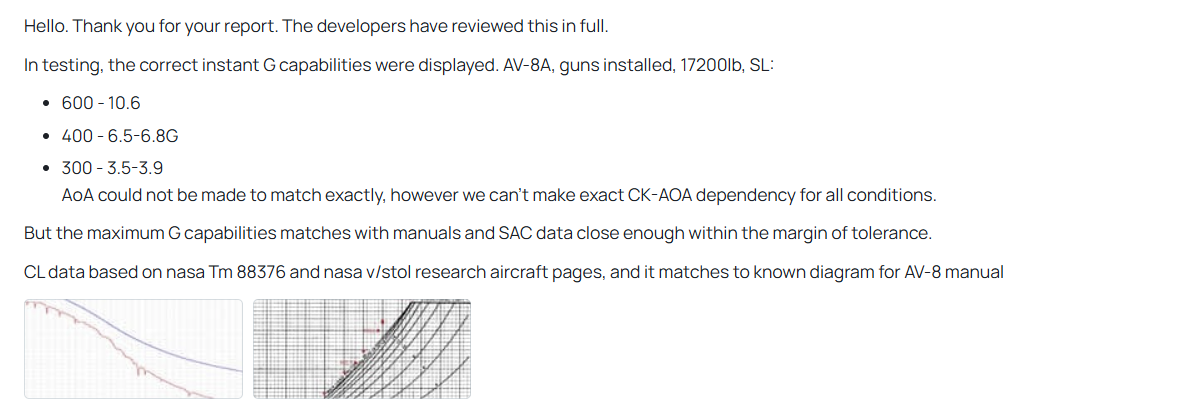

Also the real life harrier is overperforming at very low speed in lift compared to gaijins calculations.