I’ll be honest, I didn’t think you’d ever concede.
It takes a lot of strength to admit when you have been wrong and I sincerely applaud you for having the strength to publicly admit it. Sadly not a lot of people that are able to do that. Thank you.
And for everyone else here In the thread, bringing this up as a point and argument in future discussions will do nothing but harm in the long run, less people would be willing to admit fault if the end result is long term ridicule.
3 Likes
gonna be difficult for him to top this one but im sure he will
3 Likes
I really appreciate that. Also thank you for taking the time to explain it to me. Helps me feel better about having just been a complete idiot lol.
At least I understand it now
3 Likes
But the vertical component of thrust being applied isn’t though the Center of Mass, so it’s going to impart a rotation that would need to be accounted for.
And as the Wings are similarly displaced (from the CoG) there would be an impact on the Mean aerodynamic chord depending on fuel state.
In short lift generated by the Wing will have a different effect on the airframe vs that generated by the motive directional vanes, so it makes some sense that VIFF have weird characteristics that don’t quite match up cleanly with trig functions, since the horizontal component still generates lift via the wing.
Yeah that would include levels of math that would give me nightmares.
For the basic thrust vector here I just assumed that 100% was the total force
A 50/80 split makes sense for a harrier at 60 degrees nozzle down
It’s funny that this is coming from a guy who fked up right at the very beginning.
MatrixRupture is an a^2 + b^2 = c^2 victim
2 Likes
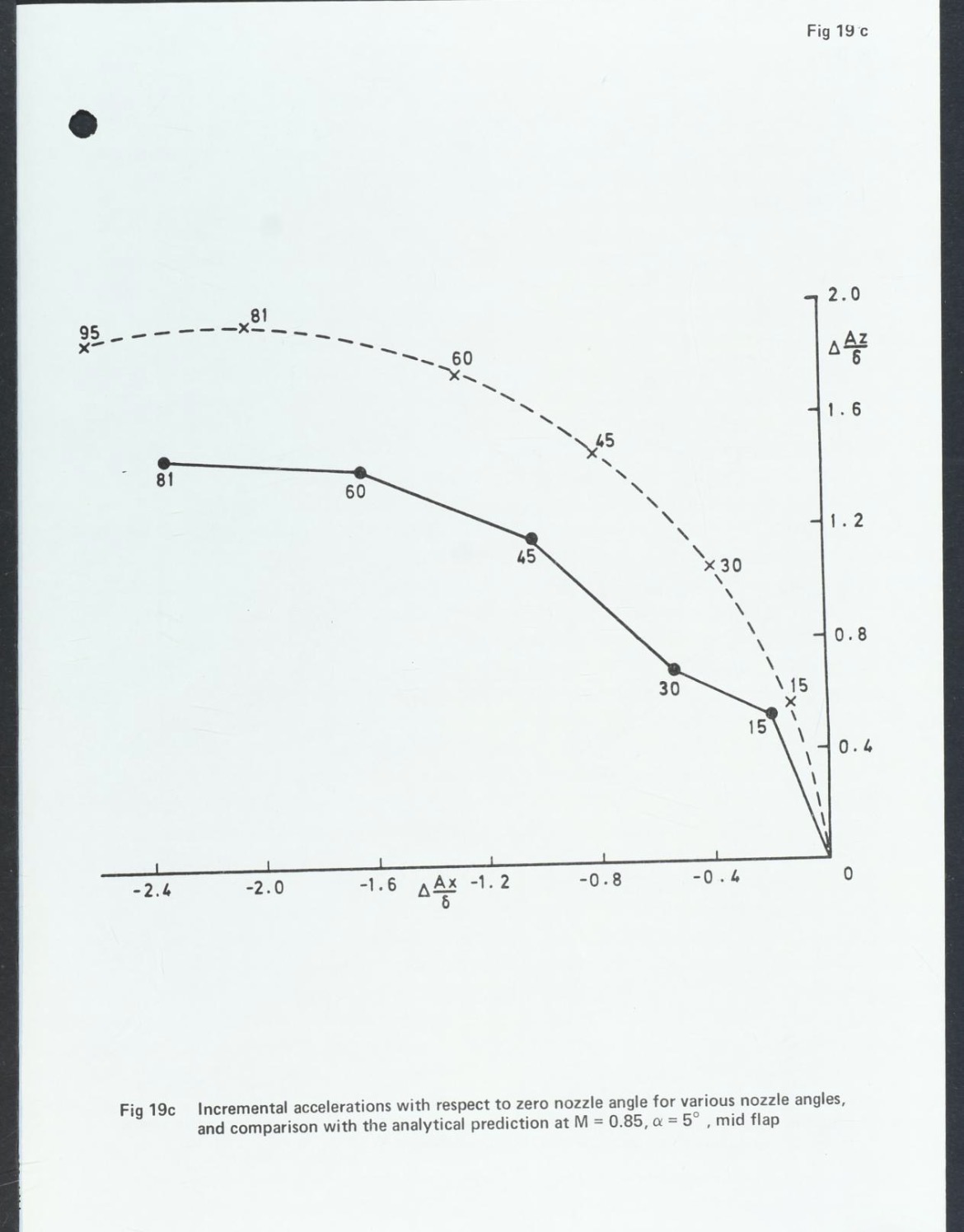
.35 Mach 60 degrees of nozzle angle would result in
(As the jet is making 18411 lbs)
9,205 forward jet propulsion
And 15,943 lift jet propulsion
COS(60 degrees) .5 * 18,411 for 9,205
9205sqrt(3)=15,943.528
So at 233 knots ish the harrier is producing its weight in jet lift and providing 9,205 lbs of forward push at the 95.5% rpm setting
If I did that right
For 20 degree nozzle angle high speed turns
33424 lbs .85 Mach
COS(20) .9396*33424 is 31,405 Thrust pushing forwards
COS(70) is .342*33424=11,431.008 thrust pushing down
Sqrt(11,431^2+31,405^2)=33,420.679 within 4 lbs of original
So 20 degrees nozzle angle provides .737 G for the given AOA while retaining 93.9% of the forward flight thrust component.
If I did that correctly
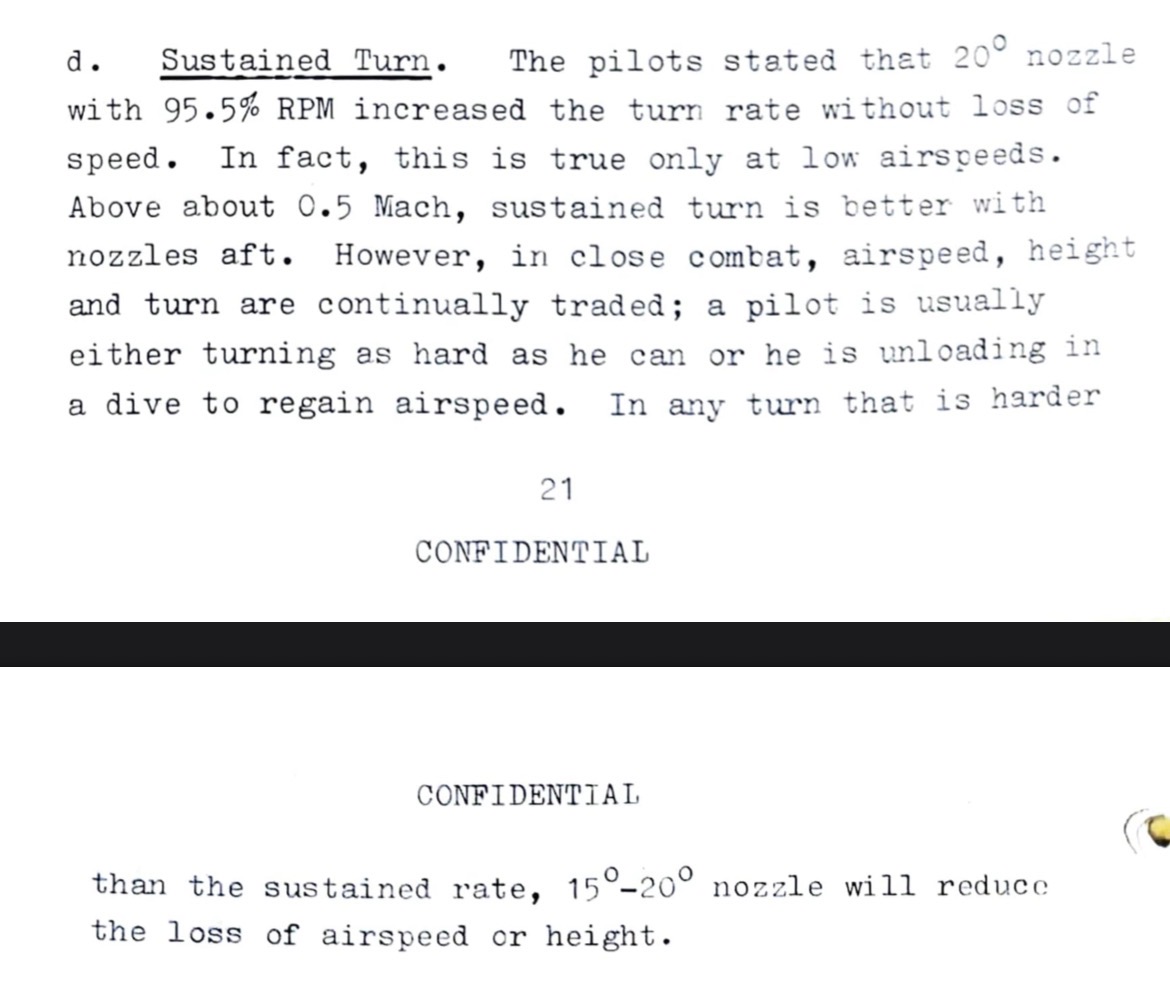
Seems to follow trend at least theoretically. Resulting in a lower sustained turn rate due to the loss of forward thrust (6%) but it would be exposing less surface area to achieve any G above the sustained G resulting in less bleed rates potentially as the pilots and people said.
Lol please keep going. Its funny.
1 Like
Unnecessary buddy
None of this actually changes any of the points made earlier regardless
You not being able to grasp a basic fundamental of mathematics and arguing that math is fake should have caused you to have a moment of reflection. It seems that was perhaps asking a little bit too much of you.
This is precisely the opposite of what pilots have said. Here are 3 different accounts regarding VIFF and energy retention…including from the interview you linked to earlier. This is a fact that you either missed or one that you are just in complete denial about.
Also anyone else that cares can watch the video. It’s only 2 minutes long.
Lmao
I said from the beginning that viff causes a loss of speed however the loss of speed is Less then expected
When pulling anything more then the sustained turn rate at higher speeds it will result in an overall less loss of energy
My math might not be “gooder math”
But this was written by a group of scientists I’m sure their math is fine.
Well to be fair to you here
All of those pilots flew the harrier 2 and it might be less useful on that aircraft. My sources are for a harrier 1
It’s not impossible to think that the jet exhaust interacted differently between the 2 jets seeing as they are very different in shape
Okay and? Your argument has been that the plane will have good retention with nozzles angled at 60 degrees down.
I am just pointing out that your characterization of what pilots claim is completely wrong. If 15-20 degrees is the “good” configuration for energy fighting and the pilots are saying that it shits speed quickly…then increasing the nozzle angle is also going to cause it to shit speed faster.
15-20 degree nozzle down will still have greater than 90% thrust directed aft. This is far different than having only a horizontal component that is equal to 50% of thrust.
If the CL diagram that you posted for the Harrier II is accurate then we know that the Harrier II has a much higher CL than the Harrier I. The Harrier II in all likelihood is going to be comparatively better in terms of turn performance.
No I said the amount of speed lost is less the what you might expect.
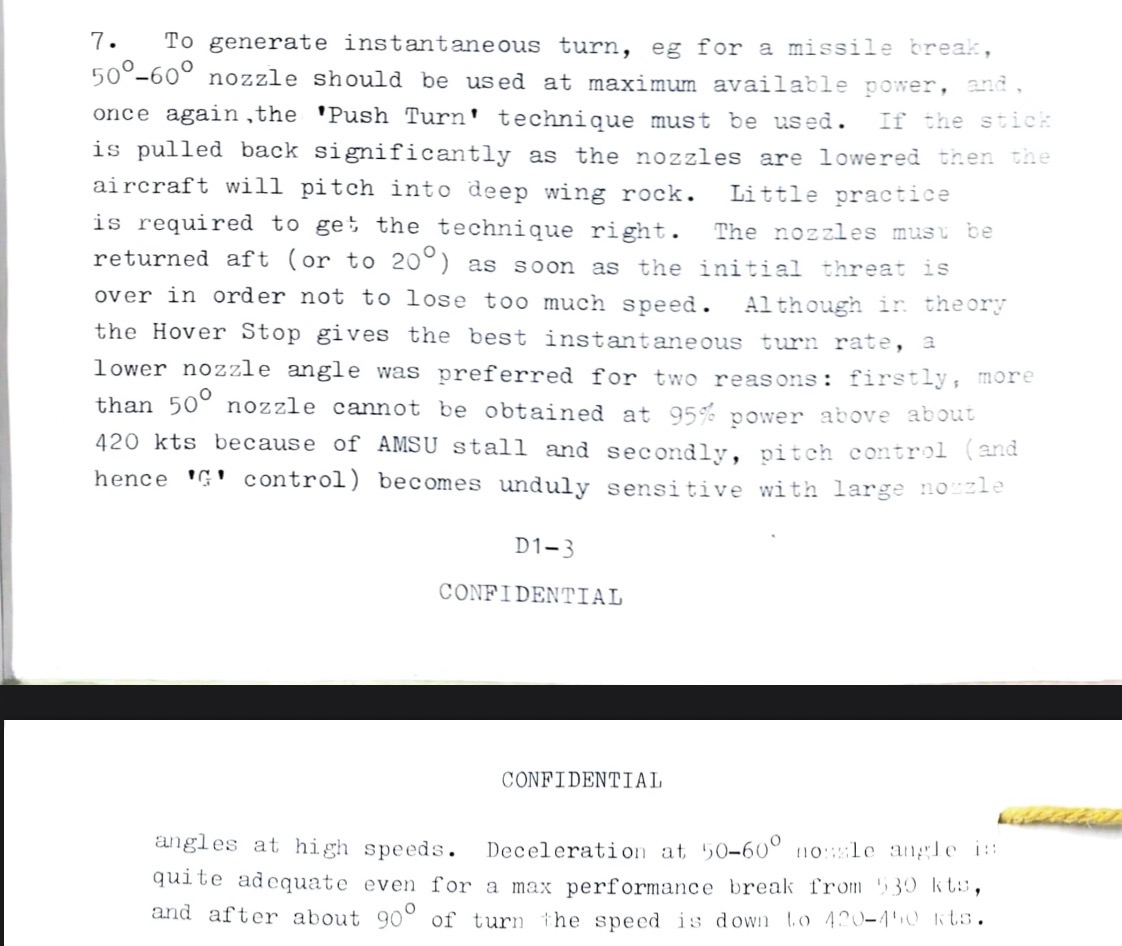
Based on the 100 knots bleed in 90 degrees of turn
With the public data we have it seems the 1 turns better.
Although we don’t know as we don’t have data for a harrier 2 at lift thrust now do we
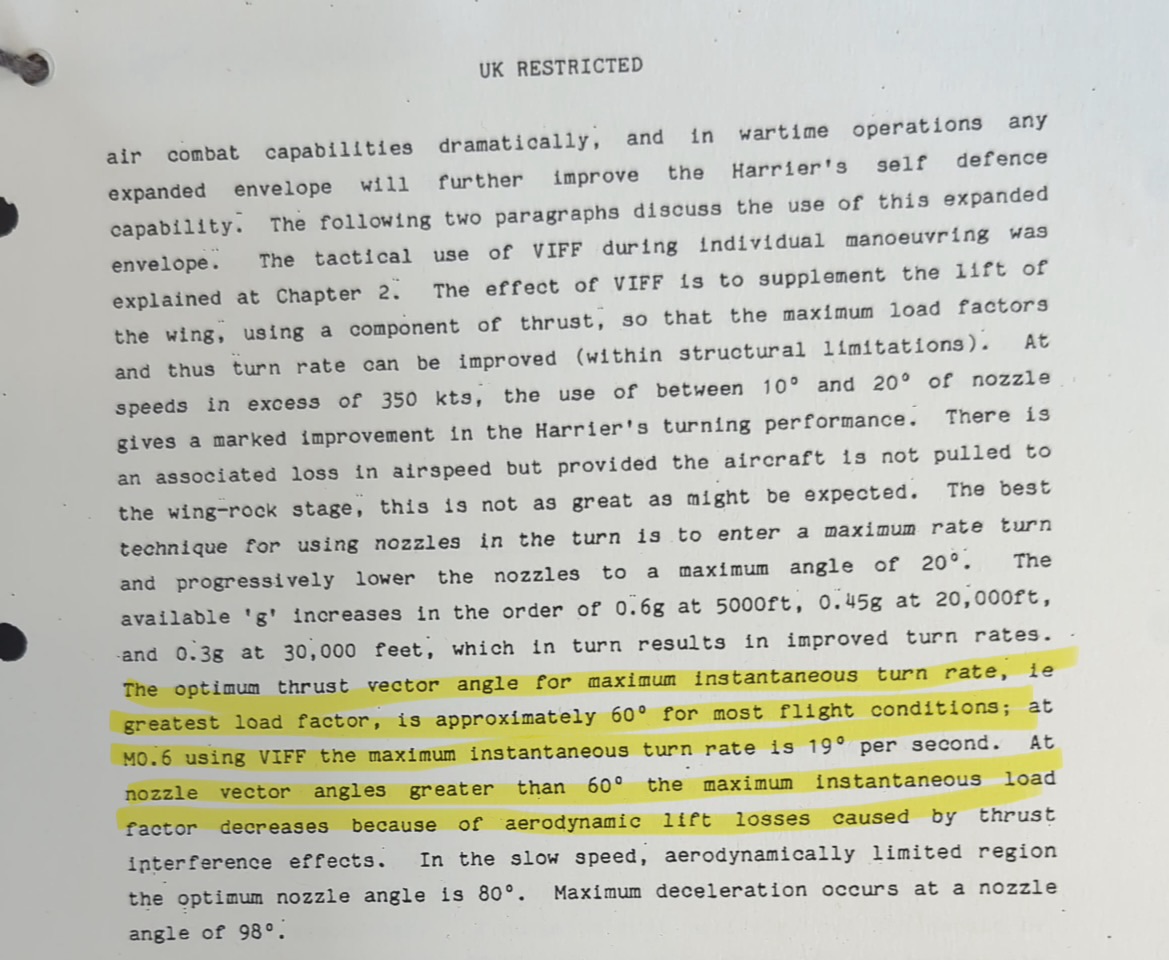
There is no turn rate that is listed here and no altitude. You keep listing 19 degrees per second. The only document that supports it is the one that shows ITR for nozzles directed to hover stop and aft. As I said earlier your interpretation of this document is based purely on conjecture.
We don’t know correct
Even still to increase bleed rate you need to increase the rate
Or vise versa
No that specified 60 degrees using more then 60 degrees of nozzle makes the turn worse