That doesn’t make sense, it doesn’t matter in what direction the aircraft is moving, it could be going backwards, it doesn’t matter, the math would still be the same, the values of the components of the thrust would still be the same.
They don’t know what’s going on and they are trying to justify their misunderstanding.
You’re half way there now
huh?
im drawing it for you
No, it seems you really have some issues with vectors. Or maybe I do, because what I’m getting is pretty similar to what @Necronomica is saying.
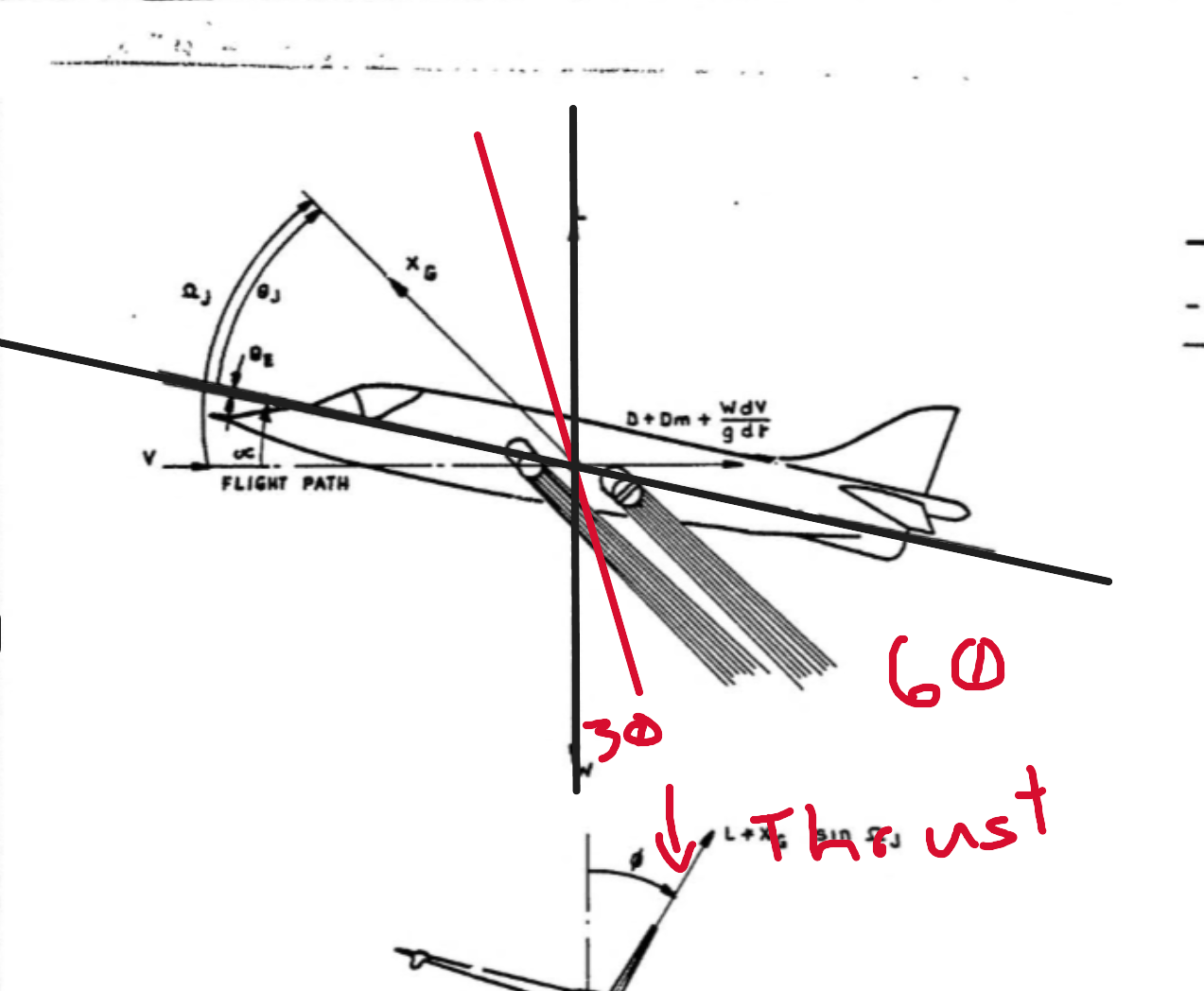
The thrust line of the nozzles are pointing more forward then they are backwards yet you are trying to imply that they are giving equal parts thrust backwards as vertically
they are only 30 degrees short of producing nothing but pure lift and are 60 degrees away from providing horizontal thrust.
how in the world can it impart an equal amount of thrust in both directions.
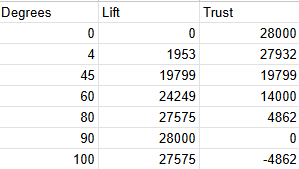
This is with a 28k gross thrust, which is what the engine produces at mach .85
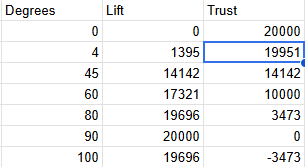
This with the 20k of the table
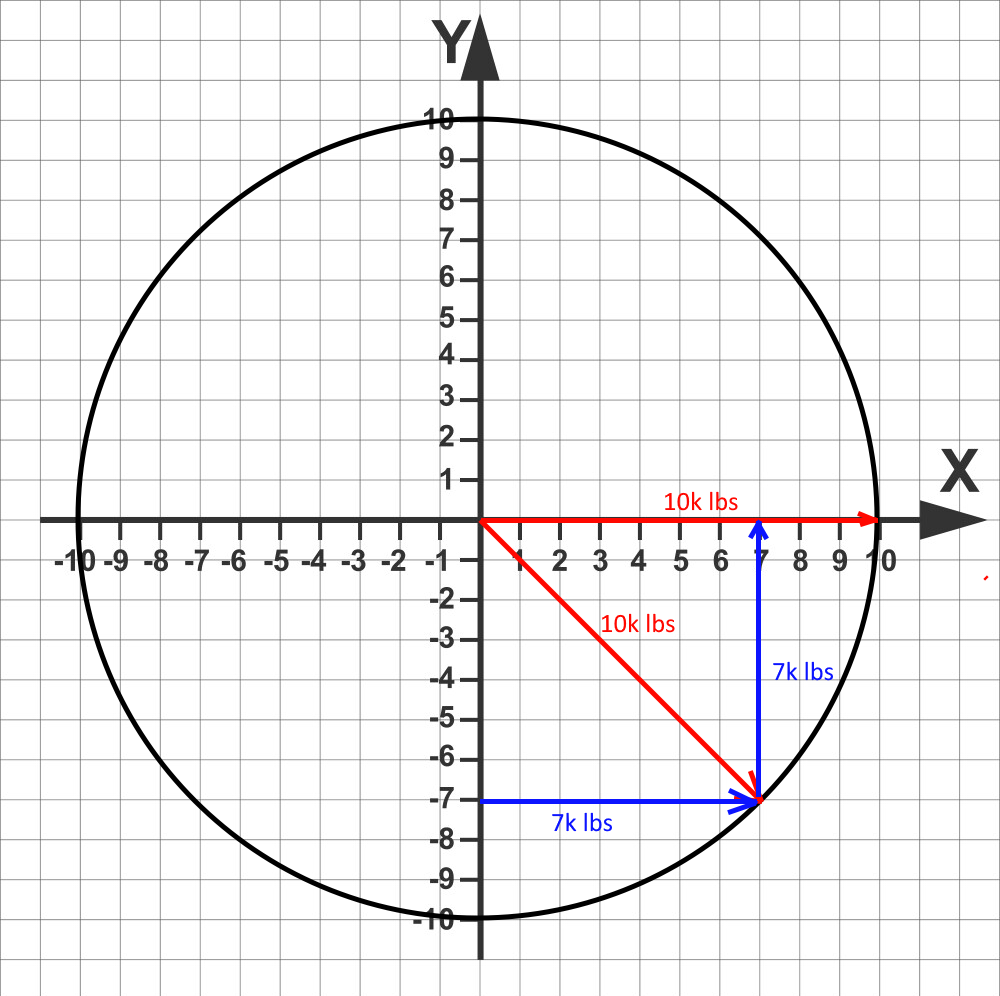
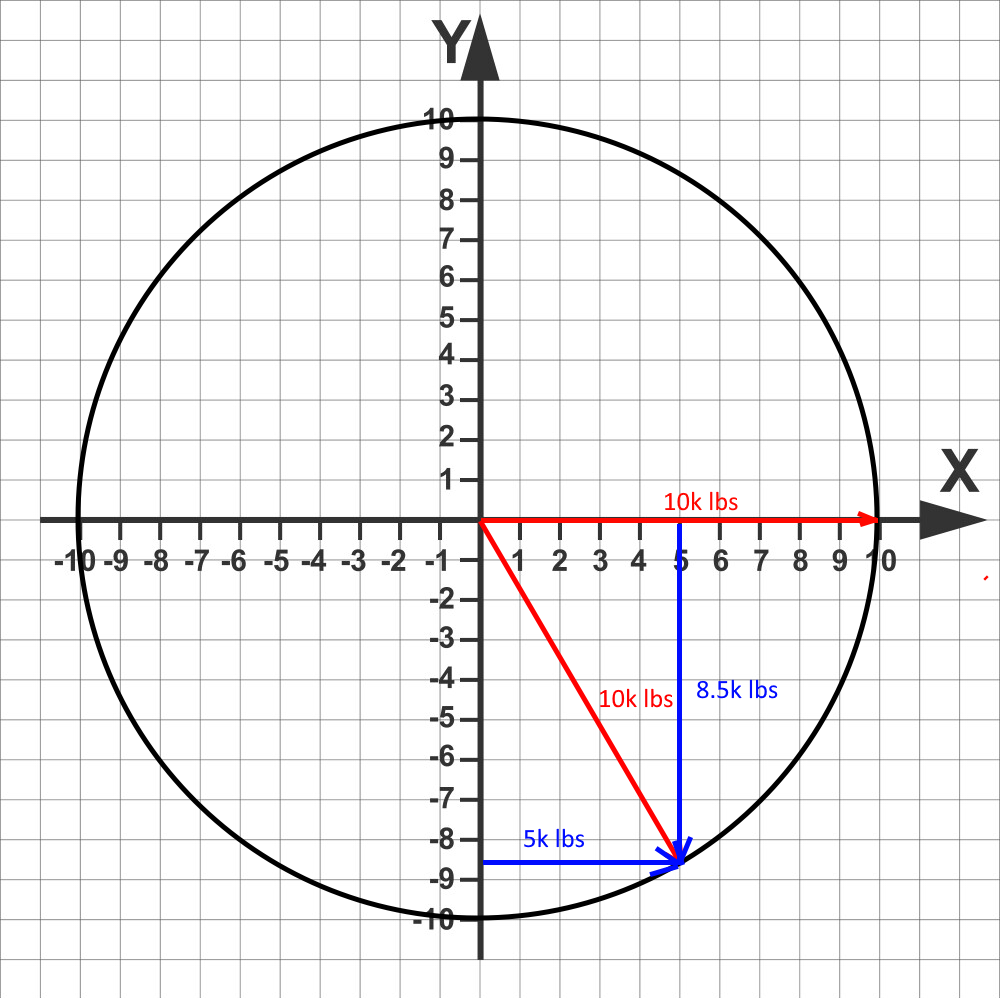
i already did it with 10k lbs to make it easier
the thrust vector always has the same length and will “draw” a radius around the plane
2 Likes
crazy that 45 degrees of nozzle results in an equal thrust split up and backwards. /s
No one said otherwise
and nobody ever argued against that
but crazy how you dont see that at a 45° angle that the horizontal component isnt 50% of the normal unvectored thrust
So then why are you even trying to make the vectors horizontal and vertical and applying that to a differently angled vector plane?
You can’t angle the aircraft (along with the nozzles) and apply the previous calculations to a new vector plane.
assume its acting on 1 flight path
should have put that in
how can a nozzle that is pointing closer to the nose provide 2 parts equal backwards and up
it will provide equal thrust down and backwards if the angle between down and backwards is equal
Well, it all seems correct. @FeetPics literally just threw away those 24249 lbs and was like, “okay, now let’s go look at the Hornet!” WTF?
Meanwhile, the @MatrixRupture 's sources actually explain the influence of that vertical component on the Harriers maneuvering characteristics.
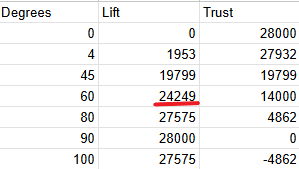
So then my previous answers still apply.
the split of the vector thrusts is not the same as each vectors size compared to the thrust. They are two different percentages that both are true at the same time.
at 45 degrees both vectors are the same size, that size being 0.707 times the size of the thrust.
It’s almost as if squrt(0.707^2 + 0.707^2) = 1 , would you look at that, the math checks out.
Oh hey, look at this one: sqrt(0.5^2 + 0.866^2) = 1 , wow at 60 degrees the math also checks out. and what size is one of the components, oh look it’s 50% ! :D
Apparently I’m dumb and don’t know anything. Same with the Royal Aircraft Establishment if the 45 degrees thrust component cam be trusted.
I said I agree
that is for finding the resulting gross thrust
however feet pics said that a nozzle pointing more forwards then backwards will provide an equal force backwards as anywhere else.

That’s not what that sentence means. that’s not what he is saying there.
The total thrust is the “input”.
