So wing loading and its induced drag are quantities we can just neglect? Because the vector of the vertical thrust component is close to the lift vector, meaning that deflecting the nozzle downward will also start to unload the wing.
Correct, but that’s not what he or i have been saying. At 45 deg both of the vectors will be 70% the length of the resultant thus be of equal length and have a 50/50 split. At 60 degrees one of the vectors will be 50% the length of the resultant and the other will be 86,6% the length of the resultant. The split at 60 degrees will be approximately 58/42 .
Do you see how “split” and “percent of the resultant” are two different things ?
This is correct.
Correct, that statement is wrong, there is no “other 50%” because that’s not how you calculate that, it’s not a+b. I also have not seen him claim this.
I’m starting to wonder if this is a language barrier thing.
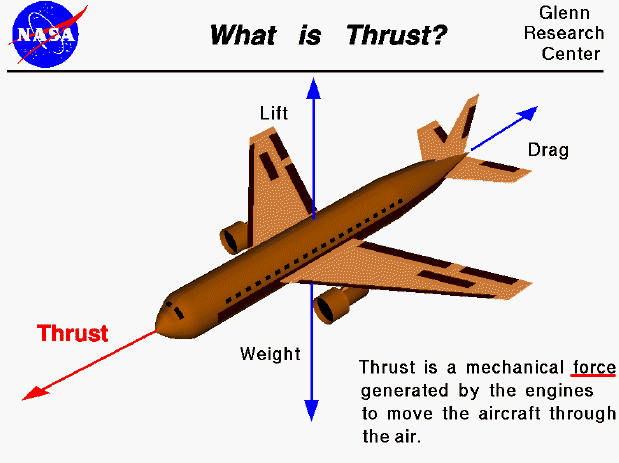
Thrust is a reactive force, you “throw” air back which generate trust fowards
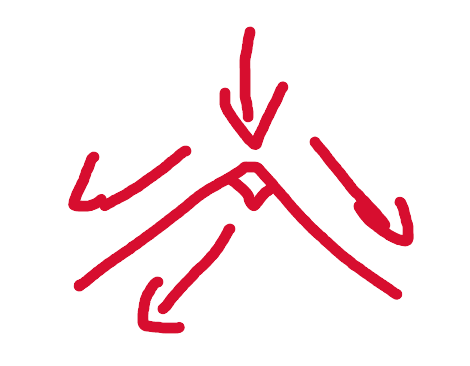
Here you go if you have a right angle with equal sides and you lay it down and apply force where does that force go
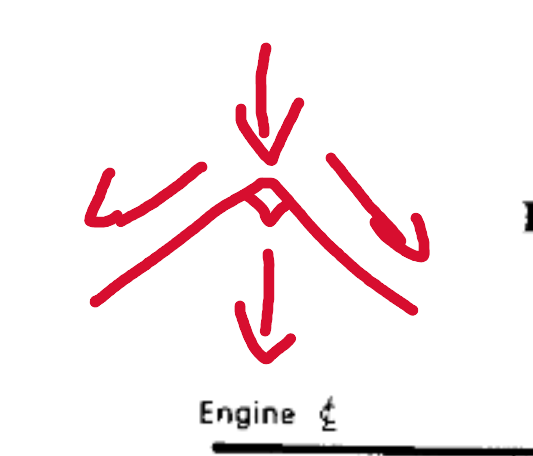
it doesn’t end up like this
its not, english is his first language
1 Like
no

congratulations, at 45 degrees nozzle angle the two forces are equal
They are yes, but are they 50% of the total? no. they are about 70% of the total, both of them.
1 Like
making them equal
Anyway, back to watching this thread rather than taking part:

I dont have the energy at the moment
3 Likes
like even his doc has been saying that

thats what he has been saying
hello reading comprhension?
Yes, i have not claimed otherwise. No one here has. you just thing we have because you’re reading the things we are saying wrong
Mate for a given 28,000 pounds of gross thrust feet pics thinks that 50% of that will go backwards if the nozzles are 60 degrees biased forwards
That is correct.
50% of the input will be diverted to horizontal.
It will NOT be a 50% split between the two vectors.
Split VS percentage of input
1 Like
your chart only gives 20k lbs thrust
if the harrier has 28k lbs thrust why dosent it produce those when the nozzle is at 0°?
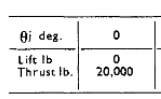
maybe its becasue you dont understand vectors and their components
The relationship does not correlate along the flightpath of the aircraft
I know that its correct for that given vector but the aircraft doesn’t exist on that plane.
Then calculate the “other xx%” using the same method, what’s the problem? I feel like I’m also starting to lose track of what’s going on.