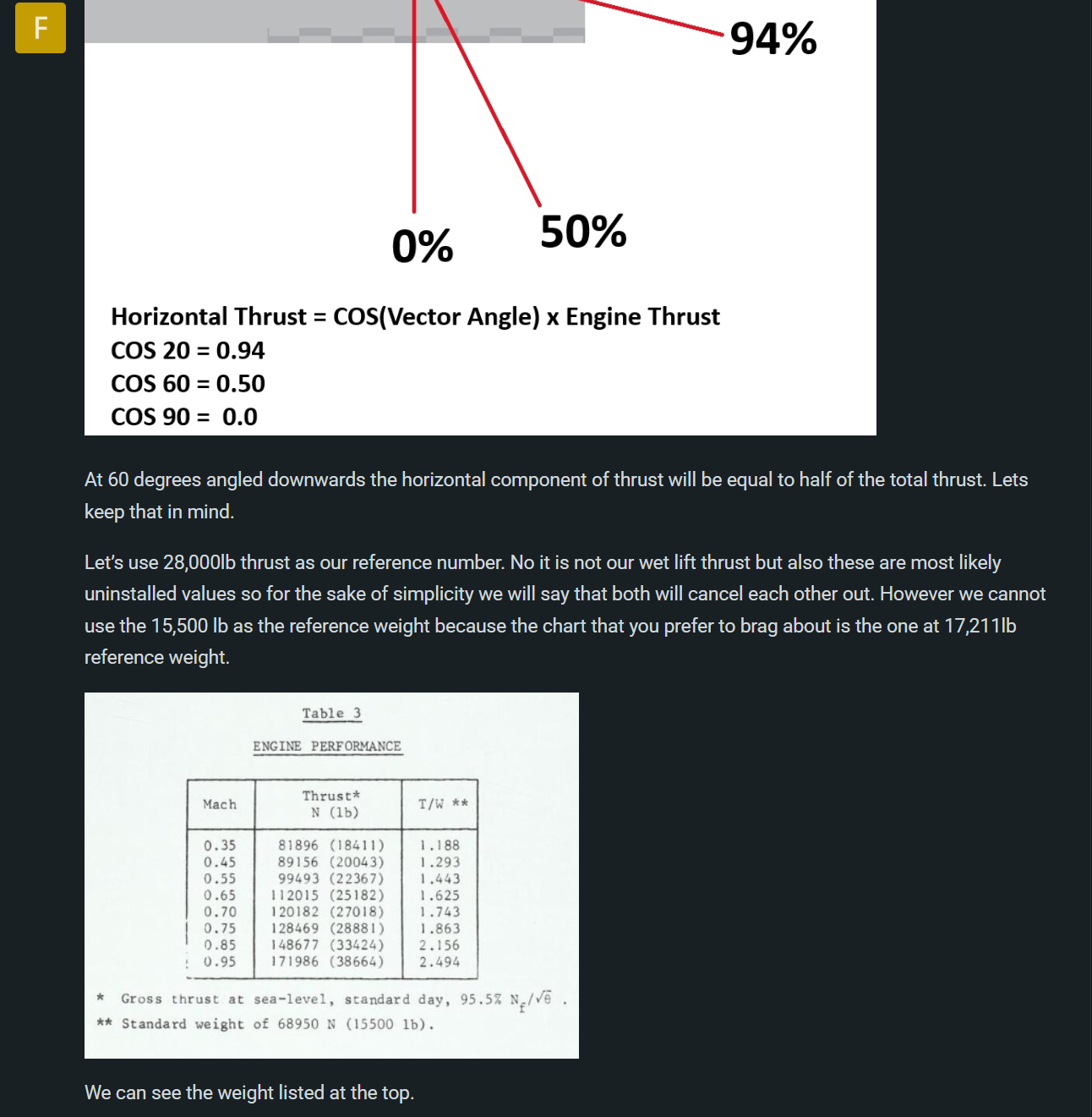
Right, by the connection of the Hyp and Adj relationship in the COS
It was just to demonstrate how the COS(60) degrees doesn’t mean anything in this specific set up.
SIN needs to be used here anyways
Right, by the connection of the Hyp and Adj relationship in the COS
It was just to demonstrate how the COS(60) degrees doesn’t mean anything in this specific set up.
SIN needs to be used here anyways
But it does though. I’m really having trouble seeing how you are thinking here.
Doesn’t matter, Sin(30)=cos(60).
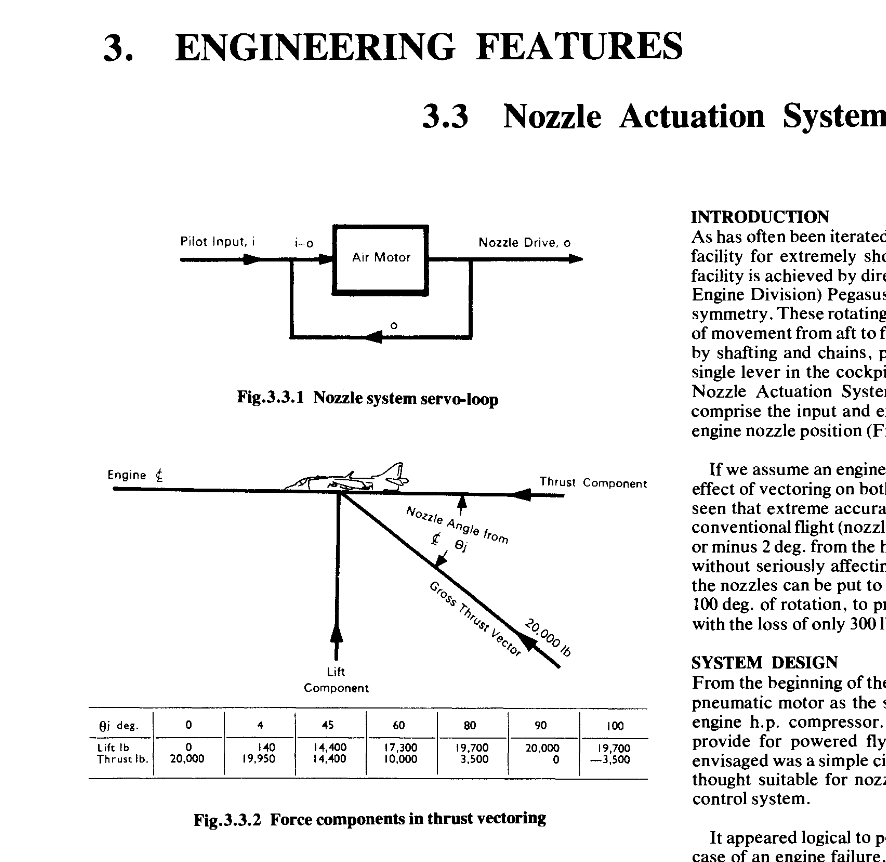
The only thing that doesnt match is the lift at 4º which is probably a typo
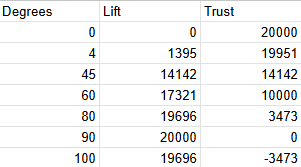
If this was true his calculation would have been correct
instead he got the resultant vector of 45 degrees Oj at 60 degrees Oj
That tells me the math didn’t math.
Where did he get this?
He simply slapped in 60 degrees of nozzle angle as if it was the COS(60 degrees)
with that 60 degrees of nozzle angle resulting in a 50/50 split
this is wrong
No no, the cos(60)=0.5 is only for the horizontal component, the vertical component would be sin(60)=sqrt(3)/2 ≈ 0.866
He hasn’t stated that the other component also would be 50% of the total.
Which is correct.
So why is is resultant vector so drastically incorrect then.
Because his two vectors are not acting in the same relative plane as the aircraft vertical and horizontal component.
You can literally picture this in your head mate.
Is it? What are you comparing it to?
are you being serious or just trolling, genuinely.
I’m 100% serious. Show me.
Feet pics thinks that if you lower the nozzles to 60 degrees the forward thrust and the thrust of the lift are equal
I literally don’t have to do anything to show you.
Look at the forward thrust vs lift thrust for 60 degrees of nozzle angle and tell me how on gods green earth its 50/50
45 is the actual 50/50 split and that’s what ive been telling you and him.
if the resultants are at 90 degrees if a vector is pointing 60 degrees offset to one its going to cause more force in that direction.
at 45 its equal
Where did I say that? Please point it out.
He has not said this in the things you have quoted.
one vector being 50% of the resultant does NOT mean that the other vector is also 50%
He does not say what you claim in that screenshot.
right there