Not that I can see, though I dont have all the pages of this book. It certainly wasn’t on the table it seems at the time of cancellation.
According to the book, conventional strike was considered a tertiary role of the aircraft; and Air Staff resisted any development of dedicated conventional weapon systems for the TSR-2. Thus they wanted only off the shelf weapon conventional weapons.
For other weapon systems though and their development; rockets seemed to be 2 inch rockets in 37 tube pods, or RP-3’s. Rocket pods would also be lowered from within the bomb bay, this was deemed too complex and costly. It was then suggested a dedicated rocket pack be created for the TSR-2’s bay. By 1959 the requirement for RP-3’s was pending removal, and was indeed removed by 1960. Standard 2 inch rocket pods were deemed the way to go and any planned rocket system using up the bay had been discarded.
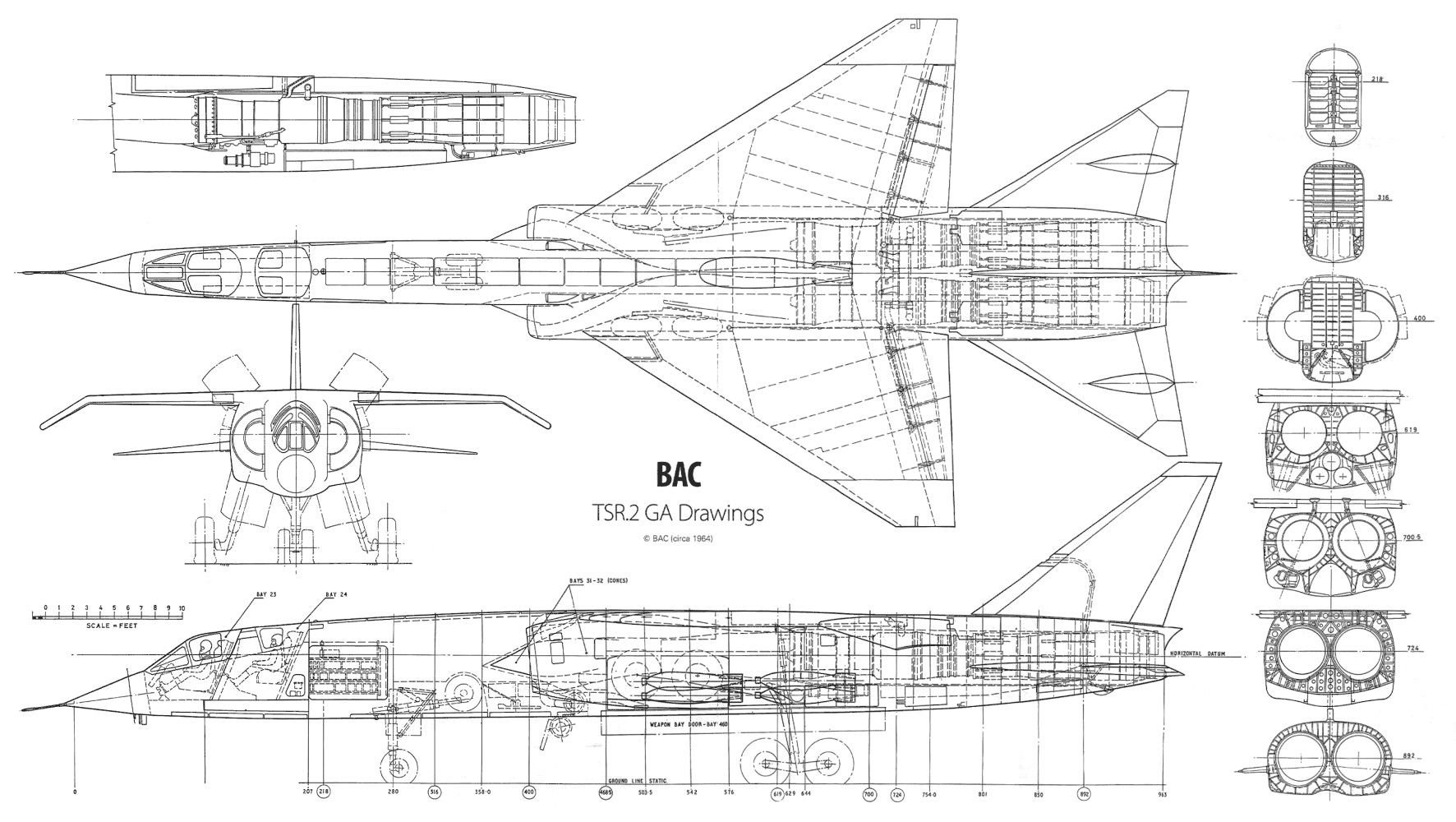
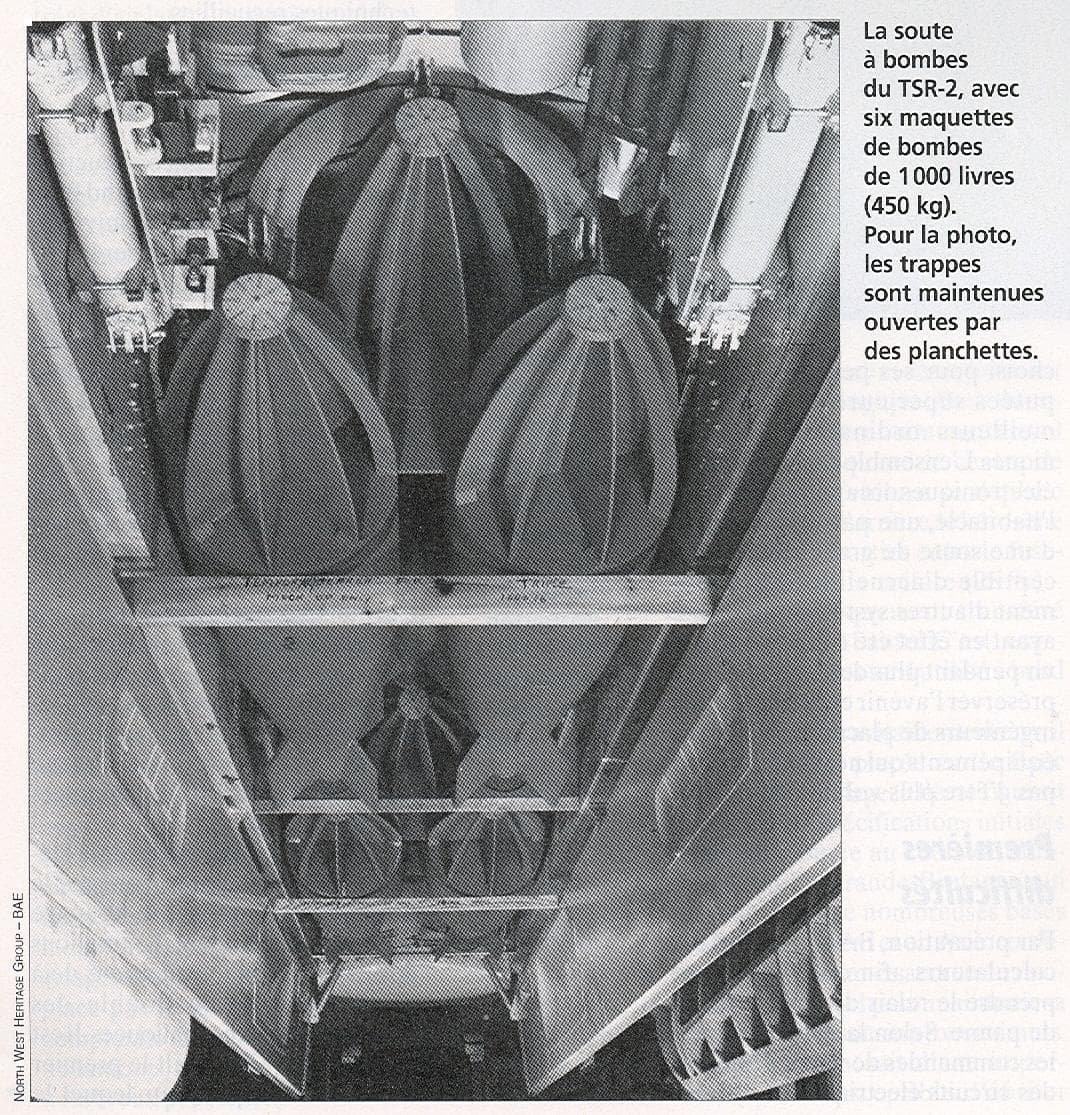
Besides the aforementioned parachute retarded bombs, and the cluster bomb, the original requirement for the TSR-2 was to at least carry 4, then later 6 1000 lb conventional bombs. Due to the nature of the lower altitude high speed strike mission, a study for a new low drag bomb was conducted. However this did not progress further due to the desire for off-the-shelf weapon systems. Additionally, it was deemed the Martel wing pylons were strong enough to support four bombs each on ejector racks, this was also not pursued any further.

AS.30’s on TSR-2 wind tunnel model
Both AGM-12 Bullpups and AS.30’s were considered for the TSR-2, but the higher than expected implementation costs, carriage limitations, existing stocks of missiles having a shelf-life that was anticipated to expire by the time the TSR-2 entered service, and the fact both weapon systems were deemed to be interim until more advanced missiles became available led to both weapons being cut from development by 1963.

Tychon
The Tychon missile was also considered for the TSR-2, with a carriage of four missiles. But this system lost out to the Martel.
GOR.339 in 1957 did bring up the possibility of napalm weapon delivery, BAC was authorized to develop a napalm carriage as late as March 1965.
Other weapons that caught the interest of the TSR-2 program was Hawkeye II, CBU-75 Sadeye, Mk 116 Weteye, and AGM-62 Walleye, though no further development was carried out.