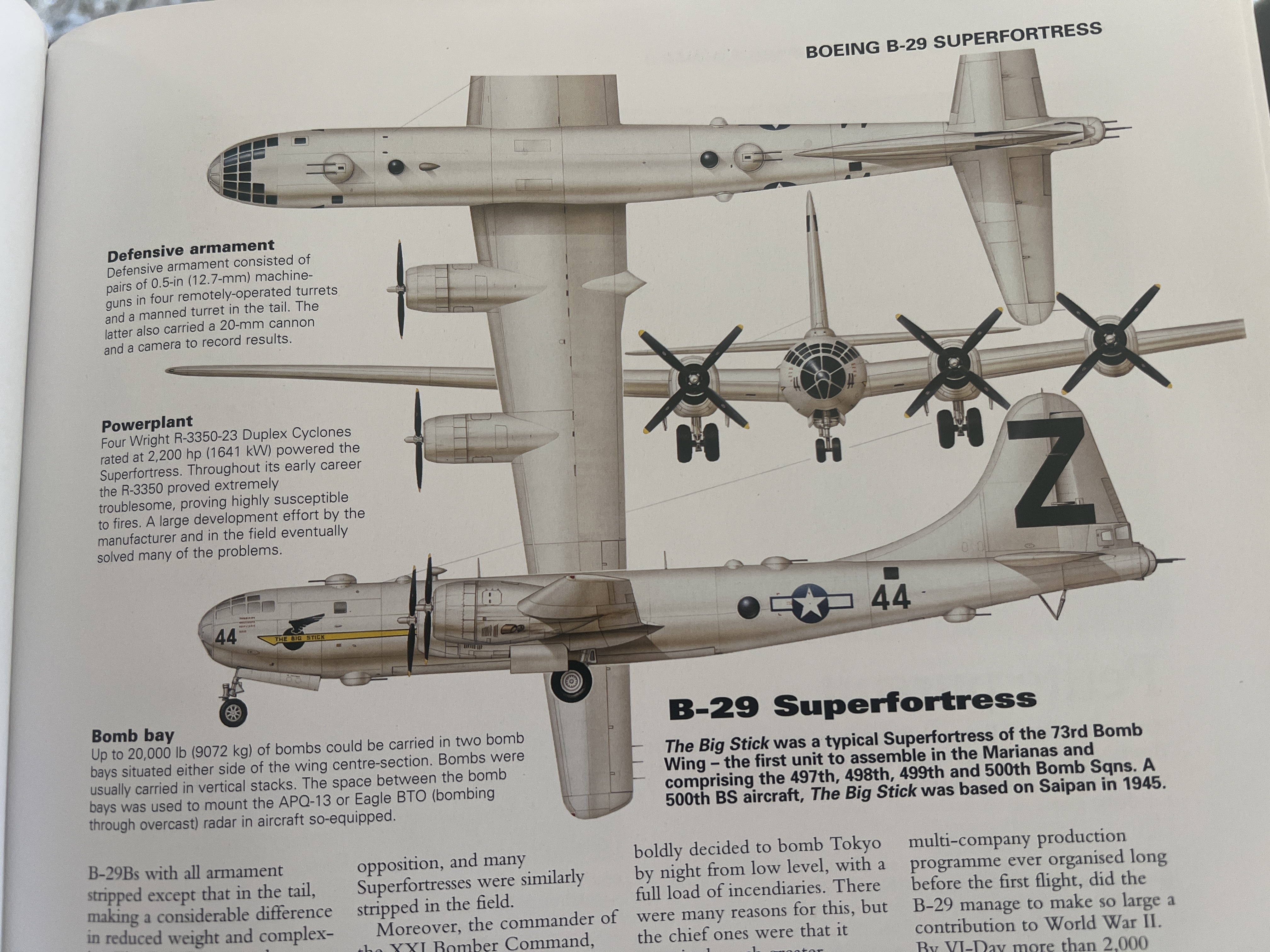
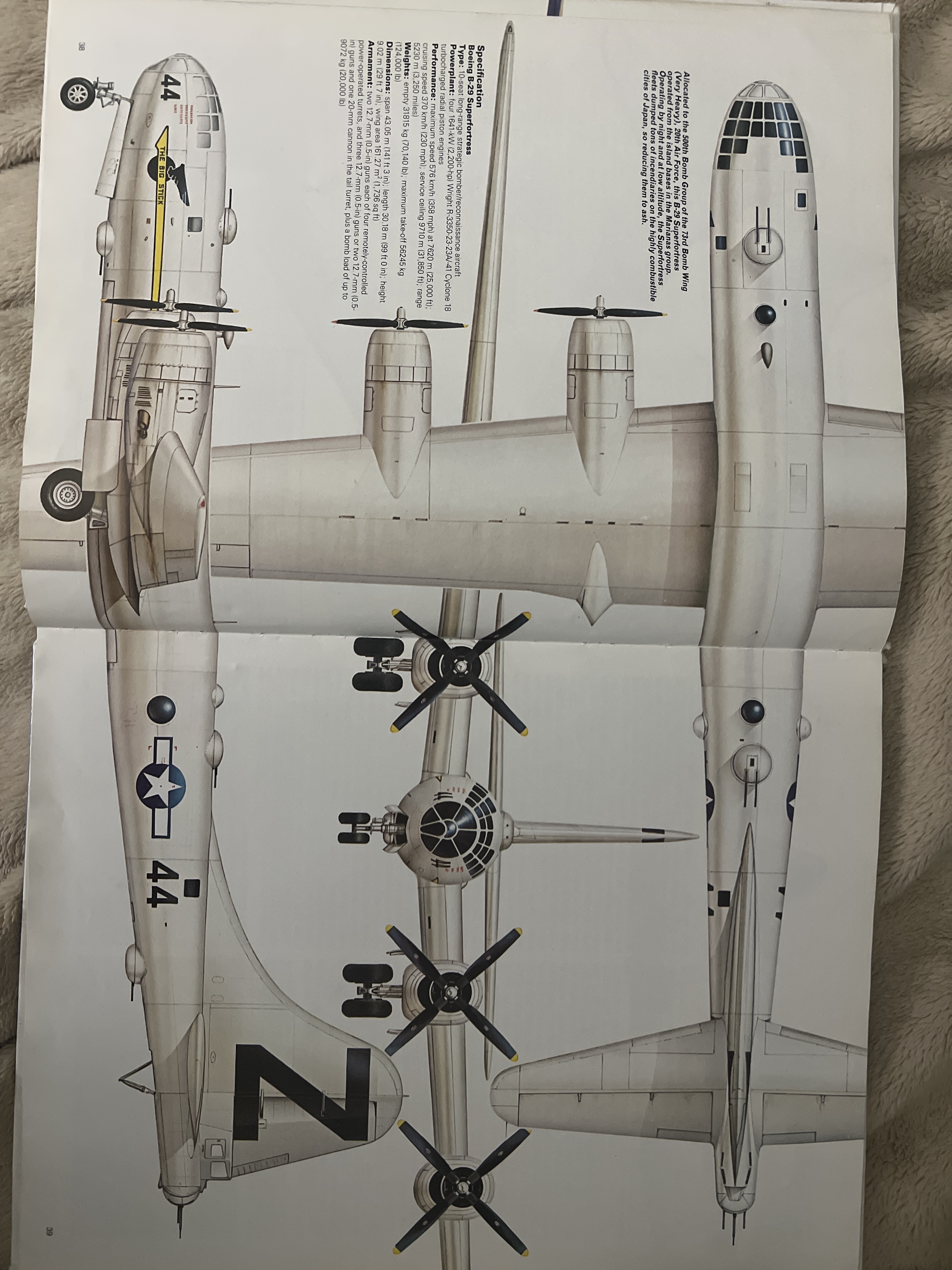
B-29A “the big stick” camouflage
During the Second World War the B-29 was deployed to the pacific theater. The super fortress was first introduced into service in may 1944. And served exclusively in the pacific theater against the Japanese empire towards the end of World War Two.
After US forces had secured Saipan an airfield was constructed on the island capable of housing 180 B-29’s. One of the bomb wings stationed on Saipan was the 73rd bomb wing (Very heavy).
The specific B-29 that I would like to suggest today is somewhat of a mystery. I only came across an artistic depiction of this specific aircraft in a book that I received long ago, however I am unable to find any actual documentation on this airframe.
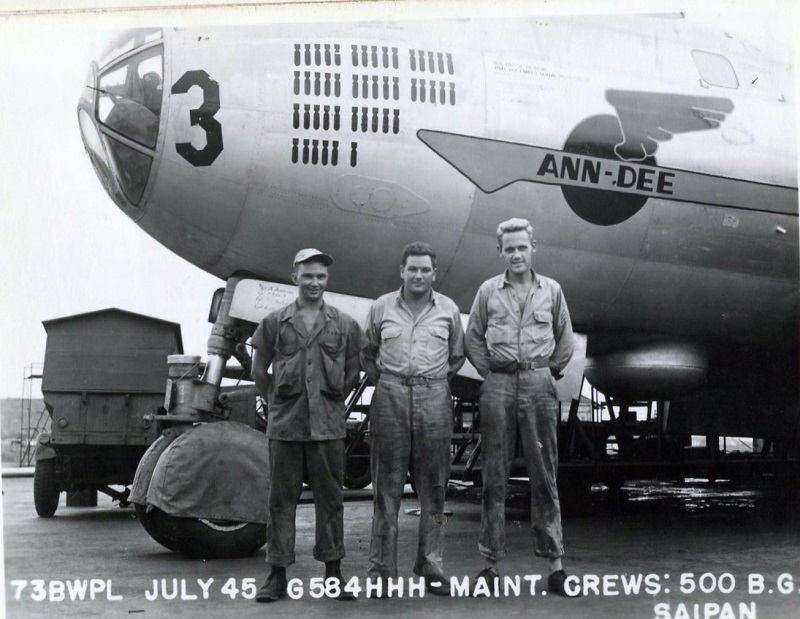
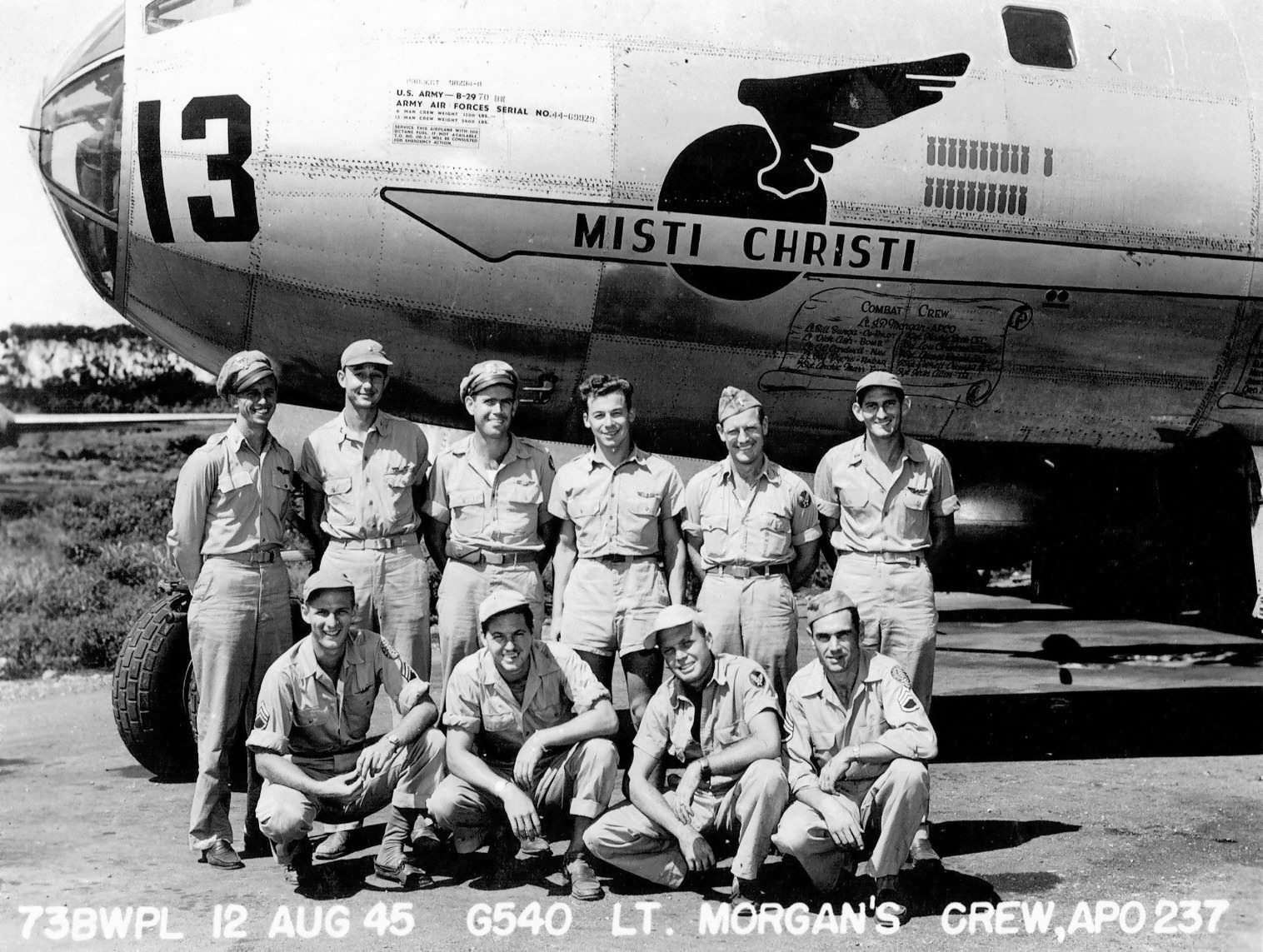
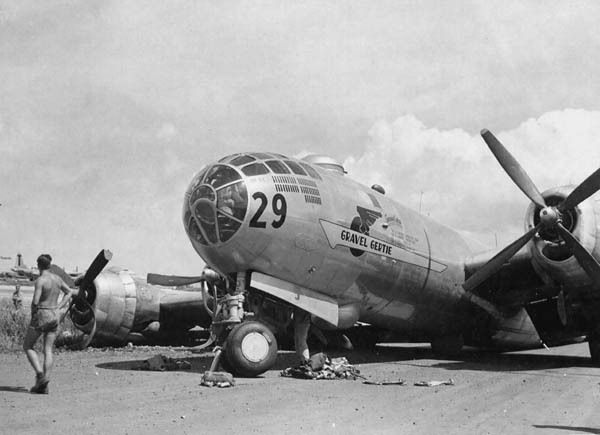
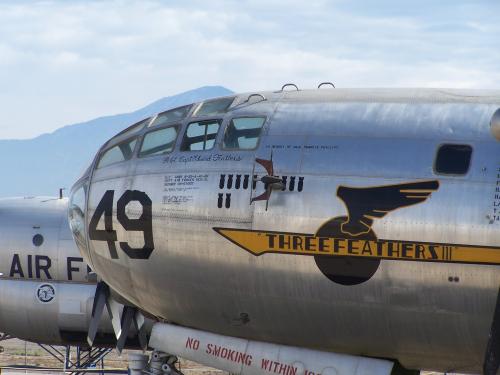
BUT, it does appear that it very well was an aircraft operated in the theater, as all its markings, as well as captions about the aircraft appear to be completely accurate, I have found other aircraft from the same unit as “the big stick” that have nearly identical paint schemes aside from tail numbers and nicknames.
This leads me to believe that images of this airframe may simply have not been taken, or were never digitalized.
The 73rd Bombardment Wing (Very Heavy) was a United States Army Air Forces combat unit during World War II that conducted strategic bombing operations against the Japanese mainland using Boeing B-29 Superfortresses. It operated as part of the Twentieth Air Force under the XXI Bomber Command.
Activated in late 1943, the wing was designated very heavy to reflect its equipment: the long-range B-29. After completing stateside training, the unit deployed to Isely Field on Saipan in the Northern Mariana Islands during the summer and fall of 1944. It was the first B-29 wing to operate from the Marianas. Commanded by Brigadier General Emmett O’Donnell Jr., the wing was positioned approximately 1,500 miles from Tokyo.
On November 24, 1944, the wing executed the first B-29 strike against Tokyo from the Marianas. Initial missions encountered difficulties, including high-altitude jet stream winds, adverse weather, and mechanical issues with the B-29 engines.
Because high-altitude precision bombing yielded limited results against industrial targets, XXI Bomber Command changed its tactics. The 73rd Bomb Wing shifted from high-altitude daylight bombing to low-altitude nighttime incendiary raids.
Comprising the 497th, 498th, 499th, and 500th Bombardment Groups, the wing conducted firebombing missions against Japanese urban areas until the end of the war in August 1945. After the surrender of Japan, the wing transported supplies and conducted relief flights for Allied prisoners of war. The unit subsequently returned to the United States, was assigned to the Strategic Air Command, and was inactivated in May 1946.
“The Big Stick” featured the 73rd bomb wings usual unit markings of a yellow “spear” that has a black circle with wings on it behind it. The tail featured a large black “Z” on the vertical stabilizer. Both on the nose just below the pilots positions and the aft section had the number “44” painted in black. Just behind the forward number 44 was the aircraft’s bomb markings that were painted in red.
inside of the yellow band was the aircraft’s nickname of “the big stick”
The name “the big stick” likely originates from the quote from Theodore Roosevelt “speak softly and carry a big stick”. The name likely implied that the b-29 was meant to be said stick. However this is just my interpretation, and it very well might be something completely different.
Sources
https://www.nationalmuseum.af.mil/Visit/Museum-Exhibits/Fact-Sheets/Display/Article/196202/marianas/
Donald, D. (Ed.). (1997). American combat aircraft of World War II. Motorbooks International.
Eden, P. E. (Ed.). (2004). The encyclopedia of aircraft of World War II. Amber Books.
- Yes
- No