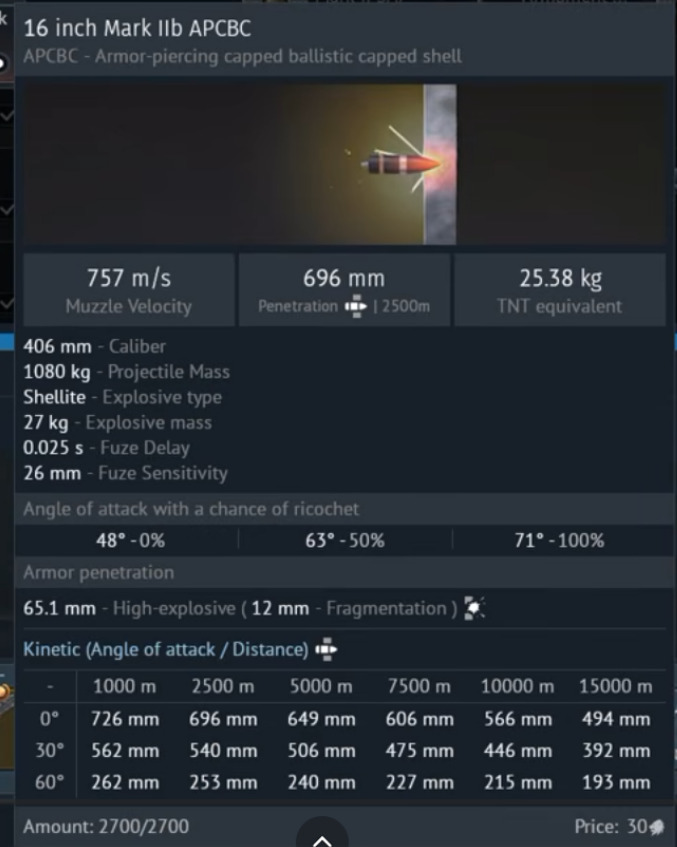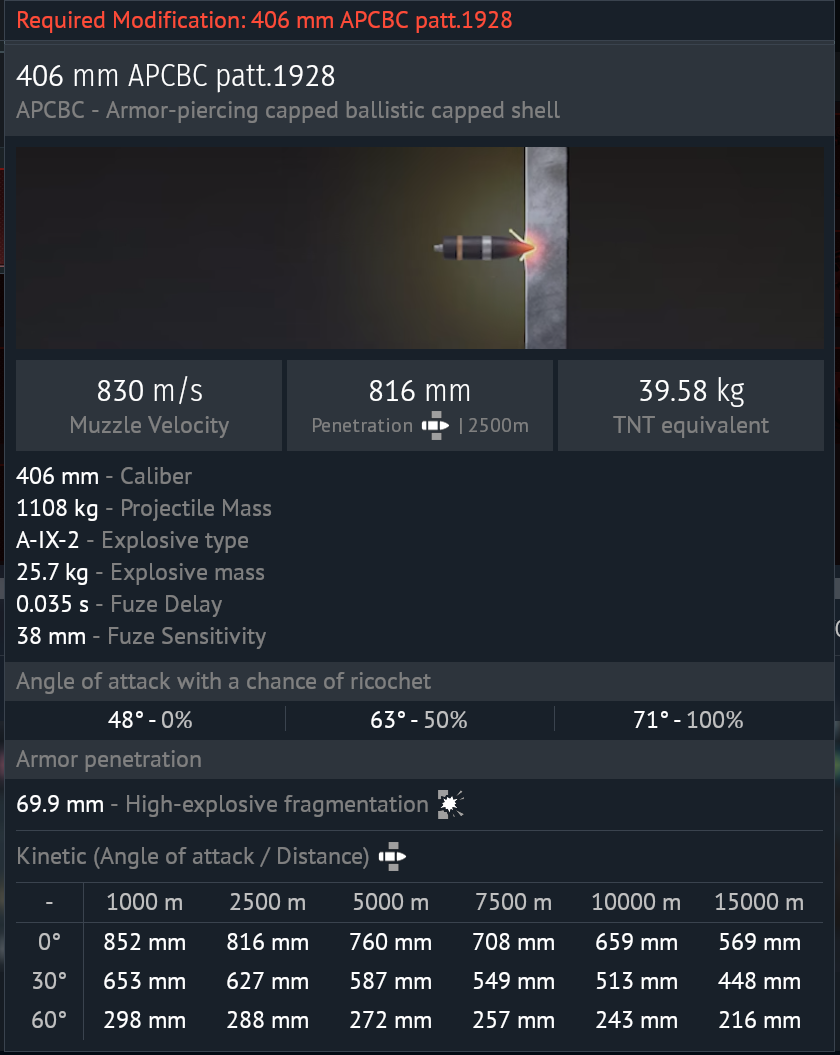
Its Lighter than the American 16in AP rounds, and isn’t even 100M/s faster, has the heaviest bursting charge IN THE GAME, and yet is the strongest AP Round in naval.
The math doesn’t math here at all.
I don’t care how you do the math either.

it has nearly 10KG more explosive filler than Mk8, and is a lighter shell, meaning it has LESS kinetic energy than the Iowa’s, even with the Higher velocity.
This shell should be performing closer to the Rodney/Nelson’s shells. Not nearly out performing shells that weigh nearly 400kg more than it, and are barely slower, with a smaller bursting charge.
If anything its performance should be more in Line with the British 16in AP. As they used lighter, Thinner walled shells, with heavier bursting charges. Which is exactly what the Russian 16in AP is, its a Light weight, Thin walled AP shell, with alot of filler, that should be more prone to shattering, and have less penetration than heavier shells with less filler.