- Yes
- No
Introduction
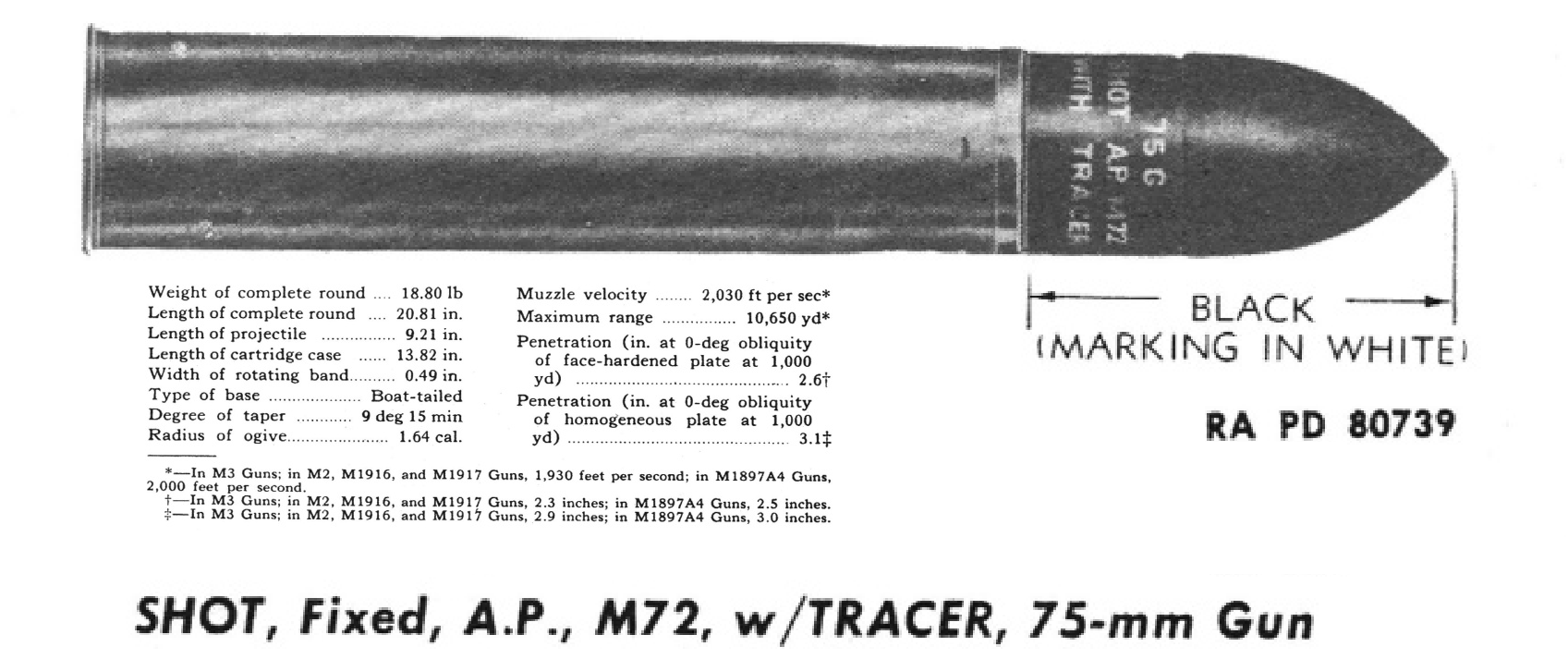
In late 1941 the British Army faced serious challenges in North Africa as German Panzer III and IV tanks began to appear with face-hardened and in some cases spaced armour, against which existing British 2-pdr uncapped armour-piercing shot proved increasingly ineffective. During Operation Crusader, firing tests on captured tanks confirmed that standard AP rounds regularly deformed or shattered on such armour, and the problem worsened when Rommel’s rebuilt armoured force returned in January 1942 equipped largely with Panzer IIIJ models carrying factory-applied 50 mm face-hardened plate. At this same time the first American M3 Medium tanks began arriving in the Middle East. The British variant, the Grant Mk I, provided the British Army with a 75 mm gun for the first time, although early U.S. ammunition was limited to the AP M72 solid-shot round and HE shells whose fuses required adaptation using First World War French components to function reliably in tank gun service.
Following the British retreat to the Gazala line early in 1942, the Grant Mk I entered frontline service. By the end of March 1942, 666 British Grants had been built in the United States, and by late May 167 were serving with the British 1st and 7th Armoured Divisions. These numbers were insufficient to fully equip every regiment, resulting in mixed units combining Grants with M3 Stuart light tanks. The type first saw combat on 27 May 1942, when 4th Armoured Brigade engaged the 15th Panzer Division at the opening of Rommel’s Operation Venezia. In these battles the Grant’s 75 mm gun proved superior to that of the Panzer III and IV then in service, allowing units such as 3rd Royal Tank Regiment and the 8th Hussars to inflict heavy losses, even though many Grants were ultimately knocked out or forced to withdraw. Grant-equipped formations continued to play a major role through mid-1942, including at Alam Halfa in August, where 22nd Armoured Brigade, operating two squadrons of Grants per regiment, helped halt Rommel’s final attempt to break through to the Nile.
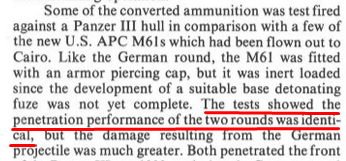
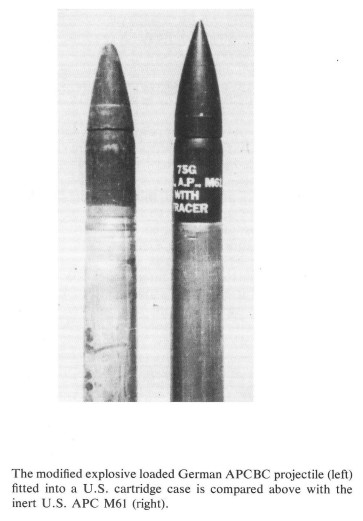
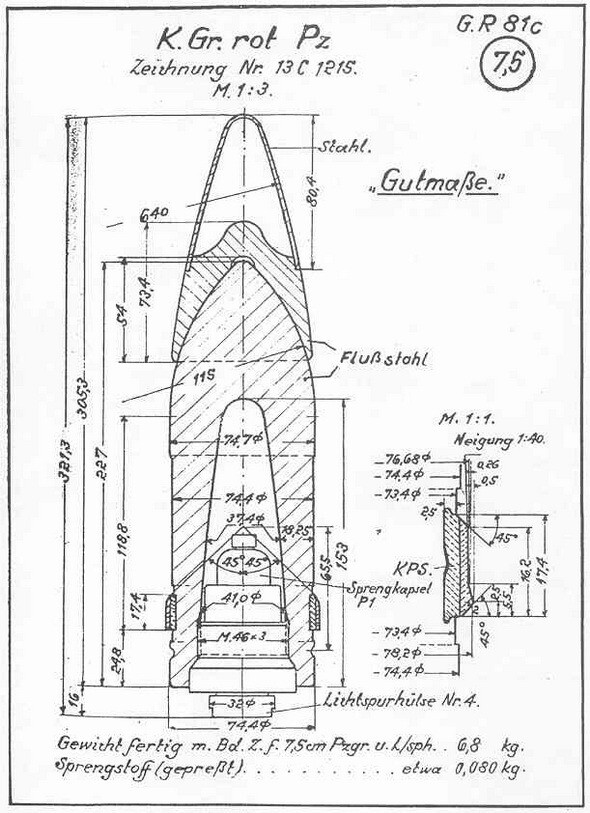
The effectiveness of the Grant’s 75 mm gun, however, depended on solving the ammunition problem. With U.S. APC M61 projectiles not scheduled to reach production until mid-1942 and unavailable in the Middle East, early tests near Cairo in March 1942 showed that the existing AP M72 was ineffective against face-hardened German armour beyond about 500 yards. An expedient solution emerged when Major Northy, an Australian ordnance officer, suggested a composite round by mating captured German 75 mm APCBC projectiles, about 17,000 of which had been taken during operation Crusader, to American 75 mm cartridge cases, within which the projectile would fit nicely if the driving band of the German APCBC was filed down. In a matter of weeks approximately 15,000 of these modified round were produced, and British reports soon note the supply of these “composite German/American A.P.C.B.C.H.E.” rounds to Grant units, though some crews initially viewed them with suspicion and early users experienced problems such as projectile-case separation when unloading live rounds. Despite these difficulties, favourable reports followed, and the new ammunition significantly improved the Grant’s ability to defeat German tanks equipped with face-hardened armour as the desert campaign continued.
In-game, this A.P.C.B.C.H.E. ‘AP-composite’ ammunition would give Britain a unique and strong alternative to current ammo types. The confirmed historical use of this ammo is with the Grant tank, which would therefore be the definitive recipient, however, as it is estimated that 15,000 rounds were produced in total, and that all British-operated 75mm tank guns during the war were capable of firing interchangable ammunition, consideration could also be given to giving it to other tanks where historically feasible.
Specifications
Images
Spoiler
Sources
Spoiler
A.F.V. Technical Reports from G.H.Q., Middle East, 159A - extract available here
Sherman - A history of the American Medium Tank, R.P. Hunnicutt - extract available here
M72 ammunition documentation
K.Gr.Rot. pz 39 ammunition documentation
George Burling Jarett and the 75mm ammunition challenge – The Crusader Project