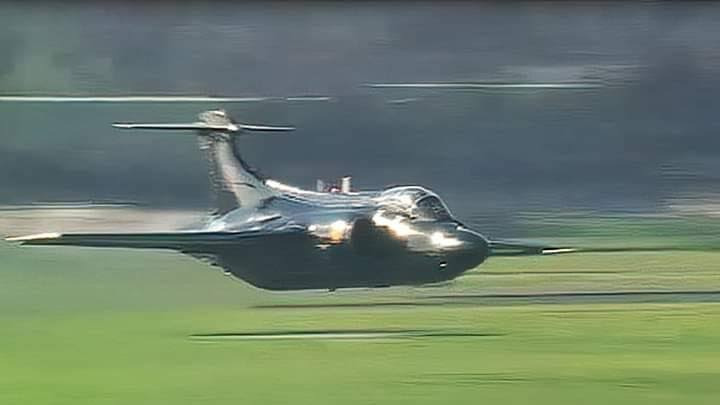
Welcome to my second suggestion ! This one is about multipathing in a modern era backround; suggesting a rework of the comportment of ground-to-air ARH (actve radar homing) missiles against low-flying targets. Prepare a good couch, cup of coffee and maybe Aspirin for later !
Your opinion is welcome, poll is at the end
Close Air Support (CAS) plays a major role in modern conflics; and so are weapons designed to avoid enemy aerial forces. They have evolved drastically trough the ages; started with a quadruple trench-war machine gun mounted on a truck to missiles creating dead-zones with radius up to 100km, and weights more than 500kg. But avoiding those missiles have never been easy; with each generation cames weaknesses.
Quick call-back : origins of multipathing
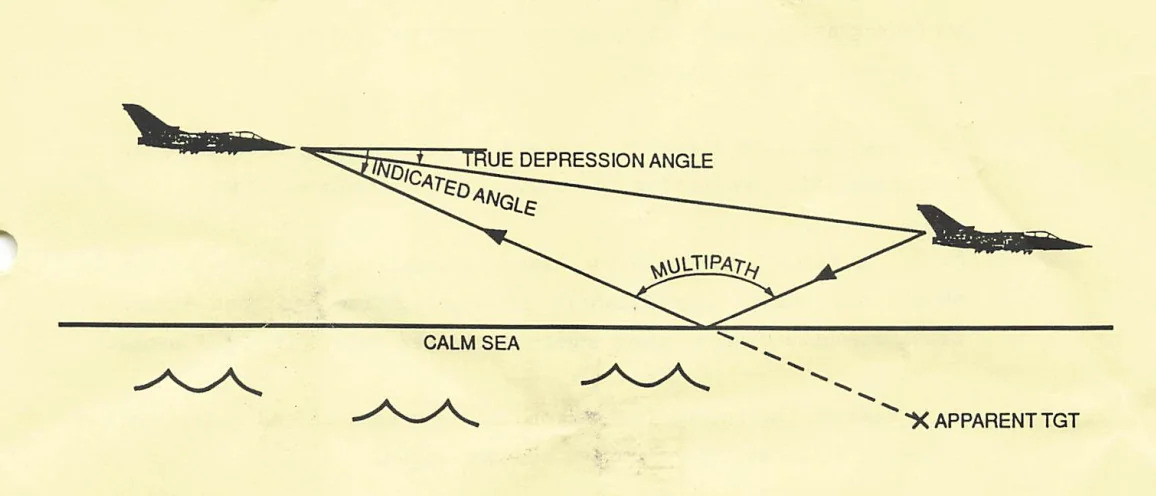
One of the oldest tricks in the book is multipath: when a radar signal bounces off the sea, the ground, or any nearby surface on its way to and from a target, the receiver picks up two overlapping copies of the same return (one direct, and a reflect on the ground) arriving from slightly different angles at nearly the same time.
The radar can struggle to tell them apart, and the reflected copy can drag its tracking solution toward a “phantom” position, sometimes right down toward the surface itself. For decades, this was a genuine exploitable weakness — the reason sea-skimming anti-ship missiles fly at wave-top height, and why a low-flying aircraft could sometimes vanish into ground clutter. This post looks at how that weakness works, how much modern radar processing has closed it, and where the physics still leaves a real tinnier gap.
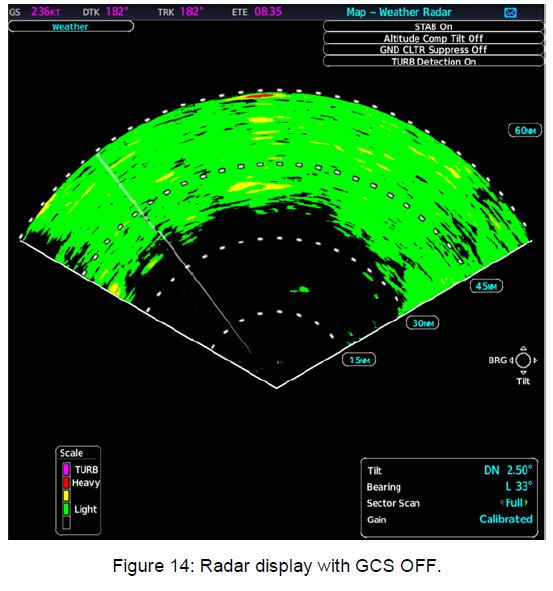
Exemple of ground clutter.
Multitude of software and hardware updates have been made trough the 2000’s all the way to today in the objective of fighting against those clutter.
In-game, games at upper BR’s are ruled by air domination. Sadly most anti-air at toptier are quickly abused by multipathing targets and pop-up attacks or low-flying/hovering attackers (helicopters). Any target flying low (currently ± 30m) can escape any incoming ARH missiles, representing 13 out of 24 12.+ total missiles (>50%).
IRL comparaison.
‘Magnum!’ Flying A Wild Weasel Mission With The Tornado ECR And The F-35 - The Aviationist
In practice, multipath is no longer a reliable evasion method against modern air defenses. Today’s radars counter it directly through fine angular resolution, adaptive sidelobe cancellation, frequency agility, and other complex methods (that are quickly explained further). As a result, real-world evasion today relies on active, trainable tactics (by example : notching, terrain masking, chaff/jamming, going cold) while multipath survives mainly as a residual, partial effect against older or lower-tier systems rather than a real tactic against modern ones.
Example of an imaginary modern SEAD mission of the Luftwaffe against Buk anti-air

1. Intelligence and mission planning
Before any aircraft launches, planners build an Electronic Order of Battle from prior SIGINT/ELINT collection — known or suspected SAM sites, likely engagement ranges, and radar activity patterns. Without a dedicated EW platform doing real-time jamming/geolocation, this pre-mission picture matters even more, because the strike aircraft won’t have a Growler-type asset actively mapping and suppressing emitters as it goes.
2. The range problem
Pantsir-S1 has an engagement envelope out to roughly 20 km against aircraft; Buk-M2/M3 extends further, commonly cited around 35–70 km depending on variant and target type. AARGM/HARM-class missiles have stated ranges well beyond both (AARGM is generally cited around 100+ km depending on launch conditions). So in principle, the strike aircraft can launch from outside the SAM’s engagement envelope entirely — this is the whole logic of an anti-radiation missile: force the enemy radar to choose between staying on (to keep guiding its own missiles) and getting hit, try to intercept it (but if it is a miss, it might be too late to try anything else), or going dark (and losing its eyes and guns).
3. Terrain masking during ingress
The strike aircraft’s survivability leans heavily on staying undetected as long as possible during approach by flying low, using ridgelines/valleys to break line of sight to known or suspected SAM search radars, and only climbing to acquire the emitter and get a valid missile solution at the last practical moment. This is slower and riskier than a jammer-supported package, since there’s no one degrading the SAM’s radar picture while the strike aircraft is exposed.
4. The wild weasel “pop-up and shoot”
At some point the aircraft needs enough altitude/line-of-sight to either passively detect the SAM’s radar (via RWR) or receive third-party targeting data, then fire from outside or at the edge of the SAM’s own engagement range. This is a vulnerable window, when the aircraft is exposed to radars when it is above terrain masking.
5. What happens on the SAM’s side
A competent SAM crew, especially Pantsir or Buk operators aware of ARM threats, will often shut their radar down (“go cold”) or move immediately after illuminating a target, precisely to deny the ARM a stable emitter to home on. This can be countered by modern ARM’s using GPS guidance, but doesn’t give a guaranteed kill.

Examples of modern counters
AESA radars with fine angular resolution
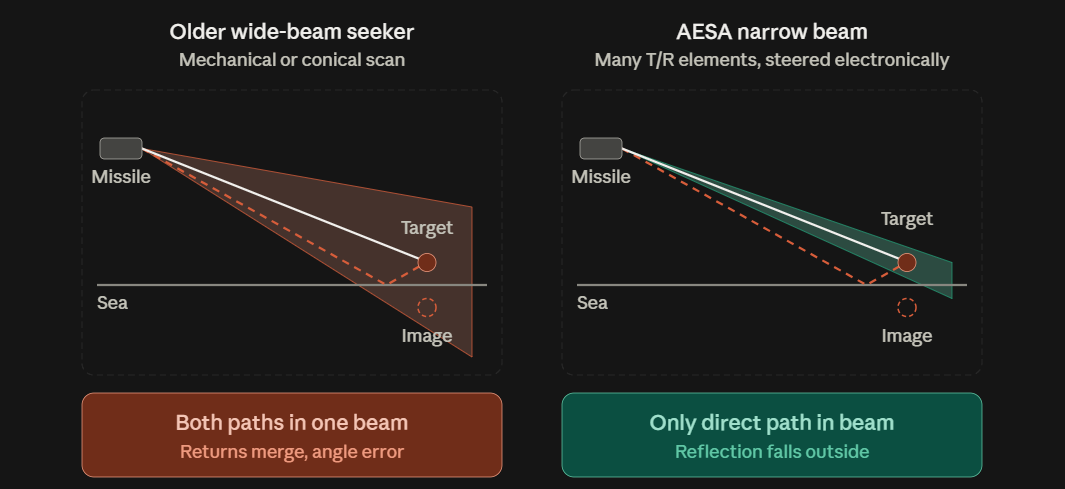
AESA radars use many small transmit/receive elements combined electronically, giving a much narrower, more precisely steerable beam than older mechanically-scanned or conical-scan antennas. That narrower beam and finer angular measurement let the radar separate the direct return from a low target and its ground/sea-reflected image, which older wide-beam systems couldn’t resolve apart. This largely closes off the low-altitude multipath deception that made terrain-hugging or sea-skimming an effective way to break a lock.
Frequency agility
rapidly hopping frequency changes the interference pattern the multipath reflection creates pulse to pulse, decorrelating it so it averages out over the tracking window instead of producing a stable false angle.
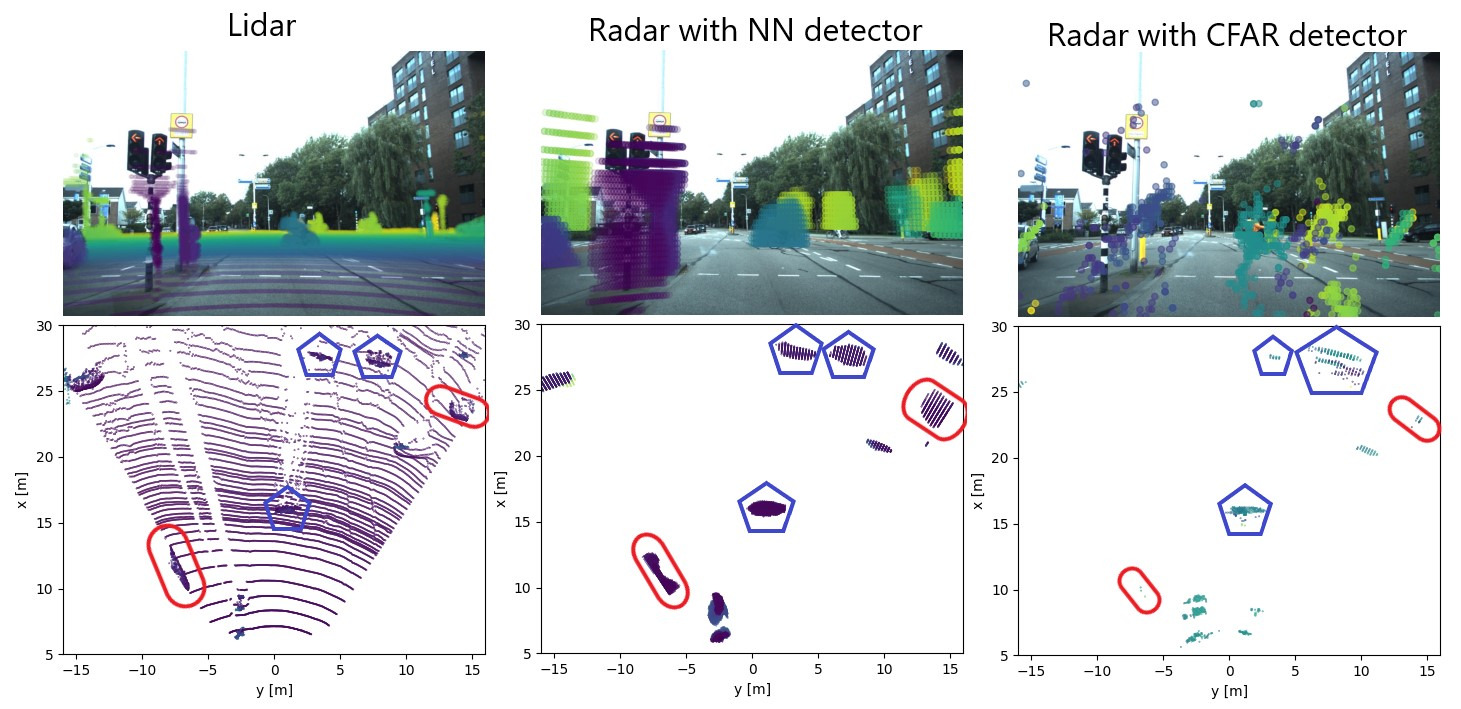
Adaptive SideLobe Cancellation (ASLC) / Constant False Alarm Rate (CFAR) processing
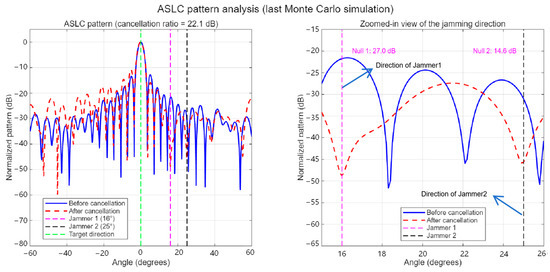
actively nulls energy arriving from the reflection’s angle and statistically rejects clutter-level returns, both used explicitly on systems like Type 03 Chu-SAM.
How CFAR works (easy schema).
Link to the video it’s from in
‘>Links and images to understand better some concepts if I wasn’t clear enough’
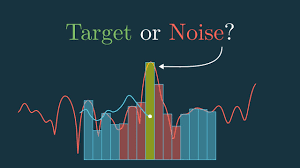
The objective is to electronically identify ‘noise’ and the target using complex numerical methods, and cancel the sound/jammer.
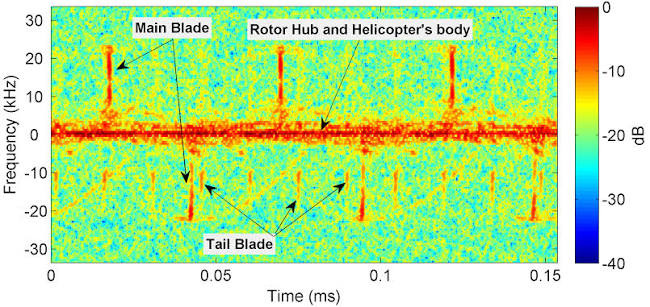
Micro-Doppler / blade-flash discrimination: The Doppler paradox of an helicopter
Is used to target helicopters mainly. Doppler works by supressing sationnary stuff to only see the targets and can work without being ‘jammed’ by scanning the whole regionnal topography. But what about a stationnary helicopter such as a hovering Mi-28NM by exemple ? Well Micro-Doppler is the Doppler effect for rotor blades, compressor faces, or propellers. Each add their own oscillating signature distinct from the fuselage’s overall closing velocity. The most exploitable form is blade-flash: brief, high-amplitude spikes generated when a rotor blade presents its broadside to the radar, recurring at a rate tied to blade count and RPM, which gives seekers a near-fingerprint for classifying rotorcraft or drones even when bulk Doppler is near zero, as with a hovering helicopter otherwise indistinguishable from ground clutter.
Steep terminal engagement geometry
missiles (Fox 3 especially, once on their own seeker) generally close from above or a steep dive angle rather than skimming the surface themselves, which geometrically separates direct and reflected paths far better than a shallow ground-radar look.
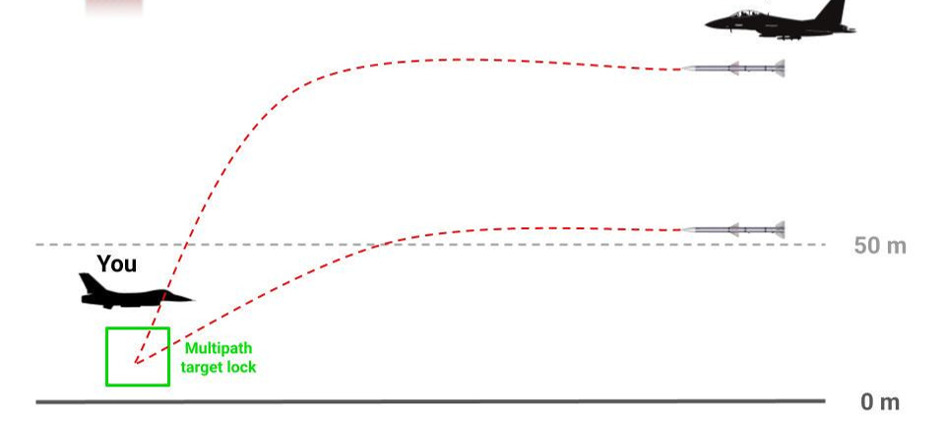
sorry for the bad meme, it’s the cleanest schema I could find to explain.
Used in air vs air in WT and IRL to get almost a 100% sure shot.
What can be found in toptier missiles ?
What I could find on modern anti-air and presence of modern counters in them
| Missile | AESA seeker | Frequency agility | ASLC/CFAR | Micro-Doppler/blade-flash | Steep terminal geometry |
|---|---|---|---|---|---|
| Aster-30 (Block 1NT) | No: I-band active seeker | Classified/unknown: seeker ECCM stated (home-on-jam), agility not named | Reportedly present: clutter suppression stated (Block 1 seeker), not named CFAR/ASLC | Assumed present, not sourced | Classified/unknown |
| Chu-SAM (base Type 03) | No: I-band active seeker | Classified/unknown (unsourced) | Classified/unknown | Assumed present, not sourced | Classified/unknown |
| Chu-SAM Kai | Yes | Jamming resistance stated at system level, AESA implies frequency agility | Classified/unknown | Assumed present, not sourced | Classified/unknown |
| AMRAAM-ER | No: I-band active seeker | Classified/unknown | ECCM stated, not named CFAR/ASLC | Assumed present, not sourced | Classified/unknown |
| AIM-120C-7 | No: I-band active seeker | Classified/unknown | ECCM stated, not named CFAR/ASLC | Assumed present, not sourced | Classified/unknown |
| 9M317MA (Buk-M3) | No: J-band active seeker | Classified/unknown | Classified/unknown | Assumed present, not sourced | Classified/unknown |
| CAMM | No: I-band active seeker | Classified/unknown | Confirmed: clutter rejection stated | Assumed present, not sourced | Classified/unknown |
| CAMM-ER | No: I-band active seeker | Classified/unknown | Classified/unknown: not sourced in this pass | Assumed present, not sourced | Classified/unknown |
| FM-3000 | No: I-band active seeker | Classified/unknown | Classified/unknown | Assumed present, not sourced | Classified/unknown |
| I-Derby ER | No: I-band active seeker | Classified/unknown: software-defined, upgradable against EW | Classified/unknown | Assumed present, not sourced | Classified/unknown |
Aster 30 has intercepted a supersonic sea-skimming target (French Navy, October 2025). The Russian MoD claims Buk-M3 intercepted simulated cruise missiles below 10 m. Approaching from above to defeat multipath is documented in the patent literature (US 6,674,390), but no missile here has a published profile
Sources
Aster-30
ASTER | MBDA
MBDA To Upgrade Aster 30 Block 1 Missile System IDEX 2025 - Eurosam promotes Advanced Aster 30 B1NT Missile and SAMPT NG - EDR Magazine
Arabel radar frequency agility: https://www.army-technology.com/projects/aster-30/
First test firing of new French-Italian ASTER 30 B1 NT surface to air missile - Naval News
October 2025 intercept of a supersonic sea-skimming target: https://armyrecognition.com/archives/archives-naval-defense/naval-news-navy-2025/french-fremm-alsace-fires-aster-30-missile-to-intercept-supersonic-sea-skimmer
https://www.globalsecurity.org/military/world/europe/aster.htm
Chu-SAM and Chu-SAM Kai
https://www.globalsecurity.org/military/world/japan/chu-sam.htm Type 03 Chu-SAM | Weaponsystems.net
AAM-4B AESA seeker (2010): AAM-4 - Wikipedia
Kai jamming resistance (system level): https://armyrecognition.com/news/army-news/2025/japan-enters-hypersonic-missile-defense-era-with-mass-production-of-type-03-chu-sam-kai
Type 03 Chū-SAM - Wikipedia
Type 03 Chū-SAM Kai (SAM-4 Kai) - JGSDF's mini Patriot: Part 2
https://w.atwiki.jp/jp-summons/pages/557.html
Japanese MoD document, checked and silent on the seeker type: https://www.mod.go.jp/j/policy/hyouka/rev_suishin/r03/pdf/r03_rontenshiryou_01.pdf
AMRAAM-ER and AIM-120C-7 (same seeker)
C-7: improved ECCM with jamming detection, upgraded seeker: https://www.designation-systems.net/dusrm/m-120.html
C-7 mechanically scanned, AIM-120D possibly AESA: Evidence Of Ukraine Using AIM-120C-8 Missiles Emerges
AMRAAM-ER uses the C-7 guidance section (forum quoting Defense News): https://www.secretprojects.co.uk/goto/post?id=458925
AMRAAM Missile | Raytheon
9M317MA (Buk-M3)
Active radar homing head (ARGSN) by Agat: 9K317M "Buk-M3" medium-range anti-aircraft missile system | Missilery.info
Moscow's Missile Shield: BUK-M3 Viking Claimed Able to Neutralize F-35s, Cruise Missiles, and Hypersonic Threats - Defence Security Asia
Buk M3 - Russian Medium Range Air Defense Missile System - смотреть видео онлайн от «Сота за Городом» в хорошем качестве, бесплатно опубликованное 8 июля 2026 года в 21:24:55 00:01:26.
https://www.globalsecurity.org/military/world/russia/sa-11-9m317.htm
Russian MoD claim about cruise missiles below 10 m: TOR and Buk air defense systems tested against incoming missiles at less than 10m altitudes - Asian Military Review
CAMM and CAMM-ER
Active RF seeker with clutter rejection: https://www.airforce-technology.com/?p=203295
CAMM CAMM-ER Sea Ceptor SAM Missile Air Defence System MBDA and CAMM (missile family) - Wikipedia
MBDA CAMM-ER / Albatros-NG Naval Air Defence System - Quwa
Low-altitude threats in the design brief: Land Ceptor ~ Success For MBDA CAMM Interceptor | Joint Forces News
FM-3000
HQ-11 - Wikipedia
https://www.globalsecurity.org/military/world/china/fm-3000.htm
###I-Derby ER
I-Derby ER, software-defined solid-state RF seeker:** PGBET - Situs Slot Terpercaya Tempatnya Spin Cuan Tanpa Drama
SPYDER - Wikipedia
Conclusion:
Visible complications of such application
Sadly, this addition would completely change the dynamic of toptier air gameplay. I’ve tried to list the arrangement to be implemented in an optic of keeping CAS possible and fair.
Keep in mind that multipathing is not the only way to escape a missile !
-
point n°0: stock chaff will be not only good but a need in smaller environements.
-
First of all, multipathing won’t work anymore after a certain missile generation (already partially in-game with SACLOS or IR missiles) , or be reduced to altitudes that messes with fuze’s sensibility, which makes pilots risking a lot with abrupt topography changes and a much higher risk of crash (that will be combined with the ‘new’ ,as of july 2026, maneuver kill mechanic.)
-
Secondly is the issue of smaller maps; some have air spawns too close and as well the end of the map still in the ‘dead’ zone of some missiles. Pilots will have to constantly notch, use the terrain and evade missiles without any possibility to have rest.
-
Helicopter will have to use as much as possible terrain coverage and MAW’s chaffs. The ‘hind doctrine’ ,as I call it, of frontal attack and count on armor/ECCM won’t be as good.
-
Helipads and airports will have to be in safer area, and more distant from the ground map. But remember that a static aircraft with shut down and cooled engine have no difference from a tree !
-
Slower gameplay, maybe a need for longer battles ?
Those changes are realistic and manageable; it is a big change in the gameplay, making pop-up attacks and short range air-to-ground missiles less common.
Links and images to understand better some concepts if I wasn't clear enough
https://www.radartutorial.eu/01.basics/Angular%20Resolution.en.html
To understand fine angular resolution.
https://www.researchgate.net/publication/313392321_Object_Discrimination_in_GMTI_Doppler_Radar_Data
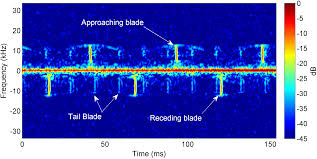
to understand better Blade Flash discrimination
https://www.youtube.com/watch?v=BEg29UuZk6c
Constant false alarm rate - Wikipedia
To understand better CFAR (Constant False Alarm Rate)
What is Adaptive Sidelobe Canceller? | RF Essentials
To understand ASLC better (here in a context of electronic jamming)
Thank you for taking time to try to understand such complex systems ! I might even myself don’t understand fully things; feel free to correct me on those.
The objective here is not in an optic of complexification of mechanics, but to show a software and hardware update having as goal the rejection of multipathing and low-altitude tracking.
PS: This will surely not be added soon. Better missiles and jets can be added, ECM as well, and maybe modern stealth airframe will help a lot for HARM missions.
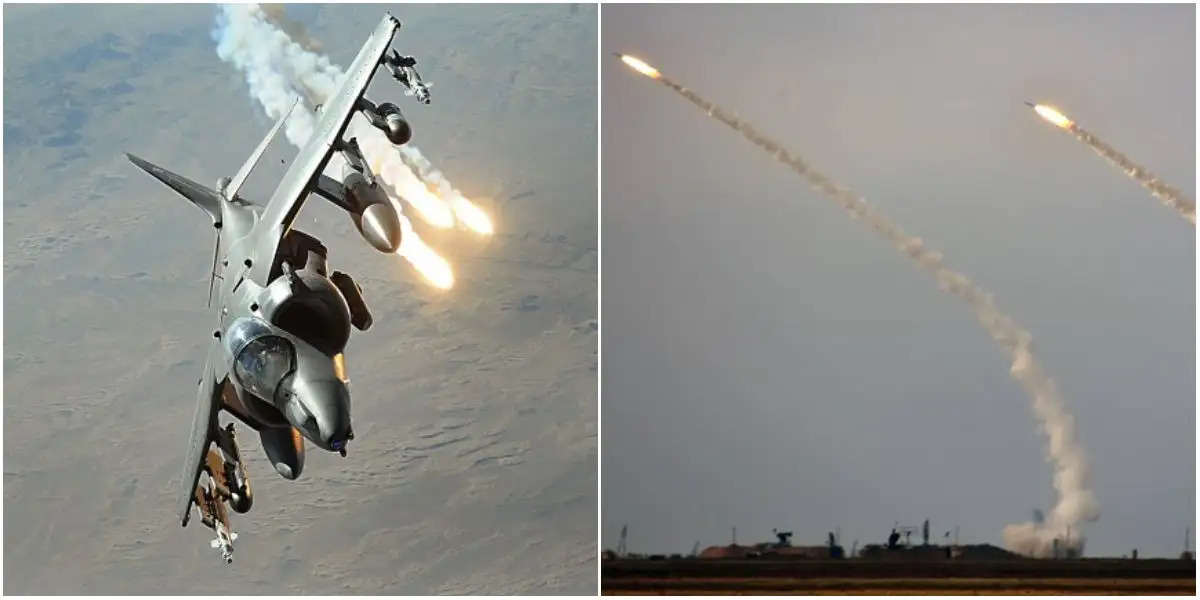
Give your opinion about changing multipathing for last-gen missiles
- Change multipathing for toptier ARH SAM if sources/proof shows it can counter multipath.
- Change multipathing for every aunti-air missiles (air-to-air as well) if sources/proof shows it can counter multipath.
- No, keep multipathing as a way to deal with some of the modern missiles.