Would you like to see the PT-76 Roket (TAPIR) in-game?
- Yes
- No
0
voters

PT-76 Roket (TAPIR)


Hello everyone! Today I would like to suggest an Indonesian modification for the PT-76B, the PT-76 Roket, colloquially called the TAPIR. This is a prototype made by PT. Also Putra Indonesia in 1995 where the 76mm D-56TS gun was removed and replaced with a 140mm BM-14-17 MLRS. Unfortunately there isn’t a whole lot of information on this vehicle since its only a prototype and spent a majority of its years in storage.
This suggestion is primarily made to complement the already suggested Indonesian Ground Forces Sub-Tree as well as the Expanded List of Indonesian Ground vehicles
A. Background
Details
The Round Table Conference in 1949 marks the end of the Indonesian War of Independence, however there were still issues in regards to New Guinea, however due to diplomatic methods reaching a standstill, Indonesia declared the immediate return of New Guinea to Indonesia. Because of this declaration, the Dutch increases their military presence in the region, even bringing in the Aircraft Carrier, Karel Doorman.
Indonesia then realizes that their armed forces is not equal to the Dutch. Because of that, in around 1958, the Indonesian armed forces plans to purchase a large amount of military hardware from many different countries, originally the plan was to purchase western equipment, however this didn’t work because the western nations supported the Dutch at the time. Additionally, the rise of the Indonesian Communist Party in the 1955 elections certainly didn’t help turn the opinion of the western nations. Due to this situation, Indonesia, which technically is a non-aligned country, was forced to buy equipment from the eastern bloc nations, like Yugoslavia, China, and the Soviet Union. Eventually in around the 1960s, many military hardware of soviet origins entered Indonesia, one of which is the amphibious PT-76 light tank, and around 50 units of them were purchased.
Due to their amphibious nature, they are mostly used by the Amphibious Tank Battalion of the Indonesian Navy Commando Corps (KKO AL). They were originally prepared to conduct the largest military operation in Indonesian history, Operation Jayawijaya, a planned large-scale amphibious operations to take back New Guinea. However this operation was cancelled a day later due to the signing of the New York Agreement.
Although not used for operation Jayawijaya or Trikora, the tanks was used during Operation Seroja, or the invasion of East Timor. The Marine Corps’ PT-76 is used for amphibious landings with infantry to take beachheads and push inland. However, in order for the infantry to safely push forward, they would need an artillery support, this role is fulfilled by the Marine Corps’ BM-14-17 trucks. But these trucks cannot be deployed simultaneously with the infantry, as the beaches need clearing first before the MLRS can land. This issue significantly halts the speed of infantry because they first need to capture the beach, wait until its clear, wait until the trucks land, and then continue. Therefore the Marine Corps decided that there should be an amphibious MLRS that can accompany the PT-76s during the beach landing so that the infantry can immediately push rather than having to wait.
The Marine Corps decided that some of the existing fleet of the PT-76s were to be retrofitted with the MLRS turret, since the PT-76 is already amphibious and there are plenty of them around. This project was given to PT. Also Putra Indonesia, the same company that did another modification for the PT-76, the PT-76(M). In this project, the tank turret was not changed, rather only the gun was removed. Then a BM-14-17 MLRS system was put on top of the tank turret. However, this project unfortunately stops at just one vehicle due to a lack of funding, and for a time it sits in storage in the Marine Corps’ 1st Cavalry Regiment in Surabaya.

PT-76 Roket gathering dust with broken parts in the 1st Marine Cavalry Regiment storage in Surabaya
With the opening of a new Marine Corps Museum in Sidoarjo, near Surabaya, it was decided that the tank should be moved to the new museum to showcase the vehicles that the Marine Corps used. It’s unknown exactly when the tank was moved, but the tank was refurbished and is currently sitting in display in the outer area of the museum. The tank received the designation R-001 for what I presume to be “Rocket, first unit” since its the only tracked MLRS system in Indonesia, at least until the 122mm SBS MLRS system developed by PT. PINDAD.

PT-76 Roket’s new home in the Marine Corps Museum in Sidoarjo
B. Specifications
Details
General Specifications
- Weight : 14 tons
- Length : 7.20m
- Width : 3.14m
- Height : 2.37m
- Crew : Most likely 2 inside the tank, but the museum label mentions around 4-6 crew
- Engine: Diesel Type V.6 240hp
- Max Speed : 44 km/h (10.2km/h in water)
- Turret can traverse, but the extent of which is questionable since the commander sits near the front of the turret
- based on images it most likely:
- has around (≈) ±40-45° of horizontal rotation
- can fire forward
Armor
Hull
- Upper front: 10mm @ 80°
- Lower front: 13mm @ 80°
- Side: 14mm @ 0°
- Back: 7mm @ 0°
- Bottom: 5mm @ 0°
Turret
- Front: 20mm @ 35°
- Side: 16mm @ 35°
- Rear: 11mm @ 33°
- Top: 8mm @ 0°
Armament
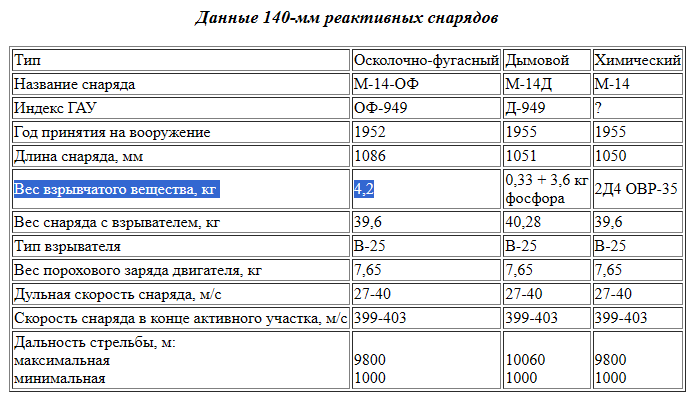
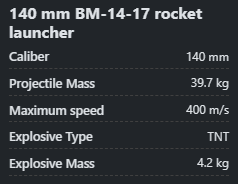
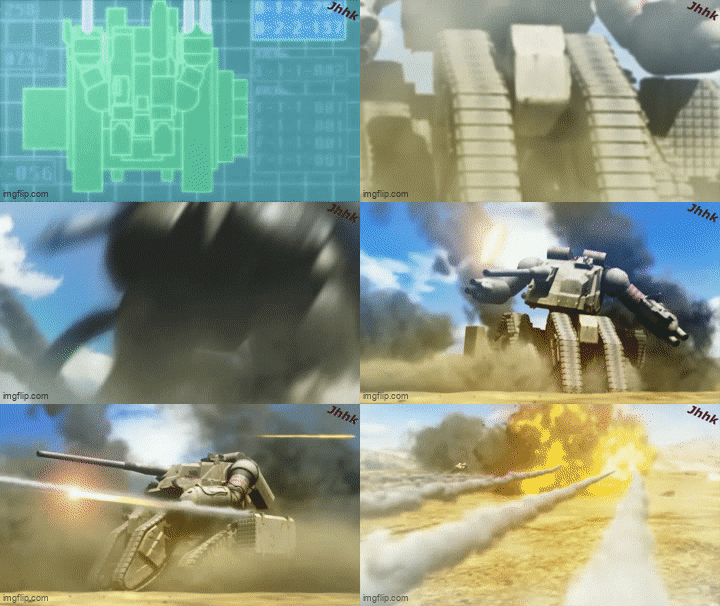
- BM-14-17 (8U35) 17-round MLRS System
- 17x 140mm M-14-OF HE-Frag rocket
Dimensions
- Length (mm): 1,092
- Diameter (mm): 140
- Weight (kg): 39.6
Warhead
- Type: High Explosive-Fragmentation
- Weight (without HE) (kg): 18.8 (14.6)
- Fuse: Impact fuse
propulsion: Solid propellant rocket motor
- maximum speed (m/s): 402
- Guidance: Unguided, ballistic flight
Armament images


C. More Images
Details
PT-76 Roket when the museum first opened

PT-76 Roket recently

Turret can traverse

D. Sources
Details
- Museum Label, PT-76 Roket (Palawa Tank). Museum Korps Marinir (Marine Corps Museum), Sidoarjo, East Java
- https://www.indomiliter.com/integrasi-kapa-dengan-peluncur-mlrs-solusi-alutsista-batalyon-roket-korps-marinir/
- https://www.indomiliter.com/pt-76-mlrs-prototipe-tank-mlrs-amfibi-marinir-yang-terlupakan/
- BM-14/17 : Generasi Pertama Self Propelled MLRS Korps Marinir TNI AL - Indomiliter - Support Our Troops
- 140mm M-14 | Weaponsystems.net
- BM-14 - Wikipedia
- PT-76B : Soviet Union (SOV)
- https://www.youtube.com/watch?v=LHgsxQmSDJw
- PT-76: Kisah Tank Amfibi Tua Korps Marinir TNI AL - Indomiliter - Support Our Troops
- PT-76 - Wikipedia
Any suggestions or corrections would be highly appreciated!Additionally, you can check out more Indonesian suggestions below!