Or it could be modular composite armour.
1 Like
i dont think so? waiting for more details
Segmented longitudinally? I´ve only seen that on reactive armor. From eyeballing, each box may be like this:
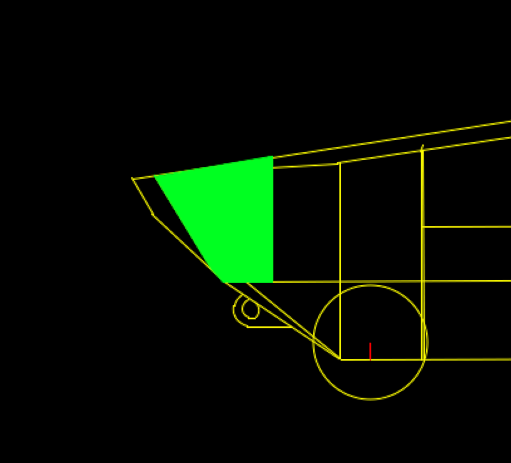
Id wager they’re composite/NERA modules aswell. Makes little to no sense to have ERA modules sunk in like this, if any of them were to go of they’d be pretty much be unchangeable due to structural damage to the front end
1 Like
Well, ERA is still the most efficient type of armor weight/volume wise. Using a non-reactive type of armor would come at the expense of lesser potential protection value. Still, that ERA detonating would only destroy the front hull sensors (which can be replaced quickly, we are talking about China here), not the structure of the tank itself.
For replacing any detonated ERA module I think there can be 2 ways: dismount the front cover together with the sensor platform or do it from the top.
I would think it is impossible for this to be ERA, as there have been no precedent in putting ERA behind existing armour, as well as the issue aforementioned, that the explosion of the round will lead to structural damage, which is contained by NERA or other composites, rather than expanded as with ERA. Another potential issue with this is with the shape, as u have highlighted ur self, it will be extremely irregular and no existing ERA can provide that sort of shape.
2 Likes
On one hand yes, there is precedent of ERA in between not ERA layers which is found on Merkava 3. And that specific aspect of the Merkava 3 was shared precisely with the Chinese back in the 90s when General Tal (chief designer of Merkava program) visited China in official capacity as part of technology sharing agreements. The Chinese later went on to write an article about it, citing speciffically the Israeli way of integrating ERA and NERA.
However this is not what we are seeing here. Type 100 actual hullfront end is a vertical wall that is parallel to the iddler wheel, very similar to T-14.

So what you have first is the sensor mount, then a layer of steel or composite that is just a cover.
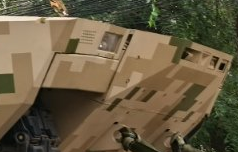
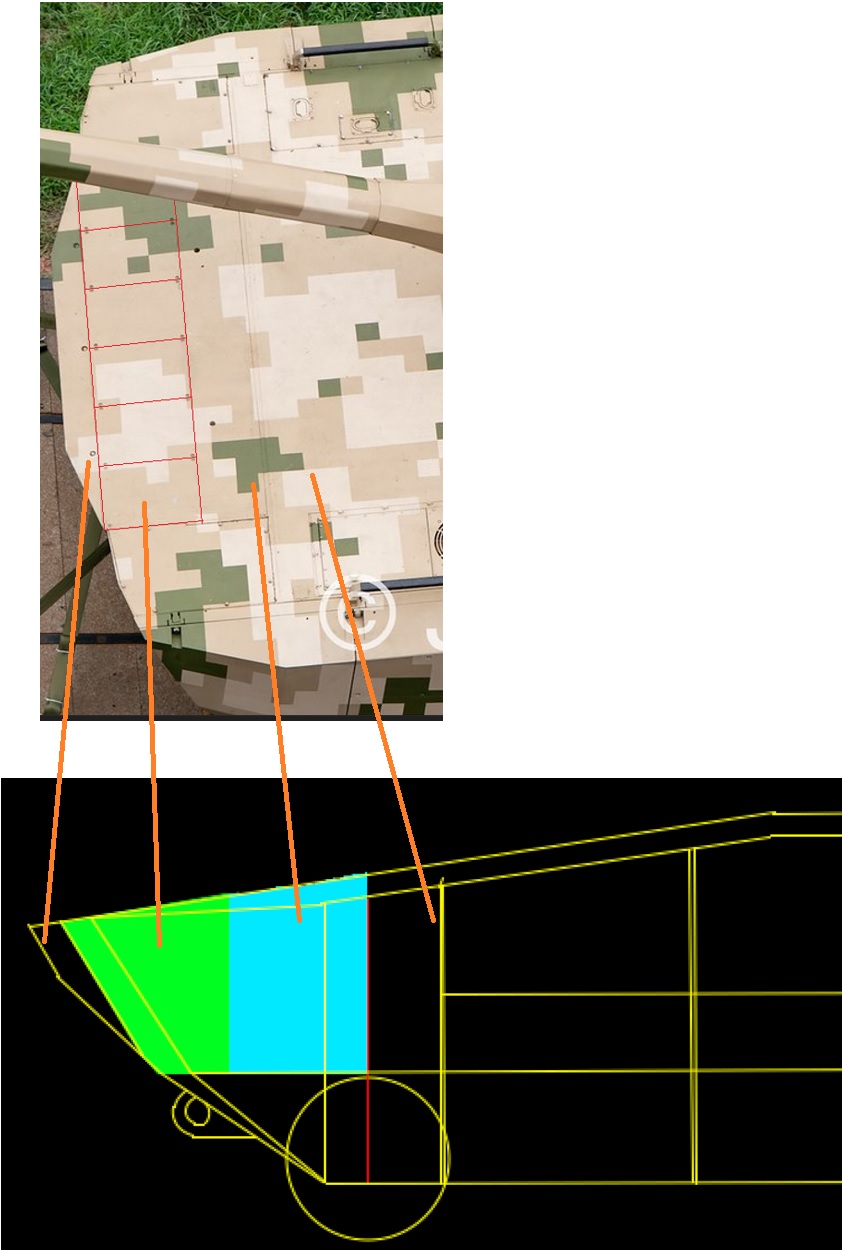
The upper section of the hull front -above the tow hooks and behind of the sensors- has extra armor modules, the frontmost of which appear to be ERA, which is what I pointed out. Whats directly behind those blocks I have no idea for the moment but it could well be another type of addon and then the base armor proper. I have no way yet to estimate thickness of the “add-on” directly behind the “ERA” nor the base armor. But I´ll figure something out sooner or later.
1 Like
The issue is T-14 doesn’t have ERA at that specific part, The T-14 has still, evidently flat ERA, which are fine to implement, however ERA of this shape, I would suggest is next to impossible, since ERA will need a base plate to operate on, and there would be no reason to ‘leave extra space’ for the ERA. Another issue of using ERA here is again the damage to sensors, since APFSDS round may not necessarily damage the sensors, ERA certainly will, it doesn’t make much sense to use ERA here especially if it has potential of extending damage to a vehicle so dependent of sensors.
Also the tank has no volume concerns certainly since almost everything before the crew casing can be used as armour.
Thats not true, there are many box-shaped ERA modules out there. Its the flyer plates inside what need to be sloped, which doesn´t coincide with external geometry. Example:
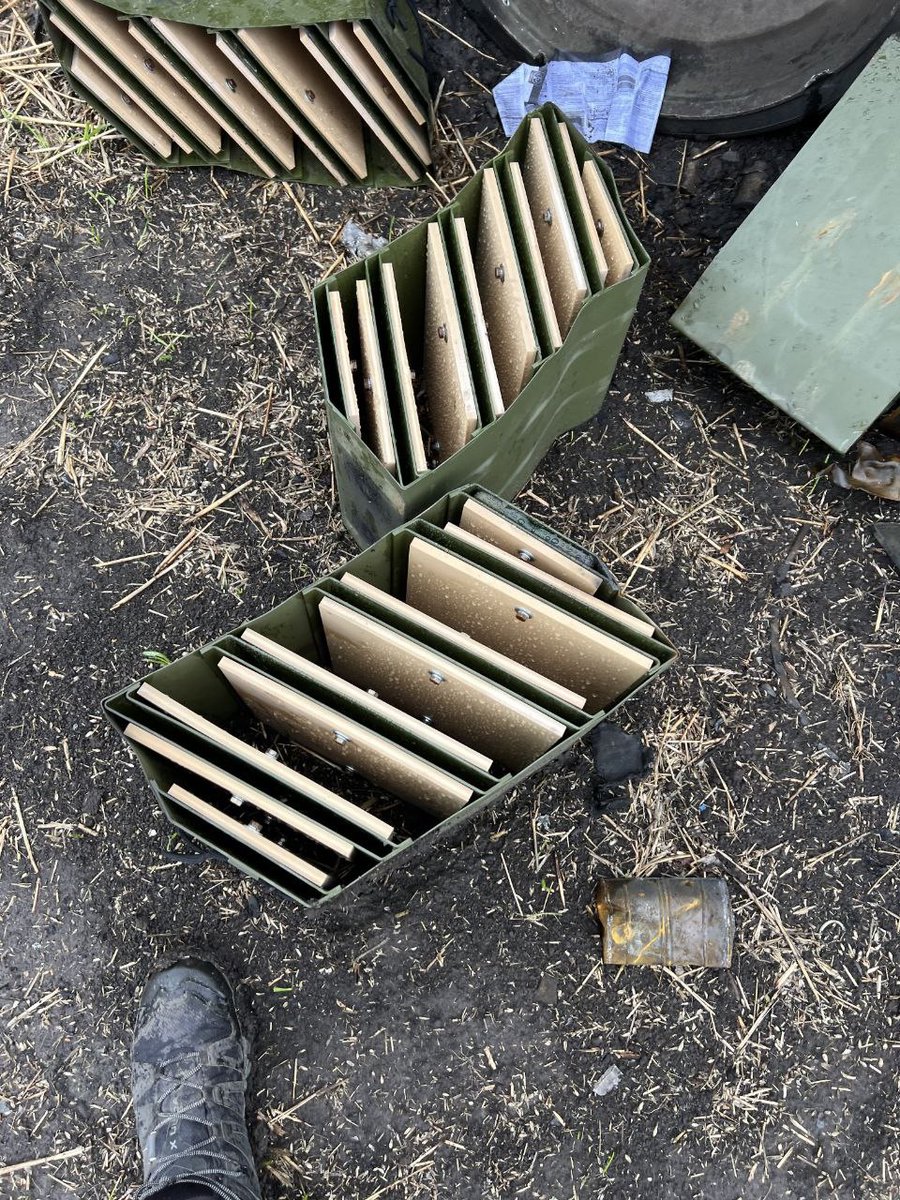
If the tank gets hit on the front, the sensors are already gone ERA or not. And besides, again, we are talking about China here. They can produce and replace whatever element at any rate they need.

The whole idea of the ZTZ-100 is modularity. You can equip it to perform different mission profiles. That’s why we see different version with more or less armor. With this, i don’t see why there wouldn’t be a specialized 125mm gun version. This is a tank build for today’s warfare in heavily urbanized spaces, it’s APS is geared to shooting upwards - crucial in highrise cities of SEAsia or for defeating FPV drones…maybe it can even down a Javelin. The whole AR headset-thing is long overdue to be installed on modern combat vehicles, so far we seen this with the Israeli Iron Vision - As installed on the
Mk.V Merkava or CV90 Mk.IV
China took this idea a bit further, and decided that the crew should be able to slave the weapons to their vision, similar to how the AH-64D can aim it’s chaingun for example. This is very important in urban fighting, where such system can provide accurate and responsive fire on enemy AT positions.
2 Likes
I don´t doubt theres a base armor. Though these days it should be ceramic based rather than NERA. Recent Chinese patents reveal they made some breakthroughs in ceramic armor technology. The problem here is that we don´t know enough yet about the geometry of the armor. I have a crude measurement of probable armor on the front, will post it later.
ceramic armor is material part, NERA is more a structure, NERA can also based on ceramic, and usually ceramic armor is for light vehicle‘s additional armor
NERA just stands for “non-explosive reactive armor”
it doesn’t have any specifics its just a generalizations of a type of armor it can be ceramic based or any other material for that matter
NERA refers to an armor which main threat defeat mechanism is a moving element. Can be of various types, “bulging plates” scheme being the most common since 3rd generation tanks. Since the 90s, tanks with these types of armor have been replacing it by “ceramic-based” composite armor, which have typically higher efficiency against KE threats while being mostly as effective against CE.
So whats the difference? “ceramic-based” composites don´t rely on a moving element, displaced by the energy of the incoming threat. They rely on the ballistic properties of the ceramic element itself. That ceramic element, usually in the form of a tile, is encased in metal together with other metallic or non-metallic elements, that act as backing layers or cushions that enhance the efficiency of the ceramic element. The whole case forms a “module” and its mounted inside the armor cavity with various other ceramic-composites cases, each can be replaced individually after sustaining damage. In many patents describing these types of ceramic-composite its stated that instead of a ceramic element, other high density elements can be used, such as DU.
First tank to enter service with this type of armor was the Leclerc. I got some GIAT patents that go in great detail about this (though of course they don´t indicate actual protection levels). Below I´m posting pics of K2 armor modules, which are perfect examples of this type of armor:
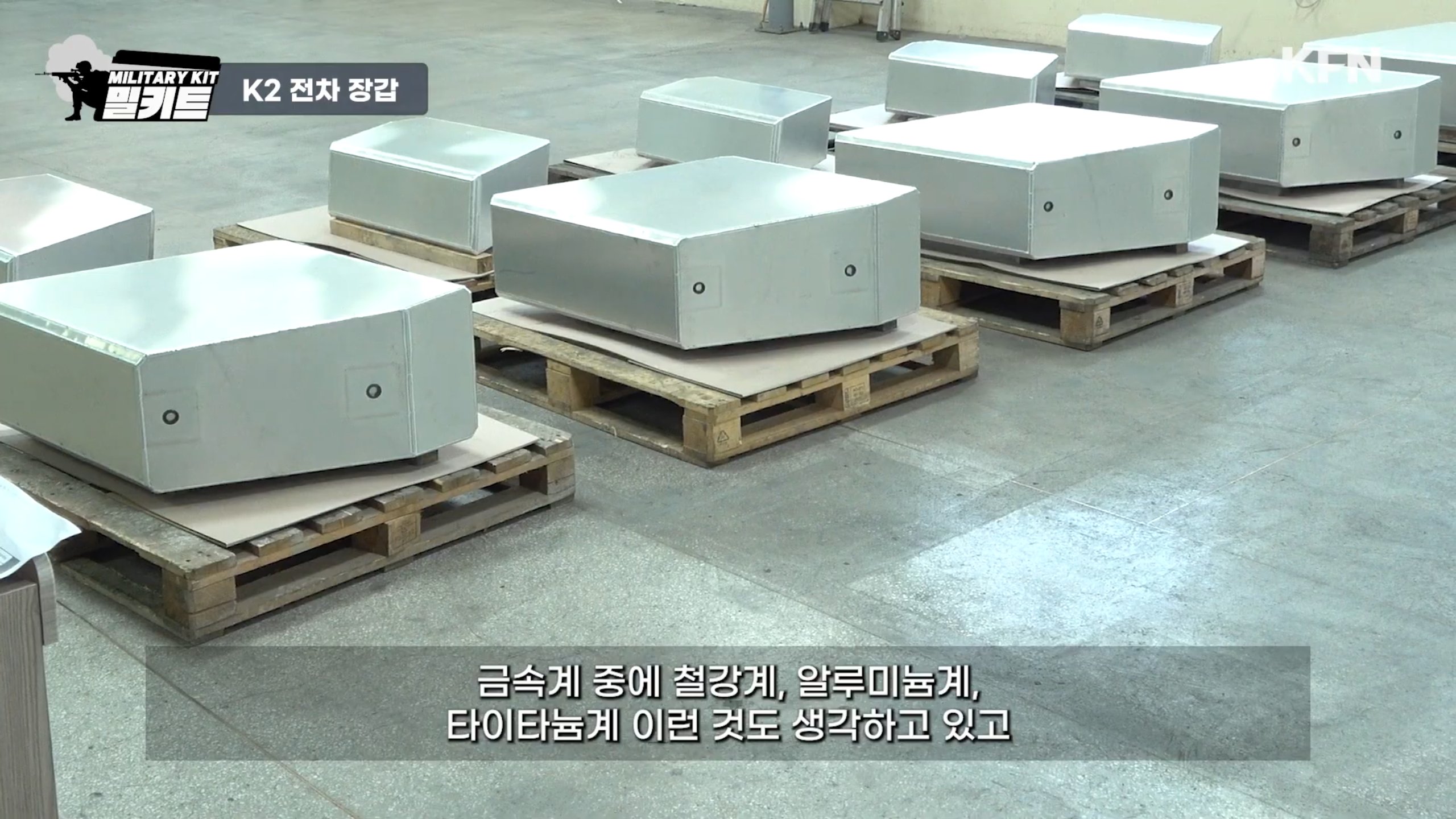
Above are the full armor blocks for the turret cheeks, inside they are filled with these cases, which are stacked:

These metallic cases have the ceramic elements together with other supporting elements and structures. Theres no bulging plates here, no NERA, although some tanks may combine the two types together. Its all a matter of weight efficiency.
Anyway, Type 100 has very likely this type of armor at the hull front. As I said, there are very recently published Chinese patents that demonstrate they´ve made a lot of research into ceramic efficiency. One that comes to mind describes a way to infuse the ceramic element with graphite, greatly enhancing its ballistic properties.
That said, the exact armor layout of Type 100 will remain purely in the realm of speculation for a long, long tyme.
1 Like
NERA can theoretically have some ceramic element, its not mutually exclusive. The difference is that NERA is a type of reactive armor, it reacts to the threat energy in the form of a physically moving element, which is what degrades the threat passing through. Like ERA but without an explosive or energetic element.
Post 1990s ceramic-based composites don´t do that, there is no physical movement of a bulging plate or anything of the like. Its a “fully passive” type of armor, more similar in concept to composite laminar armors (T-series hull armor excluding T-72 1985, and 1989, the latter of which has a NERA layer and its also the same hull armor for all T-90 models so far).
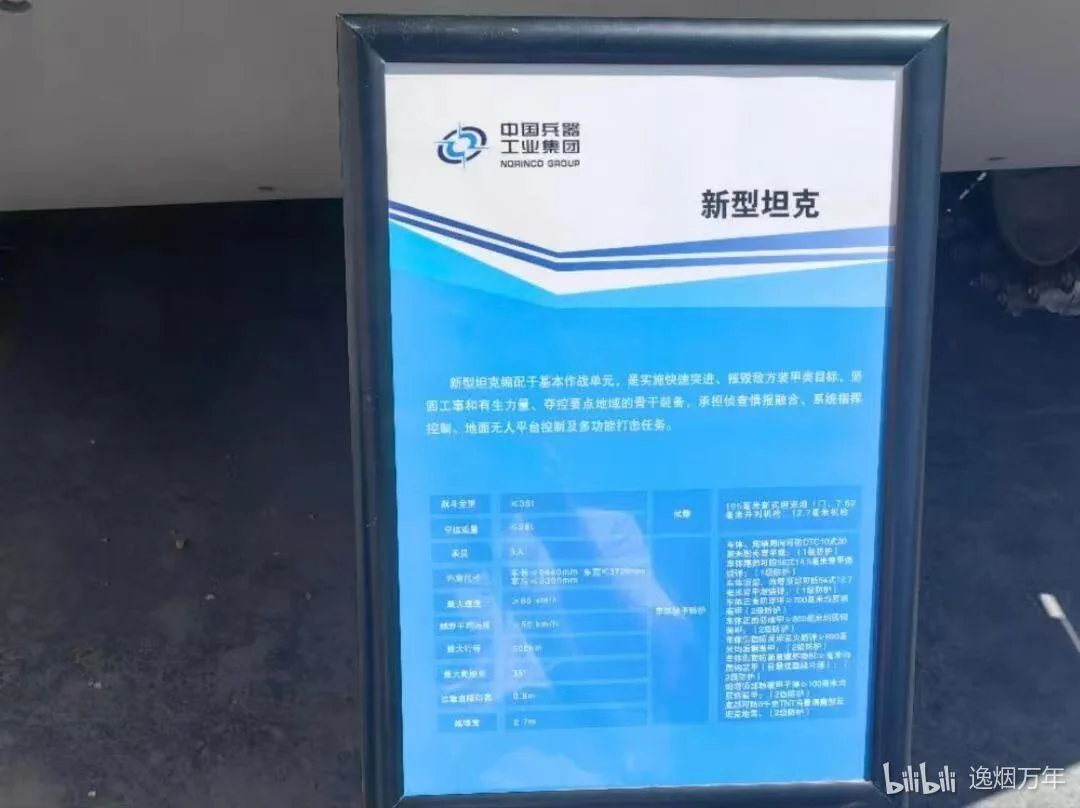
As soon as I get somewhere w decent wifi I’m updating the first post with this info.
But basically:
2 armor configurations:
-Config 1 w front and side protection vs 30mm APFSDS DTC-10.
-Config 2 w front protection 700mm KE / 850mm CE, side protection of 480mm CE. Roof protection 100mm CE (bomblets)
Combat Weight: 35 tonnes (unclear if its for armor config 1 or 2)
Max speed: 85km/h
2 Likes
How can u make that out that is blurry as hell. I can see the 35t part and that’s about it.
should be 2, next line is empty weight 25t